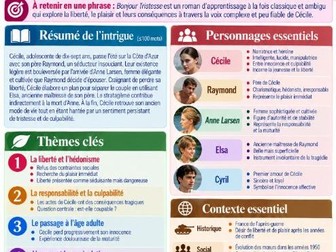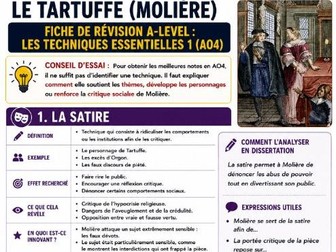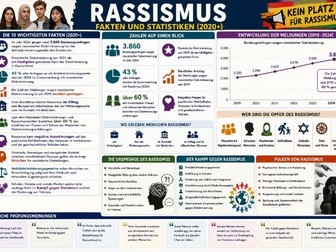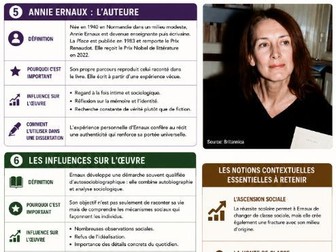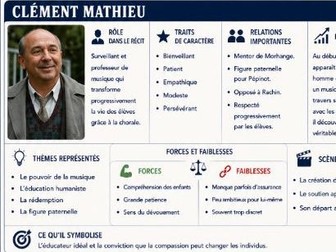
set of knowledge organisers
themes
context
techniques
characters
Critics and what they can show us/how might you use them in an essay
40 sentence starters to help your pupils be more analytical and less descriptive.
Podcast and transcripts on overview and context to the novel.
50 sentence starters on each film to help your pupils produce essays that are analytical not just descriptive.
Les 400 coups François Truffaut (1959)
Au revoir les enfants Louis Malle (1987)
La Haine Mathieu Kassovitz (1995)
L’auberge espagnole Cédric Klapisch (2002)
Un long dimanche de fiançailles Jean-Pierre Jeunet (2004)
Entre les murs Laurent Cantet (2008)
Resources created from my website: www.mflresourceshub.com
10 posters with reasons why to study languages at GCSE.
(and yes I have deliberately included ‘the coolest kids take a language’
Boosts brain power Learning a language improves memory, problem-solving, and multitasking skills—useful across all subjects.
Enhances communication skills .You become better at expressing ideas clearly, even in your own language.
Opens up career opportunities. Employers value languages in fields like business, tourism, diplomacy, and international relations.
Makes travel easier and more enjoyable. You can communicate confidently abroad and experience cultures more fully.
Gives you a competitive edge. A language GCSE stands out on CVs and helps with college or sixth form applications.
Builds cultural awareness. You learn about other cultures, traditions, and perspectives, making you more open-minded.
Supports other subjects . Languages help with English, history, and even science by improving vocabulary and analytical skills.
Develops confidence. Speaking another language in class or real-life situations builds self-esteem.
Can lead to future study abroad opportunities. Many university courses offer exchanges or study trips that require language skills.
It’s a practical life skill. Being able to speak another language is useful for life—not just exams.
knowledge organiser - themes
knowledge organiser - techniques
***Sentence starters to help pupils be less descriptive and more analytical. ***
**Various docs **
Simple introductions and spot the errors.
writing and intro and conclusion
essay mark scheme and feedback form **
10 posters A3 size. Reasons why to continue to A-level with langauges.
Study a language at A-level: examine identity, power and culture through another intellectual tradition.
From film to philosophy, A-level languages invite you to analyse the world, not merely describe it.
Engage critically with migration, inequality and political thought — in the language where they are lived.
A-level languages: where literature, cinema and society become objects of serious intellectual inquiry.
To study a language is to interrogate culture, question assumptions, and refine thought.
Explore ideas of identity, belonging and conflict through texts that demand analysis, not just understanding.
Read, debate and critique — A-level languages cultivate depth, precision and intellectual independence.
Access the original voice of global ideas: from Sartre to contemporary cinema and social debate.
A-level languages are not about fluency alone, but about engaging critically with the world’s complexities.
Serious students of language do not just communicate — they interpret, analyse, and challenge.
When I posted these on for free. I had 350 downloads.
Posters for display in corridors or classrooms.
Remit – get pupils to stop and read a poster.
Reasons to learn a language – KS3/KS4.
Also on my website
www.mflresourceshub.com
quotes from
Boule de Suif
Deux amis
la mère sauvage
Including 1) their importance; 2) what they show.
Essay feedback form for pupils to fill in.
Sample essay titles
Top tips, links & strategies for form tutors to use in tutor time.
PowerPoint of 30 slides with ideas, links and ways to engage your form group and creatively use those first 20 minutes of the day.
Please do send any feedback.
Grammar point on 1 page. Each page covers 1 grammar point.
Suitable for GCSE or A level
The following topics covered:
• Present tense
• Present tense reflexives
• Perfect tense – regular verbs + avere
• Perfect tense – irregular verbs + avere
• Perfect tense – essere
• Negatives
• Imperfect tense
• Pluperfect tense
• Adjectives
• Position of adjectives
• Comparative and superlative
• Possessive adjectives
• Future tense
• Future perfect tense
• Conditional perfect tense
• Adverbs
• Direct object pronouns
• indirect object pronouns
• relative pronouns
• reflexive pronouns
• position of pronouns
• all pronouns
• prepositions
• impersonal structures
• subjunctive
• subjunctive after opinions
• subjunctive after constructions
• past subjunctive
• partitive articles
• definite/indefinite articles
• demonstrative adjectives
• gerund
• interrogatives
• passive
• prefixes and suffixes
(Each of the numbers of the files are linked to a set of questions on that grammar point. Also available from here)
Quick win exercise.
20 past and 20 future tenses + opinions and time frames
translate into English (for the reading paper)
listen and note down in English a) time frame used; b) activity; c) opinion and qualifier used (for the listening paper)
use some of these for the writing paragraphs. (writing prompts given)
Have included 2 songs for the tenses and listening track 3 times.
5 listening exercises on each of the topics. Exercises include: comprehension, summary, true/false, multiple choice, synonyms.
60 exercises in all. Including listening tracks and answers.
Tema 1: I cambiamenti della società italiana
● L’evoluzione della famiglia italiana :Cambiamenti nell’atteggiamento verso il matrimonio, la coppia e la famiglia; i mammoni.
● L’istruzione :Il sistema scolastico e i problemi degli studenti; la fuga dei cervelli.
● Il mondo del lavoro :La parità tra i sessi; la disoccupazione; le imprese familiari; i nuovi modelli di lavoro.
Tema 2: La cultura politica ed artistica nei Paesi di lingua italiana
● La musica :Cambiamenti e sviluppi; impatto sulla cultura popolare.
● I media: Libertà di espressione; la stampa cartacea e online; l’impatto sulla società e la politica.
● Il patrimonio culturale: Feste, usi e costumi.
Tema 3: L’Italia: una società in evoluzione
● L’impatto positivo dell’immigrazione in Italia: Il contributo di immigrati e migranti all’economia e alla cultura.
● I problemi della migrazione in Italia: Marginalizzazione e alienazione; integrazione; impatto dell’emigrazione.
● Il divario Nord/Sud: Spostamenti tra Nord e Sud; il ruolo delle industrie italiane; le differenze socio-culturali; la
criminalità.
Tema 4: Dal fascismo ai giorni nostri
● L’ascesa di Mussolini al potere: La nascita del Partito Fascista
● Il Fascismo durante la Seconda Guerra Mondiale : Il governo di Mussolini e la dittatura; la vita sotto Mussolini durante la seconda guerra mondiale.
● Dalla dittatura alla democrazia: La caduta di Mussolini; la liberazione; le 6 nazioni.
5 sets of listening tasks on each module in the same format as Edexcel A level listening paper 1.
Comprehension, summary, multiple choice.
Listening resources and tracks, question sheets and answers on the following topics:
Module 10 L’ascesa di Mussolini al potere
La nascita del Partito Fascista
Module 11 Il Fascismo durante la Seconda Guerra Mondiale
Il governo di Mussolini e la dittatura; la vita sotto Mussolini durante la seconda guerra mondiale.
Module 12 Dalla dittatura alla democrazia
La caduta di Mussolini; la liberazione; le 6 nazioni.
5 sets of listening tasks on each module in the same format as Edexcel A level listening paper 1.
Comprehension, summary, multiple choice.
Listening resources and tracks, question sheets and answers on the following topics:
Tema 3: L’Italia: una società in evoluzione
Module 7 L’impatto positivo dell’immigrazione in Italia
Il contributo di immigrati e migranti all’economia e alla cultura.
Module 8 I problemi della migrazione in Italia
Marginalizzazione e alienazione; integrazione; impatto dell’emigrazione.
Module 9 Il divario Nord/Sud
Spostamenti tra Nord e Sud; il ruolo delle industrie italiane; le differenze socio-culturali; la criminalità.
5 sets of listening tasks on each module in the same format as Edexcel A level listening paper 1.
Comprehension, summary, multiple choice.
Listening resources and tracks, question sheets and answers on the following topics:
Tema 1: I cambiamenti della società italiana
Module 1
L’evoluzione della famiglia italiana
Cambiamenti nell’atteggiamento verso il matrimonio, la coppia e la famiglia; i mammoni.
Module 2
L’istruzione
Il sistema scolastico e i problemi degli studenti; la fuga dei cervelli.
Module 3
Il mondo del lavoro
La parità tra i sessi; la disoccupazione; le imprese familiari; i nuovi modelli di lavoro.
5 sets of listening tasks on each module in the same format as Edexcel A level listening paper 1.
Comprehension, summary, multiple choice.
Listening resources and tracks, question sheets and answers on the following topics:
Tema 2: La cultura politica ed artistica nei Paesi di lingua italiana
module 4 La musica
Cambiamenti e sviluppi; impatto sulla cultura popolare.
Module 5 I media
Libertà di espressione; la stampa cartacea e online; l’impatto sulla società e la politica.
Module 6 Il patrimonio culturale
Feste, usi e costumi.
Sample questions for Edexcel Speaking exam A level conversation section after the card.
For some topics there are alternative styles based on the needs/abilities of the pupils
Please let me know if you find any errors.