Was It Right to Open Tutankhamun's Tomb? | KS2 History, PSHE & English Debate LessonQuick View
timishka

Was It Right to Open Tutankhamun's Tomb? | KS2 History, PSHE & English Debate Lesson

(0)
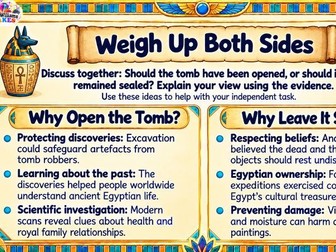
KS2 Ancient Egypt debate lesson exploring whether Tutankhamun’s tomb should have been opened. Includes PowerPoint, evidence sorting, extension and reflection. Discover the past. Question the evidence. Make your judgement! Was Howard Carter right to open Tutankhamun’s tomb in 1922, or should the ancient burial site have remained undisturbed? Bring historical enquiry, ethical reasoning and lively classroom debate together with this engaging KS2 History, PSHE and English lesson bundle from Miss Williams Makes – Where Learning Sparkles! Through thought-provoking questions, historical evidence, colourful illustrations and practical activities, pupils investigate the arguments surrounding archaeological discoveries, cultural heritage, respect for the dead and the preservation of ancient artefacts. Rather than simply learning what happened, pupils are encouraged to think like historians, consider different perspectives and reach their own informed judgements. What’s included? • 9-slide illustrated PowerPoint introducing the historical discovery, ethical questions and arguments for and against opening the tomb. • Brain Spark! Starter – An engaging dilemma encouraging pupils to form an initial opinion, with suggested answers included. • Key Vocabulary – Child-friendly explanations of ethics, excavation, heritage and perspective. • Historical Evidence and Discussion – Explore the benefits of archaeological discoveries alongside concerns about religious beliefs, cultural ownership and damage to fragile artefacts. • Weighing the Discovery Evidence – An illustrated evidence-sorting activity featuring eight statements representing different viewpoints. • Evidence Balance Sheet – Pupils organise arguments for and against opening the tomb and explain their reasoning. • Reaching a Judgement – A structured writing activity requiring pupils to use historical evidence to justify their opinion. • Ranking the Evidence – Pupils evaluate which arguments are most convincing and explain why. • The Museum Dilemma! – An extension activity exploring whether an Egyptian artefact should remain in a museum, be returned to Egypt or be replaced with a replica. • Emerald Edit – Reflect. Refine. Shine. – A reflection activity encouraging pupils to reconsider their opinions, recognise alternative perspectives and improve their final judgements in green pen.
Howard Carter & Tutankhamun's Tomb | KS2 History & English Lesson BundleQuick View
timishka

Howard Carter & Tutankhamun's Tomb | KS2 History & English Lesson Bundle

(0)
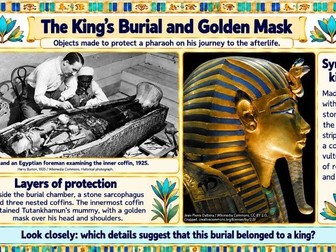
Howard Carter & Tutankhamun’s Tomb | KS2 History & English Lesson Bundle KS2 Ancient Egypt lesson exploring Howard Carter’s 1922 discovery of Tutankhamun’s tomb. Includes PowerPoint, source analysis, diary writing and answers. Step into the Valley of the Kings and uncover one of archaeology’s most remarkable discoveries! Bring the discovery of Tutankhamun’s tomb to life with this engaging, richly illustrated KS2 History and English lesson bundle from Miss Williams Makes – Where Learning Sparkles! Pupils follow Howard Carter and the Egyptian excavation team as they uncover the hidden tomb in 1922, examine historical photographs and investigate the extraordinary artefacts discovered inside. Combining historical enquiry with creative writing, this cross-curricular resource encourages pupils to think like historians, distinguish observation from inference and use historical evidence to produce an imaginative diary entry from Howard Carter’s perspective. What’s included? • 11-slide illustrated PowerPoint presentation – Explore the Valley of the Kings, meet Howard Carter, follow the excavation and discover what was found inside Tutankhamun’s tomb. • Brain Spark! Starter Activity – Examine a historical photograph, record observations, make inferences and match key historical vocabulary to definitions. • Starter Answer Sheet – Suggested answers in red to support assessment and classroom discussion. • Historical Photographs and Artefacts – Visual sources showing the excavation, tomb contents and Tutankhamun’s golden burial mask. • Historical Vocabulary – Introduces archaeology, excavation, artefact, tomb and Egyptologist. Artefact Description Word Mat – Illustrated examples of objects discovered in the tomb, including a golden throne, jewellery, statues, canopic jars and ceremonial objects, accompanied by descriptive vocabulary. • Howard Carter’s Diary Writing Activity – A themed writing sheet with clear instructions, reminders and success criteria. • Diary Continuation Sheet – Additional lined writing space for pupils who need more room to develop their ideas.
Ancient Egypt Timeline KS2 Chronology PowerPoint, Worksheets & AnswersQuick View
timishka

Ancient Egypt Timeline KS2 Chronology PowerPoint, Worksheets & Answers

(0)
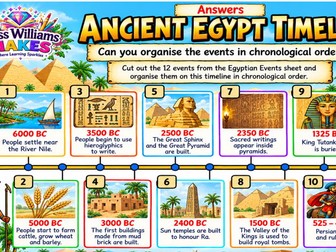
Ancient Egypt Timeline KS2 | Chronology PowerPoint, Worksheets & Answers Teach Ancient Egyptian chronology with a 17-slide PowerPoint, 12-event cut-and-stick timeline, printable worksheets, answer keys and reflection activities. Travel through time and discover the fascinating history of Ancient Egypt! Bring chronological understanding to life with this colourful, engaging and ready-to-use KS2 History lesson bundle from Miss Williams Makes – Where Learning Sparkles! Designed to help pupils develop a secure understanding of chronology, this resource takes learners on a journey through significant events in Ancient Egyptian history, from early settlements along the River Nile to the rise of the pyramids, powerful rulers and the arrival of Roman rule. Through vibrant illustrations, historical enquiry, discussion opportunities and practical cut-and-stick activities, pupils learn how to organise historical events, interpret dates and explain why chronological order matters. What’s included? • 17-slide illustrated PowerPoint exploring chronology and key events in Ancient Egyptian history. • Ready, Set, Think! Starter – A four-event sequencing challenge to assess pupils’ understanding of chronological order, with suggested answers. • Historical Vocabulary Activity – Introduces BC, BCE, AD and the meaning of chronological order through a word-bank exercise with answers. • Key Events in Ancient Egypt – Illustrated slides covering significant developments, rulers and changes in Egyptian history. • Think Like a Historian – Thought-provoking questions encouraging historical reasoning, discussion and interpretation. • 12 Ancient Egyptian Event Cards – Colourful, dated cards for pupils to cut out and organise chronologically. • Blank Ancient Egypt Timeline – A large illustrated timeline with 12 numbered spaces for pupils to arrange their events. • Completed Timeline Answer Sheet – A visual answer key showing the correct chronological sequence. • Emerald Edit – Reflect. Refine. Shine. – A follow-up activity encouraging pupils to consider which historical event had the greatest impact on Ancient Egypt and explain their reasoning.
Human & Physical Features of Ancient EgyptQuick View
timishka

Human & Physical Features of Ancient Egypt

(0)
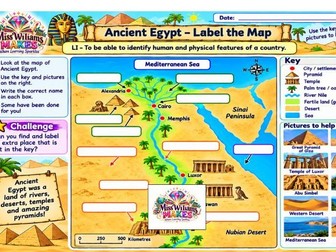
KS2 Ancient Egypt Geography | Human & Physical Features | 14-Slide PowerPoint, Printable Map Activities, Answer Sheets & Video Resources Bring the fascinating geography of Ancient Egypt to life with this colourful, engaging and ready-to-use KS2 teaching resource from Miss Williams Makes – Where Learning Sparkles! Designed to save teachers valuable planning time, this 14-slide PowerPoint introduces pupils to human and physical geographical features before taking them on an exciting journey through the landscape of Ancient Egypt. Pupils will discover how the River Nile shaped Ancient Egyptian civilisation, explore the surrounding deserts, locate important cities and landmarks, and develop essential map-reading and geographical enquiry skills. 14-slide illustrated PowerPoint presentation featuring eye-catching visuals, clear explanations and engaging activities. Ready, Steady, Think! – A fun introductory activity where pupils classify famous landmarks from around the world as human or physical features. Learning intention – To be able to identify human and physical features of a country. Ancient Egypt Mapping – Explore the location of Egypt, the River Nile and significant landmarks. Human and Physical Features – Understand the differences between natural geographical features and those created by people. The Importance of the River Nile – Discover how water, fertile land and natural resources influenced farming, transport and settlements. Ancient Egypt: Label the Map – A printable mapping activity supported by pictures and a geographical key. Ancient Egypt: Map Detectives – A geographical investigation involving compass directions, settlements, landmarks and reasoning questions. Thinking Geographers – Opportunities for discussion, observation, geographical reasoning and deeper thinking. Video Resources – A selection of educational videos and clickable resource links to support teaching. Suggested Answers – Answer slides with responses clearly displayed in red to make marking and feedback easier.