AQA A-Level Chemistry Alkanes Bundle | 5 PowerPoints, Workbook & AnswersQuick View
chem1984

AQA A-Level Chemistry Alkanes Bundle | 5 PowerPoints, Workbook & Answers

(0)
Teach the Alkanes topic with five coordinated PowerPoint presentations, a matching student workbook and a separate mark scheme for AQA AS and Year 1 A-level Chemistry. This package includes: • Five PowerPoint presentations containing 102 slides. • A 12-page editable Word workbook with 39 questions. • A separate six-page mark scheme with answers and mark allocations. Topics covered: • Crude oil, fractional distillation and boiling-point trends. • Uses of alkanes and complete and incomplete combustion. • Thermal and catalytic cracking, including economic reasons. • Pollutant formation, environmental effects and emission controls. • Free-radical substitution, further substitution and ozone depletion. The presentations combine clear explanations, diagrams, starters and practice questions. Click-to-reveal answers support discussion and assessment, while information points appear progressively to help pace explanations. The accompanying workbook follows the lesson sequence, with slide references, brief supporting notes, writing space, calculations, equation practice and structure-drawing tasks. The separate mark scheme supports teacher marking, self-assessment and revision. Suitable for first teaching, consolidation and revision. PowerPoint slides and Word documents can be adapted to suit your classes. Use PowerPoint Slide Show mode for the reveal animations. Independently produced teaching resources for the AQA course. The practice questions are not official AQA examination questions.
AQA A-Level Chemistry: Introduction to Organic Chemistry | 5 PowerPoint UnitQuick View
chem1984

AQA A-Level Chemistry: Introduction to Organic Chemistry | 5 PowerPoint Unit

(0)
Build students’ confidence with organic chemistry through five coordinated PowerPoints containing 108 slides. Designed for Year 12 students studying AQA AS and A-level Chemistry, this unit combines explanations, illustrated examples and practice with click-to-reveal answers. Included: • Introduction to organic chemistry • Organic nomenclature • Isomerism • Skeletal formulae • Organic revision and practice Topics include molecular, empirical, general, structural, displayed and skeletal formulae; homologous series; functional groups; naming organic compounds; chain, position and functional-group isomerism; and E/Z isomerism with CIP priority rules. Clear molecular diagrams support naming and drawing activities. Information points appear progressively on text-based teaching slides, while structures and question numbers remain visible during naming exercises. Answers and names reveal on click. The unit includes starter activities, extension tasks, revision questions and answers within the presentations. PowerPoint text and layouts can be adapted to suit your classes. Supplied as five PowerPoint files. Use PowerPoint Slide Show mode for the click reveals. Worksheets and separate mark schemes are not included.
Mass, Weight and Gravity | Edexcel IGCSE Physics PowerPoint & Exam-Style QuestionsQuick View
chem1984

Mass, Weight and Gravity | Edexcel IGCSE Physics PowerPoint & Exam-Style Questions

(0)
Help students distinguish between mass and weight, understand gravitational field strength and confidently use W = mg. This editable 18-slide PowerPoint supports the Edexcel International GCSE Physics course, combining clear explanations, diagrams, worked examples and original exam-style practice. What’s included: Mass, weight, gravity and gravitational field strength. Scalars and vectors, units and measuring instruments. Worked calculations using W = mg and rearranging to calculate mass. Comparisons of weight on Earth and other worlds. Six original exam-style question sets with worked answers and suggested marks. Practice covering spring extension, floating forces and force directions. Click-to-reveal questions and answers for teacher-controlled pacing. A light background with clear text and editable content. Suitable for ages 14–16, for classroom teaching, guided practice or revision. Download includes one PowerPoint (.pptx), with questions and answers within the slides. An independent teaching resource. Questions are original and are not official Pearson Edexcel exam questions.
AQA A-Level Biology: Carbohydrates | PowerPoint with Diagrams & Reveal AnswersQuick View
chem1984

AQA A-Level Biology: Carbohydrates | PowerPoint with Diagrams & Reveal Answers

(0)
Teach carbohydrate structure and function with this editable 30-slide PowerPoint, designed for AQA A-level Biology. Clear explanations and labelled diagrams help students connect molecular structure to biological function, while retrieval activities and exam-style practice build confidence applying their knowledge. Topics covered: Monosaccharides and the structures of α-glucose and β-glucose Disaccharides, glycosidic bonds and condensation reactions Starch: amylose and amylopectin Glycogen and its role in energy storage Cellulose, microfibrils and plant cell-wall strength Comparing the structures and functions of polysaccharides Includes diagrams on every information slide, recall questions and original exam-style questions with click-to-reveal answers and teacher marking guidance. Suitable for classroom teaching, consolidation and revision. Supplied as an editable PowerPoint so you can adapt the content to your students. Practice questions and marking guidance are independent teaching materials, not official AQA examination material.
AQA A-Level Biology: Monomers and Polymers – PowerPoint with AnswersQuick View
chem1984

AQA A-Level Biology: Monomers and Polymers – PowerPoint with Answers

(0)
Introduce the foundations of biological molecules with this editable 29-slide PowerPoint, aligned with relevant AQA A-level Biology content. The presentation covers: The main groups of biological molecules and their roles. Monomers and polymers, with named biological examples. Condensation reactions and the formation of covalent bonds. Hydrolysis and the breakdown of larger molecules. Glycosidic, peptide and phosphodiester bonds. Why lipids are not polymers. What’s included? Clear teaching explanations and editable diagrams. Retrieval questions to revisit prior knowledge. Practice questions on identifying molecules, predicting hydrolysis products and counting condensation reactions. Click-to-reveal answers and teacher marking guidance. Suitable for introducing the topic, checking understanding and revision. The editable format allows you to adapt the presentation to your class. Use PowerPoint’s Slide Show mode for the answer reveals. This download contains one PowerPoint; a separate student booklet is not included. This is an independent teaching resource and is not endorsed by AQA. Practice questions and teacher marking guidance are not official AQA examination material.
AQA A-Level Biology: Biological Molecules – 6 PowerPoints with AnswersQuick View
chem1984

AQA A-Level Biology: Biological Molecules – 6 PowerPoints with Answers

(0)
Support your teaching of biological molecules with six editable PowerPoint presentations containing 180 slides, aligned with relevant AQA A-level Biology content. Topics included: Monomers and Polymers: biological molecules, condensation, hydrolysis and the bonds joining monomers. Carbohydrates: monosaccharides, disaccharides, α-glucose and β-glucose, starch, glycogen and cellulose. Lipids: triglycerides, phospholipids, ester bonds, saturated and unsaturated fatty acids, energy storage and membranes. Proteins: amino acids, peptide bonds, levels of protein structure, bonding, denaturation and structure–function relationships. Enzymes: specificity, induced fit, activation energy, factors affecting activity, competitive and non-competitive inhibition. Food Tests: Benedict’s, iodine, Biuret and emulsion tests, testing for non-reducing sugars, colorimetry and interpreting results. What’s included? Six editable PowerPoint files. Clear explanations, molecular structures and teaching diagrams. Retrieval questions and assessment-style practice. Click-to-reveal answers and teacher marking guidance. Calculation, graph interpretation and experimental evaluation activities. A teaching guide and curriculum references. Suitable for classroom teaching, consolidation and revision. Adapt the presentations to your classes and use PowerPoint’s Slide Show mode for the answer reveals.
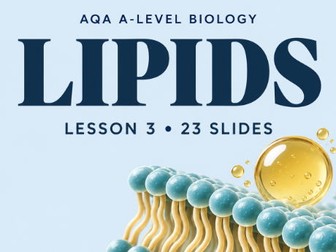
Title: AQA A-Level Biology: Lipids | PowerPoint with Diagrams & Reveal AnswersQuick View
chem1984

Title: AQA A-Level Biology: Lipids | PowerPoint with Diagrams & Reveal Answers

(0)
Explore lipid structure and function with this editable 23-slide PowerPoint, designed for AQA A-level Biology. Clear molecular diagrams and explanations help students understand how triglycerides and phospholipids are adapted to their biological roles. Topics covered: Glycerol, fatty acids and triglyceride structure Ester bonds, condensation and hydrolysis Saturated and unsaturated fatty acids Phospholipid structure and behaviour in water Lipids in cell membranes Energy storage and the properties of triglycerides Includes retrieval activities and original exam-style questions covering molecular structures, reaction calculations, data interpretation and evaluation, with click-to-reveal answers and teacher marking guidance. Suitable for teaching, consolidation and revision. Supplied as an editable PowerPoint with a relevant diagram or illustration on every information slide.
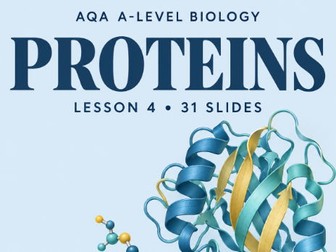
Title: AQA A-Level Biology: Proteins | Structure, Bonding & Exam-Style PracticeQuick View
chem1984

Title: AQA A-Level Biology: Proteins | Structure, Bonding & Exam-Style Practice

(0)
Develop students’ understanding of protein structure and function with this editable 31-slide PowerPoint, designed for AQA A-level Biology. Labelled diagrams support explanations of amino acids, peptide bonds and protein folding, helping students connect molecular structure to biological function. Topics covered: Amino acid structure and variable R groups Peptide bonds, condensation and hydrolysis Primary, secondary, tertiary and quaternary structure Bonds and interactions involved in protein structure Disulfide bridges and denaturation Globular and fibrous proteins The relationship between protein structure and function Includes retrieval questions, review activities and original exam-style practice with click-to-reveal answers and teacher marking guidance. Suitable for classroom teaching and revision, with editable slides and diagrams on every information slide.
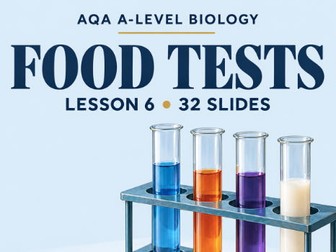
AQA A-Level Biology: Food Tests | Practical Methods, Results & Reveal AnswersQuick View
chem1984

AQA A-Level Biology: Food Tests | Practical Methods, Results & Reveal Answers

(0)
Build confidence with biochemical tests and practical interpretation using this editable 32-slide PowerPoint, designed for AQA A-level Biology. Clear method summaries, diagrams and results tables help students understand how to test biological samples and interpret their observations. Topics covered: Preparing food samples Benedict’s test for reducing sugars Testing for non-reducing sugars Iodine test for starch Biuret test for proteins Emulsion test for lipids Estimating concentration using calibration curves Chromatography of amino acids Practical hazards and precautions Includes recall activities, practical questions and original exam-style tasks covering unknown samples, results interpretation and investigation design. Click-to-reveal answers and teacher marking guidance support discussion and feedback. Suitable for practical preparation, consolidation and revision. Supplied as an editable PowerPoint with a diagram, illustration or graph on every information slide. For each listing: Practice questions and marking guidance are independent teaching materials, not official AQA examination material. These resources are not endorsed by AQA.
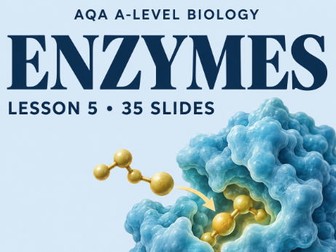
AQA A-Level Biology: Enzymes | Activity, Inhibition & Reveal AnswersQuick View
chem1984

AQA A-Level Biology: Enzymes | Activity, Inhibition & Reveal Answers

(0)
Teach enzyme action and the factors affecting enzyme activity with this editable 35-slide PowerPoint, designed for AQA A-level Biology. Diagrams and graphs support explanations of enzyme specificity, induced fit and inhibition, while practice activities develop students’ calculation and interpretation skills. Topics covered: Enzymes as biological catalysts Active sites, specificity and induced fit Activation energy Effects of enzyme and substrate concentration Effects of temperature and pH Competitive and non-competitive inhibition Measuring enzyme activity and calculating reaction rates Interpreting reaction and inhibition curves Includes retrieval activities and original exam-style questions with click-to-reveal answers and teacher marking guidance. Suitable for introducing content, checking understanding and revising enzyme concepts. Supplied as an editable PowerPoint with a diagram or graph on every information slide.
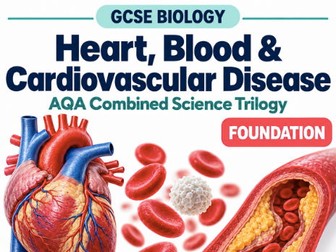
Heart, Blood & Cardiovascular Disease | AQA GCSE Combined Science Foundation WorksheetQuick View
chem1984

Heart, Blood & Cardiovascular Disease | AQA GCSE Combined Science Foundation Worksheet

(0)
Support GCSE Biology revision with this structured worksheet for AQA Combined Science Trilogy Foundation. The resource combines manageable sections of teaching notes with diagrams, comparison tables, guided activities and exam-question practice. Suitable for classroom teaching, small-group tuition and supported revision. Topics covered Heart structure and double circulation. Major blood vessels and the role of valves. Arteries, veins and capillaries. Heart rate, pacemakers and a guided pulse-rate calculation. Red blood cells, white blood cells, platelets and plasma. Coronary heart disease and cardiovascular risk factors. Stents, statins and coronary bypass surgery. Replacement heart valves, transplants and artificial hearts. Learning activities Includes sentence completion, whiteboard checks, sketching, diagram-based questions, multiple-choice questions and written explanations. Treatment comparison tables help students consider benefits and risks. What is included One student worksheet in Word format (.docx). Text and layout are editable; some questions and diagrams are embedded images. No answer sheet or teacher guide is included.
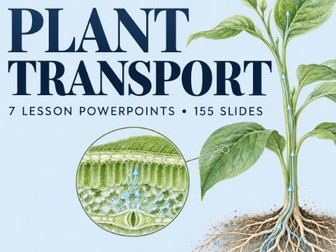
AQA A-Level Biology: Plant Transport Unit – 7 PowerPoints with AnswersQuick View
chem1984

AQA A-Level Biology: Plant Transport Unit – 7 PowerPoints with Answers

(0)
Teach plant transport with a coordinated sequence of seven editable PowerPoints containing 155 slides, aligned with relevant AQA A-level Biology content. The unit covers: Properties of Water: hydrogen bonding, cohesion, solvent properties and thermal properties. Leaf Structure: leaf tissues, stomata, guard cells and adaptations for exchange. Water Transport: water potential, root uptake, xylem and the cohesion–tension mechanism. Investigating Transpiration: potometers, environmental factors, calculations and experimental evaluation. Xerophytic Adaptations: structural adaptations that reduce water loss and their biological explanations. Translocation: phloem structure, sources and sinks, sucrose loading and mass flow. Mass Flow Experiments: ringing experiments, radioactive tracers and evaluation of evidence. What’s included? Seven editable PowerPoint presentations. Clear teaching explanations and diagrams. 72 assessment slides containing practice and application questions. Click-to-reveal answers and teacher marking guidance to support discussion and checking understanding. Calculation, data interpretation and practical evaluation activities. A teaching guide and references. Suitable for classroom teaching, consolidation and revision. Presentations can be adapted to your classes; use PowerPoint’s Slide Show mode for the answer reveals.
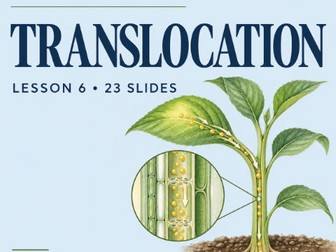
AQA A-Level Biology: Translocation and Mass Flow – PowerPoint with AnswersQuick View
chem1984

AQA A-Level Biology: Translocation and Mass Flow – PowerPoint with Answers

(0)
Guide students through the movement of assimilates in plants with this editable 23-slide PowerPoint. Covers sieve tube elements and companion cells, sources and sinks, sucrose loading, active transport and the mass-flow hypothesis. Students explore how water entry creates hydrostatic pressure differences that drive movement through the phloem. Includes teaching diagrams and nine assessment slides, with click-to-reveal answers and teacher marking guidance. Suitable for introducing translocation, consolidating the mechanism and revision.
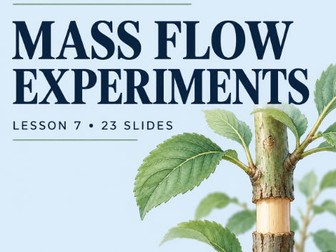
AQA A-Level Biology: Evidence for Translocation – Mass Flow Experiments and AnswersQuick View
chem1984

AQA A-Level Biology: Evidence for Translocation – Mass Flow Experiments and Answers

(0)
Develop students’ understanding of the evidence for translocation with this editable 23-slide PowerPoint. Covers ringing experiments, radioactive tracers, autoradiography and evidence supporting the mass-flow hypothesis. Activities encourage students to interpret findings, draw supported conclusions and recognise limitations in experimental evidence. Includes 11 assessment slides, with click-to-reveal answers and teacher marking guidance. Suitable for teaching evidence-based explanations and strengthening application and evaluation skills.
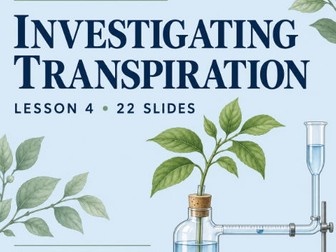
AQA A-Level Biology: Investigating Transpiration and Potometers – PowerPoint with AnswersQuick View
chem1984

AQA A-Level Biology: Investigating Transpiration and Potometers – PowerPoint with Answers

(0)
Support practical understanding and data-handling skills with this editable 22-slide PowerPoint on investigating transpiration. Covers potometer preparation and use, estimating water uptake, experimental precautions and the effects of light, temperature, humidity and air movement. Activities develop students’ ability to calculate rates, identify control variables, interpret results and evaluate investigations. Includes 11 assessment slides, with click-to-reveal answers and teacher marking guidance. Suitable for preparing students for practical work or consolidating experimental skills.
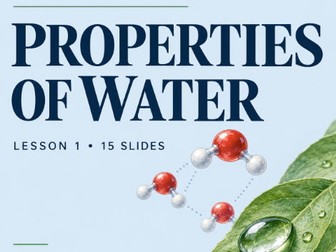
AQA A-Level Biology: Properties of Water – PowerPoint with AnswersQuick View
chem1984

AQA A-Level Biology: Properties of Water – PowerPoint with Answers

(0)
Explore how the properties of water support biological processes with this editable 15-slide PowerPoint. Covers water polarity and hydrogen bonding, water as a solvent and metabolite, specific heat capacity, latent heat of vaporisation and cohesion. Explanations connect molecular properties to their importance in living organisms and plant transport. Includes teaching diagrams and five assessment slides, with click-to-reveal answers and teacher marking guidance. Suitable for introducing the topic, checking understanding and revision.
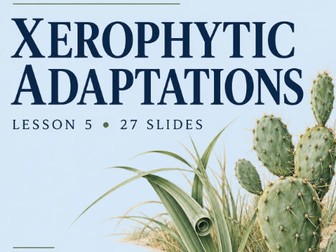
AQA A-Level Biology: Xerophytic Adaptations – PowerPoint with AnswersQuick View
chem1984

AQA A-Level Biology: Xerophytic Adaptations – PowerPoint with Answers

(0)
Help students explain how plants survive in dry conditions with this editable 27-slide PowerPoint. Covers thick cuticles, reduced leaves, leaf hairs, sunken stomata, rolled leaves, root systems and water storage. Explanations link adaptations to reduced water loss, water-vapour gradients and the balance between water conservation and gas exchange. Includes teaching illustrations and 12 assessment slides, with click-to-reveal answers and teacher marking guidance. Suitable for developing clear biological explanations and applying knowledge to unfamiliar plants.
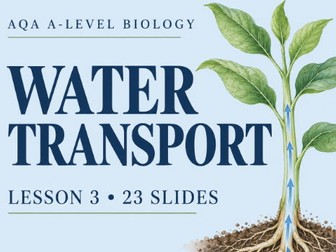
AQA A-Level Biology: Water Transport in Plants – PowerPoint with AnswersQuick View
chem1984

AQA A-Level Biology: Water Transport in Plants – PowerPoint with Answers

(0)
Explain how water moves from soil to leaves with this editable 23-slide PowerPoint. Covers water potential, uptake by roots, movement through root tissues, xylem structure and the cohesion–tension mechanism. Students connect transpiration to water movement and apply their knowledge through explanations, calculations and interpretation of evidence. Includes teaching diagrams and 12 assessment slides, with click-to-reveal answers and teacher marking guidance. Suitable for teaching the topic and revisiting key processes before assessments.
AQA A-Level Biology: Leaf Structure – PowerPoint with AnswersQuick View
chem1984

AQA A-Level Biology: Leaf Structure – PowerPoint with Answers

(0)
Develop students’ understanding of how leaf structure supports photosynthesis and exchange with this editable 22-slide PowerPoint. Covers the epidermis and cuticle, palisade and spongy mesophyll, stomata and guard cells. Questions encourage students to link structural features to their functions and apply their understanding to biological data. Includes teaching diagrams and 12 assessment slides, with click-to-reveal answers and teacher marking guidance. Suitable for classroom teaching, consolidation and revision.
AQA A-Level Chemistry: Making Esters & Biodiesel PowerPointQuick View
chem1984

AQA A-Level Chemistry: Making Esters & Biodiesel PowerPoint

(0)
Develop students’ understanding of ester preparation and biodiesel production with this editable 11-slide PowerPoint. Covers triglyceride reactions, methyl ester formation, glycerol, reaction equations and interpretation of the ester preparation method. Includes practice questions, worked answers and activities linking practical steps to the chemistry involved. Information points reveal on click to support paced explanations. Practical content complements your department’s approved laboratory instructions. Designed for AQA A-level Chemistry.
AQA A-Level Chemistry: Acylation & Acyl Chloride Reactions PowerPointQuick View
chem1984

AQA A-Level Chemistry: Acylation & Acyl Chloride Reactions PowerPoint

(0)
Introduce acylation and the reactions of acyl chlorides with water, alcohols, ammonia and primary amines using this editable 18-slide PowerPoint. Covers acyl chloride naming, product prediction, equations, conditions and observations, including the role of excess ammonia or amine. Includes a starter, naming practice, answers and an acylation check. Click-to-reveal teaching points provide opportunities to pause for student responses. This presentation focuses on reactions and products; detailed worked mechanisms are covered in the separate Acyl Chloride Mechanisms resource.