Transformer Equation Calculations - AQA GCSE Physics Practice BookQuick View
advisoryscience

Transformer Equation Calculations - AQA GCSE Physics Practice Book

(0)
The transformer equation involves ratios, and students who are not confident with proportional reasoning find it surprisingly difficult. This AQA GCSE Triple Physics workbook builds that skill with 12 scaffolded questions using the EVERY method framework. The EVERY method breaks each calculation into clear steps: Equation, Values, Enter values into the equation, Rearrange if needed, Your units. Every question has a structured EVERY table for students to complete, building a consistent problem-solving habit. Questions get progressively harder: Q1-3 are straightforward, Q4-6 introduce unit conversions, and Q7-12 require rearranging the formula. What’s inside: 12 progressive questions on Transformers (Vs/Vp = Ns/Np and power conservation) Structured EVERY method table on every question page Progressive difficulty: simple substitution, then unit conversions, then rearranging Self-assessment tracker with “What made me stuck?” reflection checklist Full worked answers for all 12 questions using the EVERY method steps AQA specification reference: 6.7 Magnetism and Electromagnetism (Triple Physics only, higher tier) Transformer calculations require students to use the turns ratio equation to calculate primary or secondary voltage and number of turns. Some questions also involve power conservation (VpIp = VsIs) to find current in the secondary coil, linking to the national grid. Common student mistakes this workbook addresses: putting primary and secondary on the wrong sides of the equation, confusing step-up with step-down transformers, not using power conservation to find secondary current, and forgetting that real transformers are not 100% efficient. Suitable for AQA GCSE Physics (Triple only, higher tier).
AQA GCSE Biology Calculation Practice Books Bundle | 13 Maths Skills Workbooks with AnswersQuick View
advisoryscience

AQA GCSE Biology Calculation Practice Books Bundle | 13 Maths Skills Workbooks with Answers

(0)
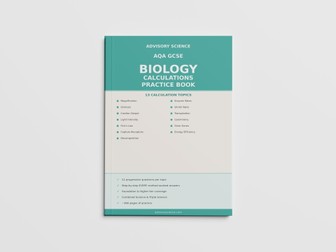
Stop spending your evenings writing calculation worksheets from scratch. This bundle contains 13 targeted calculation practice books covering every quantitative skill your students need for AQA GCSE Biology. Each workbook focuses on a single calculation type, giving students repeated, scaffolded practice with one skill at a time. That means no cognitive overload, no context-switching, just focused drill on the exact maths they will face in the exam. Topics included: Magnification, Rate of Enzyme Reaction, Percentage Change in Osmosis, Surface Area to Volume Ratio, Cardiac Output, Rate of Transpiration, Light Intensity (Inverse Square Law), Energy from Calorimetry, Fick’s Law of Diffusion, Area of Clear Zone, Capture-Recapture, Energy Transfer Efficiency, and Rate of Decomposition. Every book includes a questions section and a complete answers section, so students can self-mark or you can use them for homework with minimal follow-up. They work brilliantly as intervention booklets, revision resources, or as part of a structured maths-in-science programme. Combined Science and Triple Biology topics are clearly labelled, so you can distribute the right books to the right students without any confusion. Designed by a practising science teacher and curriculum advisor. Print-ready, no-fuss, straight into your teaching.
Energy Transfer Efficiency - AQA GCSE Biology Practice BookQuick View
advisoryscience

Energy Transfer Efficiency - AQA GCSE Biology Practice Book

(0)
Energy transfer efficiency in food chains is where ecology meets maths, and students often struggle to extract the right numbers from food chain diagrams. This AQA GCSE Triple Biology workbook builds exam confidence with 12 scaffolded questions using the EVERY method framework. The EVERY method breaks each calculation into clear steps: Equation, Values, Enter values into the equation, Rearrange if needed, Your units. Every question has a structured EVERY table for students to complete, building a consistent problem-solving habit. Questions get progressively harder: Q1-3 are straightforward, Q4-6 introduce unit conversions, and Q7-12 require rearranging the formula. What’s inside: 12 progressive questions on Energy Transfer Efficiency (efficiency = energy transferred to next level / total energy x 100) Structured EVERY method table on every question page Progressive difficulty: simple substitution, then unit conversions, then rearranging Self-assessment tracker with “What made me stuck?” reflection checklist Full worked answers for all 12 questions using the EVERY method steps AQA specification reference: 4.7 Ecology (Triple Biology only) Energy transfer efficiency calculations require students to compare how much energy passes from one trophic level to the next. They work with food chains, pyramids of biomass, and energy flow diagrams, calculating the percentage efficiency at each transfer. Common student mistakes this workbook addresses: using total energy in the ecosystem instead of energy at the previous trophic level, forgetting to multiply by 100 to express as a percentage, confusing biomass with energy values, and not explaining why efficiency is always less than 100%. Suitable for AQA GCSE Biology (Triple only, not Combined Science). Works for both foundation and higher tier students.
Capture-Recapture Population Estimates - AQA GCSE Biology Practice BookQuick View
advisoryscience

Capture-Recapture Population Estimates - AQA GCSE Biology Practice Book

(0)
The Lincoln index formula looks straightforward but students lose marks by substituting values into the wrong positions. This AQA GCSE Triple Biology workbook builds fluency with 12 scaffolded questions using the EVERY method framework. The EVERY method breaks each calculation into clear steps: Equation, Values, Enter values into the equation, Rearrange if needed, Your units. Every question has a structured EVERY table for students to complete, building a consistent problem-solving habit. Questions get progressively harder: Q1-3 are straightforward, Q4-6 introduce unit conversions, and Q7-12 require rearranging the formula. What’s inside: 12 progressive questions on Capture-Recapture (population = first catch x second catch / number recaptured) Structured EVERY method table on every question page Progressive difficulty: simple substitution, then unit conversions, then rearranging Self-assessment tracker with “What made me stuck?” reflection checklist Full worked answers for all 12 questions using the EVERY method steps AQA specification reference: 4.7 Ecology (Triple Biology only) Capture-recapture questions ask students to estimate population size from fieldwork sampling data. They use the Lincoln index: total population = (number in first sample x number in second sample) / number recaptured in second sample. Common student mistakes this workbook addresses: dividing by the wrong value (using total second catch instead of recaptured), not recognising when the assumptions of the method are violated (e.g. migration, births, deaths), rounding population estimates to whole numbers, and confusing this formula with other ecology calculations. Suitable for AQA GCSE Biology (Triple only, not Combined Science). Works for both foundation and higher tier students.
Cardiac Output Calculations - AQA GCSE Biology Practice BookQuick View
advisoryscience

Cardiac Output Calculations - AQA GCSE Biology Practice Book

(0)
Cardiac output is a straightforward equation but students still lose marks by confusing stroke volume with heart rate. This AQA GCSE Biology workbook builds real confidence with 12 scaffolded questions using the EVERY method framework. The EVERY method breaks each calculation into clear steps: Equation, Values, Enter values into the equation, Rearrange if needed, Your units. Every question has a structured EVERY table for students to complete, building a consistent problem-solving habit. Questions get progressively harder: Q1-3 are straightforward, Q4-6 introduce unit conversions, and Q7-12 require rearranging the formula. What’s inside: 12 progressive questions on Cardiac Output (cardiac output = stroke volume x heart rate) Structured EVERY method table on every question page Progressive difficulty: simple substitution, then unit conversions, then rearranging Self-assessment tracker with “What made me stuck?” reflection checklist Full worked answers for all 12 questions using the EVERY method steps AQA specification reference: 4.2 Organisation (Combined Science and Triple Biology) Cardiac output questions test whether students can calculate the volume of blood pumped by the heart per minute. Students work with data from rest and exercise scenarios, rearrange the formula for any unknown, and convert between different units of volume. Common student mistakes this workbook addresses: confusing stroke volume (per beat) with cardiac output (per minute), not rearranging the formula correctly when solving for heart rate, giving answers without units, and not converting cm3 to dm3 when required. Suitable for AQA GCSE Combined Science and Biology (Triple). Works for both foundation and higher tier students.
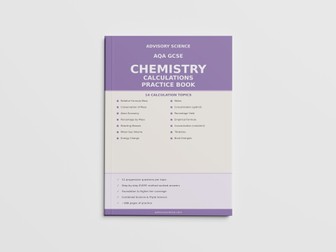
AQA GCSE Chem Calculation Practice Books Bundle | 14 Quantitative Chemistry Workbooks with AnswerQuick View
advisoryscience

AQA GCSE Chem Calculation Practice Books Bundle | 14 Quantitative Chemistry Workbooks with Answer

(0)
Quantitative chemistry is where marks go to die. Your students understand the concepts but fall apart when they hit the calculation questions. These 14 focused practice books fix that problem. Each workbook isolates a single calculation type so students build genuine fluency with one skill before moving on. No mixed-topic confusion, no half-practised techniques. Just solid, repeated practice with the exact calculation formats AQA uses in their exams. Topics included: Relative Formula Mass, Moles, Conservation of Mass, Concentration in g/dm3, Atom Economy, Percentage Yield, Percentage by Mass, Empirical Formula, Reacting Masses, Concentration in mol/dm3, Molar Gas Volume, Titrations, Energy Change, and Bond Energies. The heavy hitters are all here. Moles, titrations, empirical formulae, reacting masses. These are the topics that separate a grade 5 from a grade 7, and your students need more practice than a textbook double-page spread can offer. Each book comes with full worked answers, making them ideal for independent revision, homework, or after-school intervention sessions. Combined Science and Triple Chemistry topics are clearly separated so you always know which books to hand out. Created by a science curriculum specialist who has seen exactly where students lose marks on Paper 1 and Paper 2.
Area of Clear Zone Antibiotics - AQA GCSE Biology Practice BookQuick View
advisoryscience

Area of Clear Zone Antibiotics - AQA GCSE Biology Practice Book

(0)
Calculating the area of clear zones around antibiotic discs is a simple formula but students consistently lose marks on unit conversion and precision. This AQA GCSE Triple Biology workbook fixes that with 12 scaffolded questions using the EVERY method framework. The EVERY method breaks each calculation into clear steps: Equation, Values, Enter values into the equation, Rearrange if needed, Your units. Every question has a structured EVERY table for students to complete, building a consistent problem-solving habit. Questions get progressively harder: Q1-3 are straightforward, Q4-6 introduce unit conversions, and Q7-12 require rearranging the formula. What’s inside: 12 progressive questions on Area of Clear Zone (A = pi r squared) Structured EVERY method table on every question page Progressive difficulty: simple substitution, then unit conversions, then rearranging Self-assessment tracker with “What made me stuck?” reflection checklist Full worked answers for all 12 questions using the EVERY method steps AQA specification reference: 4.3 Infection and Response (Triple Biology only) Clear zone calculations appear in the antibiotics required practical. Students measure the diameter of the inhibition zone, halve it to find the radius, then calculate the area using pi r squared. They compare zones to determine which antibiotic is most effective. Common student mistakes this workbook addresses: using the diameter instead of the radius in the formula, forgetting to square the radius before multiplying by pi, not rounding pi appropriately, and confusing area with circumference. Suitable for AQA GCSE Biology (Triple only, not Combined Science). Works for both foundation and higher tier students.
Empirical Formula Calculations - AQA GCSE Chemistry Practice BookQuick View
advisoryscience

Empirical Formula Calculations - AQA GCSE Chemistry Practice Book

(0)
Empirical formula is a multi-step calculation that students rarely practise enough to get fluent. This AQA GCSE Triple Chemistry workbook breaks down every step with 12 scaffolded questions using the EVERY method framework. The EVERY method breaks each calculation into clear steps: Equation, Values, Enter values into the equation, Rearrange if needed, Your units. Every question has a structured EVERY table for students to complete, building a consistent problem-solving habit. Questions get progressively harder: Q1-3 are straightforward, Q4-6 introduce unit conversions, and Q7-12 require rearranging the formula. What’s inside: 12 progressive questions on Empirical Formula (divide masses or percentages by Ar, then simplify) Structured EVERY method table on every question page Progressive difficulty: simple substitution, then unit conversions, then rearranging Self-assessment tracker with “What made me stuck?” reflection checklist Full worked answers for all 12 questions using the EVERY method steps AQA specification reference: 5.3 Quantitative Chemistry (Triple Chemistry only) Empirical formula calculations require students to convert mass or percentage data into moles for each element, divide by the smallest number, and express the simplest whole-number ratio as a formula. Some questions also ask students to find the molecular formula from the empirical formula and Mr. Common student mistakes this workbook addresses: not dividing by Ar before finding the ratio, rounding ratios prematurely (1.5 should become 3 not 2), forgetting to divide all values by the smallest, and confusing empirical formula with molecular formula. Suitable for AQA GCSE Chemistry (Triple only, not Combined Science). Works for both foundation and higher tier students.
Conservation of Mass Calculations - AQA GCSE Chemistry Practice BookQuick View
advisoryscience

Conservation of Mass Calculations - AQA GCSE Chemistry Practice Book

(0)
Conservation of mass sounds simple but exam questions on gas loss and precipitate formation catch students out every year. This AQA GCSE Chemistry workbook builds understanding with 12 scaffolded questions using the EVERY method framework. The EVERY method breaks each calculation into clear steps: Equation, Values, Enter values into the equation, Rearrange if needed, Your units. Every question has a structured EVERY table for students to complete, building a consistent problem-solving habit. Questions get progressively harder: Q1-3 are straightforward, Q4-6 introduce unit conversions, and Q7-12 require rearranging the formula. What’s inside: 12 progressive questions on Conservation of Mass (total mass of reactants = total mass of products) Structured EVERY method table on every question page Progressive difficulty: simple substitution, then unit conversions, then rearranging Self-assessment tracker with “What made me stuck?” reflection checklist Full worked answers for all 12 questions using the EVERY method steps AQA specification reference: 5.3 Quantitative Chemistry (Combined Science and Triple Chemistry) Conservation of mass calculations require students to use balanced equations and given masses to find unknown masses. Questions include straightforward addition, reactions where gas escapes (apparent mass loss), and precipitate formation where the system appears to gain mass. Common student mistakes this workbook addresses: thinking mass is lost when a gas escapes (rather than understanding the gas still has mass), not using the balanced equation ratios, confusing conservation of mass with conservation of atoms, and forgetting to subtract to find the unknown. Suitable for AQA GCSE Combined Science and Chemistry (Triple). Works for both foundation and higher tier students.
Concentration in mol/dm3 - AQA GCSE Chemistry Practice BookQuick View
advisoryscience

Concentration in mol/dm3 - AQA GCSE Chemistry Practice Book

(0)
Molar concentration adds another layer to the concentration calculation students already know, and the jump from g/dm3 to mol/dm3 catches many off guard. This AQA GCSE Triple Chemistry workbook builds fluency with 12 scaffolded questions using the EVERY method framework. The EVERY method breaks each calculation into clear steps: Equation, Values, Enter values into the equation, Rearrange if needed, Your units. Every question has a structured EVERY table for students to complete, building a consistent problem-solving habit. Questions get progressively harder: Q1-3 are straightforward, Q4-6 introduce unit conversions, and Q7-12 require rearranging the formula. What’s inside: 12 progressive questions on Concentration in mol/dm3 (concentration = moles / volume) Structured EVERY method table on every question page Progressive difficulty: simple substitution, then unit conversions, then rearranging Self-assessment tracker with “What made me stuck?” reflection checklist Full worked answers for all 12 questions using the EVERY method steps AQA specification reference: 5.3 Quantitative Chemistry (Triple Chemistry only) Molar concentration calculations require students to calculate moles of solute (often from mass and Mr), then divide by volume in dm3 to find concentration. Students also convert between g/dm3 and mol/dm3 using Mr as the conversion factor. Common student mistakes this workbook addresses: using volume in cm3 without converting to dm3, confusing the g/dm3 formula with the mol/dm3 formula, not calculating moles before dividing, and mixing up the conversion direction between the two concentration units. Suitable for AQA GCSE Chemistry (Triple only, not Combined Science). Works for both foundation and higher tier students.
Percentage Yield Calculations - AQA GCSE Chemistry Practice BookQuick View
advisoryscience

Percentage Yield Calculations - AQA GCSE Chemistry Practice Book

(0)
Students know the percentage yield formula but consistently lose marks by confusing actual yield with theoretical yield. This AQA GCSE Chemistry workbook builds exam-ready confidence with 12 scaffolded questions using the EVERY method framework. The EVERY method breaks each calculation into clear steps: Equation, Values, Enter values into the equation, Rearrange if needed, Your units. Every question has a structured EVERY table for students to complete, building a consistent problem-solving habit. Questions get progressively harder: Q1-3 are straightforward, Q4-6 introduce unit conversions, and Q7-12 require rearranging the formula. What’s inside: 12 progressive questions on Percentage Yield (percentage yield = actual yield / theoretical yield x 100) Structured EVERY method table on every question page Progressive difficulty: simple substitution, then unit conversions, then rearranging Self-assessment tracker with “What made me stuck?” reflection checklist Full worked answers for all 12 questions using the EVERY method steps AQA specification reference: 5.3 Quantitative Chemistry (Combined Science and Triple Chemistry, higher tier) Percentage yield questions require students to compare the mass of product actually obtained with the maximum mass predicted by the balanced equation. Students explain why yield is always less than 100% and link this to incomplete reactions, side reactions, and practical losses. Common student mistakes this workbook addresses: putting theoretical yield on top instead of actual yield, not calculating the theoretical yield from the balanced equation first, giving a yield over 100% without questioning it, and confusing percentage yield with atom economy. Suitable for AQA GCSE Combined Science and Chemistry (Triple), higher tier.
Percentage by Mass of Elements - AQA GCSE Chemistry Practice BookQuick View
advisoryscience

Percentage by Mass of Elements - AQA GCSE Chemistry Practice Book

(0)
Percentage by mass combines Ar, Mr, and percentage calculations into one multi-step problem. This AQA GCSE Triple Chemistry workbook builds systematic working with 12 scaffolded questions using the EVERY method framework. The EVERY method breaks each calculation into clear steps: Equation, Values, Enter values into the equation, Rearrange if needed, Your units. Every question has a structured EVERY table for students to complete, building a consistent problem-solving habit. Questions get progressively harder: Q1-3 are straightforward, Q4-6 introduce unit conversions, and Q7-12 require rearranging the formula. What’s inside: 12 progressive questions on Percentage by Mass (% mass = total Ar of element / Mr of compound x 100) Structured EVERY method table on every question page Progressive difficulty: simple substitution, then unit conversions, then rearranging Self-assessment tracker with “What made me stuck?” reflection checklist Full worked answers for all 12 questions using the EVERY method steps AQA specification reference: 5.3 Quantitative Chemistry (Triple Chemistry only) Percentage by mass calculations require students to find the total mass contribution of one element within a compound and express it as a percentage of Mr. Questions progress from simple compounds to fertilisers and minerals with more complex formulae. Common student mistakes this workbook addresses: using Ar instead of total Ar (forgetting to multiply by the number of atoms), calculating Mr incorrectly before starting the percentage, dividing Mr by Ar instead of Ar by Mr, and not multiplying by 100 at the end. Suitable for AQA GCSE Chemistry (Triple only, not Combined Science). Works for both foundation and higher tier students.
Molar Gas Volume Calculations - AQA GCSE Chemistry Practice BookQuick View
advisoryscience

Molar Gas Volume Calculations - AQA GCSE Chemistry Practice Book

(0)
The 24 dm3 rule is easy to remember but students struggle to apply it in multi-step gas calculations. This AQA GCSE Triple Chemistry workbook builds fluency with 12 scaffolded questions using the EVERY method framework. The EVERY method breaks each calculation into clear steps: Equation, Values, Enter values into the equation, Rearrange if needed, Your units. Every question has a structured EVERY table for students to complete, building a consistent problem-solving habit. Questions get progressively harder: Q1-3 are straightforward, Q4-6 introduce unit conversions, and Q7-12 require rearranging the formula. What’s inside: 12 progressive questions on Molar Gas Volume (volume = moles x 24 dm3 at RTP) Structured EVERY method table on every question page Progressive difficulty: simple substitution, then unit conversions, then rearranging Self-assessment tracker with “What made me stuck?” reflection checklist Full worked answers for all 12 questions using the EVERY method steps AQA specification reference: 5.3 Quantitative Chemistry (Triple Chemistry only, higher tier) Molar gas volume calculations use the fact that one mole of any gas occupies 24 dm3 at room temperature and pressure. Students calculate the volume of gas produced in a reaction, or work backwards from volume to moles, often as part of a multi-step reacting mass calculation. Common student mistakes this workbook addresses: using 24000 cm3 when the question gives volume in dm3 (or vice versa), forgetting that the 24 dm3 rule only applies at RTP, not calculating moles of gas from the balanced equation first, and confusing molar gas volume with molar mass. Suitable for AQA GCSE Chemistry (Triple only, higher tier).
Moles Calculations - AQA GCSE Chemistry Practice BookQuick View
advisoryscience

Moles Calculations - AQA GCSE Chemistry Practice Book

(0)
The moles formula underpins everything in quantitative chemistry, and students who are shaky on it will struggle with every calculation that follows. This AQA GCSE Chemistry workbook builds rock-solid fluency with 12 scaffolded questions using the EVERY method framework. The EVERY method breaks each calculation into clear steps: Equation, Values, Enter values into the equation, Rearrange if needed, Your units. Every question has a structured EVERY table for students to complete, building a consistent problem-solving habit. Questions get progressively harder: Q1-3 are straightforward, Q4-6 introduce unit conversions, and Q7-12 require rearranging the formula. What’s inside: 12 progressive questions on Moles (moles = mass / Mr) Structured EVERY method table on every question page Progressive difficulty: simple substitution, then unit conversions, then rearranging Self-assessment tracker with “What made me stuck?” reflection checklist Full worked answers for all 12 questions using the EVERY method steps AQA specification reference: 5.3 Quantitative Chemistry (Combined Science and Triple Chemistry) Moles calculations require students to use mass and relative formula mass to find the number of moles, then rearrange to find mass or Mr. This formula is the starting point for concentration, reacting masses, gas volume, and titration calculations. Common student mistakes this workbook addresses: dividing the wrong way round (Mr / mass instead of mass / Mr), not calculating Mr before substituting, using grams when the question gives kilograms, and leaving the answer without “mol” as the unit. Suitable for AQA GCSE Combined Science and Chemistry (Triple). Works for both foundation and higher tier students.
Efficiency Calculations - AQA GCSE Physics Practice BookQuick View
advisoryscience

Efficiency Calculations - AQA GCSE Physics Practice Book

(0)
Efficiency questions come in two forms (decimal and percentage) and use two different versions of the formula (energy and power), which means students need to be comfortable switching between all four combinations. This AQA GCSE Physics workbook covers them all with 12 scaffolded questions using the EVERY method framework. The EVERY method breaks each calculation into clear steps: Equation, Values, Enter values into the equation, Rearrange if needed, Your units. Every question has a structured EVERY table for students to complete, building a consistent problem-solving habit. Questions get progressively harder: Q1-3 are straightforward, Q4-6 introduce unit conversions, and Q7-12 require rearranging the formula. What’s inside: 12 progressive questions on Efficiency (efficiency = useful output / total input, using energy or power) Structured EVERY method table on every question page Progressive difficulty: simple substitution, then unit conversions, then rearranging Self-assessment tracker with “What made me stuck?” reflection checklist Full worked answers for all 12 questions using the EVERY method steps AQA specification reference: 6.1 Energy (Combined Science and Triple Physics) Efficiency calculations require students to identify the useful energy output (or useful power output) and the total energy input (or total power input), then divide. Some questions ask for a decimal, others ask for a percentage. Real-world contexts include light bulbs, motors, and power stations. Common student mistakes this workbook addresses: putting input on top instead of output, giving efficiency greater than 1 (or greater than 100%) without questioning it, not converting between decimal and percentage forms, and confusing wasted energy with useful energy. Suitable for AQA GCSE Combined Science and Physics (Triple). Works for both foundation and higher tier students.
Electrical Power Calculations - AQA GCSE Physics Practice BookQuick View
advisoryscience

Electrical Power Calculations - AQA GCSE Physics Practice Book

(0)
Electrical power comes in two forms on the AQA paper (P = IV and P = I2R) and students need to pick the right one for each question. This AQA GCSE Physics workbook develops that judgement with 12 scaffolded questions using the EVERY method framework. The EVERY method breaks each calculation into clear steps: Equation, Values, Enter values into the equation, Rearrange if needed, Your units. Every question has a structured EVERY table for students to complete, building a consistent problem-solving habit. Questions get progressively harder: Q1-3 are straightforward, Q4-6 introduce unit conversions, and Q7-12 require rearranging the formula. What’s inside: 12 progressive questions on Electrical Power (P = IV and P = I2R) Structured EVERY method table on every question page Progressive difficulty: simple substitution, then unit conversions, then rearranging Self-assessment tracker with “What made me stuck?” reflection checklist Full worked answers for all 12 questions using the EVERY method steps AQA specification reference: 6.2 Electricity (Combined Science and Triple Physics) Electrical power calculations link power, current, voltage, and resistance. Students calculate the power of domestic appliances, fuse ratings, and circuit components. Some questions require choosing which formula to use based on the data given. Common student mistakes this workbook addresses: using P = IV when resistance is given (P = I2R is needed), forgetting to square the current in P = I2R, confusing power (watts) with energy (joules), and not converting milliamps to amps. Suitable for AQA GCSE Combined Science and Physics (Triple). Works for both foundation and higher tier students.
Energy Transferred by Appliances - AQA GCSE Physics Practice BookQuick View
advisoryscience

Energy Transferred by Appliances - AQA GCSE Physics Practice Book

(0)
Energy transferred by electrical appliances links the electricity topic to the energy topic, and students need to be comfortable with E = Pt, E = QV, and kWh calculations. This AQA GCSE Physics workbook covers all three with 12 scaffolded questions using the EVERY method framework. The EVERY method breaks each calculation into clear steps: Equation, Values, Enter values into the equation, Rearrange if needed, Your units. Every question has a structured EVERY table for students to complete, building a consistent problem-solving habit. Questions get progressively harder: Q1-3 are straightforward, Q4-6 introduce unit conversions, and Q7-12 require rearranging the formula. What’s inside: 12 progressive questions on Energy Transferred (E = Pt, E = QV, and kWh) Structured EVERY method table on every question page Progressive difficulty: simple substitution, then unit conversions, then rearranging Self-assessment tracker with “What made me stuck?” reflection checklist Full worked answers for all 12 questions using the EVERY method steps AQA specification reference: 6.2 Electricity (Combined Science and Triple Physics) Energy transferred calculations require students to work out the total energy used by appliances. Questions include calculating electricity bills using kilowatt-hours, converting between joules and kWh, and calculating energy from charge and voltage. Common student mistakes this workbook addresses: confusing kW with kWh (power versus energy), using time in hours with the E = Pt formula (which needs seconds), not converting watts to kilowatts for kWh calculations, and mixing up E = Pt with E = QV. Suitable for AQA GCSE Combined Science and Physics (Triple). Works for both foundation and higher tier students.
Gravitational Potential Energy - AQA GCSE Physics Practice BookQuick View
advisoryscience

Gravitational Potential Energy - AQA GCSE Physics Practice Book

(0)
GPE = mgh is a straightforward formula but exam questions set it in unfamiliar contexts that throw students off. This AQA GCSE Physics workbook builds adaptable skills with 12 scaffolded questions using the EVERY method framework. The EVERY method breaks each calculation into clear steps: Equation, Values, Enter values into the equation, Rearrange if needed, Your units. Every question has a structured EVERY table for students to complete, building a consistent problem-solving habit. Questions get progressively harder: Q1-3 are straightforward, Q4-6 introduce unit conversions, and Q7-12 require rearranging the formula. What’s inside: 12 progressive questions on Gravitational Potential Energy (GPE = m x g x h) Structured EVERY method table on every question page Progressive difficulty: simple substitution, then unit conversions, then rearranging Self-assessment tracker with “What made me stuck?” reflection checklist Full worked answers for all 12 questions using the EVERY method steps AQA specification reference: 6.1 Energy (Combined Science and Triple Physics) GPE calculations require students to multiply mass, gravitational field strength, and height. Contexts include roller coasters, lifts, falling objects, and ski slopes. Questions also link GPE to KE through conservation of energy. Common student mistakes this workbook addresses: using weight instead of mass (then multiplying by g again), confusing height with distance travelled along a slope, using g = 10 when the question states g = 9.8, and not converting units (e.g. grams to kilograms). Suitable for AQA GCSE Combined Science and Physics (Triple). Works for both foundation and higher tier students.
Evolution and Inheritance Y6 WorkbookQuick View
advisoryscience

Evolution and Inheritance Y6 Workbook

(0)
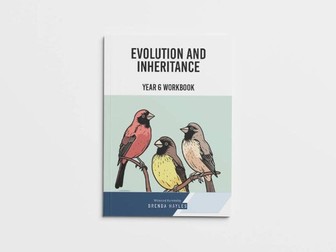
Designed for UK Year 6 (equivalent to US Grade 6 / Grade 7), this evolution inheritance Year 6 wokbook primary is ideal for classroom use, revision, and homeschool science. Science made simple for every learner. Topics covered: Variation: genetic and environmental variation in living things KS2 Natural Selection: adaptation primary science and how populations change Year 6 Fossils: Mary Anning, fossil formation, and what they reveal about evolution KS2 Charles Darwin and Alfred Russel Wallace: the theory of natural selection KS2 More than just worksheets — a complete fossils and evolution Year 6 KS2 science booklet with diagrams and vocabulary. Evolution and inheritance primary science made simple. KS2 science made easy. This is a digital product. No physical item will be posted. How you’ll receive it: After checkout, you’ll get instant access to download the file(s). Printing: You can print at home or use on a tablet/laptop. For best results, print at 100% (actual size). Licence / permitted use: Your purchase is for personal use in one household. You may print copies for your own child/children and keep them for future revision. Not permitted: You may not share, resell, redistribute, upload, or reproduce these files (in whole or in part) for others, including on social media, websites, school drives, WhatsApp groups, or email lists. Support: If you have any issues downloading, send a message and I’ll help.
Light Y6 WorkbookQuick View
advisoryscience

Light Y6 Workbook

(0)
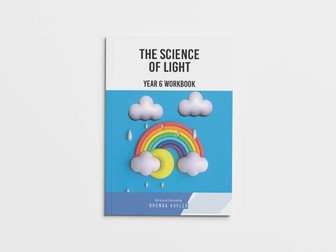
Designed for UK Year 6 (equivalent to US Grade 6 / Grade 7), this KS2 science Year 6 light booklet is ideal for classroom use, revision, and homeschool science. Science made simple for every learner. Topics covered: How Light Travels: rays, straight-line travel, and light and shadows Year 6 Reflection: mirrors, periscopes Year 6, and real-world applications Opaque, Translucent and Transparent: comparing materials KS2 Rainbows and Colour: the visible spectrum and light reflection colour KS2 More than just worksheets — a complete light Year 6 booklet KS2 with diagrams, activities, and vocabulary. KS2 science Year 6 light made simple. KS2 science made easy. This is a digital product. No physical item will be posted. How you’ll receive it: After checkout, you’ll get instant access to download the file(s). Printing: You can print at home or use on a tablet/laptop. For best results, print at 100% (actual size). Licence / permitted use: Your purchase is for personal use in one household. You may print copies for your own child/children and keep them for future revision. Not permitted: You may not share, resell, redistribute, upload, or reproduce these files (in whole or in part) for others, including on social media, websites, school drives, WhatsApp groups, or email lists. Support: If you have any issues downloading, send a message and I’ll help.
Atom Economy Calculations - AQA GCSE Chemistry Practice BookQuick View
advisoryscience

Atom Economy Calculations - AQA GCSE Chemistry Practice Book

(0)
Atom economy questions combine Mr calculations with percentage calculations, and students often lose marks at both stages. This AQA GCSE Chemistry workbook builds fluency with 12 scaffolded questions using the EVERY method framework. The EVERY method breaks each calculation into clear steps: Equation, Values, Enter values into the equation, Rearrange if needed, Your units. Every question has a structured EVERY table for students to complete, building a consistent problem-solving habit. Questions get progressively harder: Q1-3 are straightforward, Q4-6 introduce unit conversions, and Q7-12 require rearranging the formula. What’s inside: 12 progressive questions on Atom Economy (atom economy = Mr of desired product / total Mr of all products x 100) Structured EVERY method table on every question page Progressive difficulty: simple substitution, then unit conversions, then rearranging Self-assessment tracker with “What made me stuck?” reflection checklist Full worked answers for all 12 questions using the EVERY method steps AQA specification reference: 5.3 Quantitative Chemistry (Combined Science and Triple Chemistry, higher tier) Atom economy calculations require students to identify the desired product and waste products from a balanced equation, calculate the Mr of each, and express the desired product as a percentage of the total. This links to green chemistry and industrial processes. Common student mistakes this workbook addresses: dividing by Mr of reactants instead of Mr of all products, including only one product when there are several, not balancing the equation before calculating Mr, and confusing atom economy with percentage yield. Suitable for AQA GCSE Combined Science and Chemistry (Triple), higher tier. Also useful for higher-attaining foundation students approaching the grade 5 boundary.