 Quick View
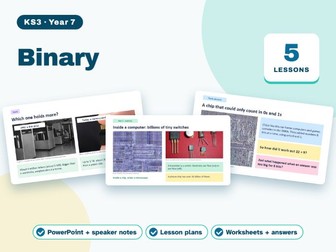
KS3 Binary: Year 7 Computing Unit (5 Lessons)
Why computers use two states, and the core conversions pupils meet again at GCSE: denary to binary, binary to denary, addition and storage units.
5 complete 55-minute lessons for Year 7, ready to teach.
The lessons
Why binary? On/off, switches and bits.
Denary to 8-bit binary with the biggest-first method.
Binary to denary.
Binary addition, and spotting overflow.
Bits, nibbles, bytes and storage units, with a conversion and addition test.
What is included for every lesson
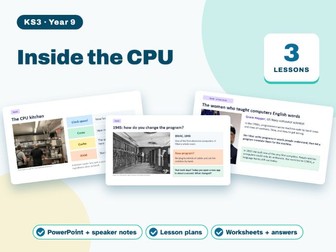
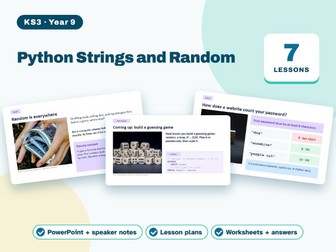
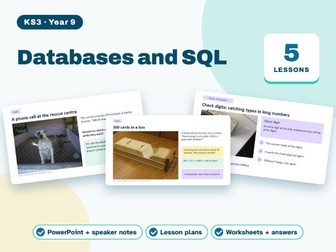
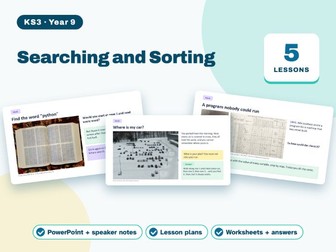
A PowerPoint deck of 26 to 33 slides with speaker notes on every slide and click animations for reveals
A 55-minute lesson plan with timings
A printable worksheet
An answer sheet
How it is taught
A Do Now at the start of every lesson, to bring back earlier learning
Hinge questions to check understanding before pupils move on
Worked examples (I do, we do, you do), then pupil practice
Unplugged games and mini-whiteboard activities. Each lesson mixes unplugged activities with hands-on work.
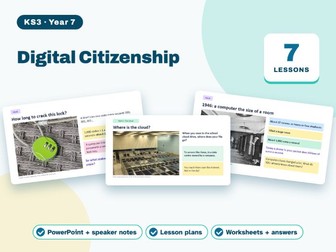
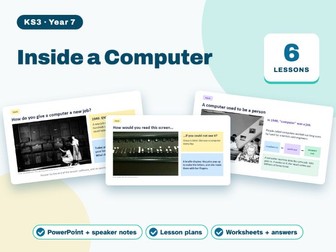
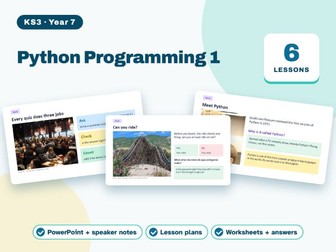
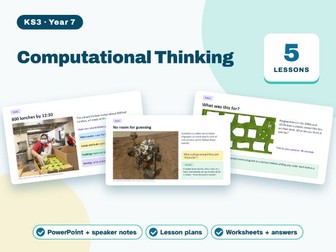
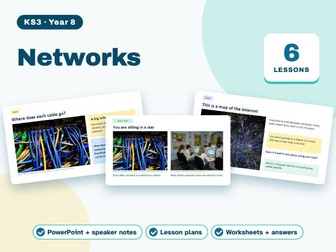
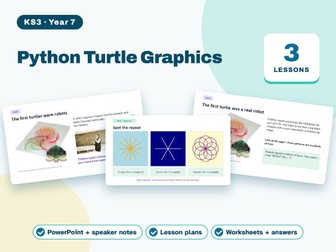
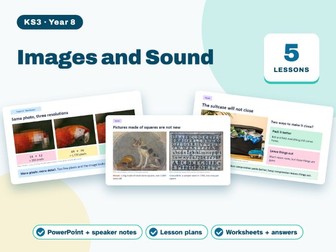
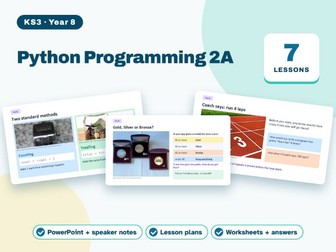
Real photos and clear diagrams, with the photo credit on each deck
A short exit ticket and a summary slide
Lesson 5 ends with a conversion and addition test, self-marked from a key.
Slides are editable PowerPoint (.pptx). Each lesson plan fills a full 55-minute lesson, minute by minute.
British English throughout. Part of a complete KS3 Computer Science course for Years 7 to 9.