This PowerPoint resource is designed to support Year 11 students revising for the Pearson Edexcel International GCSE English Literature Paper 1 (4ET1). It covers Sections A, B and C of the paper and walks students through each section with a focus on exam technique as well as subject knowledge.
Section A covers the unseen poetry question, guiding students through how to approach an unfamiliar poem and analyse language, form and structure effectively.
Section B addresses both anthology poetry comparison questions. For each question, students are given an overview of the poems, a step-by-step essay plan, a model introduction with annotations explaining what makes it effective, key quotations with analysis, and relevant contextual points to strengthen their responses.
Section C focuses on Of Mice and Men and covers both set questions. Each question includes a character or theme overview, a structured essay plan, a model introduction, a bank of key quotations with analytical commentary, and a contextual links slide covering the historical and social background students need for AO4.
Throughout, the resource emphasises the difference between description and analysis, and models the kind of writing that reaches the higher levels of the mark scheme. It is suitable for use as a whole-class walkthrough as a WALK and TALK, for independent revision, or as a teacher reference when planning exam preparation lessons.
This introductory lesson on Arthur Miller’s classic play, A View from the Bridge, is designed for the Pearson Edexcel IGCSE English Literature curriculum. It provides a comprehensive foundation for Paper 2, Section A (Modern Drama).
Lesson Overview
Students will dive into the genre of tragedy, exploring how Miller utilizes a modern setting to examine timeless dramatic concepts. The lesson guides learners through key vocabulary, such as protagonist, flaw, and betrayal, while establishing the necessary historical framework for the play.
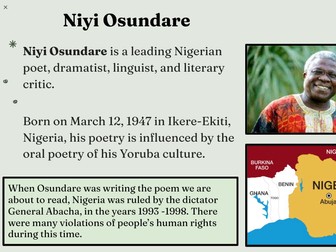
This engaging and thought-provoking lesson introduces students to Not My Business by Niyi Osundare, exploring themes of bystander behaviour, injustice, power, and moral responsibility. Designed for Year 9, the resource builds strong links between poetry, real-world ethics, and personal reflection.
The lesson begins with relatable modern-day scenarios (bullying, theft, shoplifting, knife possession) to encourage discussion around “turning a blind eye” vs taking action, supported by clear sentence starters to scaffold student responses. Context is carefully embedded, introducing Osundare’s background and the political climate of Nigeria under military dictatorship, helping students understand the poem’s message and significance.
This high-quality resource pack focuses on Alice Munro’s autobiographical short story, ‘Night’.
What’s Included:
Comprehensive Lesson Presentation (2 lessons): A step-by-step guide to the story’s context, narrative voice, and key events. Includes retrieval quizzes, independent reading tasks, and discussion prompts.
“Quote Stations” Activity: A collaborative, movement-based learning resource. Six distinct stations focus on key motifs like “The Mysterious Growth” and “Psychological Decline,” complete with evidence, technical terminology (e.g., Anadiplosis, Pathetic Fallacy), and deep-thinking questions.
Key Themes & Symbols Revision Guide: A detailed breakdown of the story’s core elements, including the symbolism of snowstorms, the turkey egg, and the contrast between generations.
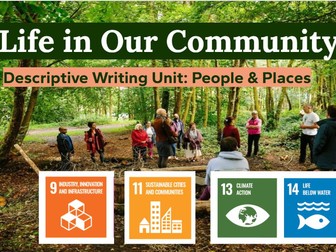
A comprehensive scheme of work guiding students from the foundational stages of descriptive writing through to exploring pathetic fallacy, setting, mood, and characterisation. perfect for Year 7 or 8 classes looking to polish their creative writing skills.
What’s Included:
Interactive Lesson Presentation: A visually engaging slide deck that guides students through the literal and metaphorical meanings of the poem. Includes starter activities on the symbolism of tattoos, guided annotations, and deep-dive discussions on Kooser’s use of imagery.
Structured P.E.A. Grids: Scaffolding worksheets that help students deconstruct the poem’s key quotes. These grids provide a clear framework for analysing past vs. present imagery, physical strength vs. old age, and the poem’s emotional “blue” ending.
Basics of Essay Writing – Gap-Fill Exercise: A unique, classroom-tested “model essay” template. This resource allows students to practice using academic signposting and structural links while deciding on their own analytical interpretations for the gaps.
Thematic Focus: The lesson explores complex themes of the passing of time, masculinity, fragility, and the “stories” we carry on our skin.
This lesson introduces students to the advanced technique of building mood and atmosphere within a narrative setting. Students will learn to move beyond physical description to convey intangible feelings like tension, comfort, or anxiety through deliberate word choice, lighting, and weather. They will practice distinguishing between a setting’s literal elements and its emotional atmosphere to create more immersive and evocative writing.
This lesson prepares students for their formative assessment by applying all previously learned descriptive techniques. Students will analyse a model response to identify figurative language, sensory imagery, and sentence variety, then apply these skills in their own writing. The final task focuses on crafting a purely descriptive piece of a setting, using a structured framework to build atmosphere without relying on character action.
This lesson introduces students to the core methods of characterisation: physical appearance, dialogue, and behaviour. Students will learn to identify these techniques in a model text to understand how authors build believable characters. Through close analysis, they will begin to apply these strategies to their own descriptive writing.
This lesson introduces students to the essential elements of crafting a vivid setting in narrative writing. Students will build on prior learning to use sensory details, specific imagery, and figurative language like pathetic fallacy to bring a location to life. Through analysis of model texts and targeted writing exercises, they will practise constructing immersive and atmospheric settings.
This two lesson resource introduces students to the power of figurative language, including simile, metaphor, and personification. Through model poetry texts and creative exercises, students learn how to use these devices to create striking imagery and deepen the impact of their writing.
This lesson introduces students to the specific literary device of pathetic fallacy, where environment and weather reflect human emotion. Students will learn to identify its use in classic texts and film to build mood and express themes. Through analysis and creative application, they will practice weaving this technique into their own descriptive writing to enhance atmosphere.
A powerful and engaging assembly that explores the core values that build strong character and a positive school community. Dive into the importance of Honesty, Fairness, and Responsibility— not just as words, but as actionable principles that guide our choices every day.
This lesson introduces students to the core principle of descriptive writing: using sensory details. Through guided exercises, students learn how to incorporate sight, sound, smell, taste, and touch to create vivid imagery for the reader.
In this lesson, students will master the art of rhetorical analysis by learning to identify ethos, pathos, and logos in real-world media. The lesson empowers them to deconstruct persuasive messages and understand the mechanics of influence.
This lesson is the ideal hook for any unit on oracy, speech writing, or rhetoric. It explores the history of public speaking from Ancient Greece to the digital age, using JFK’s iconic moon speech to demonstrate timeless persuasive techniques. A ready-to-teach resource with powerpoint, video, and accompanying documents,
 Quick View

 Quick View
 Quick View
 Quick View
 Quick View
 Quick View
 Quick View
 Quick View
![Descriptive Writing Lesson 6-7 [Mood & Atmosphere]](https://l.imgt.es/resource-preview-imgs/5b3fab84-55a4-4542-a919-d85f6a6eda92%2FScreenshot20250822at101337.crop_885x664_0%2C0.preview.png?profile=res-img-med-legacy-v2) Quick View
Quick View![Descriptive Writing: Lesson 12 [BONUS Designing your Mythical Creature]](https://l.imgt.es/resource-preview-imgs/ac48adc4-f540-42ab-b180-e1e5565f2b5a%2FScreenshot20250822at104346.crop_622x466_37%2C0.preview.png?profile=res-img-med-legacy-v2) Quick View
Quick View![Descriptive Writing: Lesson 11 [Formative Assessment]](https://l.imgt.es/resource-preview-imgs/b6e6e03a-4aca-4156-90e0-a5060d427eff%2FScreenshot20250822at103606.crop_610x457_5%2C0.preview.png?profile=res-img-med-legacy-v2) Quick View
Quick View![Descriptive Writing: Lesson 10 [Characterisation]](https://l.imgt.es/resource-preview-imgs/7e77147d-20dd-4d47-ae05-7959a32d8a43%2FScreenshot20250822at102626.crop_640x480_2%2C0.preview.png?profile=res-img-med-legacy-v2) Quick View
Quick View![Descriptive Writing Lesson 4 & 5 [Setting]](https://l.imgt.es/resource-preview-imgs/b81b8698-c724-453a-85e2-29b2b8a4766b%2FScreenshot20250822at100408.crop_594x446_111%2C0.preview.png?profile=res-img-med-legacy-v2) Quick View
Quick View![Descriptive Writing Lesson 2 & 3 [Figurative Writing]](https://l.imgt.es/resource-preview-imgs/1bff2891-9664-4974-a585-9f285f0dbd99%2FScreenshot20250821at175157.crop_589x442_0%2C0.preview.png?profile=res-img-med-legacy-v2) Quick View
Quick View![Descriptive Writing Lesson 8-9 [Pathetic Fallacy]](https://l.imgt.es/resource-preview-imgs/fe55a55a-3eb1-475e-b9e9-8e8f2c08f8be%2FScreenshot20250822at101957.crop_609x457_94%2C0.preview.png?profile=res-img-med-legacy-v2) Quick View
Quick View Quick View
![Descriptive Writing Lesson 1 [Sensory Writing]](https://l.imgt.es/resource-preview-imgs/f5babd6d-3f2b-477e-a4dd-a54bb993ded6%2FScreenshot20250821at174603.crop_603x453_34%2C0.preview.png?profile=res-img-med-legacy-v2) Quick View
Quick View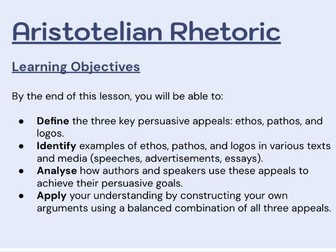 Quick View
 Quick View