Social Skills - PrimaryQuick View
creativeteaching_hart

Social Skills - Primary

(0)
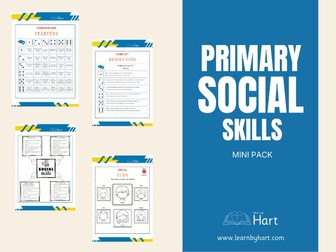
Description Support pupils in developing the essential social skills they need to thrive in the classroom and beyond with this practical primary resource pack. Covering conversation, conflict resolution, emotional recognition, and core social competencies, this pack gives teachers and support staff a versatile set of tools to explicitly teach and reinforce positive social behaviour at KS1 and KS2. Building social skills in the primary years is fundamental to pupils’ wellbeing, relationships, and readiness to learn. This pack brings together four complementary resources that address key areas of social development, from initiating conversations and reading emotional cues to navigating conflict and understanding what effective teamwork looks like. Each component is designed to be accessible and engaging for primary-aged pupils, and can be used flexibly across whole-class, small group, or individual intervention settings. What’s Included A 4 page PDF containing the following: Conversation Starters – A grid of 36 ready-to-use conversation prompt cards designed to help pupils initiate and sustain dialogue with peers. Conflict Resolution Cards – A set of six scenario-based discussion cards presenting realistic classroom conflicts alongside a guiding question for each. Social Skills Overview – A visual reference chart mapping key social competencies across four domains. This chart provides a clear framework for teachers and support staff to identify target skills for individual pupils or to use as a basis for structured social skills programmes. Social Cues Activity Sheet – A draw-and-match worksheet in which pupils complete the facial expressions of six characters to match a named emotion. How to Use Use the Social Skills Overview at the start of a programme or term to identify focus areas for your class or individual pupils, then draw on the other three components to practise those skills in context. The Conversation Starters work well as a warm-up activity during morning meetings or PSHE lessons, while the Conflict Resolution Cards are well suited to circle time, RSHE discussions, or small group intervention work. The Social Cues Activity Sheet can be used as a standalone lesson starter or as part of a broader emotions and wellbeing unit. Grade Levels: KS1 and KS2 File Format: PDF (printable and projectable) **Note: **This is a digital download only.
Philosophy for Children (P4C) – Primary Resource PackQuick View
creativeteaching_hart

Philosophy for Children (P4C) – Primary Resource Pack

(0)
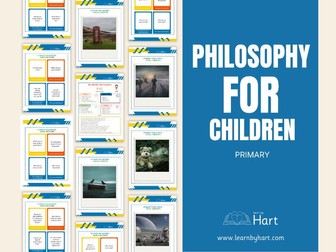
Bring rich, structured philosophical discussion into your primary classroom with this ready-to-use Philosophy for Children (P4C) resource pack. Designed to develop critical thinking and collaborative reasoning skills, this pack gives teachers everything they need to facilitate meaningful enquiry-based dialogue with pupils at KS1 and KS2. P4C is an evidence-informed approach that encourages children to think carefully, listen actively, and engage respectfully with big ideas and open-ended questions. What’s Included A 10 page PDF containing the following: P4C Sentence Starters – A structured reference sheet organising dialogue prompts into four thinking categories: Caring, Collaborative, Creative, and Critical. P4C Discussion Rules – A clear, pupil-friendly set of ten ground rules for philosophical enquiry, covering active listening, respectful disagreement, turn-taking, and the use of “I” statements. Primary Philosophy Question Cards – A set of 16 discussion question cards organised across four philosophical themes Primary Philosophy Visual Prompts – A collection of five thought-provoking photographic and illustrated images designed to spark philosophical discussion without the need for text. How to Use Use the sentence starters and discussion rules together at the start of the year to establish your P4C community of enquiry, then introduce the question cards and visual prompts as stimuli for individual sessions. The question cards can be selected by the teacher to match a current theme or PSHE topic, or offered to pupils as a choice to encourage ownership of the enquiry. Visual prompts work especially well as a low-barrier entry point for KS1 classes or mixed-ability groups. Components can be used individually as standalone lesson starters or combined to run a complete P4C session. Grade Levels: KS1 and KS2 File Format: PDF (printable and projectable) Note: This is a digital download only.
Stroop Test – Cognitive Control & Working Memory AssessmentQuick View
creativeteaching_hart

Stroop Test – Cognitive Control & Working Memory Assessment

(0)
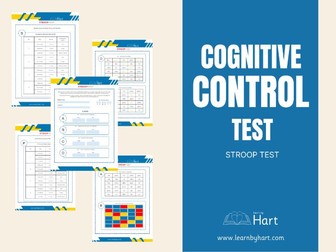
Stroop Test Assess and develop cognitive control, working memory, and mental flexibility with this ready-to-use Stroop Test assessment tool. Designed for classroom intervention, and learning support settings, this resource gives teachers and SENCOs a structured, evidence-based way to observe and measure how students manage competing cognitive demands. What’s Inside A 5 page PDF containing the following: Recording & Results Sheet — A clean, structured sheet for capturing student name, assessor, and date of assessment alongside scores for all four task sets. Each set has dedicated fields for errors and time, making data collection straightforward during live administration. Set A – Read the Words (Non-Conflicting) — Students read colour words printed in plain black text, providing a baseline measure of reading speed and accuracy without any conflicting visual information. This establishes a cognitive baseline before interference is introduced. Set B – Name the Ink Colours (Non-Conflicting) — Students name the colour of plain colour blocks, again without conflicting information. This second baseline task isolates colour-naming speed independently of word reading. Set C – Read the Words (Conflicting) — Students read colour words that are printed in a mismatching ink colour, introducing cognitive interference. This begins to reveal the degree to which automatic word-reading competes with task demands. Set D – Name the Ink Colours (Conflicting) — The most cognitively demanding task, requiring students to name the ink colour of words whose meaning conflicts with that colour. Performance on this set is the core measure of cognitive control and inhibition. Interpretation Guides (Primary & Secondary) — Two age-specific scoring tables provide clear performance benchmarks across all four sets, categorising results as Good, Average, or Needs Improvement based on both time and error count. The Primary guide covers ages 6–11 and the Secondary guide covers ages 12–18. How to Use Administer the test individually or in small groups as part of a cognitive assessment, SEN review, or learning support session. Use Sets A and B first to establish baseline performance before moving to the conflicting sets, then apply the appropriate interpretation guide to contextualise results. Individual components can also be used in isolation — for example, Sets C and D alone make an effective focused attention activity during intervention sessions or at the start of a unit on metacognition or self-regulation. Grade Levels: Primary and Secondary (Ages 6–18) File Format: PDF (printable and projectable) **Note: ** This is a digital download only.
Build the Team - 5 x Team building activities!!Quick View
creativeteaching_hart

Build the Team - 5 x Team building activities!!

(0)
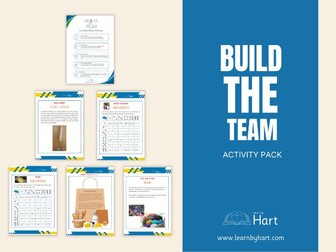
Description Bring energy, laughter, and genuine teamwork into your classroom with this ready-to-use team-building activity pack. Whether you’re settling in a new class, running a form period, or looking for engaging group activities, these five hands-on challenges require minimal materials and zero preparation stress. Each activity comes with a fully detailed instruction sheet so you can hand it straight to students or run it yourself with confidence. What’s Included A 6-page PDF (including cover/index) containing five complete team-building activities: Cup Stack Challenge Teams must stack plastic cups into a pyramid using only a rubber band and strings — no hands allowed! A fantastic problem-solving challenge that gets groups communicating and thinking creatively under pressure. Ball Drop Challenge Working in pairs, students use strings to guide a ping pong ball and drop it into a paper cup below. Simple to set up, surprisingly tricky to master — and guaranteed to get students talking and laughing together. Back to Back Drawing One student draws on another’s back; that student draws what they feel on the next person’s back, and so on down the line. The further it travels, the funnier it gets! A brilliant activity for communication, interpretation, and a lot of laughs. Includes a dice-roll image chart with 36 prompts. I Went to the Shops and Bought… A classic memory and recall game with a competitive twist. Students build a cumulative list in alphabetical order, with each person required to remember everything before them. Easily adapted by theme, complexity, or use of adjectives for differentiation. Team Drawing Teams roll dice to select a target image, then must draw it together using a single pen attached to multiple strings — one string per person. The closest drawing to the target wins! Encourages coordination, communication, and plenty of creative chaos. Includes the same 36-prompt dice-roll image chart. How to Use Run all five activities as a dedicated team-building day or use individual activities as icebreakers, lesson starters, or form time fillers. Most activities require only basic classroom supplies (string, rubber bands, cups, a pen and paper). Materials Needed (not included) Plastic cups Rubber bands and string Ping pong ball and paper cups Paper and pens A standard dice File Format: PDF (fully printable) Note: This is a digital download only.
Working Memory: Complete Cognitive Skills BundleQuick View
creativeteaching_hart

Working Memory: Complete Cognitive Skills Bundle

(0)
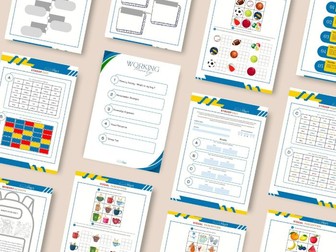
Boost working memory, learning strategies, and cognitive control with this comprehensive resource pack. Help your students develop stronger memory skills, organizational abilities, and cognitive flexibility using proven techniques and engaging activities. This complete bundle provides everything you need to teach memory enhancement strategies, visual perception, and cognitive control in your classroom. What’s Included A 21 page PDF (including cover/index) containing the following: Memory Activity: What’s in My Bag? An interactive game that builds working memory through active recall. Students observe objects, watch one disappear, then identify which item is missing. Easy to implement with everyday classroom materials, and perfectly scalable for different ability levels. Ten (10) Memorization Strategies Evidence-based techniques students can use immediately: Chunking Rhymes & Songs Repetition Visuals Acronyms Acrostics Story Method Journey Method Linked Words Senses Five (5) Knowledge Organizers Visual tools to reduce cognitive load and organize information: Mind Maps Flowcharts Venn Diagrams KWL Charts Timelines Visual Perception & Memory Exercises Four grid-based activities that strengthen visual memory and attention to detail. Students memorize image positions, then recreate grids from memory—perfect for building focus and observation skills. Stroop Test: Complete Assessment Tool A classic cognitive test that measures attention, inhibitory control, and processing speed. Includes four difficulty levels (A–D) and interpretation guides for both primary (ages 6–11) and secondary (ages 12–18) students. Track errors and response time to monitor cognitive development. How to Use Use as a complete unit on memory and learning strategies, or cherry-pick individual activities to support specific lessons. Perfect for morning meetings, intervention groups, or whole-class instruction. Grade Levels: KS2 and KS3 (activities differentiate for age groups) File Format: PDF (fully printable and projectable) Note: This is a digital download only
Classroom Observation checklist, FBA and LOTS MORE to Identify the Needs of StudentsQuick View
creativeteaching_hart

Classroom Observation checklist, FBA and LOTS MORE to Identify the Needs of Students

(0)
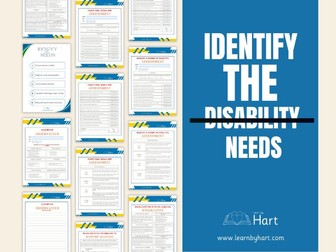
Identify the Needs – SEN Assessment & Support Toolkit for Educators Equip yourself with everything you need to identify, assess, and support students with diverse learning needs. This ready-to-use resource pack gives educators practical, structured tools to take a more informed and confident approach to inclusive education - from initial classroom observation right through to targeted intervention planning. What’s Inside A 14 page PDF (including cover/index) containing: Classroom Observations Checklist – A comprehensive observation tool covering six key areas: Academic Performance, Social Interaction, Communication Skills, Motor Skills, Attention and Focus, and Emotional and Behavioural Indicators. Use it to systematically identify barriers to learning and track student progress over time. Includes a dedicated Observation Notes page. Checklists for Specific Learning Disabilities – Detailed definition and indicator checklists for ten learning disabilities and disorders, including Dyslexia, Dysgraphia, Dyscalculia, ADHD, Auditory Processing Disorder, Visual Processing Disorder, Nonverbal Learning Disability, Executive Functioning Disorder, Dyspraxia, and Social Communication Disorder. Each checklist pairs a clear definition with observable classroom indicators. Functional Behaviour Assessment (FBA) – A structured 20-question rating scale to identify the frequency and severity of challenging behaviours. Uses a 1–5 scoring system with built-in score interpretation across four levels (Low, Moderate, High, and Very High) to guide appropriate next steps and intervention planning. Using Assistive Technology to Support Learning – A practical five-step guide to selecting and implementing assistive technology for students with SEN. Covers reading aids, writing aids, communication aids, math aids, and organisational tools, with guidance on assessing student needs, matching technology to those needs, training staff, and monitoring outcomes. Memory & Cognitive Function Assessment – A structured 20-question rating scale to assess working memory, recall, sequencing, and cognitive processing. Includes the same 1–5 scoring scale and tiered score interpretation framework to support the development of targeted IEP goals and intervention strategies. How to Use Ideal for classroom teachers, SENCOs, learning support staff, and school psychologists. Use the observation and assessment tools at the start of the year or when a concern is first identified, then refer to the disability checklists and assistive technology guide to inform your next steps and support plans. Grade Levels: Suitable for primary and secondary settings (adaptable across all year levels) File Format: PDF (printable and projectable) Note This is a digital download only.
Break the Ice ActivitiesQuick View
creativeteaching_hart

Break the Ice Activities

(0)
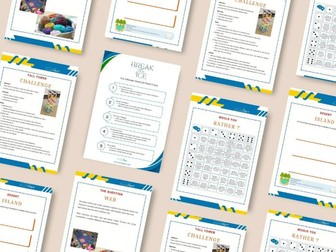
Break the Ice – Fun Icebreaker Activity Pack for Small Groups Help your students build confidence, connection, and communication skills from day one with this ready-to-use icebreaker activity pack. This comprehensive resource provides everything you need to run five (5) engaging group activities designed to break down barriers, spark conversation, and build a positive classroom community. What’s Inside A six (6) page PDF comprising of: One (1) instruction page and five (5) activities, each on a seperate page: Two Truths and a Lie – A classic conversation starter that builds listening and critical thinking skills. Students write two true statements and one false statement about themselves, then challenge their peers to spot the lie. Includes a student worksheet. Would You Rather? – A grid-based discussion game where students roll a dice to select thought-provoking questions and debate their answers. Sparks lively conversation and helps students learn more about each other in a fun, low-pressure way. Tall Tower Challenge – A hands-on team challenge where groups have 15 minutes to build the tallest free-standing structure using only clothes pegs and pop sticks. Promotes creativity, problem-solving, and collaboration. Full instruction sheet included. The Question Web – Students pass a ball of yarn while answering questions, weaving a physical web that visually represents shared connections and interests. Encourages active listening and builds a sense of community. Instruction sheet included. Desert Island – Each student selects three items they’d bring to a desert island and explains their reasoning. Sparks rich discussion around priorities, creativity, and critical thinking. Fill-in worksheet included. How to Use Perfect for the first day of school, new groups, or any time your class needs an energy reset. Run activities as a whole-class warm-up, in small groups, or as a structured team-building session. Eco-friendly “green options” are included for each activity so you can go paperless if preferred. Grade Levels: K–6 (adaptable for older or mixed-age groups) File Format: PDF (printable and projectable) Note This is a digital download only.
Talk for Writing: 10 Story PlotsQuick View
creativeteaching_hart

Talk for Writing: 10 Story Plots

(0)
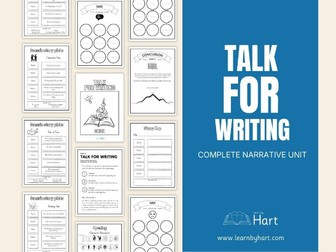
Talk for Writing Guide - Complete Storytelling Framework Help your students write confident, well-structured stories using proven Talk for Writing techniques. This comprehensive resource provides everything you need to teach narrative writing using Pie Corbett’s respected three-stage approach: Imitation, Innovation, and Invention. What’s Inside A 39 page PDF (including 1 cover and 8 section dividers) containing: Story Plot Structures (10 Types) - Ready-to-teach narrative templates with clear descriptions and example texts: Wishing Tale Warning Tale Conquering the Monster Finding Tale Journey Tale Losing Tale Rags to Riches Tale of Fear Meeting Tale Character Flaw Tale Six (6) Opening Techniques - Teach students how to hook readers from the first sentence: Character Description Dialogue Question Setting Description with Alliteration Action with Onomatopoeia Statement Story Map Planning Template - Scaffolded worksheet with all five story elements (Opening, Build Up, Problem, Resolution, Conclusion) plus transition word prompts. Vocabulary Support Pages - Word banks organized by purpose: Happy (9 synonyms) Sad (9 synonyms) Said (9 alternatives) Went (9 alternatives) Foundational Framework: Clear explanation of the Talk for Writing three-stage pedagogy to guide your teaching. How to Use Perfect for whole-class instruction, small group work, or individual student reference. Print templates for students to plan before drafting, or display opening techniques and vocabulary supports during writing lessons. Grade Levels: KS1 (Years 1, 2 and 3) File Format: PDF (printable and projectable) Note This is a digital download only.
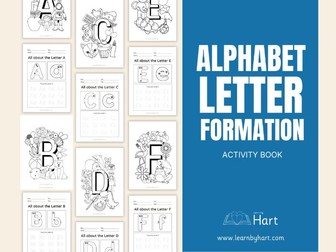
Alphabet Letter Formation BookQuick View
creativeteaching_hart

Alphabet Letter Formation Book

(0)
Description Help your young students master letter formation with this teacher-made handwriting booklet, featuring traceable worksheets for every letter of the alphabet. Each letter includes step-by-step formation instructions so children know exactly where to start and end — building confident, consistent handwriting from the very beginning. What’s Included A 53-page PDF (including cover) containing the following for each letter A–Z: Letter Formation Guide – Visual diagrams showing correct stroke order and direction for both uppercase and lowercase letters Tracing Worksheet – 12 opportunities to trace each letter pair (Aa, Bb, Cc…), with clearly dotted guides for independent practice Illustration Page – A fun, colourable letter scene filled with objects beginning with that letter, reinforcing phonics and vocabulary alongside handwriting How to Use Use as a complete handwriting unit, or assign individual letter worksheets as needed. Ideal for morning work, literacy centres, intervention groups, or take-home practice. The colouring pages make a great extension or early-finisher activity. Grade: PreK – 1st File Format: PDF (fully printable) **Note ** This is a digital download only.