St. Michael the Archangel Prayer in LatinQuick View
AspieTeacher

St. Michael the Archangel Prayer in Latin

(0)
This is a work packet to assist students in learning the St. Michael the Archangel Prayer in Latin. Students will practice writing the prayer several times, each time with a few more Latin words. An activity is included for students to translate phrases from Latin to English. Space for writing and answer keys are provided.
"Eternal Father" Prayer in LatinQuick View
AspieTeacher

"Eternal Father" Prayer in Latin

(0)
This is a work packet to assist students in learning the “Eternal Father” prayer in Latin. Students will practice writing the prayer several times, each time with a few more Latin words. An activity is included for students to translate phrases from Latin to English. Space for writing and answer keys are provided.
Concluding Prayer of the Rosary in LatinQuick View
AspieTeacher

Concluding Prayer of the Rosary in Latin

(0)
This is a work packet to assist students in learning the Concluding Prayer of the Rosary in Latin. Students will practice writing the prayer several times, each time with a few more Latin words. An activity is included for students to translate phrases from Latin to English. Space for writing and answer keys are provided.
Finding the Perimeter of a ShapeQuick View
AspieTeacher

Finding the Perimeter of a Shape

(0)
This slideshow will help you teach students about finding the perimeter of a shape by adding the lengths of all sides together, or by multiplying the number of sides by the length of each side in shapes with all equal sides. Two slides are a commentary to help you teach and ten slides have practice problems. These problems include examples of both U.S. measurement and metric systems. An answer key is provided.
Area of a RectangleQuick View
AspieTeacher

Area of a Rectangle

(0)
This slideshow will help you teach students about finding the area of a rectangle by multiplying the length and width. Ten slides have practice problems that include examples of both U.S. measurement and metric systems. An answer key is provided.
3D Shape FlashcardsQuick View
AspieTeacher

3D Shape Flashcards

(0)
This is a set of flashcards for the 3D shapes: tetrahedron, triangular pyramid, cube, sphere, cylinder, rectangular prism, cone, heptahedron, octahedron, pentagonal prism, hexagonal prism, heptagonal prism, heptagonal pyramid, octagonal prism, and octagonal pyramid. These cards can be used as either flashcards or cards for a memory game.
Symmetric or Asymmetric?Quick View
AspieTeacher

Symmetric or Asymmetric?

(0)
This slideshow is to help teach symmetrical and asymmetrical lines. A few slides explain what makes a line in a shape symmetrical or asymmetrical. Ten shapes with lines are provided for students to determine whether the line is symmetrical or asymmetrical. An answer key is provided.
Polygon FlashcardsQuick View
AspieTeacher

Polygon Flashcards

(0)
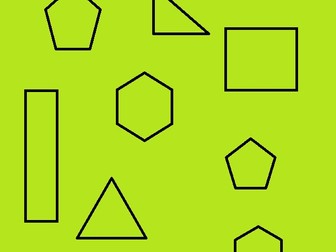
This is a set of flashcards for students to practice identifying the polygons triangle, square, pentagon, hexagon, hectogon, octagon, nonagon, decagon, hendecagon, dodecagon, tridecagon, tetradecagon, pentadecagon, hexadecagon, heptadecagon, octadecagon, enneadecagon, and icosagon (polygon shapes with up to twenty sides). This set can be used as flashcards or as a memory game.
Junie B. First Grade: Boss of LunchQuick View
AspieTeacher

Junie B. First Grade: Boss of Lunch

(0)
This aligns with the novel Junie B. First Grade: Boss of Lunch, by Barbara Parks. A comprehension quiz is provided for each of the nine chapters. An answer key is provided. A vocabulary list with eight words is included, which has definitions and space to use each word in a sentence.
Saints' BingoQuick View
AspieTeacher

Saints' Bingo

(0)
This is a bingo game with 100 saints for students to learn about. Read the description of the saints, and students will see their bingo cards to see if they have that specific saint. After someone gets a bingo, have him or her read the saints on his or her card to ensure the correct saint was chosen. This will motivate students to learn about saints!
How Many Degrees is the Percentage of the CircleQuick View
AspieTeacher

How Many Degrees is the Percentage of the Circle

(0)
This is a bingo game with 100 saints for students to learn about. Read the description of the saints, and students will see their bingo cards to see if they have that specific saint. After someone gets a bingo, have him or her read the saints on his or her card to ensure the correct saint was chosen. This will motivate students to learn about saints!
Parallel, Perpendicular, & Intersecting LinesQuick View
AspieTeacher

Parallel, Perpendicular, & Intersecting Lines

(0)
This slideshow is a teaching tool to help students learn about parallel, perpendicular, and intersecting lines. This slideshow includes a quick description of the different lines and ten slides showing a pair of lines. Students will determine if the pair of lines is parallel, perpendicular, or intersecting. An answer key is provided.
The Call of the Wild Comprehension QuizzesQuick View
AspieTeacher

The Call of the Wild Comprehension Quizzes

(0)
This is a set of comprehension quizzes and writing prompts for the Great Illustrated Classic The Call of the Wild (adapted by Jack London). Each quiz will cover two or three chapters. Answer keys are provided. This exciting story helps students learn about a different time period and lessons in rules, teamwork, and obedience to leadership.
Changes for Josefina Comprehension QuizzesQuick View
AspieTeacher

Changes for Josefina Comprehension Quizzes

(0)
This includes comprehension quizzes and vocabulary words for the book Changes for Josefina, by Valerie Tripp. Each chapter includes 3-7 comprehension questions and 2-3 vocabulary words. Answer keys are provided.
180 Degrees in a TriangleQuick View
AspieTeacher

180 Degrees in a Triangle

(0)
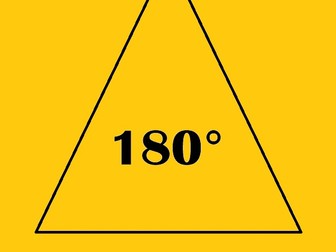
This slideshow is a teaching tool to help teach students the concept of a triangle having 180 degrees. This slideshow includes a tutorial on how to find the degrees in the missing angle of a triangle. Ten triangles are provided with the amount of degrees in two of the angles. Students will find the amount of degrees in the other angle. An answer key is provided. Note, the measurements in these angles are not exact but an estimation to serve as a example.