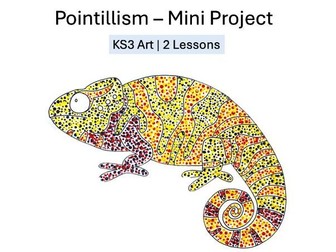
KS3 Art: Pointillism Mini Project (2 Lessons) | Colour Theory ApplicationQuick View
ChuniaB

KS3 Art: Pointillism Mini Project (2 Lessons) | Colour Theory Application

(0)
This KS3 Art pointillism mini project is designed to be taught across two lessons and allows students to apply their understanding of colour theory through a practical painting outcome. Students explore the Pointillism technique, learning how artists use small, layered dots of colour to create the illusion of blending and form secondary colours. What’s included: A fully resourced PowerPoint covering 2 lessons Clear learning objectives, success criteria and key vocabulary Introduction to Pointillism with visual examples Step-by-step drawing guidance using basic shapes A step-by-step pointillism painting guide showing how to layer dots to create secondary colours Retrieval quiz / recap questions Extension task included Inclusive & teacher-friendly: Adapted and scaffolded resources included for low ability / SEN pupils Clear visual instructions suitable for EAL learners Designed to be ready-to-teach with minimal preparation Suitable for: KS3 Art (Years 7–9) A standalone mini project A follow-on task after teaching colour theory A foundation or refresher activity for KS4 Preview images show examples of lesson content. Full lesson structure, guidance and resources are included in the download.
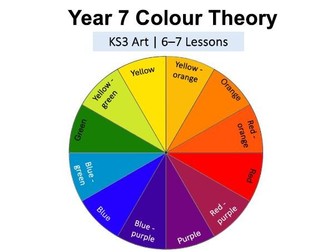
Year 7 Colour Theory – KS3 Art Half-Term Unit (6–7 Lessons, SEN Friendly)Quick View
ChuniaB

Year 7 Colour Theory – KS3 Art Half-Term Unit (6–7 Lessons, SEN Friendly)

(0)
A complete Year 7 KS3 Art colour theory unit (6–7 lessons) covering colour mixing, colour schemes and a pointillism final piece. SEN friendly. This comprehensive Year 7 KS3 Art colour theory unit is designed to be taught across a half term (6–7 lessons) and introduces students to colour theory through clear, practical and well-scaffolded lessons. Students learn about primary, secondary and tertiary colours, colour mixing, warm and cool colours, complementary and analogous colour schemes, and apply this knowledge through drawing, painting and a pointillism final outcome. The unit has been planned for real classroom settings and is particularly suitable for low ability, SEN and EAL learners, with adapted resources included throughout. What’s included: A fully resourced PowerPoint covering 6–7 sequential lessons Clear learning objectives, success criteria and key vocabulary Step-by-step practical tasks using paint and drawing Artist references (e.g. Mondrian and Matisse) to support discussion Drawing skill development (grid method progressing to freehand) A pointillism final piece that brings together colour theory learning Retrieval quizzes, Do Nows and extension tasks Inclusive & teacher-friendly features: Adapted and scaffolded resources clearly labelled for low ability/SEN pupils Printable resource sections at the end of each lesson for easy preparation Teacher guidance notes to support differentiation Designed to be ready-to-teach with minimal preparation required This unit is ideal for specialist and non-specialist art teachers looking for a structured, engaging and well-paced introduction to colour theory at KS3.