Cell Cycle – Interphase (G1, S & G2) | Checkpoints & Regulation | A Level Biology Lesson pptxQuick View
Nupur6

Cell Cycle – Interphase (G1, S & G2) | Checkpoints & Regulation | A Level Biology Lesson pptx

(0)
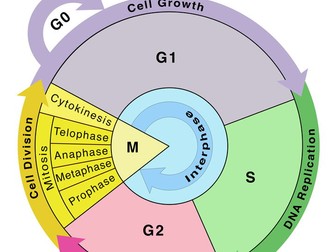
**This detailed A Level Biology lesson PowerPoint introduces students to the cell cycle, with a strong focus on interphase, including G1, S and G2 phases, cell cycle regulation, and checkpoints. The lesson is carefully scaffolded to support conceptual understanding, correct common misconceptions, and develop exam-ready explanations. ** Learning Objectives By the end of the lesson, students will be able to: Define key cell cycle terminology Describe the stages of the eukaryotic cell cycle Explain events occurring during interphase (G1, S and G2) Understand the role of G1, G2 and M checkpoints in regulating the cell cycle Explain the significance of the G₀ phase **Lesson Content Includes ** Key terminology: chromosome, chromatin, sister chromatids, centromere, karyotype Comparison of mitosis vs meiosis Definitions of somatic cells, gametes, haploid and diploid cells Overview of the eukaryotic cell cycle Detailed coverage of interphase: G1 phase – growth, organelle synthesis, protein production S phase – DNA replication and error checking G2 phase – preparation for mitosis and protein synthesis Addressing misconceptions (interphase as an “active” phase) G₀ phase: causes, significance, and examples Cell cycle checkpoints: G1 checkpoint (resources and DNA integrity) G2 checkpoint (DNA replication accuracy) M/spindle checkpoint (chromosome attachment) Clear links between cell cycle regulation and cancer prevention Exam-style multiple-choice questions, true/false checks, and discussion prompts ** Student Activities & Assessment ** Prep work terminology checks Think–Pair–Share starter Label-and-annotate cell cycle diagrams Structured comparison questions (G1 vs G2) MCQs and retrieval practice Plenary and preparation for mitosis lesson ** Perfect For ** A Level Biology (Cell Cycle / Cell Division) OCR, AQA and Edexcel specifications Revision lessons and exam preparation Structured teaching or cover lessons Keywords Cell cycle, interphase, G1 S G2 phases, cell cycle checkpoints, A Level Biology, mitosis preparation, DNA replication, G0 phase, cell cycle regulation, biology lesson PowerPoint.
Transport in Animals: Blood Vessels (Arteries, Veins & Capillaries) – A Level Biology Lesson PPTXQuick View
Nupur6

Transport in Animals: Blood Vessels (Arteries, Veins & Capillaries) – A Level Biology Lesson PPTX

(0)
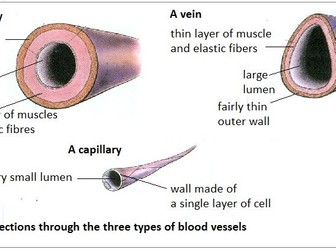
This comprehensive A Level Biology lesson PowerPoint covers the structure, function and adaptations of blood vessels, focusing on arteries, arterioles, veins, venules and capillaries as part of the Transport in Animals topic. The lesson is carefully scaffolded to support knowledge recall, application and exam-level understanding, with clear explanations, visual comparisons, and student tasks throughout. Learning Objectives By the end of the lesson, students will be able to: Describe the structure of blood vessels Explain how elastic fibres, smooth muscle, collagen and endothelium contribute to function Compare arteries, veins and capillaries in terms of structure, pressure and role Apply structure–function relationships to unfamiliar exam questions. **Lesson Content Includes: ** Definition and role of blood vessels in transport Components of blood vessel walls: Elastic fibres (stretch and recoil) Smooth muscle (vasoconstriction and vasodilation) Collagen (strength and prevention of bursting) Endothelium (reduced friction and diffusion) Detailed coverage of blood vessel types: with diagrams Arteries and arterioles (high pressure, elastic tissue, flow control) Veins and venules (large lumen, valves, low pressure return to heart) Capillaries (exchange of gases, nutrients and wastes) Structure–function comparisons of arteries vs veins Capillary adaptations for diffusion and perfusion Reference to light microscope (LM) micrographs of blood vessels **Student Tasks & Activities: ** Whiteboard recap questions (tissue function and vessel structure) Mix-and-match activity linking tissues to functions Frayer model task for blood vessels Comparison tables and exam-style questioning Plenary and preparation for next lesson Perfect For A Level Biology (Transport in Animals) OCR, AQA, Edexcel specifications Revision lessons, cover lessons, structured teaching Exam preparation and retrieval practice Keywords Transport in animals, blood vessels, arteries veins capillaries, A Level Biology, structure and function, arterioles venules, capillary exchange, elastic fibres smooth muscle collagen, vasoconstriction vasodilation, biology lesson PowerPoint.