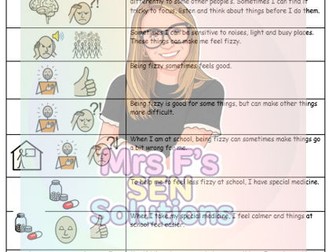
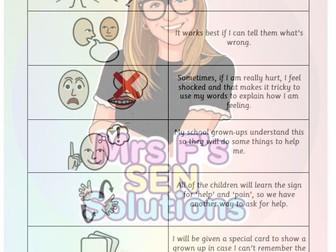
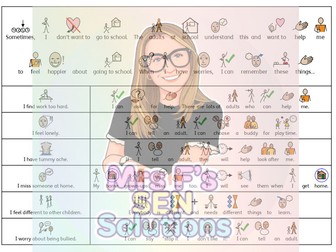
**This resources is a super simple, two page social story/visual discussion board to support children who are struggling with anxiety around school or Emotional Based School Avoidance (EBSA). **
Visuals can help children (often a child or someone social communication difficulties) to understand and navigate a specific situations.
This resource is designed to:
Reduce anxiety about new or confusing situations
Clarify expectations (what will happen, what others might do or feel, and what the person can do)
This resource comes with two different skin tones - to reflect the child with whom it is being used.
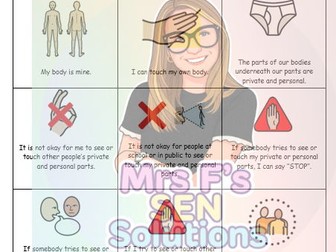
**This resources is a super simple, one page social story about private and personal . **
A social story is a short, personalised story that helps (often a child or someone social communication difficulties) to understand and navigate a specific social situation.
Social stories are designed to:
Teach appropriate social behaviors
Reduce anxiety about new or confusing situations
Clarify expectations (what will happen, what others might do or feel, and what the person can do)
A social story usually includes:
Descriptive sentences — Explain what is happening and why.
Example: “At lunchtime, I will sit at the table with my friends.”
Perspective sentences — Describe how others might feel or react.
Example: “My friends like it when I wait my turn to talk.”
Directive sentences — Suggest what the person can do.
Example: “I will raise my hand when I have something to say.”
Affirmative sentences — Reinforce the importance of the behavior or feeling.
Example: “It’s okay to wait my turn. Everyone gets a chance.”
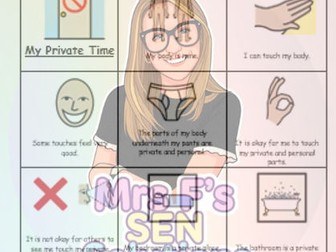
**This resources is a super simple, one page social story about ‘private time’. **
This can help support children or someone social communication difficulties to understand about mastrbation and keeping themselves safe.
A social story is a short, personalised story that helps (often a child or someone social communication difficulties) to understand and navigate a specific social situation.
Social stories are designed to:
Teach appropriate social behaviors
Reduce anxiety about new or confusing situations
Clarify expectations (what will happen, what others might do or feel, and what the person can do)
A social story usually includes:
Descriptive sentences — Explain what is happening and why.
Example: “At lunchtime, I will sit at the table with my friends.”
Perspective sentences — Describe how others might feel or react.
Example: “My friends like it when I wait my turn to talk.”
Directive sentences — Suggest what the person can do.
Example: “I will raise my hand when I have something to say.”
Affirmative sentences — Reinforce the importance of the behavior or feeling.
Example: “It’s okay to wait my turn. Everyone gets a chance.”
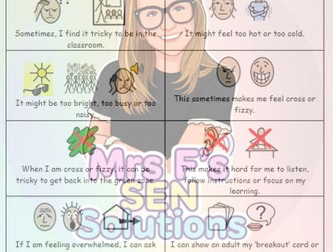
**This resources is a super simple, one page social story about managing sensory sensitivities at . **
This can help support children or someone social communication difficulties to understand about mastrbation and keeping themselves safe.
A social story is a short, personalised story that helps (often a child or someone social communication difficulties) to understand and navigate a specific social situation.
Social stories are designed to:
Teach appropriate social behaviors
Reduce anxiety about new or confusing situations
Clarify expectations (what will happen, what others might do or feel, and what the person can do)
A social story usually includes:
Descriptive sentences — Explain what is happening and why.
Example: “At lunchtime, I will sit at the table with my friends.”
Perspective sentences — Describe how others might feel or react.
Example: “My friends like it when I wait my turn to talk.”
Directive sentences — Suggest what the person can do.
Example: “I will raise my hand when I have something to say.”
Affirmative sentences — Reinforce the importance of the behavior or feeling.
Example: “It’s okay to wait my turn. Everyone gets a chance.”
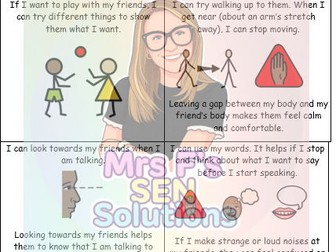
**This resources is a super simple, one page social story about initiating peer . **
A social story is a short, personalised story that helps (often a child or someone social communication difficulties) to understand and navigate a specific social situation.
Social stories are designed to:
Teach appropriate social behaviors
Reduce anxiety about new or confusing situations
Clarify expectations (what will happen, what others might do or feel, and what the person can do)
A social story usually includes:
Descriptive sentences — Explain what is happening and why.
Example: “At lunchtime, I will sit at the table with my friends.”
Perspective sentences — Describe how others might feel or react.
Example: “My friends like it when I wait my turn to talk.”
Directive sentences — Suggest what the person can do.
Example: “I will raise my hand when I have something to say.”
Affirmative sentences — Reinforce the importance of the behavior or feeling.
Example: “It’s okay to wait my turn. Everyone gets a chance.”
**This resources is a super simple, one page social story about taking ADHD meds for school **
A social story is a short, personalised story that helps (often a child or someone social communication difficulties) to understand and navigate a specific social situation.
Social stories are designed to:
Teach appropriate social behaviors
Reduce anxiety about new or confusing situations
Clarify expectations (what will happen, what others might do or feel, and what the person can do)
A social story usually includes:
Descriptive sentences — Explain what is happening and why.
Example: “At lunchtime, I will sit at the table with my friends.”
Perspective sentences — Describe how others might feel or react.
Example: “My friends like it when I wait my turn to talk.”
Directive sentences — Suggest what the person can do.
Example: “I will raise my hand when I have something to say.”
Affirmative sentences — Reinforce the importance of the behavior or feeling.
Example: “It’s okay to wait my turn. Everyone gets a chance.”
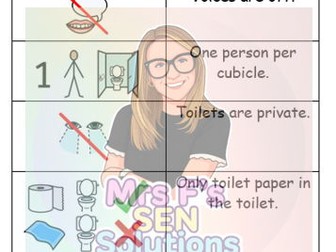
The Toilet Rules visual is an easy-to-read poster designed to promote, courtesy, privacy, safety and responsibility in shared toilets. Using simple images and minimal text, this visual communicates key guidelines for maintaining respect for others.
It highlights essential do’s and don’ts such as ensuring only one child per cubi
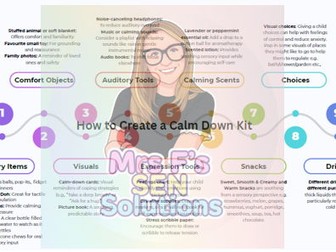
A calm-down kit is a collection of items your child can use to soothe themselves during or after a period of dysregulation. Choose items that engage different senses for a well-rounded effect. You can store everything in a small box, backpack, or shoebox.
Calming Exercises to Practice Together:
Practicing these when your child is calm will make them easier to recall during moments of distress. You can even add printed versions of these instructions to the kit!
Balloon Breathing (For Deep Breathing)
• Imagine holding a balloon.
• Inhale deeply through your nose, filling your belly like a balloon.
• Hold it for a moment, then slowly “release” the balloon, exhaling through your mouth.
• Repeat 3-5 times.
5-4-3-2-1 Grounding (For Anxiety and Overstimulation)
• Name 5 things you can see.
• Name 4 things you can touch.
• Name 3 things you can hear.
• Name 2 things you can smell.
• Name 1 thing you can taste.
Animal Breaths (Fun for Younger Kids)
• Bunny Breaths: Take 3 quick sniffs through your nose, then exhale slowly through your mouth.
• Lion’s Breath: Inhale deeply, then open your mouth wide and roar out your breath like a lion.
Butterfly Hug (For Self-Soothing)
• Cross your arms over your chest, hands on your shoulders like butterfly wings.
• Slowly tap your hands back and forth, left to right.
• Breathe deeply as you tap.
Body Scan (For Relaxation)
• Lie down or sit comfortably.
• Close your eyes and slowly focus on different parts of your body, starting from your toes and working up to your head.
• Notice any tension and imagine releasing it like a gentle wave.
**This resources is a super simple, one page social story about being safe, even if you don’t feel okay. **
A social story is a short, personalised story that helps (often a child or someone social communication difficulties) to understand and navigate a specific social situation.
Social stories are designed to:
Teach appropriate social behaviors
Reduce anxiety about new or confusing situations
Clarify expectations (what will happen, what others might do or feel, and what the person can do)
A social story usually includes:
Descriptive sentences — Explain what is happening and why.
Example: “At lunchtime, I will sit at the table with my friends.”
Perspective sentences — Describe how others might feel or react.
Example: “My friends like it when I wait my turn to talk.”
Directive sentences — Suggest what the person can do.
Example: “I will raise my hand when I have something to say.”
Affirmative sentences — Reinforce the importance of the behavior or feeling.
Example: “It’s okay to wait my turn. Everyone gets a chance.”
**This resources is a super simple, one page social story about asking an adult for help if you’re hurt (for schools). **
A social story is a short, personalised story that helps (often a child or someone social communication difficulties) to understand and navigate a specific social situation.
Social stories are designed to:
Teach appropriate social behaviors
Reduce anxiety about new or confusing situations
Clarify expectations (what will happen, what others might do or feel, and what the person can do)
A social story usually includes:
Descriptive sentences — Explain what is happening and why.
Example: “At lunchtime, I will sit at the table with my friends.”
Perspective sentences — Describe how others might feel or react.
Example: “My friends like it when I wait my turn to talk.”
Directive sentences — Suggest what the person can do.
Example: “I will raise my hand when I have something to say.”
Affirmative sentences — Reinforce the importance of the behavior or feeling.
Example: “It’s okay to wait my turn. Everyone gets a chance.”
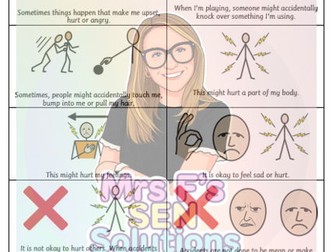
**This resources is a super simple, one page social story about how accidents happen but it it not okay to hurt. **
A social story is a short, personalised story that helps (often a child or someone social communication difficulties) to understand and navigate a specific social situation.
Social stories are designed to:
Teach appropriate social behaviors
Reduce anxiety about new or confusing situations
Clarify expectations (what will happen, what others might do or feel, and what the person can do)
A social story usually includes:
Descriptive sentences — Explain what is happening and why.
Example: “At lunchtime, I will sit at the table with my friends.”
Perspective sentences — Describe how others might feel or react.
Example: “My friends like it when I wait my turn to talk.”
Directive sentences — Suggest what the person can do.
Example: “I will raise my hand when I have something to say.”
Affirmative sentences — Reinforce the importance of the behavior or feeling.
Example: “It’s okay to wait my turn. Everyone gets a chance.”
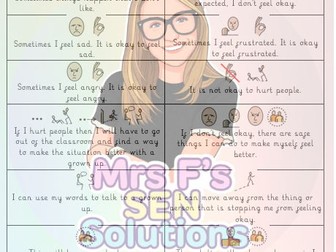
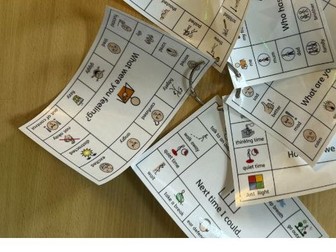
This series of visual choice boards is designed to guide children through calm, structured reflection following periods of emotional dysregulation. Each board supports an emotion coaching conversation, helping the child to make sense of their experience and develop self-regulation skills in a supportive, non-judgmental way.
The boards use visual prompts, symbols, and simple language to scaffold understanding and communication, making them accessible for children with a range of ages and communication abilities.
The series aims to:
Help children identify and name their emotions after moments of upset.
Encourage reflection on what happened, including their actions, choices, and triggers.
Support discussion around the impact of behaviour on themselves and others.
Facilitate collaborative problem-solving to explore how to “fix” the problem, make amends, or choose different strategies next time.
Reinforce emotional literacy, empathy, and accountability in a safe and supportive way.
Each visual choice board focuses on a different stage of emotional reflection:
‘What were you feeling?’ – identifying the emotion(s) experienced.
‘What caused it?’ - – sequencing the events or triggers.
‘What happened?’ – reflecting on actions or choices.
‘Who has been affected?’ – understanding consequences and impact.
‘What are you feeling now?’ - identifying the current emotion(s).
‘How can we fix it?’ – exploring solutions, repairs, or next steps.
‘Next time I could…’ – choosing new strategies or calming tools for future success.
Intended Use:
These boards are designed for use by teachers, support staff, therapists, or parents as part of a restorative and relationship-based approach to behaviour. They can be used 1:1 after a child has returned to a calm state, promoting connection, reflection, and growth rather than punishment.


 Quick View