SEND Reform 2026 Explained |White Paper|  Inclusion Strategy & SEND CPD PowerPointQuick View
sendclassroomsolutions

SEND Reform 2026 Explained |White Paper| Inclusion Strategy & SEND CPD PowerPoint

(0)
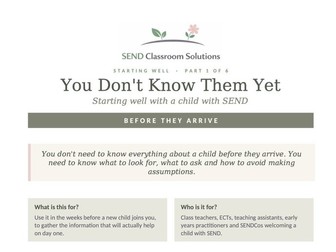
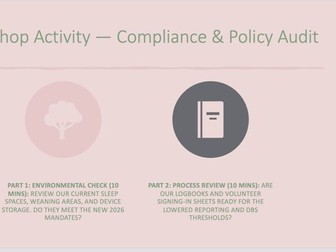
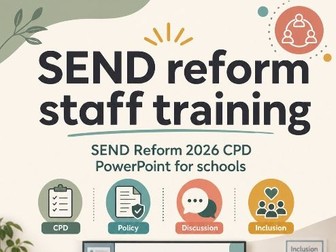
SEND Reform 2026 Training PowerPoint | Inclusion Strategy CPD SEND Reform 2026 training PowerPoint for Early Years settings, primary schools, Special Educational Needs Coordinators, inclusion leads and senior leaders. This editable CPD presentation helps staff understand the key messages from the SEND Reform White Paper and what the proposed changes mean in practice for classrooms, settings and schools. The training focuses on: ✓ The vision behind SEND Reform 2026 ✓ Inclusion as a core principle ✓ Early intervention and graduated support ✓ The Universal Offer ✓ Inclusion Strategies ✓ Workforce development and staff training ✓ Behaviour as communication ✓ Practical implications for classrooms and settings ✓ The RUC (Regulate, Understand, Change) approach ✓ Immediate actions practitioners can take How I use this resource: This presentation can be delivered as a staff meeting, inset session, SEND network meeting or professional development session. It is suitable for Early Years practitioners, teachers, teaching assistants, Special Educational Needs Coordinators, behaviour leads and senior leaders. The PowerPoint includes discussion activities, reflection questions and practical implementation strategies to support settings in preparing for upcoming SEND reforms. Ideal for: • Early Years settings • Primary schools • Special Educational Needs Coordinators • Inclusion leads • Behaviour leads • Senior leadership teams Supports: • SEND Reform 2026 • Inclusion Strategy development • SEND leadership • Behaviour as communication • Early intervention • Inclusive practice • Workforce development Last updated: June 2026. Related Resources: • What To Do When A Child Hits, Kicks or Screams at Staff • Why Isn’t This Child Accessing Learning? • Creating Calm and Inclusive Classrooms • Behaviour as Communication Reflection Log
How to Stop Taking Behaviour Personally: Behaviour as Communication Reflection GuideQuick View
sendclassroomsolutions

How to Stop Taking Behaviour Personally: Behaviour as Communication Reflection Guide

(0)
A practical reflection guide for Early Years and primary teachers who want to respond calmly when behaviour feels personal, challenging or overwhelming. This resource supports teachers to reflect on what happened, what they felt in the moment, what the child may have been communicating and what support may be needed next. It is ideal for behaviour reflection, SEND support, new teachers, ECTs, staff discussion and inclusive classroom practice. Useful for: Early Years and primary teachers New teachers and ECTs SEND and inclusion support Behaviour as communication reflection Staff wellbeing and professional reflection Calm, safe responses to distressed behaviour The resource encourages teachers to move from blame or self-criticism towards curiosity, regulation and practical next steps.
10 ChatGPT Prompts for New Teachers Managing Behaviour in SeptemberQuick View
sendclassroomsolutions

10 ChatGPT Prompts for New Teachers Managing Behaviour in September

(0)
A practical AI prompt guide for new teachers, ECTs and student teachers managing behaviour in September. This resource includes 10 ready-to-use ChatGPT prompts to help teachers reflect on behaviour as communication, respond calmly to dysregulation and use the Regulate, Understand, Change approach after challenging moments in the classroom. The prompts support new teachers to think about regulation, triggers, adult responses, classroom routines, inclusive practice and how to seek support from mentors, SENCOs or leaders. Useful for: New teachers and ECTs Student teachers Early Years and primary teachers Teaching assistants Mentors and induction leads SENDCos supporting reflective practice This resource is designed to support calm, inclusive and trauma-informed behaviour reflection during the busy September transition period.
What to do if a Child Refuses to Join In? | SEND & Behaviour Support GuideQuick View
sendclassroomsolutions

What to do if a Child Refuses to Join In? | SEND & Behaviour Support Guide

(0)
A practical SEND and behaviour support guide for teachers and Early Years practitioners supporting a child who refuses to join activities, group time or learning. When a child repeatedly says no, moves away or avoids classroom activities, it can be easy to view the behaviour as defiance or non-compliance. However, refusal may communicate anxiety, sensory overwhelm, communication difficulties, low confidence, transition needs or uncertainty about what is expected. This free behaviour as communication resource helps practitioners move beyond asking, “Why won’t they join in?” and instead consider what may be making participation difficult for the child. The guide includes: ✓ Possible reasons a child may refuse to participate ✓ Behaviour as communication reflection questions ✓ Practical regulation strategies ✓ Questions to help identify patterns and barriers ✓ Inclusive classroom adjustments ✓ Ideas for gradually supporting participation ✓ A simple Regulate, Understand, Change approach How I use this resource: Use the guide after noticing repeated refusal or avoidance. Practitioners can work through the reflection questions individually, during supervision, in SEND discussions or as part of a team meeting. Choose one practical change to test rather than increasing pressure on the child. Ideal for Early Years practitioners, primary teachers, teaching assistants, Special Educational Needs Coordinators, inclusion leads and new teachers. Supports SEND, inclusive practice, dysregulation, emotional regulation, behaviour as communication and early intervention. Part of the SEND Classroom Solutions behaviour as communication resource collection. Last updated: July 2026.
Child Runs Away in School? | SEND & Behaviour Support GuideQuick View
sendclassroomsolutions

Child Runs Away in School? | SEND & Behaviour Support Guide

(0)
A practical SEND and behaviour support guide for teachers and Early Years practitioners supporting a child who runs away from adults, activities or classroom spaces. When a child repeatedly runs away in school or an Early Years setting, immediate safety must always come first. Once the child is safe, practitioners also need to consider what the behaviour may be communicating. Running may be connected to sensory overload, anxiety, demands, difficult transitions, movement needs or a child’s inability to communicate that they need a break. This free behaviour as communication resource helps staff move beyond asking, “How do we stop the child running?” and begin identifying patterns that may help reduce the need to run. The guide includes: ✓ Possible reasons a child may run away ✓ Questions to identify triggers and patterns ✓ Practical regulation strategies ✓ SEND and inclusive classroom adjustments ✓ Ideas for supporting transitions ✓ Alternative communication strategies ✓ A simple Regulate, Understand, Change approach How I use this resource: Use the guide following an incident or when reviewing repeated patterns of running. Consider what happened immediately before the child ran and where the child attempted to go. This information can support professional reflection, SEND discussions and proactive planning. This resource does not replace safeguarding procedures, supervision requirements or individual risk assessments. Ideal for Early Years practitioners, primary teachers, teaching assistants, Special Educational Needs Coordinators, inclusion leads and new teachers. Supports SEND, behaviour as communication, dysregulation, emotional regulation, early intervention and inclusive practice. Last updated: July 2026.
Behaviour as Communication ChatGPT Prompts for New TeachersQuick View
sendclassroomsolutions

Behaviour as Communication ChatGPT Prompts for New Teachers

(0)
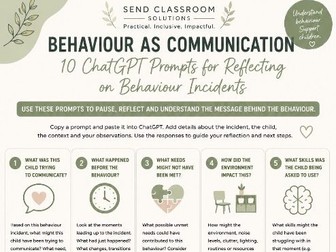
A practical behaviour reflection prompt guide for new teachers, teaching assistants and Early Years practitioners who want to better understand behaviour as communication. This free resource includes 10 ChatGPT prompts to help staff reflect on behaviour incidents, identify possible triggers and consider what a child may have been communicating through dysregulation or distress. The prompts support reflection around: what happened before the behaviour possible unmet needs sensory, emotional or communication barriers adult responses environmental factors next steps after an incident How I use this resource: Copy one prompt into ChatGPT and add brief details about the behaviour incident, the child’s age, setting and context. Use the response as a starting point for professional reflection, team discussion or planning next steps. Ideal for: new teachers Early Years practitioners teaching assistants Special Educational Needs Coordinators behaviour leads inclusion leads Supports: SEND behaviour as communication dysregulation emotional regulation trauma-informed practice early intervention inclusive classrooms Part of the New Teacher Series from SEND Classroom Solutions.
20 ChatGPT Prompts for Creating an Inclusive Classroom | New Teacher GuideQuick View
sendclassroomsolutions

20 ChatGPT Prompts for Creating an Inclusive Classroom | New Teacher Guide

(0)
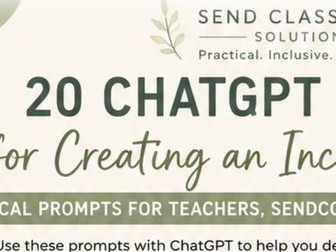
Designing an inclusive classroom can feel overwhelming, especially if you’re a new teacher or setting up a classroom for the first time. This free resource contains 20 carefully written ChatGPT prompts to help you create calm, inclusive learning environments that support every child from day one. Rather than providing generic ideas, these prompts help you personalise recommendations for your own classroom, taking into account your age group, children’s needs, physical environment and available resources. The prompts cover: ✓ Classroom layout ✓ Sensory-friendly environments ✓ Visual supports ✓ Behaviour and emotional regulation ✓ Communication-friendly classrooms ✓ Executive functioning ✓ Independence ✓ Inclusive displays ✓ Transitions and routines ✓ Trauma-informed practice How I use this resource Copy and paste a prompt into ChatGPT, then personalise it with details about your classroom, year group and children’s needs. The responses can be used to generate practical ideas before the school year begins or when reviewing your classroom environment. Ideal for: • New teachers • Early Years practitioners • Teaching assistants • Special Educational Needs Coordinators • Inclusion leads • Primary teachers Supports: • SEND • Inclusive classrooms • Behaviour support • Emotional regulation • Classroom environment • Reasonable adjustments • Teacher workload This resource is part of the New Teacher Series from SEND Classroom Solutions. Related resources • The RUC Approach for New Teachers • What To Do When A Child Hits, Kicks or Screams at Staff • Why Isn’t This Child Accessing Learning?
Behaviour as Communication Guide for New Teachers | SEND & InclusionQuick View
sendclassroomsolutions

Behaviour as Communication Guide for New Teachers | SEND & Inclusion

(0)
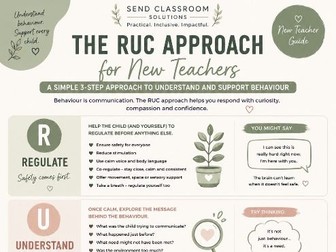
A practical behaviour as communication guide for new teachers, teaching assistants and Early Years practitioners who want a simple framework for responding to dysregulation. This free infographic introduces the Regulate → Understand → Change framework: a practical way to respond when behaviour escalates, reflect on what the child may be communicating and adapt support for next time. This resource includes: simple steps for responding to dysregulation behaviour as communication reminders example language for staff reflection questions practical tips for new teachers SEND and inclusion-friendly strategies How I use this resource: Use this as a classroom reference, staffroom display, induction handout or discussion tool during mentoring and staff training. It is especially useful for new teachers who want practical behaviour support without relying only on sanctions or rewards. Ideal for: new teachers Early Years practitioners teaching assistants Special Educational Needs Coordinators behaviour leads inclusion leads Supports: SEND behaviour support dysregulation behaviour as communication inclusive practice emotional regulation trauma-informed practice early intervention Part of the New Teacher Series from SEND Classroom Solutions.