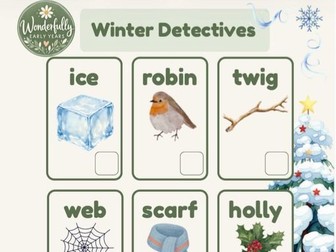
Put children’s observation skills to the test with this fun winter-themed scavenger hunt! Children become winter detectives as they explore their surroundings, searching for a range of seasonal items, colours, textures and signs of winter.
A fantastic way to encourage observation, vocabulary, discussion and exploration, this activity gets children moving, talking and thinking as they investigate the world around them. Perfect for outdoor learning, continuous provision or a winter-themed challenge.
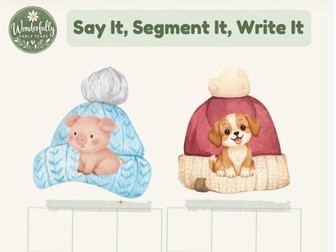
Make practising CVC words fun with these colourful CVC Bobble Hats! This engaging phonics activity encourages children to read and blend simple CVC words before matching each hat to the correct picture.
A simple, hands-on resource for building early reading confidence, segmenting and blending skills while keeping phonics practice playful and purposeful.
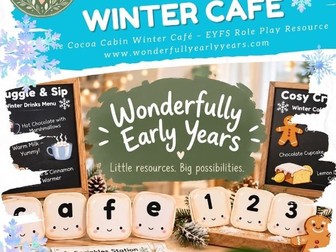
Transform your role-play area into a cosy winter café where little learners can take orders, explore menus, serve customers and bring their imaginations to life.
This seasonal resource encourages children to develop their communication and language skills, practise early writing, explore numbers and counting, and build confidence through imaginative play.
Perfect for your winter-themed provision, children can take on different roles as café owners, chefs, waiters and customers while learning through meaningful, purposeful play.
A cosy little café with big opportunities for learning!
Perfect for EYFS continuous provision and winter role play.
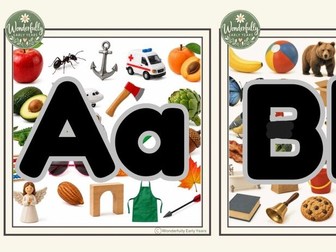
Make learning letters fun and engaging with these alphabet initial sound cards from Wonderfully Early Years!
Featuring every letter of the alphabet in uppercase and lowercase, alongside clear, colourful images representing the initial sound, these resources help children make meaningful connections between letters, sounds and familiar objects.
Perfect for supporting early phonics development, letter recognition and vocabulary building in EYFS.
Ideal for:
Recognising uppercase and lowercase letters.
Linking letters to their initial sounds.
Developing early phonics knowledge.
Supporting independent learning and continuous provision.
Using in small groups, interventions or classroom displays.
A simple, engaging resource to help little learners see it, say it and connect it to the sound!
Make your phonics displays extra special with this beautiful Sound of the Week frame from Wonderfully Early Years.
Featuring a soft, neutral background, sage green heading and colourful wildflower border, this printable frame is perfect for highlighting your focus sound each week.
Perfect for:
Displaying your weekly focus sound
Creating an engaging phonics working wall
Supporting sound recognition and revisiting previously taught sounds
Adding a touch of beauty to your Early Years classroom
Simply print and add your chosen sound, picture or sound card to create a lovely, eye-catching display.
A simple, practical resource designed with Early Years practitioners in mind.
Bring autumn to life in your EYFS setting with our cosy café role-play pack!
From warming drinks and seasonal treats to lunch menus and toppings, everything you need to create a little autumn café is included.
Encourage communication and language
Develop imaginative role-play
Practise early writing and mark making
Explore numbers through real-life play
Perfect for creating a welcoming, autumn-inspired continuous provision area!
#WonderfullyEarlyYears #EYFS #EarlyYears #RolePlay #ContinuousProvision #AutumnActivities #EarlyYearsResources
Make initial sound practice active, noisy and fun with this engaging phonics game!
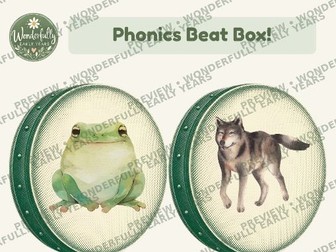
Phonics Beat Box gives children a hands-on way to practise hearing and identifying initial sounds. Children are given a drumstick each and look carefully at the picture drums. They say the word, listen for its initial sound, and then beat the drum showing the picture with the matching initial sound.
For example, if the target sound is /f/, children might identify and beat the drum showing a frog.
What’s included?
Colourful picture drums featuring familiar objects and animals
A set of phoneme sticks with the focus sounds f, j, w and v
A fun, practical activity that gets children listening, saying and matching sounds
7 printable pages
Skills developed
Hearing and identifying initial phonemes
Linking phonemes to graphemes
Listening and sound discrimination
Developing oral vocabulary
Building confidence with early phonics
Following instructions and taking turns
Perfect for EYFS and Reception phonics, small-group teaching, phonics games, continuous provision or intervention.
A simple “say it, hear it, beat it!” activity that children will want to play again and again!
The resource focuses on the initial sounds f, j, w and v, with the final page providing the matching sound sticks.
Make initial sound practice active, noisy and fun with this engaging phonics game!
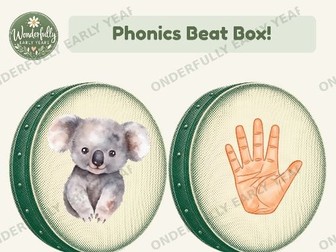
Phonics Beat Box gives children a hands-on way to practise hearing and identifying initial sounds. Children are given a drumstick each and look carefully at the picture drums. They say the word, listen for its initial sound, and then beat the drum showing the picture with the matching initial sound.
For example, if the target sound is /k/, children might identify and beat the drum showing a koala bear.
What’s included?
Colourful picture drums featuring familiar objects and animals
A set of phoneme sticks with the focus sounds k, e, h and b
A fun, practical activity that gets children listening, saying and matching sounds
7 printable pages
Skills developed
Hearing and identifying initial phonemes
Linking phonemes to graphemes
Listening and sound discrimination
Developing oral vocabulary
Building confidence with early phonics
Following instructions and taking turns
Perfect for EYFS and Reception phonics, small-group teaching, phonics games, continuous provision or intervention.
A simple “say it, hear it, beat it!” activity that children will want to play again and again!
The resource focuses on the initial sounds k, e, h and b, with the final page providing the matching sound sticks.
Make initial sound practice active, noisy and fun with this engaging phonics game!
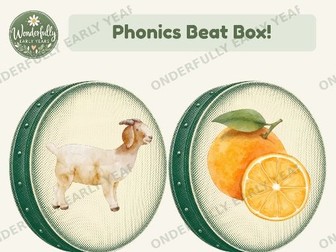
Phonics Beat Box gives children a hands-on way to practise hearing and identifying initial sounds. Children are given a drumstick each and look carefully at the picture drums. They say the word, listen for its initial sound, and then beat the drum showing the picture with the matching initial sound.
For example, if the target sound is /g/, children might identify and beat the drum showing a gorilla.
What’s included?
Colourful picture drums featuring familiar objects and animals
A set of phoneme sticks with the focus sounds g, o, c and r
A fun, practical activity that gets children listening, saying and matching sounds
7 printable pages
Skills developed
Hearing and identifying initial phonemes
Linking phonemes to graphemes
Listening and sound discrimination
Developing oral vocabulary
Building confidence with early phonics
Following instructions and taking turns
Perfect for EYFS and Reception phonics, small-group teaching, phonics games, continuous provision or intervention.
A simple “say it, hear it, beat it!” activity that children will want to play again and again!
The resource focuses on the initial sounds g, o, c and r, with the final page providing the matching sound sticks.
Make initial sound practice active, noisy and fun with this engaging phonics game!
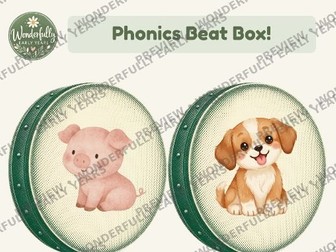
Phonics Beat Box gives children a hands-on way to practise hearing and identifying initial sounds. Children are given a drumstick each and look carefully at the picture drums. They say the word, listen for its initial sound, and then beat the drum showing the picture with the matching initial sound.
For example, if the target sound is /p/, children might identify and beat the drum showing a pig.
What’s included?
Colourful picture drums featuring familiar objects and animals
A set of phoneme sticks with the focus sounds p, m, d and t
A fun, practical activity that gets children listening, saying and matching sounds
7 printable pages
Skills developed:
Hearing and identifying initial phonemes
Linking phonemes to graphemes
Listening and sound discrimination
Developing oral vocabulary
Building confidence with early phonics
Following instructions and taking turns
Perfect for EYFS and Reception phonics, small-group teaching, phonics games, continuous provision or intervention.
A simple “say it, hear it, beat it!” activity that children will want to play again and again!
The resource focuses on the initial sounds p, m, d and t, with the final page providing the matching sound sticks.
Make initial sound practice active, noisy and fun with this engaging phonics game!
Phonics Beat Box gives children a hands-on way to practise hearing and identifying initial sounds. Children are given a drumstick each and look carefully at the picture drums. They say the word, listen for its initial sound, and then beat the drum showing the picture with the matching initial sound.
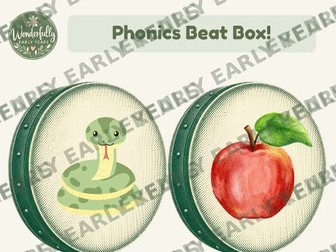
For example, if the target sound is /a/, children might identify and beat the drum showing an anchor.
What’s included?
Colourful picture drums featuring familiar objects and animals
A set of phoneme sticks with the focus sounds s, a, i and n
A fun, practical activity that gets children listening, saying and matching sounds
7 printable pages
Skills developed
Hearing and identifying initial phonemes
Linking phonemes to graphemes
Listening and sound discrimination
Developing oral vocabulary
Building confidence with early phonics
Following instructions and taking turns
Perfect for EYFS and Reception phonics, small-group teaching, phonics games, continuous provision or intervention.
A simple “say it, hear it, beat it!” activity that children will want to play again and again!
The resource focuses on the initial sounds s, a, i and n, with the final page providing the matching sound sticks.
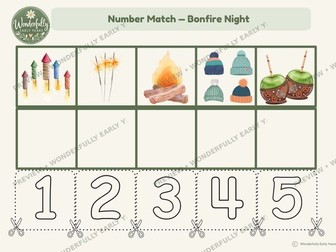
Make number matching fun with this Bonfire Night-themed maths resource, designed to support children in recognising and matching numbers 1–5.
Children match the numerals to the corresponding Bonfire Night images, including rockets, sparklers, bonfires, hats and toffee apples.
Two versions included:
Colour version – bright and engaging for classroom use
Black & white version – ideal for printing economically or for children to colour themselves
The resource is perfect for EYFS maths, small-group activities, continuous provision and seasonal learning.
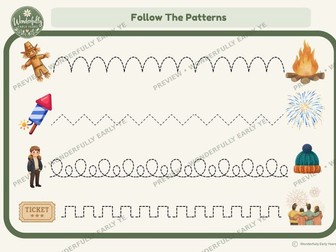
Support children’s early mark making and pre-writing development with this fun Bonfire Night-themed resource.
Children practise following a range of pre-letter writing patterns, helping to develop pencil control, hand–eye coordination and the movements needed for later letter formation.
Two versions included:
Colour version – bright and engaging for children to follow
Black & white version – ideal for economical printing and colouring
The resource includes a variety of patterns, including arches, zigzags, loops and repeated square movements, with engaging Bonfire Night images to provide a clear starting and finishing point.
Perfect for EYFS continuous provision, fine motor activities, focused mark-making sessions and seasonal learning.
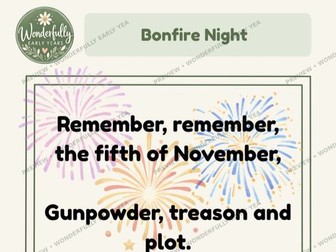
Celebrate Bonfire Night with this simple and engaging traditional rhyme, perfect for introducing children to the language and traditions associated with 5th November.
The resource features the familiar:
“Remember, remember, the fifth of November…”
with clear, child-friendly presentation and colourful Bonfire Night illustrations including fireworks and a bonfire.
Perfect for:
EYFS and KS1
Whole-class rhyme time
Poetry and oral language
Bonfire Night themed learning
Supporting children to learn and recite a traditional rhyme
Classroom displays
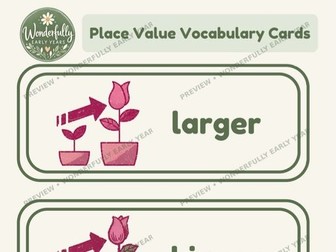
Support children in developing their place value and mathematical vocabulary with this colourful and practical set of Place Value Vocabulary Cards.
The cards provide clear visual prompts alongside key vocabulary, helping children become familiar with the language they need when talking about numbers, comparing quantities and describing position and order.
The pack includes vocabulary such as:
ones, tens and digit
the same number as / as many as
one more, one less, ten more and ten less
Ideal for EYFS, KS1 and early maths, these cards can be used for displays, small-group teaching, maths discussions, continuous provision and vocabulary reinforcement.
10-page pack – just £5
Designed to make mathematical vocabulary clear, accessible and engaging for young learners.
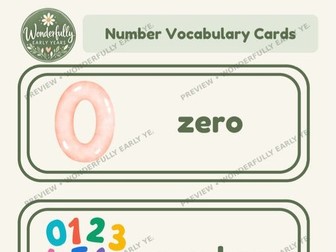
Build children’s mathematical vocabulary with this colourful set of Number Vocabulary Cards, designed to support EYFS and early maths learning.
The 14-page resource includes vocabulary from zero to twenty, alongside key mathematical language such as:
number
none
how many?
count, count on and count back
count in ones, twos, fives and tens
Each word is presented clearly with a supporting image or visual representation, making the cards ideal for introducing, reinforcing and displaying mathematical vocabulary in the classroom.
Great value: This resource contains 14 pages but is priced as £5
Perfect for maths vocabulary displays, small-group teaching, continuous provision and independent learning.
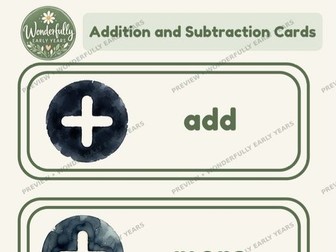
Support children in developing their addition and subtraction mathematical vocabulary with this colourful and practical set of vocabulary cards.
This 8-page pack includes key vocabulary and phrases such as:
add
more
and
double
one more / two more
ten more
take away
The cards combine clear vocabulary with visual prompts, making them ideal for maths displays, small-group teaching, mathematical discussions, continuous provision and vocabulary reinforcement.
8 pages for just £5
A practical, affordable resource designed to help children confidently use the language of addition and subtraction.
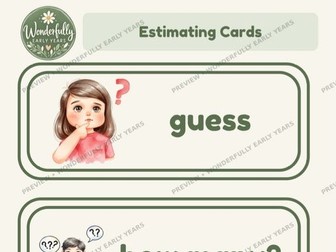
Help children develop the mathematical language needed for estimating, comparing and describing quantities with this colourful set of Estimating Vocabulary Cards.
The 4-page pack includes key vocabulary such as:
estimate
guess
how many?
The cards use clear visuals alongside each word or phrase, making them ideal for EYFS and KS1 maths, vocabulary displays, small-group teaching, maths discussions and continuous provision.
4 pages for the price of 3!
A simple, affordable resource to help children confidently use the language of estimation in their mathematical thinking.
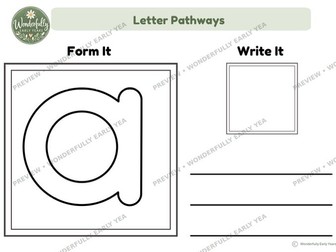
Support children in developing confident, controlled lowercase letter formation with this 26-sheet Letter Pathways resource.
There is one sheet for every lowercase letter a–z, giving children a clear progression from supported formation to independent writing.
Each sheet encourages children to:
Form It – children can write inside the large letter outline or trace the letter with their finger, helping them become familiar with its shape and movement.
Write It – children then form the letter independently on a large scale in the writing box.
Write It Again – children practise the letter further on the lines provided.
This creates a simple supported → independent progression, making the resource ideal for repeated practice and developing children’s confidence with letter formation.
26 sheets – the complete lowercase alphabet for £5
Perfect for EYFS, Reception, phonics, handwriting, continuous provision and focused letter-formation practice.
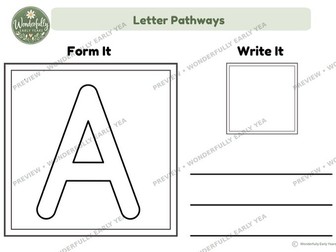
Support children in developing confident, controlled upper case letter formation with this 26-sheet Letter Pathways resource.
There is one sheet for every upper case letter a–z, giving children a clear progression from supported formation to independent writing.
Each sheet encourages children to:
Form It – children can write inside the large letter outline or trace the letter with their finger, helping them become familiar with its shape and movement.
Write It – children then form the letter independently on a large scale in the writing box.
Write It Again – children practise the letter further on the lines provided.
This creates a simple supported → independent progression, making the resource ideal for repeated practice and developing children’s confidence with letter formation.
26 sheets – the complete upper case alphabet for £5
Perfect for EYFS, Reception, phonics, handwriting, continuous provision and focused letter-formation practice.
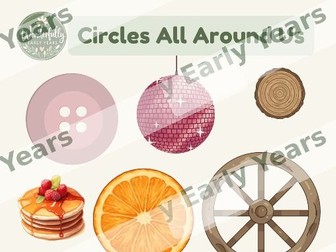
This resource is aimed at EYFS pupils and is for developing children’s understanding of 2D shapes through familiar objects and everyday environments. Children are encouraged to recognise, name and talk about shapes they can see around them, helping to connect mathematical learning to the world around them.
It provides a simple and engaging way to explore shape recognition, develop mathematical vocabulary and encourage children to notice and discuss shapes in their everyday lives.


 Quick View