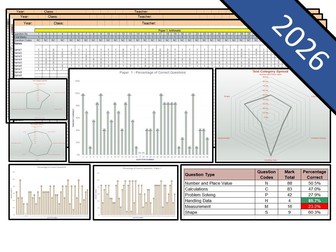
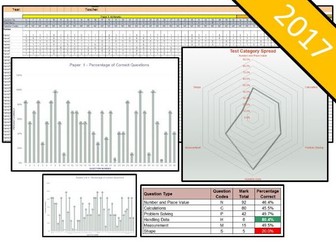
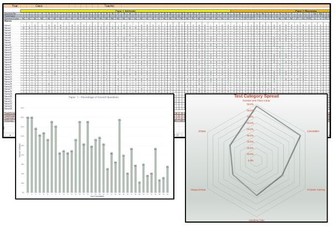
An easy to use Excel Spreadsheet to analyse the maths test scores from the 2016 KS2 SATs though Question Level Analysis (QLA). Papers 1 (arithmetic), 2 and 3 (reasoning) are analysed. Will highlight students' areas of strength and weaknesses in key maths areas including number, calculation, problem solving, handling data, shape and measurement. Simply add the students' name and their score and the spreadsheet will update and produce graphs.
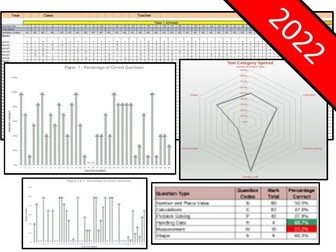
An easy to use Excel Spreadsheet to analyse the maths test scores from the 2022 KS2 SATs though Question Level Analysis (QLA). Papers 1 (arithmetic), 2 and 3 (reasoning) are analysed. Will highlight students’ areas of strength and weaknesses in key maths areas including number, calculation, problem solving, handling data, and shape and measurement. Simply add the students’ name and their score and the spreadsheet will update and produce graphs.
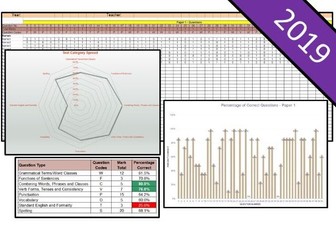
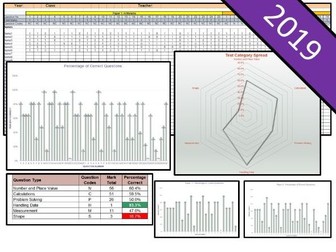
An easy to use Excel Spreadsheet to analyse the English Spelling, Punctuation and Grammar test scores from the 2019 KS2 SATs though Question Level Analysis (QLA). Papers 1 (questions), and 2 (spellings) are analysed. Will highlight students’ areas of strength and weaknesses in key SPaG areas including: grammatical terms/word classes; functions of sentences; combining words, phrases and clauses; verb forms, tenses and consistency; punctuation; vocabulary; standard English and formality; and spelling. Simply add the students’ names and their scores and the spreadsheet will update and produce graphs.
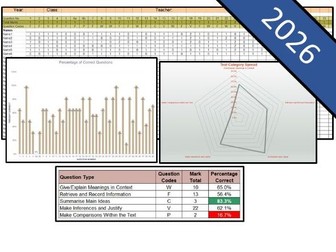
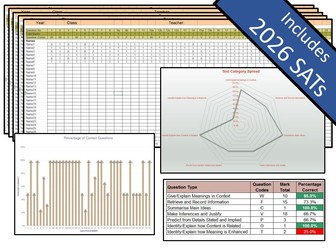
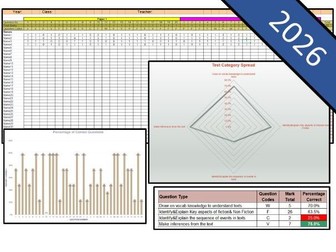
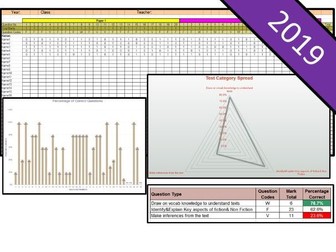
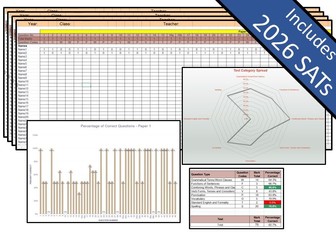
An easy to use Excel Spreadsheet to analyse the reading test scores from the 2026 KS2 SATs though Question Level Analysis (QLA). Will highlight students’ areas of strength and weaknesses in key reading areas including: giving/explaining meanings of words in context, retrieving and recording information/identifying key details from fiction and non-fiction, summarising main ideas from one or more paragraphs, making inferences from the text/explaining and justifying inferences with evidence from the text, identifying/explaining how meaning is enhanced through choice of words and phrases, and identifying/explaining how information or narrative content is related and contributes to meaning as a whole. Simply add the students’ names and their scores and the spreadsheet will update and produce graphs.
Includes:
KS1 2026 Optional Maths SATs QLA
KS1 2025 Optional Maths SATs QLA
KS1 2024 Optional Maths SATs QLA
KS1 2023 Maths SATs QLA
KS1 2022 Maths SATs QLA
KS1 2019 Maths SATs QLA
KS1 2026 Optional Reading SATs QLA
KS1 2025 Optional Reading SATs QLA
KS1 2024 Optional Reading SATs QLA
KS1 2023 Reading SATs QLA
KS1 2022 Reading SATs QLA
KS1 2019 Reading SATs QLA
KS1 2026 Optional SPaG SATs QLA
KS1 2025 Optional SPaG SATs QLA
KS1 2024 Optional SPaG SATs QLA
KS1 2023 SPaG SATs QLA
KS1 2022 SPaG SATs QLA
KS1 2019 SPaG SATs QLA
Easy to use Excel Spreadsheets to analyse the above test scores using Question Level Analysis (QLA). Will highlight students’ areas of strength and weaknesses in key maths (number, calculation, problem solving, handling data, shape and measurement), reading (drawing on knowledge of vocabulary to understand texts; identifying and explaining key aspects of fiction and non-fiction texts, such as characters, events, titles and information; identifying and explaining the sequence of events in texts; making inferences from texts; and predicting what might happen on the basis of what has been read so far) and SPaG (grammatical terms/word classes; functions of sentences; combining words, phrases and clauses; verb tenses and consistency; punctuation; vocabulary; and spelling) areas. Simply add the students’ name and their score and the spreadsheet will update and produce graphs based on their answers.
Includes:
KS2 2026 Maths SATs QLA
KS2 2026 Spelling, Punctuation and Grammar SATs QLA
KS2 2026 Reading SATs QLA
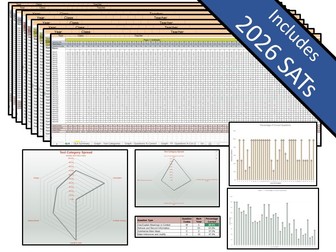
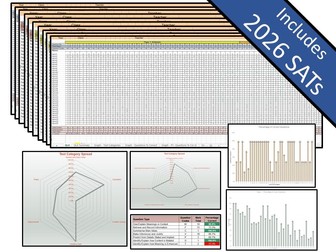
Easy to use Excel Spreadsheets to analyse the above SATs test scores using Question Level Analysis (QLA). All papers are analysed and will highlight students’ areas of strength and weaknesses in key maths (number, calculation, problem solving, handling data, shape and measurement), reading (giving/explaining meanings of words in context, retrieving and recording information/identifying key details from fiction and non-fiction, summarising main ideas from one or more paragraphs, making inferences from the text/explaining and justifying inferences with evidence from the text, identifying/explaining how meaning is enhanced through choice of words and phrases, and identifying/explaining how information or narrative content is related and contributes to meaning as a whole) and SPaG (grammatical terms/word classes; functions of sentences; combining words, phrases and clauses; verb forms, tenses and consistency; punctuation; vocabulary; standard English and formality; and spelling) areas. Simply add the students’ name and their score and the spreadsheet will update and produce graphs based on their answers.
Includes:
KS2 2026 Maths SATs QLA
KS2 2025 Maths SATs QLA
KS2 2024 Maths SATs QLA
KS2 2023 Maths SATs QLA
KS2 2022 Maths SATs QLA
KS2 2019 Maths SATs QLA
KS2 2026 Spelling, Punctuation and Grammar SATs QLA
KS2 2025 Spelling, Punctuation and Grammar SATs QLA
KS2 2024 Spelling, Punctuation and Grammar SATs QLA
KS2 2023 Spelling, Punctuation and Grammar SATs QLA
KS2 2022 Spelling, Punctuation and Grammar SATs QLA
KS2 2019 Spelling, Punctuation and Grammar SATs QLA
KS2 2026 Reading SATs QLA
KS2 2025 Reading SATs QLA
KS2 2024 Reading SATs QLA
KS2 2023 Reading SATs QLA
KS2 2022 Reading SATs QLA
KS2 2019 Reading SATs QLA
Easy to use Excel Spreadsheets to analyse the above test scores using Question Level Analysis (QLA). Will highlight students’ areas of strength and weaknesses in key maths (number, calculation, problem solving, handling data, shape and measurement), reading (giving/explaining meanings of words in context, retrieving and recording information/identifying key details from fiction and non-fiction, summarising main ideas from one or more paragraphs, making inferences from the text/explaining and justifying inferences with evidence from the text, identifying/explaining how information/narrative content is related and contributes to meaning as a whole, identifying/explaining how meaning is enhanced through choice of words and phrases, and making comparisons within the text) and SPaG (grammatical terms/word classes; functions of sentences; combining words, phrases and clauses; verb forms, tenses and consistency; punctuation; vocabulary; standard English and formality; and spelling) areas. Simply add the students’ name and their score and the spreadsheet will update and produce graphs based on their answers.
Includes:
KS2 2026 Reading SATs QLA
KS2 2025 Reading SATs QLA
KS2 2024 Reading SATs QLA
KS2 2023 Reading SATs QLA
KS2 2022 Reading SATs QLA
KS2 2019 Reading SATs QLA
KS2 2018 Reading SATs QLA
KS2 2017 Reading SATs QLA
KS2 2016 Reading SATs QLA
KS2 Sample Reading SATs QLA
Easy to use Excel Spreadsheets to analyse the above reading test scores using Question Level Analysis (QLA). Will highlight students’ areas of strength and weaknesses in key reading areas including: giving/explaining meanings of words in context, retrieving and recording information/identifying key details from fiction and non-fiction, summarising main ideas from one or more paragraphs, making inferences from the text/explaining and justifying inferences with evidence from the text, identifying/explaining how information/narrative content is related and contributes to meaning as a whole, identifying/explaining how meaning is enhanced through choice of words and phrases, and making comparisons within the text. Simply add the students’ name and their score and the spreadsheet will update and produce graphs based on their answers.
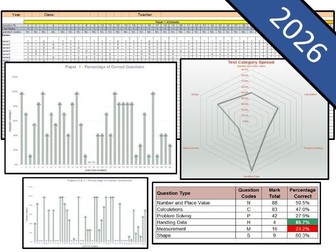
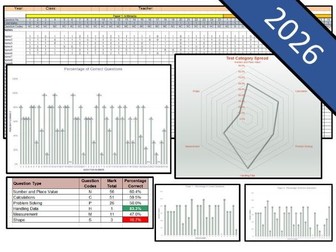
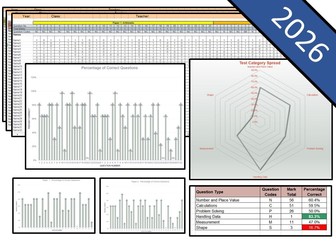
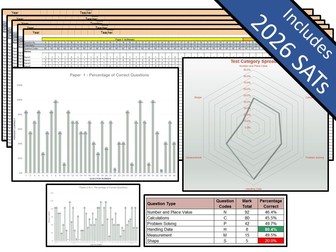
An easy to use Excel Spreadsheet to analyse the maths test scores from the 2026 KS2 SATs though Question Level Analysis (QLA). Papers 1 (arithmetic), 2 and 3 (reasoning) are analysed. Will highlight students’ areas of strength and weaknesses in key maths areas including number, calculation, problem solving, handling data, and shape and measurement. Simply add the students’ name and their score and the spreadsheet will update and produce graphs.
An easy to use Excel Spreadsheet to analyse the maths test scores from the 2017 KS2 SATs though Question Level Analysis (QLA). Papers 1 (arithmetic), 2 and 3 (reasoning) are analysed. Will highlight students' areas of strength and weaknesses in key maths areas including number, calculation, problem solving, handling data, and shape and measurement. Simply add the students' name and their score and the spreadsheet will update and produce graphs.
An easy to use Excel Spreadsheet to analyse the reading test scores from the 2026 Optional KS1 SATs though Question Level Analysis (QLA). Both Papers 1 and 2 are analysed. Will highlight students’ areas of strength and weaknesses in key reading areas including: drawing on knowledge of vocabulary to understand texts; identifying and explaining key aspects of fiction and non-fiction texts, such as characters, events, titles and information; identifying and explaining the sequence of events in texts; and making inferences from texts. Simply add the students’ names and their scores and the spreadsheet will update and produce graphs.
An easy to use Excel Spreadsheet to analyse the maths test scores from the 2026 Optional KS1 SATs though Question Level Analysis (QLA). Papers 1 (arithmetic) and 2 (reasoning) are analysed. Will highlight students’ areas of strength and weaknesses in key maths areas including number, calculation, problem solving, handling data, shape and measurement. Simply add the students’ name and their score and the spreadsheet will update and produce graphs.
An easy to use Excel Spreadsheet to analyse the English Spelling, Punctuation and Grammar test scores from the 2026 Optional KS1 SATs though Question Level Analysis (QLA). Papers 1 (spellings), and 2 (questions) are analysed. Will highlight students’ areas of strength and weaknesses in key SPaG areas including: grammatical terms/word classes; functions of sentences; combining words, phrases and clauses; verb tenses and consistency; punctuation; vocabulary; and spelling. Simply add the students’ name and their score and the spreadsheet will update and produce graphs.
Includes:
Optional KS1 2026 Maths SATs QLA
Optional KS1 2026 Reading SATs QLA
Optional KS1 2026 Spelling, Punctuation and Grammar SATs QLA
Easy to use Excel Spreadsheets to analyse the above SATs test scores using Question Level Analysis (QLA). All papers are analysed and will highlight students’ areas of strength and weaknesses in key maths (number, calculation, problem solving, handling data, shape and measurement), reading (drawing on knowledge of vocabulary to understand texts; identifying and explaining key aspects of fiction and non-fiction texts, such as characters, events, titles and information; identifying and explaining the sequence of events in texts; and making inferences from texts) and SPaG (grammatical terms/word classes; functions of sentences; combining words, phrases and clauses; verb tenses and consistency; punctuation; vocabulary; and spelling) areas. Simply add the students’ name and their score and the spreadsheet will update and produce graphs based on their answers.
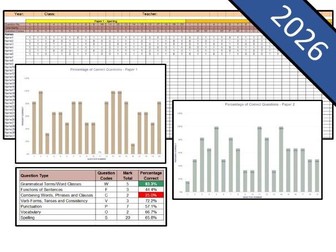
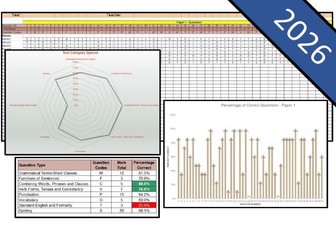
An easy to use Excel Spreadsheet to analyse the English Spelling, Punctuation and Grammar test scores from the 2026 KS2 SATs though Question Level Analysis (QLA). Papers 1 (questions), and 2 (spellings) are analysed. Will highlight students’ areas of strength and weaknesses in key SPaG areas including: grammatical terms/word classes; functions of sentences; combining words, phrases and clauses; verb forms, tenses and consistency; punctuation; vocabulary; standard English and formality; and spelling. Simply add the students’ names and their scores and the spreadsheet will update and produce graphs.
An easy to use Excel Spreadsheet to analyse the reading test scores from the 2019 KS1 SATs though Question Level Analysis (QLA). Both Papers 1 and 2 are analysed. Will highlight students’ areas of strength and weaknesses in key reading areas including: drawing on knowledge of vocabulary to understand texts; identifying and explaining key aspects of fiction and non-fiction texts, such as characters, events, titles and information; and making inferences from texts. Simply add the students’ names and their scores and the spreadsheet will update and produce graphs.
An easy to use Excel Spreadsheet to analyse the maths test scores from the 2019 KS1 SATs though Question Level Analysis (QLA). Papers 1 (arithmetic) and 2 (reasoning) are analysed. Will highlight students’ areas of strength and weaknesses in key maths areas including number, calculation, problem solving, handling data, shape and measurement. Simply add the students’ name and their score and the spreadsheet will update and produce graphs.
Includes:
KS2 2026 Maths SATs QLA
KS2 2025 Maths SATs QLA
KS2 2024 Maths SATs QLA
KS2 2023 Maths SATs QLA
KS2 2022 Maths SATs QLA
KS2 2019 Maths SATs QLA
KS2 2018 Maths SATs QLA
KS2 2017 Maths SATs QLA
KS2 2016 Maths SATs QLA
KS2 Sample Maths SATs QLA
Easy to use Excel Spreadsheets to analyse the above maths test scores using Question Level Analysis (QLA). Papers 1 (arithmetic), 2 and 3 (reasoning) are analysed. Will highlight students’ areas of strength and weaknesses in key mathematical areas including: number, calculation, problem solving, handling data, and shape and measurement. Simply add the students’ name and their score and the spreadsheet will update and produce graphs based on their answers.
Includes:
KS2 2026 SPaG SATs QLA
KS2 2025 SPaG SATs QLA
KS2 2024 SPaG SATs QLA
KS2 2023 SPaG SATs QLA
KS2 2022 SPaG SATs QLA
KS2 2019 SPaG SATs QLA
KS2 2018 SPaG SATs QLA
KS2 2017 SPaG SATs QLA
KS2 2016 SPaG SATs QLA
KS2 Sample SPaG SATs QLA
Easy to use Excel Spreadsheets to analyse the above SPaG test scores using Question Level Analysis (QLA). Papers 1 (questions) and 2 (spellings) are analysed in the 2025 SATs, 2024 SATs, 2023 SATs, 2022 SATs, 2019 SATs, 2018 SATs, 2017 SATs, 2016 SATs and sample SATs. Will highlight students’ areas of strength and weaknesses in key SPaG areas including: grammatical terms/word classes; functions of sentences; combining words, phrases and clauses; verb forms, tenses and consistency; punctuation; vocabulary; standard English and formality; and spelling. Simply add the students’ name and their score and the spreadsheet will update and produce graphs based on their answers.
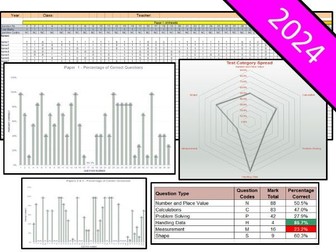
An easy to use Excel Spreadsheet to analyse the maths test scores from the 2024 KS2 SATs though Question Level Analysis (QLA). Papers 1 (arithmetic), 2 and 3 (reasoning) are analysed. Will highlight students’ areas of strength and weaknesses in key maths areas including number, calculation, problem solving, handling data, and shape and measurement. Simply add the students’ name and their score and the spreadsheet will update and produce graphs.
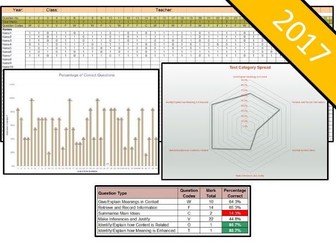
An easy to use Excel Spreadsheet to analyse the reading test scores from the 2017 KS2 SATs though Question Level Analysis (QLA). Will highlight students' areas of strength and weaknesses in key reading areas including: giving/explaining meanings of words in context, retrieving and recording information/identifying key details from fiction and non-fiction, summarising main ideas from one or more paragraphs, making inferences from the text/explaining and justifying inferences with evidence from the text, identifying/explaining how information/narrative content is related and contributes to meaning as a whole, and identifying/explaining how meaning is enhanced through choice of words and phrases. Simply add the students' name and their score and the spreadsheet will update and produce graphs.


 Quick View