These sheets were made as a follow up activity for children to complete during continuous provision free flow.
After completing a RWI word time lesson I would put the corresponding sheet out in our writing/phonics area. We would also use them to help with blending skills and the selection of sounds for green words independent of the RWI syllabus.
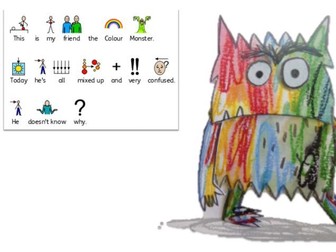
A power point with sheets that takes a class through the story of the colour monster.
The sheets add more words to help children express their feelings through further synonyms which they are able to choose. For example happiness: glee, elation, pleasure, delight, jubilation.
A microphone is also needed as children are encouraged to add their own thoughts to the power point after each emotion is expressed. For instance What makes you scared? These can be revisited and used to highlight how different things make different people feel.
The power point also has a graph where the children can chart how they think the character is feeling as the monster goes through all the different emotions.
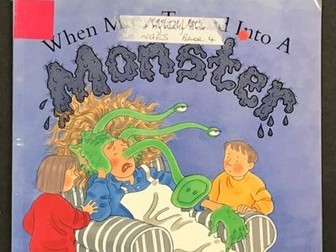
You will need the story ‘When Mum turned into a monster’ by Joanna Harrison. It can be found on youtube as well.
PSHE Thrive Emotions resource. Based on the story ‘When Mum Turned Into A Monster’. The story follows a mum who gradually turns into a monster due to the actions of her children over a day.
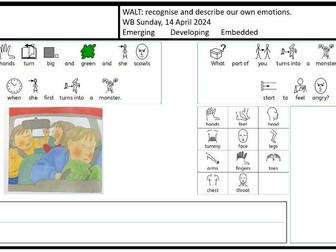
The resource investigates what makes mum angry in the story, what makes your teacher, parent, siblings and you angry. When you turn angry what part of you do you feel turning into a monster first?
Helps children talk about what they do or don’t do to turn others into monster, What others do to turn them into monster. Allowing children and adults to look at their actions and choices in a humorous way and think about positive ways to express emotion or keep calm.
Made originally to work with a SEN class with some children with severe anger issues who viewed anger as a negative emotion and struggled to label themselves as anything but happy. Story helped them talk about anger and turning into a monster without becoming upset.
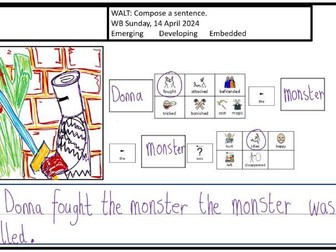
A colourful semantics make a sentence power point that can be printed out to be used with children to make and write sentences. I have a laminated copy with velcro that I have successfully used in Nursery, Reception and SEN settings.
Sheets made around the story ’ When mum turned into a monster ’ by Joanna Harrison. A fun book where the childrens behaviour slowly turns their mum into a monster.
Previously used with special needs children to help them understand emotions. I have also used the sheets with main stream children who struggle to control their emotions.
Has the story as a power point and sheets to go alongside the story for the children to create their own version.
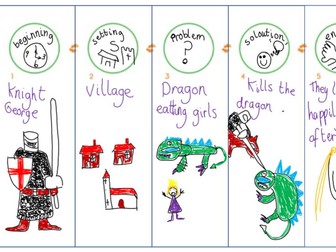
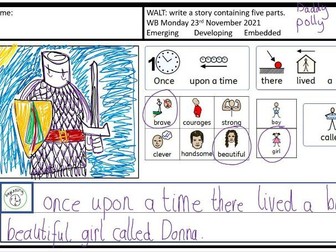
A power point helping children to write a five part story using the story of St George.
-Beginning
-Setting
-Problem
-Solution
-End
Each part has a sentence for the children to use with synonyms to choose from to help improve their vocabulary and writing. Model and pictures for the five parts are included. I have used this power point with a reception class, Year One class and with a number of classes in Key stage two in a SEN school.
When teaching using the power point I like to play a game called word catcher with the children. I pretend to throw the synonyms out to the children and then they say which word they are going to use. An idea taken from ‘THe write stuff’ by Jane Considine.
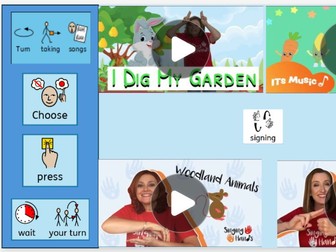
A fantastic resource to use with children to count in 2’s, 5’s and 10’s. Pupils can order Numicon and Dot domino squares to match numerals. Then record their voices (With adult help) so they can listen to themselves count in 2’s, 5’s and 10’s.
An excellent maths and ICT resource to use with Early Years children or Year One.
I have used the power points with lots of success with a number of Reception classes and also in a SEN school.
Read Write Ink Set One sounds.
Power point that follows the Read Write Ink set one sounds progression.
Everything required to teach the sound lessons using an interactive white board.
Originally created for a special needs class I have also used this resource with early years and year one classes. Pupils need to be read the story of St George and are shown how it fits into five parts. Beginning-Setting-Problem-Solution-End. Pupils then help create a different version of the story choosing from in-print blocks with symbols and words to help support understanding.
The power point contains a model created with a class and then the corresponding blank sheets for pupils to use to create their own story.
A practical and engaging collection of resources for a six-week Plants and Animals topic designed specifically for non-verbal SEND learners. Created to support communication, sensory exploration, and hands-on learning through simple activities, visuals, symbols, and repetitive routines.
Children will explore plants, herbs, seeds, and British animals through sensory play, investigation, matching activities, and structured learning tasks adapted for a range of abilities. The activities encourage communication using symbols, Makaton, key vocabulary, and choice making.
This pack includes:
Weekly lesson ideas and themed activities
Symbol-supported visuals and vocabulary cards
Matching, sorting, and sensory exploration tasks
Fine motor and attention-building activities
Simple science investigations for SEND learners
Continuous provision ideas
Animal and plant identification resources
To fully access the investigation activities, you will need to purchase a small selection of fresh herbs and sunflower seeds for planting and sensory exploration. These low-cost items help provide meaningful real-life learning experiences and support curiosity, communication, and engagement.
Perfect for SEND classrooms, early years provision, autism provision, and pupils working below age-related expectations.
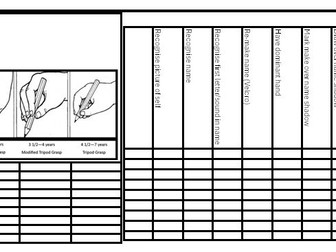
A practical and easy-to-use Mark Making Checklist designed for Early Years and SEND provision. Perfect for tracking pre-writing development, fine motor progress, and early pencil control skills in a clear and manageable way.
This resource supports practitioners in identifying small-step achievements, monitoring progress, and planning next steps for children working on early writing foundations. Ideal for non-verbal learners, autistic children, and pupils needing additional fine motor or communication support.
Includes:
Progressive mark making skill checklist
Fine motor and pencil control observations
Easy-to-follow assessment format
Suitable for nursery, reception, SEND classrooms, and intervention groups
Great for evidence folders, EHCP targets, and parent communication
A helpful assessment tool for teachers, teaching assistants, and SEND practitioners looking to celebrate and track early writing development in an engaging and supportive way.
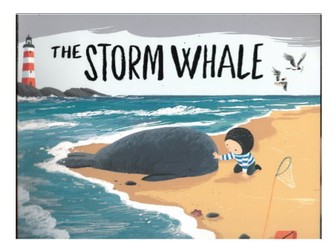
A differentiated writing resource based on the beautiful story The Storm Whale, designed for Early Years and SEND classrooms. Perfect for autistic pupils, and children developing early writing confidence.
These simple and supportive writing sheets allow pupils to build sentences independently by choosing their answers through circling picture or word options before copying the completed sentence below. This structured approach reduces cognitive load while encouraging sentence building, reading, and mark making skills.
The pack includes:
Choice-based sentence building sheets
Symbol-supported vocabulary and visuals
Simple copy writing opportunities
Differentiated recording sheets
Large writing spaces for emerging writers
Repetitive sentence structures to support communication and confidence
Symbol marking checklist for use alongside pupils during assessment
Early writing assessment support for SEND learners
Ideal for literacy lessons, provision activities, interventions, and evidence gathering in Early Years, autism provision, and SEND classrooms. The symbol marking checklist helps practitioners assess engagement, communication, pencil control, copying skills, and sentence understanding in a supportive and accessible way.
A simple and supportive story mapping resource designed to help children develop and organise their own story ideas. The map is split into five clear sections: beginning, setting, problem, solution, and ending, making storytelling more accessible for pupils who struggle with communication, sequencing, or recording ideas independently.
Originally created for a verbal SEND class aged 8–11 with low communication skills, this resource encouraged pupils to express their imagination through drawing before developing language around their ideas. Children were able to create detailed pictures, which then became the focus for discussion, questioning, and storytelling.
This resource is ideal for:
SEND classrooms
Autism provision
Speech and language interventions
Early writers and reluctant writers
Pupils needing visual structure and support
The story map supports:
Drawing and visual storytelling
Sequencing events
Developing vocabulary and communication
Adult-supported discussion and questioning
Expanding simple ideas into full stories
Building confidence in storytelling and writing
Perfect for use as part of literacy lessons, intervention groups, or independent creative activities where communication and imagination are encouraged in a low-pressure and accessible way.
A fun and engaging science sensory story designed to help children explore and investigate different materials through hands-on, sensory-based learning. This resource introduces wood, metal, plastic, and glass using repetitive story language, sensory exploration, and real-life objects to support understanding and communication.
Created for Early Years and SEND learners, this sensory story is ideal for non-verbal children, autistic pupils, and children with communication and sensory needs. Activities encourage exploration through touch, sound, observation, and play while developing early science vocabulary and attention skills.
The story includes opportunities for children to:
Explore and compare materials
Investigate textures, sounds, and properties
Develop early science understanding
Build communication through symbols and key vocabulary
Engage in sensory-rich, repetitive learning experiences
To fully access the activities, you will need a selection of supporting materials and objects for investigation, including:
Wooden toys
Foil
Metal pans
Metal toy cars
Plastic dolls
Cups
Plastic utensils
Lego
Marbles
Glass bottles
Perfect for SEND classrooms, sensory circuits, attention autism sessions, continuous provision, and early science lessons.
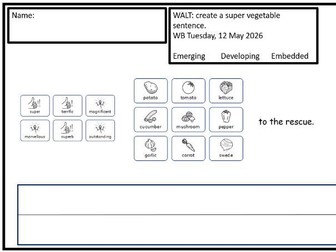
A fun and engaging literacy resource inspired by Supertato, designed to help children create and re-write their very own Super Vegetable adventure story. Perfect for encouraging imagination, storytelling, mark making, and early writing skills in both mainstream and SEND settings.
When originally used, the completed pages were printed in A3 format and turned into individual story books for each child to take home — creating a meaningful and motivating final outcome that children were incredibly proud of.
This resource has been successfully used with:
Reception classes during the Summer term
SEND provisions
Verbal autistic children needing structured literacy support
The activities support:
Story sequencing
Character creation
Simple sentence building
Drawing and illustration
Speaking and listening skills
Collaborative storytelling
Confidence in early writing
Children can invent their own superhero vegetable, create problems and solutions, and build a personalised story using structured prompts and visuals. The repetitive and familiar story format helps reduce pressure while allowing creativity and imagination to shine.
Perfect for literacy lessons, World Book Day activities, topic work, or end-of-term creative projects.
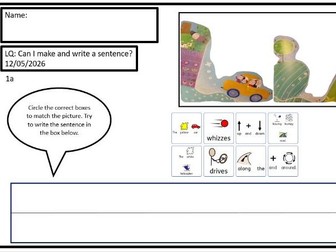
A colourful semantics resource based on The Journey Home from Grandpa’s designed for Reception and SEND learners. This resource supports children in developing simple sentence structure, communication, and storytelling skills through the use of colourful semantics visuals and structured language activities.
Perfect for autistic learners, children with speech and language needs, and pupils working on early communication and sentence building. Activities are designed to reduce language overload while encouraging understanding of who, what, where, and action words through engaging and familiar story contexts.
This pack includes:
Colourful semantics sentence strips
Symbol-supported vocabulary cards
Story sequencing activities
Simple sentence building tasks
Matching and comprehension activities
Visual prompts to support speaking and writing
Differentiated worksheets for a range of abilities
Ideal for Reception classrooms, SEND provision, speech and language interventions, and children developing early expressive language skills. The repetitive story structure and visual supports help build confidence, communication, and independence in both verbal and non-verbal learners.
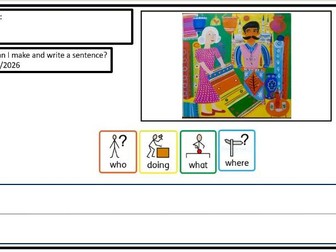
A colourful semantics re-write resource based on Grandma Goes to Market designed for Reception and SEND learners. This engaging resource helps children develop sentence structure, vocabulary, communication, and storytelling skills through repetitive language patterns and colourful semantics activities.
Children build and re-write simple sentences using colour-coded visuals to support understanding of who, what doing, what, and where. The familiar story structure helps reduce language pressure while encouraging confidence in speaking, reading, and early writing.
Perfect for:
Reception classrooms
SEND provision
Speech and language interventions
Autistic learners
Children developing expressive language skills
This pack includes:
Colourful semantics sentence strips
Symbol-supported vocabulary cards
Story re-write activities
Simple sentence building tasks
Matching and sequencing activities
Visual supports for communication and writing
Differentiated worksheets for a range of abilities
Ideal for developing communication, comprehension, and early literacy skills in a structured and accessible way.