Human Sexuality & Religious Views (AQA Theme A) -  Lesson 2Quick View
MissRRE

Human Sexuality & Religious Views (AQA Theme A) - Lesson 2

(0)
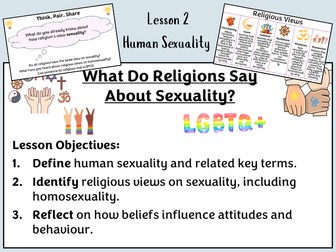
This engaging and thoughtful lesson introduces students to religious views on human sexuality, including diversity of belief within and across faith traditions. Learners explore how different religions understand sexuality, how attitudes vary, and how beliefs influence behaviour. The lesson is designed for Year 10 Core RE, but aligns directly with AQA GCSE Theme A and helps build foundational understanding for later exam content. This lesson follows Lesson 1: Introduction to Relationships and Families, as confirmed in the slide sequence. What’s Included: ✔ Full PowerPoint (15 slides) featuring: DNA starter questions reviewing key terminology and law changes Key term explanations Overview of major religious and humanist views (Christianity, Islam, Judaism, Buddhism, Hinduism, Humanism) A table‑based analysis task identifying religions from key quotes and interpreting their views on homosexuality and sexuality more generally Two detailed case studies of LGBTQ+ individuals from religious backgrounds Extended writing task Ideal For: Year 10 Core RE GCSE short course Theme A introductory units PSHE sessions on diversity, equality, and belief
Sexual Relationships Before and Outside of Marriage – Lesson 3 (AQA Theme A)Quick View
MissRRE

Sexual Relationships Before and Outside of Marriage – Lesson 3 (AQA Theme A)

(0)
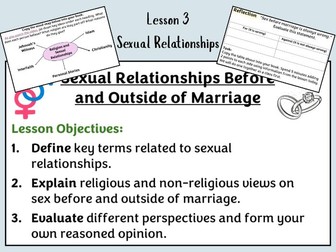
This comprehensive and engaging lesson explores religious and non‑religious views on sex before marriage and adultery, helping students understand differing ethical perspectives and consider their own reasoned views. Designed for Year 10 Core RE, but perfectly aligned with AQA GCSE RS Theme A, this lesson builds directly on Lessons 1 and 2 in your Relationships and Families unit, as shown in the slide sequence. ✔ Full PowerPoint (15 slides) featuring: DNA starter questions checking prior knowledge about sex before marriage and differing religious beliefs Key vocabulary including adultery, marriage, fornification (fornication) Guided video mind‑map task covering views from Islam, Christianity, Jehovah’s Witnesses, interfaith voices, and personal stories Station activity where students move around the room to explore multiple belief systems and complete comparison tables Detailed religious info sheets (Christianity, Islam, Hinduism, Humanism/Atheism) giving quotes, teachings, and reasons behind beliefs Student worksheet for comparing beliefs about sex before marriage and adultery Evaluation task Extended writing task with sentence starters Ideal For Year 10 Core RE lessons AQA GCSE lessons (introductory or revision) Ethical debate or SMSC lessons
Introduction to Relationships and Families (AQA)Quick View
MissRRE

Introduction to Relationships and Families (AQA)

(0)
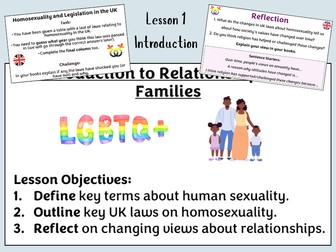
This engaging and thought‑provoking introductory lesson to Relationships and Families is designed for Year 10 Core RE, but aligns directly with AQA GCSE Theme A. It introduces pupils to key concepts around human sexuality, UK laws on homosexuality, and how attitudes toward relationships have changed over time. The lesson encourages reflection, respectful discussion, and an understanding of both religious and societal views. What’s Included: ✔ Full PowerPoint (13 slides) covering: Starter activity using prediction and discussion Key definitions (human sexuality, heterosexuality, homosexuality) Timeline activity on changes in UK law relating to homosexuality Religious and social attitudes toward sexuality and consent Age of consent explanation Reflection tasks with sentence starters ✔ Printable table activity on UK laws and social change ✔ Challenge questions for stretch ✔ Discussion questions promoting critical thinking Ideal For: Core RE lessons in Years 9–11 AQA GCSE Theme A introduction PSHE or tutor‑time sessions on relationships & equality Lessons exploring law, ethics, and social change
History Timeline Bunting - 43 Key EventsQuick View
MissRRE

History Timeline Bunting - 43 Key Events

(0)
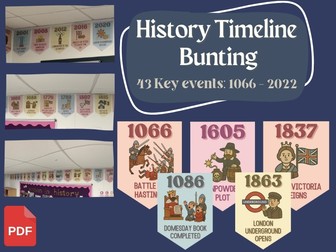
Engaging history display bunting featuring key events from 1066 to 2022. Supplied as a printable PDF file. Just print, cut and either hang as bunting or stick directly to the wall to create a clear visual timeline for KS2-KS4 classrooms. Ideal for revision, displays and helping pupils understand chronology. Bring history to life with this colourful classroom display bunting, covering 43 major events from the Battle of Hastings to King Charles III becoming monarch. What’s Included: Printable PDF file with 43 bunting pieces (one for each event). Clear, bold text for easy visibility across the classroom. A wide range of British and world history milestones. Events Covered Include: Battle of Hastings, Magna Carta, Black Death, Spanish Armada Gunpowder Plot, English Civil War, Great Fire of London American Declaration of Independence, French Revolution, Slave Trade Abolition World Wars I & II, Cuban Missile Crisis, Fall of the Berlin Wall 9/11, Brexit, Covid-19 pandemic, King Charles III coronation and many more! How To Use: Print onto card or paper, cut out and either: String together as bunting, or Stick directly to the wall to create a straight time line display. Perfect for corridors, classrooms or history-themed events. Suitable for Key Stage 2, Key Stage 3 and Key Stage 4 as a visual reminder of key historical events. Why Teachers Love It: Instant, eye-catching classroom display. Helps pupils understand the chronological order of key historical moments. Supports revision and historical context building.
6 Worldview Religion PDF PostersQuick View
MissRRE

6 Worldview Religion PDF Posters

(0)
This set includes 6 high-quality PDF posters, each focusing on one of the world’s major religions: Buddhism, Hinduism, Sikhism, Christianity, Islam, and Judaism. Each poster provides essential, easy-to-read information, making it an ideal display for your classroom. Perfect for helping students explore and understand the key beliefs, symbols, practices, and history of these faiths. Use these vibrant and informative posters to engage your students and spark discussions on religious diversity and global culture.