Romero BrittoQuick View
tee_ali

Romero Britto

(0)
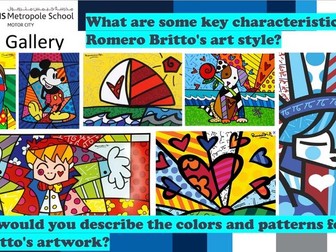
Introduction to Romero Britto Objective: Students will learn about the artist Romero Britto, explore his unique style, and delve into typography. They will then create their names in the style of Britto, using his mark-making techniques, and be encouraged to develop their own creative variations. Who is Romero Britto? Romero Britto is a Brazilian artist known for his vibrant and colourful artwork that combines elements of pop art, cubism, and graffiti. His work often features bold patterns, playful themes, and a sense of joy and optimism. Britto’s Style: Bright Colours: Britto’s artwork is characterised by the use of bright, eye-catching colours. Bold Lines: Thick, black outlines define the shapes in his paintings. Patterns: He often incorporates a variety of patterns, such as polka dots, stripes, and geometric shapes. Playful Themes: His art frequently includes hearts, stars, flowers, and happy characters. Exploring Typography: Typography is the art and technique of arranging type to make written language legible, readable, and visually appealing. In this lesson, students will focus on: Font Styles: Different styles of lettering and their impact. Composition: How the arrangement of letters and words affects the overall design. Creativity: Incorporating personal style and artistic elements into typography. Activity: Create Your Name in Britto’s Style Research and Inspiration: Students will look at examples of Romero Britto’s artwork and identify common elements. Sketching: Each student will sketch their name, incorporating bright colours, bold lines, and various patterns inspired by Britto’s style. Mark-Making Techniques: They will use different mark-making techniques to add texture and depth to their letters. Personal Touch: Encourage students to add their own unique elements and creativity to their designs. Materials Needed: Coloured markers, pencils, or paints Black markers for outlines Paper Reference images of Romero Britto’s artwork Outcome: By the end of the lesson, students will have a better understanding of Romero Britto’s artistic style and the basics of typography. They will have created a personalised piece of art that reflects both their name and their creative interpretation of Britto’s techniques.
Monsters KS3 ProjectQuick View
tee_ali

Monsters KS3 Project

(0)
This PowerPoint introduces a KS3 Art project based on the theme of Monsters, designed to develop students’ drawing skills, creativity, and understanding of artist influence. Students explore a range of artists who use character, exaggeration, and expressive mark-making in their work, including Jean-Michel Basquiat, Jon Kelly Green, Mateo Dineen, and Tim Burton. Through artist research and visual analysis, students examine how artists use shape, line, colour, tone, and facial expression to communicate character and emotion. A particular focus is placed on the work of Jon Kelly Green, exploring how simple shapes, limited colour palettes, and tonal variation can create bold and effective monster designs. Students are guided to: Gather and evaluate information about relevant artists Recreate an artist-inspired monster drawing using careful observation Apply learned techniques to design their own original monster Develop confidence in drawing, observation, and creative decision-making The project encourages a “70% looking, 30% drawing” approach, reinforcing the importance of observation in successful artwork. The final outcome includes the creation of a front cover design, showcasing students’ understanding of artist influence and personal creativity.
Google Doodle - KS3Quick View
tee_ali

Google Doodle - KS3

(0)
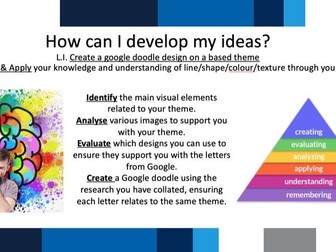
KS3 Art: Google Doodle exercise - A visual, well designed PowerPoint encouraging students to create their own Google Doodle Art. Information and Success Criteria linked to the NC. This exercise is completed in TONE due to current Covid 19 regulations. Also shows visuals of light, medium and dark tones as well as Mark Making Techniques. More PP to follow.
Picasso Style PortraitsQuick View
tee_ali

Picasso Style Portraits

(2)
Use Picasso to influence your students. Can be differentiated easily as students will concentrate on line drawing and then apply all relevant details. Discuss the artist, look at his work and then students will choose which portrait they like the most. Stories can be created depending on the theme, mood, and colours of the portraits. Discussions can also be encouraged. Please leave comments if you wish.
Fruit PortraitsQuick View
tee_ali

Fruit Portraits

(0)
Interesting lesson aimed at KS3 but can be adapted to KS4 ensuring that you provide the correct differentiation. Students will learn about the Artist and then create their own portrait using a range of different fruits. Fantastic results, can use a wide range of media but colouring pencils seem to be best option ensuring that you encourage them to use the right colouring techniques. Please leave any comments if you found this powerpoint helpful?
TypographyQuick View
tee_ali

Typography

(0)
Simple one lesson activity for students to look at a range of different types of font. Key words: scale, proportion, size, detail, tone. \n\nCan elaborate on each point. \n\nEnjoy
Art & Design Assessment Objectives (AO1–AO4)Quick View
tee_ali

Art & Design Assessment Objectives (AO1–AO4)

(0)
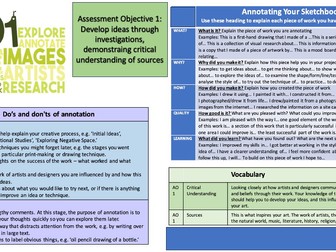
This PowerPoint provides a detailed breakdown of the Art and Design Assessment Objectives (AO1–AO4). It is designed to support teachers and students in clearly understanding what is required to achieve success across all stages of the creative process. The presentation explains how students should: Develop ideas through investigation and research (AO1) Experiment with materials, techniques, and processes (AO2) Record ideas, observations, and insights effectively (AO3) Present a personal and meaningful final outcome (AO4) It is intended to ensure consistent assessment, clear expectations, and high-quality outcomes across Key Stage 3, GCSE, and A Level Art. The PowerPoint can be used for teaching, planning, moderation, and inspection purposes, supporting both staff confidence and student progress.
Artist Case Study: Georgina LuckQuick View
tee_ali

Artist Case Study: Georgina Luck

(0)
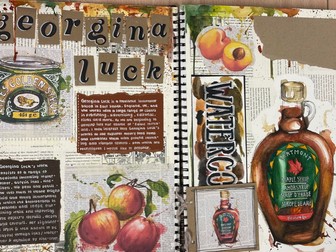
This PowerPoint introduces students to the work of contemporary artist Georgina Luck, focusing on her use of pattern, repetition, line, and nature-inspired forms. The presentation supports students in understanding how artists develop ideas from natural sources and translate observations into structured, decorative compositions. The resource encourages students to: Analyse how Georgina Luck uses shape, line, and pattern Explore how natural forms can be simplified and stylised Develop their own ideas through artist research and visual analysis Experiment with pattern-making techniques inspired by the artist’s work This presentation is designed to support AO1 (developing ideas through research) and AO2 (exploring materials and processes), and can be used across KS3 and KS4 to inspire sketchbook work, practical exploration, and personal responses.
GCSE Art & Design Component 2: Artist Research SuccessQuick View
tee_ali

GCSE Art & Design Component 2: Artist Research Success

(0)
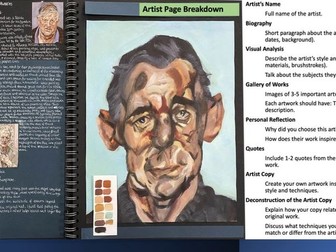
This PP showcases high-quality artist research examples for Component 2, including clear Success Criteria, Bronze, Silver, and Gold graded examples with detailed explanations. It also provides in-depth guidance on Assessment Objectives AO1 – AO4, supporting students in understanding how to analyze, develop ideas, refine work, and present outcomes effectively.
GCSE Art Theme Support: 47 Artists with Images + Prompts (49 Slides)Quick View
tee_ali

GCSE Art Theme Support: 47 Artists with Images + Prompts (49 Slides)

(0)
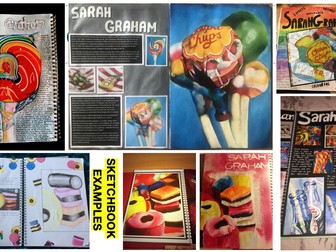
GCSE Art: 47 Artist References PowerPoint (49 Slides) A ready-to-use PowerPoint designed to support GCSE Art students with 40 different artist references across 49 slides - Also includes examplers of sketchbooks of the artists for inspiration. Each slide includes the artist’s name and strong visual examples to help students quickly explore styles, techniques, and ideas. Selected slides also include key words, short prompts, and student-friendly guidance to support analysis and idea development. Perfect for students who need artist links to their theme, and ideal for teachers as a revision, research, or project-planning resource.