Designed for young adults with SEN. This is an age appropriate and relevant resource, could be adapted for other learners.
This includes a 5 slide Power Point and that guides students through discussion based activities supporting them to recognize the signs of an unsafe relationship, along with questions and answers.
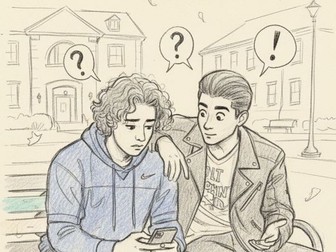
This resource has supporting scenario that allows students to discuss ‘Alex and Jordan’s’ story. It is great to open up discussions around trust, control, consent and coercion.
For new OCR (1-9) Biology B1.
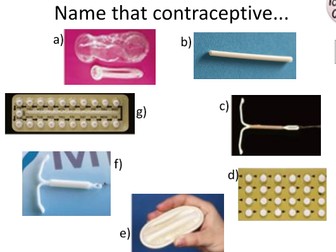
HA and LA students have used this. Overview of all types of contraception. Slides 4-13 can be printed 1 page to a sheet and students work in tables to sort them into hormonal and non-hormonal methods. I then got students to choose one method from each category and list the pros and cons, using the sheet to guide them. They the answer the 6 Mark q.
Marks for identifying 1 hormonal method and a make for giving an advantage and a third for a disadvantage, 3 more for doing the same for a non hormonal method.
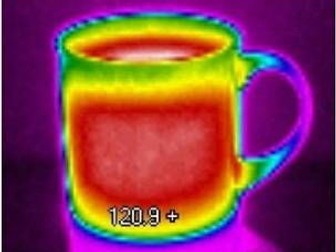
Aimed at Lower to Middle ability students and could be adapted and extended easily for higher attainers. Includes 5 minute lesson plan, temperature cards for matching to pictures (to be printed from ppt slides), ppt and worksheet included.
Aims to get students to:
Understand that everything returns to room temperature, specifically;
Explain that some things are hotter than others
Be able to identify that hotter things cool down to room temperature
Be able to identify that cooler things warm up to room temperature
Begin to think about why this happens
Students work together to make a temperature line to include all the temperatures of the items in the pictures and then use their findings to complete the worksheet.
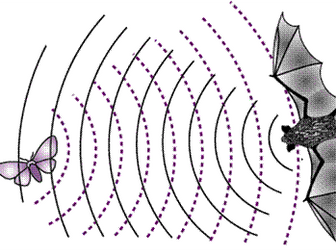
A mixed ability lesson aimed at developing an understanding of echos and ultrasound and their uses. Lesson plan, powerpoint presentation, teach teach swap card class activity along with a mixed ability worksheet included.
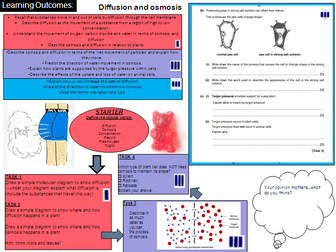
This learning mat allows year 10/11 students to work through at their own pace, includes short activities and exam questions allowing you to facilitate that learning. Leveled activities allow students to meet the following criteria (taken from OCR GCSE science specification):
Foundation:
Recall that substances move in and out of cells by diffusion through the cell membrane.
Describe diffusion as the movement of a substance from a region of high to low concentration.
Understand the movement of oxygen, carbon dioxide and water in terms of osmosis and diffusion
Describe osmosis and diffusion in relation to plants
Standard:
Describe osmosis and diffusion in terms of the ‘net movement of particles’ and explain how they move.
Predict the direction of water movement in osmosis.
Explain how plants are supported by the turgor pressure within cells
Describe the effects of the uptake and loss of water on animal cells.
Higher:
Explain how w can increase the rate of diffusion
Predict the direction of water movement in osmosis
Use the terms: crenation and lysis
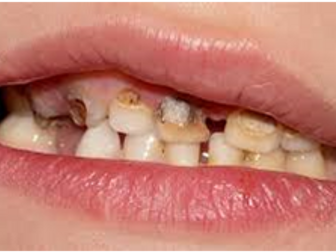
This was a lesson designed to investigate the dangers of too much sugar in the diet. It includes the sugar tax debate and links to Jamie Oliver's campaign. Lesson plan and powerpoint (cards for students to sort to be printed from ppt slides). A very successful lesson that can be tweaked for all abilities.
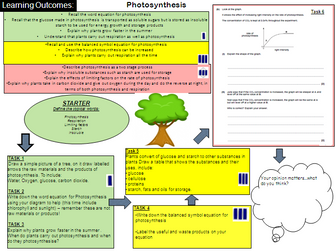
This learning mat allows year 10/11 students to work through at their own pace, includes short activities and exam questions allowing you to facilitate that learning. Leveled activities allow students to meet the following criteria (taken from OCR GCSE science specification):
Foundation:
Recall the word equation for photosynthesis
Recall that the glucose made in photosynthesis is transported as soluble sugars but is stored as insoluble starch to be used for energy, growth and storage products
Explain why plants grow faster in the summer
Understand that plants carry out respiration as well as photosynthesis
Standard:
Recall and use the balanced symbol equation for photosynthesis
Describe how photosynthesis can be increased
Explain why plants carry out respiration all the time
Higher:
Describe photosynthesis as a two stage process
Explain why insoluble substances such as starch are used for storage
Explain the effects of limiting factors on the rate of photosynthesis
Explain why plants take in carbon dioxide and give out oxygen during the day and do the reverse at night, in terms of both photosynthesis and respiration
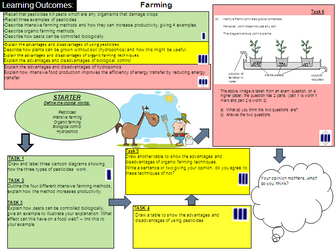
This learning mat allows year 10/11 students to work through at their own pace, includes short activities and exam questions allowing you to facilitate that learning. Leveled activities allow students to meet the following criteria (taken from OCR GCSE science specification):
Foundation:
Recall that pesticides kill pests which are any organisms that damage crops
Recall three examples of pesticides
Describe intensive farming methods and how they can increase productivity, giving 4 examples
Describe organic farming methods.
Describe how pests can be controlled biologically
Standard:
Explain the advantages and disadvantages of using pesticides
Describe how plants can be grown without soil (hydroponics) and how this might be useful.
Explain the advantages and disadvantages of organic farming techniques
Explain the advantages and disadvantages of biological control
Higher:
Explain the advantages and disadvantages of hydroponics
Explain how intensive food production improves the efficiency of energy transfer by reducing energy
transfer
This learning mat allows year 10/11 students to work through at their own pace, includes short activities and exam questions allowing you to facilitate that learning. Levelled activities allow students to meet the following criteria (taken from OCR GCSE science specification):
Foundation:
-State that cholesterol level is an inherited factor that can affect our health
-Identify the two types of cholesterol
-Explain how diet can effect the balance between good and bad cholesterol in the blood
-How the risks of diseases of the heart and blood vessels
Standard:
Explain what cholesterol is
Describe the effects of high levels of ‘bad cholesterol’ in the blood
Explain the benefits of regular exercise on health
Higher:
Evaluate information on the effects of exercise on our health
Explain the importance of the balance of the different types of cholesterol in the blood and how this is effected by diet
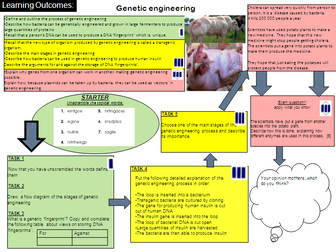
This learning mat allows year 10/11 students to work through at their own pace, includes short activities and exam questions allowing you to facilitate that learning. Leveled activities allow students to meet the following criteria (taken from OCR GCSE science specification):
Foundation:
Define and outline the process of genetic engineering
Describe how bacteria can be genetically engineered and grown in large fermenters to produce large quantities of proteins
Recall that a person’s DNA can be used to produce a DNA ‘fingerprint’ which is unique.
Standard:
Recall that the new type of organism produced by genetic engineering is called a transgenic organism.
Describe the main stages in genetic engineering
Describe how bacteria can be used in genetic engineering to produce human insulin
Describe the arguments for and against the storage of DNA ‘fingerprints’.
Higher:
Explain why genes from one organism can work in another, making genetic engineering possible.
Explain how, because plasmids can be taken up by bacteria, they can be used as ‘vectors’ in genetic engineering.
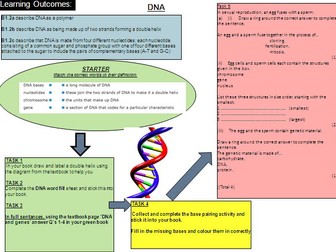
This learning mat allows year 10/11 students to work through at their own pace, includes short activities and exam questions allowing you to facilitate that learning. Leveled activities allow students to meet the following criteria (taken from OCR GCSE science specification):
B1.2a describe DNA as a polymer
B1.2b describe DNA as being made up of two strands forming a double helix
B1.2c describe that DNA is made from four different nucleotides; each nucleotide consisting of a common sugar and phosphate group with one of four different bases attached to the sugar to include the pairs of complementary bases (A-T and G-C)