P2 Lesson 4: Home InsulationQuick View
Anongdm

P2 Lesson 4: Home Insulation

(0)
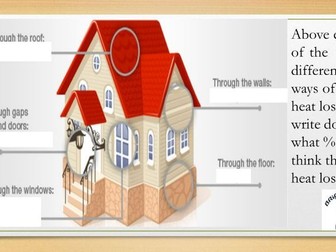
This is the fourth lesson in P2: Energy transfer. In this lesson students learn the different places that energy is lost at home and the different methods of preventing heat loss. The lesson describes how the different methods of insulation work. There is a work sheet with answers.
P2: Lesson 5: Pay back timeQuick View
Anongdm

P2: Lesson 5: Pay back time

(0)
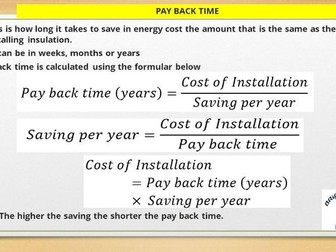
This is the fifth lesson in P2 of AQA GCSE combined/triple science physics. In this lesson about payback time and how to calculate it. There is a worksheet with mark scheme.
P2 Lesson 1:  Systems and heat transferQuick View
Anongdm

P2 Lesson 1: Systems and heat transfer

(0)
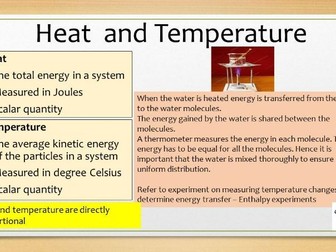
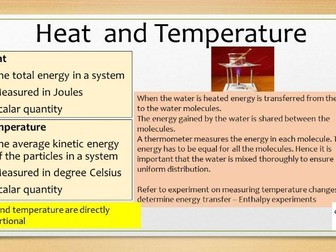
This is the first lesson in AQA combined Science/triple science physics of P2: energy transfer. In this lesson students learn the about systems, and surrounding, the difference between heat and temperature. Students learn about methods of heat transfer and look in details on the method of heat transfer by conduction. They learn about the differences in the conduction in solid, liquid and gases. Students learn about insulators. The lesson has worksheet with mark scheme.
P2 Lesson 3: Effectiveness of different materials as insulatorsQuick View
Anongdm

P2 Lesson 3: Effectiveness of different materials as insulators

(0)
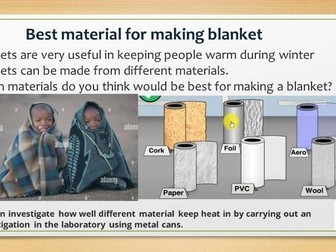
This is the third lesson on P2: Energy transfer of AQA GCSE combined/triple physics. This is a practical lesson with method, risk assessment. Students investigate the ability of newspaper, wool and aluminium foil to work as insulation. Students learn to identify variables in investigation and practice evaluating the result for accuracy in measurement and reliability. The lesson has sample results with questions and mark schemes.
Electrolysis of sodium chloride solutionQuick View
Anongdm

Electrolysis of sodium chloride solution

(0)
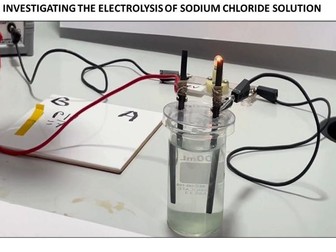
This lesson consist of a short 3 minutes video on electrolysis of sodium chloride solution. It also has power point and worksheet with mark scheme. The video explains the process of electrolysis using a real lab experiment. The questions are typical exam questions testing observations and ability to write equations for reactions at the electrodes. This is not the one to miss.
Investigating the electrolysis of  aqueous solution of copper sulphateQuick View
Anongdm

Investigating the electrolysis of aqueous solution of copper sulphate

(0)
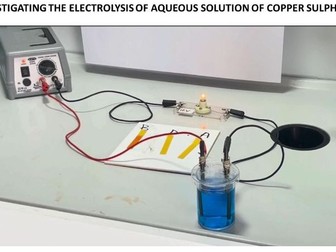
This is the second investigation on electrolysis. The resources include a short video and worksheet with mark scheme. Teachers new into teaching electrolysis will find this very helpful. The video and worksheet can be set as homework for students or used in lesson. You do not want to miss this one. There are 2 more similar resources electrolysis of acidified water electrolysis of sodium hydroxide Enjoy this one
Investigating the electrolysis of aqueous solution of sodium hydroxideQuick View
Anongdm

Investigating the electrolysis of aqueous solution of sodium hydroxide

(0)
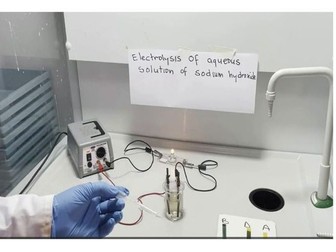
This is the second investigation on electrolysis. The resources include a short video and worksheet with mark scheme. Teachers new into teaching electrolysis will find this very helpful. The video and worksheet can be set as homework for students or used in lesson. You do not want to miss this one. There are 2 more similar resources electrolysis of acidified water electrolysis of sodium chloride electrolysis of copper sulphate
Investigating the electrolysis of acidified waterQuick View
Anongdm

Investigating the electrolysis of acidified water

(0)
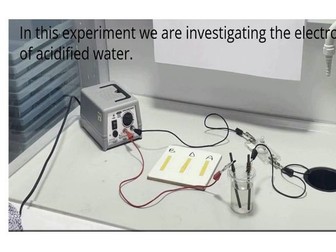
This is the third investigation on electrolysis. The resources include a short video and worksheet with mark scheme. Teachers new into teaching electrolysis will find this very helpful. The video and worksheet can be set as homework for students or used in lesson. You do not want to miss this one. There are more similar resources electrolysis of sodium chloride electrolysis of sodium hydroxide Copper sulphate Enjoy this one
Introduction to the scientific method for year 7 scienceQuick View
Anongdm

Introduction to the scientific method for year 7 science

(0)
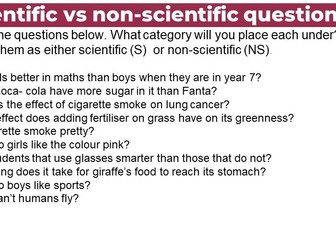
This is the 9th lesson in this topic. The lesson introduces students to the scientific method, the way that scienctist work to answer a question or solve a problem. It explain to students the difference between a scientific and a non-scientific question. Students learn the steps in a scientific. There is a work sheet with mark scheme that can be used as either lesson activity, homework or cover work.
Variables in a scientific investigationQuick View
Anongdm

Variables in a scientific investigation

(0)
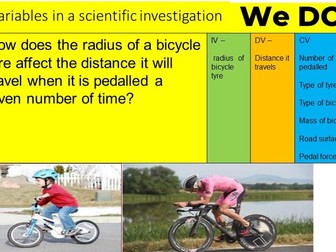
This is the 10th lesson in the topic. This lesson covers the 3 different variables that students come across in science. There is a worksheet with mark scheme that can be use for class activity or homework or cover.
Introduction to science @ KS3 for year 7sQuick View
Anongdm

Introduction to science @ KS3 for year 7s

(0)
This power point will help you introduce the year 7s into science at KS3. It explains to the students what science is and what scientists do and the scientific method. It also explains the qualities that scientists have and gives the students the opportunity to reflect on their own skills and readiness for science at KS3. It introduces them to what to expect, content that will be covered , homework and assessments.
Risk assessmentQuick View
Anongdm

Risk assessment

(0)
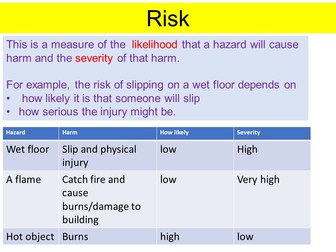
This is the fourth lesson on working scientifically for year 7. This power point introduces students to what hazard, risk and the process of carrying out a risk assessment. The lesson comes with an activity and mark scheme.
Science Hazard symbolsQuick View
Anongdm

Science Hazard symbols

(0)
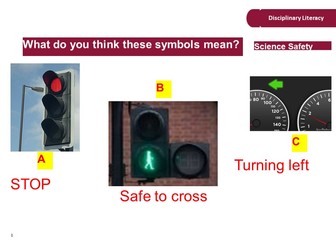
This is the third lesson on working scientifically. This power point, covers the common hazard symbols that students will come across as they embark on their study of science from year 7. Students will learn to recognize the symbols and describe the warning given by each. There is a practice activity with mark scheme.
Laboratory equipmentQuick View
Anongdm

Laboratory equipment

(0)
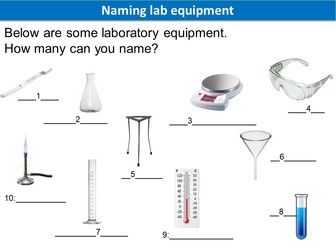
This is the fifth lesson on working scientifically. This lesson introduces students to the most common equipments that they will be using in science. The uses of the equipment are covered. The power point has an activity and mark scheme.
Making measurements in ScienceQuick View
Anongdm

Making measurements in Science

(0)
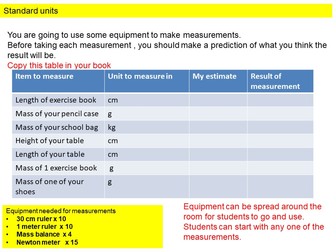
This is the sixth lesson on working scientifically. This power point introduces students to the simple measurements that they will encounter during their study of science. Students also learn about the units for measuring quantities. This is a practical lesson, so would need advance booking.
Using a Bunsen burnerQuick View
Anongdm

Using a Bunsen burner

(0)
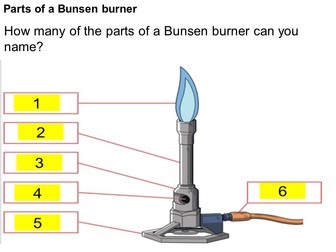
This is the seventh lesson on working scientifically. This lesson concentrate on students learning the names of the parts of a Bunsen burner, the steps to follow when using a Bunsen burner and types of flames to use. The lesson has an activity with answers.
Separation techniqueQuick View
Anongdm

Separation technique

(0)
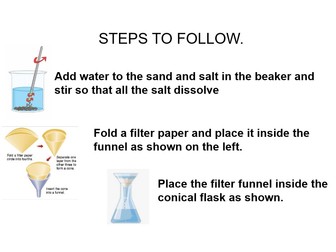
This is the eighth lesson on working scientifically. In this lesson students work in pairs to separate a mixture of sand and salt. There is full instruction for the practical. There is the opportunity here for students to carry out a risk assessment.
Safety in a science laboratoryQuick View
Anongdm

Safety in a science laboratory

(0)
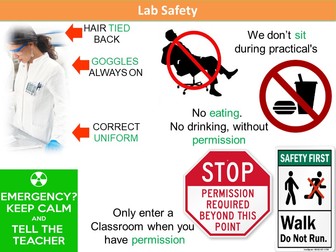
This is the second of 13 lessons on working scientifically mainly for year 7 and an introductory topic. It covers all aspects of working safely in a science lab with particular focus on safety rules, identifying incorrect behavior amongst students in a lab. The lesson has classroom scenario’s, worksheet with mark scheme.
P2 Lesson 2: Investigating conduction in metal rodsQuick View
Anongdm

P2 Lesson 2: Investigating conduction in metal rods

(0)
This is the second lesson in P2: Energy transfer in AQA GCSE combined/triple physics. This is a practical lesson in which students compare the conductivity of rods of different metals using the pin drop with risk assessment. Students revise variables in investigation. Students collect data and practice calculating mean and identifying sources of errors. There are 5 analysis questions with detailed answers.
Heat transfer and conductionQuick View
Anongdm

Heat transfer and conduction

(0)
This is the first lesson in P2: Energy transfer of the AQA GCSE combined physics. This lesson introduces students to what systems and surroundings are and explains the difference between heat and temperature. It introduces and describes the 3 methods of heat transfer. It explains the difference in conduction in solid, liquid and gas. There is a worksheet for students to complete and questions to answer with mark scheme.
Atoms, elements and compounds practice questionsQuick View
Anongdm

Atoms, elements and compounds practice questions

(0)
This worksheet contain 30 multiple choice questions and 2 short answer questions. The questions covers all the content for the topic. It’s a quick way of assessing students understanding for the topic. It’s best used as in class assessment.