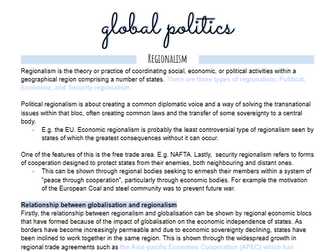
This resource consists of a set of PowerPoint dashboards that summarise the core political ideologies required for A-Level Politics:
Liberalism
Conservatism
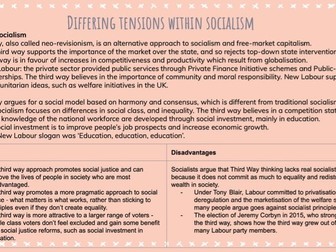
Socialism
Internal ideological tensions within each tradition
Each dashboard presents the key political thinkers in a clear, student-friendly format, breaking down their ideas into consistent, comparable sections such as:
Core beliefs and principles
Key concepts and arguments
Views on the state and human nature
Ideas on society, the economy, and freedom
Context and key quotations
The dashboards use colour-coding, icons, and structured layout to help students quickly understand, revise, and compare ideological thinkers. They are designed to:
Support A-Level Politics exam preparation
Make complex theorists easier to revise
Highlight both shared ideas and tensions within each ideology (e.g., classical vs modern liberalism)
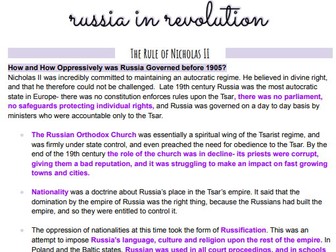
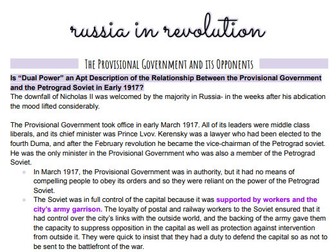
This detailed PowerPoint presentation provides a comprehensive overview of Nicholas II’s character, attitude towards autocracy, and leadership abilities, designed specifically for A-Level History students studying Tsarist Russia. The resource is ideal for classroom teaching or independent student revision and forms a strong foundation for understanding the weaknesses of Nicholas II’s rule in the lead-up to the 1905 and 1917 revolutions.
The presentation is structured to encourage critical thinking around the central enquiry question:
“Were the character, attitude and abilities of Nicholas II suitable for his role as tsar?”
It includes clear, well-organised slides covering the following key areas:
Nicholas II’s Character:
Explores how historians and contemporaries have interpreted the tsar’s personality, including common portrayals of him as naïve, indecisive, and overly private. Discussion includes the limitations of personal diaries as historical sources and the debate between seeing Nicholas as weak-willed vs. misunderstood.
Attitude Towards Rule:
Analyses Nicholas’s deep belief in divine right and his unwavering commitment to autocracy, supported by references to the Fundamental Laws of 1906. It examines how this rigid ideology influenced his resistance to reform and prioritisation of dynastic preservation.
Leadership Abilities:
Evaluates his practical competence as a ruler, highlighting his failure to adapt to modern political challenges, his overreliance on advisors, and his sporadic assertiveness—often interpreted as obstinacy. Students are encouraged to weigh Nicholas’s limited successes against broader structural issues.
Political Context:
Provides background on the outdated and overstretched nature of the Russian autocratic system. Key points include the inefficiency of the bureaucracy, isolation from the public, and the regime’s lack of a coherent strategy to address rapid industrialisation and social change. A comparative table outlines the tension between the old and new roles of the state.
Mini Case Study – Department of Agriculture (1894):
A concise case study highlighting the regime’s inability to manage rural unrest through effective reform. Used to illustrate the disconnect between Nicholas’s intentions and administrative outcomes.
This PowerPoint is ideal for use over one or two lessons and is designed to support exam preparation by building context for topics such as the 1905 Revolution, the collapse of autocracy, and the broader causes of revolution in Russia.
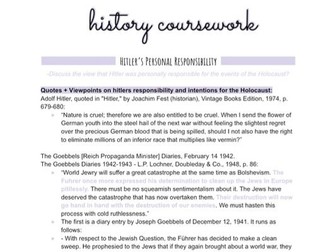
A set of notes prepared for coursework on the Edexcel A-Level History topic, specifically addressing the question: “Discuss the view that Hitler was personally responsible for the events of the Holocaust?” These notes have been crafted by a prior student who achieved a perfect score of 40/40 in her coursework. The notes provide a comprehensive analysis of Hitler’s involvement in the Holocaust, drawing upon various scholarly interpretations, primary sources, and historical context. Key aspects covered in the notes include Hitler’s ideological framework, direct involvement evidenced through primary sources such as Joseph Goebbels’ diaries, Hitler’s leadership style, contrasting scholarly interpretations regarding Hitler’s personal responsibility, and a nuanced conclusion synthesizing different perspectives.
The resource aims to offer a well-researched and structured argument supported by citations from reputable authors and primary sources, providing a strong foundation for students to develop their understanding and analysis of Hitler’s role in the Holocaust within the framework of their coursework requirements.
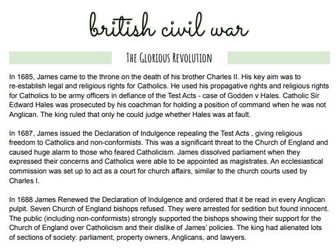
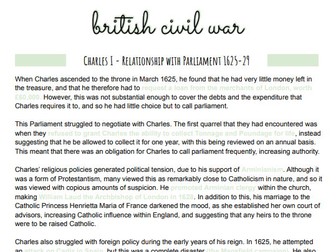
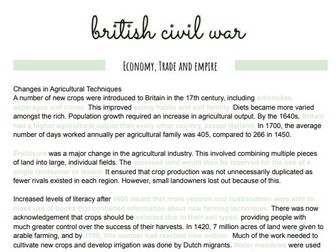
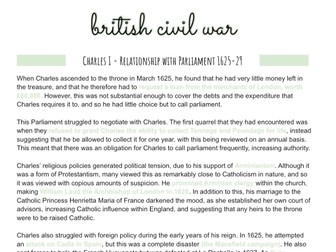
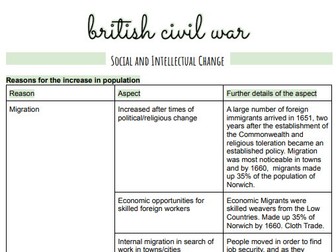
This bundle contains notes on the Edexcel A-Level History Britain 1625-1701 course for theme 1-5 including: A Quest for Political Stability, Religion, Conflict and Dissent, Social and Intellectual Challenge, Economy, Trade and Empire and The Glorious Revolution


 Quick View