The Guardian: Three Little Pigs - Newspaper ReportQuick View
emmabw94

The Guardian: Three Little Pigs - Newspaper Report

(1)
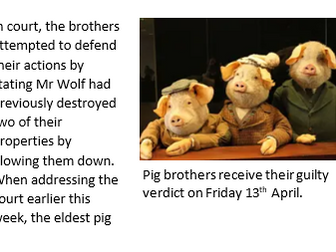
Newspaper report based on The Guardian’s twist on the Three Little Pigs. The TV ad follows a developing story of three little pigs being arrested in a police raid and found guilty of insurance fraud, putting a twist on the victims within the classic fairytale. The newspaper article is suitable for use in UKS2 and can be linked through history looking at Crime and Punishment. Video: https://www.youtube.com/watch?v=vDGrfhJH1P4
WW2 - Air Raid InstructionsQuick View
emmabw94

WW2 - Air Raid Instructions

(0)
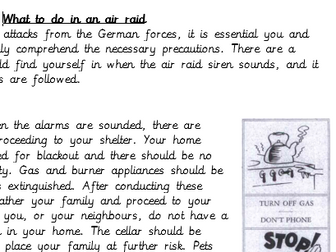
Formal instructions for what to do during an air raid in WWII. Grammar focus: modal verbs, formal language, subordination, adverbials. Suitable for use in UKS2.
Holes - Letter to Children's ServicesQuick View
emmabw94

Holes - Letter to Children's Services

(0)
A formal letter written from Stanley to Children’s Services, making a formal complaint about the conditions at Camp Green Lake. Grammar focus: formal language, passive voice, range of clauses, adverbials.
Persuasive advert - GladiatorQuick View
emmabw94

Persuasive advert - Gladiator

(0)
Persuasive advert encouraging people to become a gladiator, including a range of persuasive devices. Grammar focuses: sentence openers, relative clauses, persuasive devices (emotive language, exaggeration, direct address, rhetorical questions), modal verbs, dashes. Suitable for use in UKS2.
Historic Battle - Setting DescriptionQuick View
emmabw94

Historic Battle - Setting Description

(0)
Setting description based on a generic ancient battle. Grammar focus: descriptive devices, relative clauses, dashes and fronted adverbials. Suitable for use in UKS2. Used in conjunction with history topic - Ancient Civilisations. For the independent write, children changed the setting to better suit Ancient China.
Goodnight Mr Tom - letter to Mrs FordQuick View
emmabw94

Goodnight Mr Tom - letter to Mrs Ford

(0)
A persuasive letter from Mr Tom to the billeting officer - Mrs Ford - asking her to consider allowing William to stay in Little Weirwold with him. Grammar focus: adverbial phrases, subordinate clauses, emotive language, rhetorical questions. Suitable for use in UKS2.
Macbeth Banquo's Ghost - Third person narrative (Y6)Quick View
emmabw94

Macbeth Banquo's Ghost - Third person narrative (Y6)

(0)
Third person narrative based on Macbeth. The narrative is based on the short encounter between Macbeth and Banquo’s ghost (Act 3, Scene 4). Grammar focuses: semi-colons, dialogue to advance action and punctuating direct speech correctly.
Harry Potter: Gryffindor vs. Slytherin - Newspaper ReportQuick View
emmabw94

Harry Potter: Gryffindor vs. Slytherin - Newspaper Report

(0)
Newspaper report based on Harry Potter and the Philosopher’s Stone chapter 11 (Quidditch). The report is based on the Quidditch match that takes place between Gryffindor and Slytherin. Grammar focuses: direct and reported speech, formal language, adverbials and semi-colons. Suitable for use in UKS2.
Wonder - Jack's Diary EntryQuick View
emmabw94

Wonder - Jack's Diary Entry

(0)
A diary entry based on Wonder and written from the perspective of Jack after he takes August on a school tour during his summer break (chapters 8-10). Grammar focus: parenthesis, rhetorical questions, subordinate clauses, adverbial phrases. Suitable for use in UKS2.
Goodnight Mr Tom - additional chapter openingQuick View
emmabw94

Goodnight Mr Tom - additional chapter opening

(0)
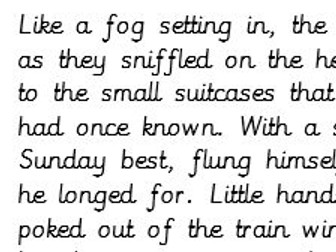
Additional chapter opening for Goodnight Mr Tom which follows Willie’s experiences at the train station, saying goodbye to his mother. Grammar focus: speech, descriptive devices, subordinate clauses, adverbial phrases. Suitable for use in UKS2.
Leaf  - Newspaper ReportQuick View
emmabw94

Leaf - Newspaper Report

(0)
Newspaper report based on Leaf by Sandra Dieckmann. A strange creature washes up in the shore of the Wild Wood and most of the residents are not pleased with the newcomers arrival. Grammar focus: direct speech, indirect speech, passive voice, subordinate clauses, relative clauses, adverbial phrases. Suitable for use in UKS2.