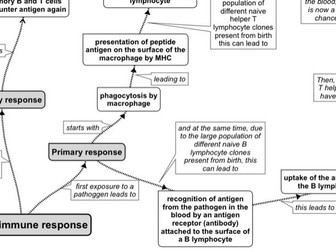
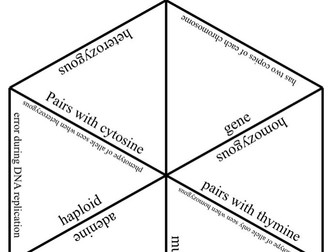
Animated Powerpoint presentation to support a lesson on 4.1.1 phagocytosis, clonal selection and clonal expansion of B and T cells. I have prepared these in outline and more notes can be added as needed. I have provided a link to one of my videos to revise the steps of phagocytosis. The animated slides show how helper T cells are activated and undergo clonal expansion. I then show how B cells undergo activation and clonal expansion. I also show the same process for killer T cells and show a link to one of my videos which clarifies the distinction between the process of activation of helper and killer T cells (this last bit is slightly beyond A level but this extra bit of detail may help clarify some confusion arising from textbook over-simplification).
Includes a black mindmap, a scrambled list of answers and the completed mindmap. The mindmap describes clonal selection and clonal expansion of B and T cell populations
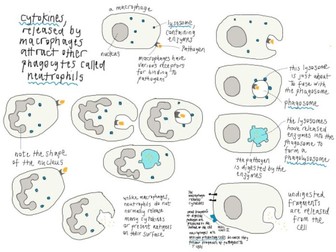
This YouTube video comes with
a pdf summary of the video
an unannotated version of the summary sheet that students can fill in using the video. This sheet has only the pictures from the video.
an unannotated version with scaffolding
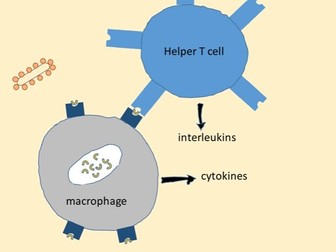
Phagocytes have evolved over millions of years to be able to recognise common features of pathogens. They carry various receptors on their surface for this purpose. They are part of the first stages of a response to infection. This is described as innate immunity because it is not learned through exposure during a single lifetime. It is described as part of the cellular immune response to to distinguish it from an antibody response. However, antibodies enhance phagocytosis. Phagocytosis by macrophages also plays a key role in the initiation of an antibody response because macrophages can present antigens to helper T cells. Macrophages also release cytokines that stimulate antibody responses.
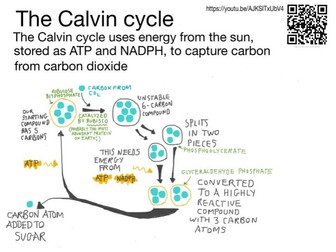
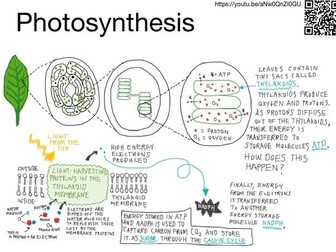
Why do plants produce oxygen and need light? A YouTube video including a pdf summary of the video. The summary contains a QR code link for quick access to the video.
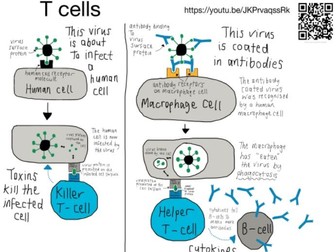
This is a pdf summary sheet with a linked YouTube video. It summarises the role of two important kinds of T cell: helper T cells and Killer T cells. The sheet has a link and QR code so students can access the video version of this resource.
Description of the YouTube video:
T-cells play a central role in our response to infections. They act in two different ways, summarised in this video.
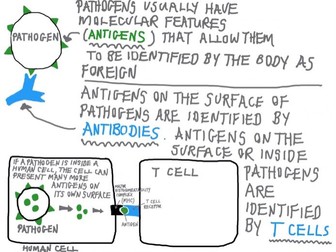
There is one strategy for identifying cells that have become infected or are abnormal. These are the Killer or cytotoxic T cells. These cells recognise infected cells through receptor molecules called T-cell receptors. What they recognise are short pieces of foreign antigen presented a bit like a picture in a frame on a presentation molecule called MHC class I on the surface of the infected cell. The MHC class I act like windows to the inside of the cell, whilst at the same time acting as a mark of quality to other cells. They say: “this is good quality information”
Pieces of pathogen that have been eaten by immune cells like macrophages are presented to a different kind of T-cell, called a T helper cell. This distinction is important because it would not be helpful for killer T cells to start killing cells that are doing a good job in eating pathogens. Instead the role of the T helper cell is to stimulate other immune cells such as B cells. B cells are instructed by T helper cells to make more antibodies. They are in effect saying to the B cell “great job-keep doing what you are doing!”. The way T helper cells recognise macrophages that have eaten pathogens is again through their T cell receptors. However, the T cell receptors of T helper cells recognise pieces of foreign antigen that are presented on MHC class II molecules, again a bit like a picture in a very specific frame that tells the the T cells that this is reliable information.
https://youtu.be/KfgUoXCLm_E
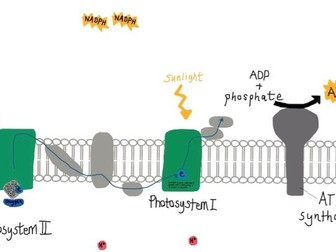
This YouTube video describes cyclic and non-cyclic photophosphorylation and NADPH production. It describes photosystems I and II and the oxygen-evolving complex. It describes how proton-motive force drives the synthesis of ATP by ATP synthase.
There is an annotation task based on the video for students to fill in the details and make notes
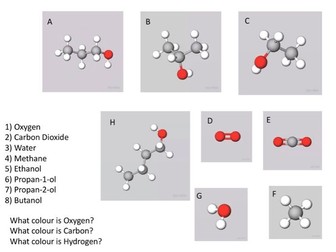
This Powerpoint contains videos showing the 3 dimensional structure of various molecules, including fuels. You can click on the images to start the videos or use as a 2D image. Students need to guess which structure is which.
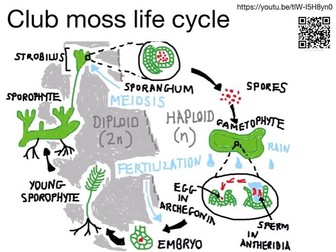
A YouTube video summarising the life cycle of a club moss, providing an example of alternation of generations. The resource includes a pdf summary of the YouTube video with a QR code for quick access to the video.
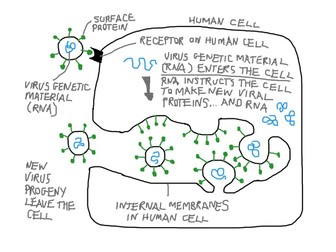
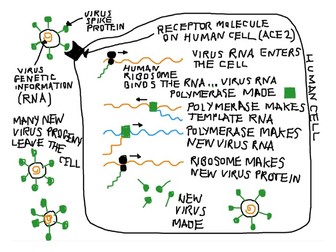
A video summarising the basic life cycle of coronavirus. The resource includes a pdf summary of the video with a QR code for quick access to the video from the summary.
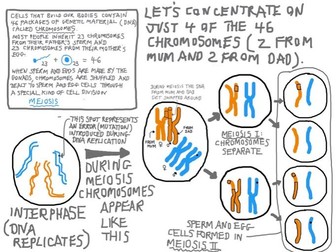
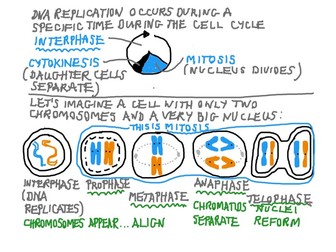
A visual summary of meiosis summarizing a link (QR code) for access to a YouTube video showing the summary being developed.
Here is the link to a video presentation of this visual summary:
https://youtu.be/lo7VwUCBSuY
A YouTube video summarising the basic molecular biology of the coronavirus life cycle. The resource includes a pdf summary of the video with a QR code for quick access to the video.
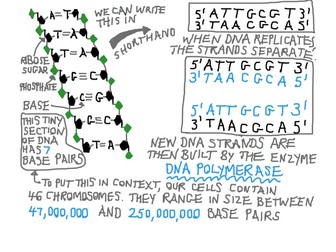
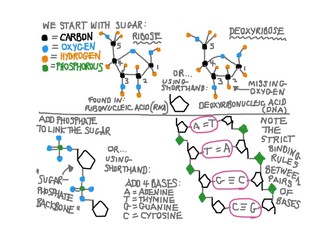
A YouTube video summary of nucleic acid structure showing the difference between DNA and RNA. The resource includes an annotation task using pictures from the video and a pdf summary of the video. Both sheets have a a QR code for quick access to the video.
A visual summary of the two main ways we use to build immunity to infectious agents through cellular and humoral immunity.
This resource is a YouTube video


 Quick View