A lesson on Elements Compounds and Mixtures designed for an observation.
AFL - checkpoints included
Differentiated - tasks
Peer assessment - included
Progress - Start and end exam question
Numeracy - Included
Literacy - included
SMSC - included
Challenge questions - included
Success criteria:
Define the words elements mixtures and compounds.
Recognise elements mixtures and compounds
Evaluate the number of elements and atoms in molecules.
Write the chemical formula for elements mixtures and compounds.
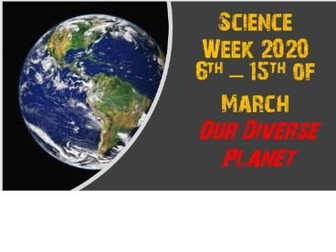
A science week assembly for 2020 focusing on the theme of diversity.
Includes examples of Bio, Cultural, Social and Career diversity. Also includes ideas of how to get involved in Science week using the Science week website.
Includes two links to youtube video clips.
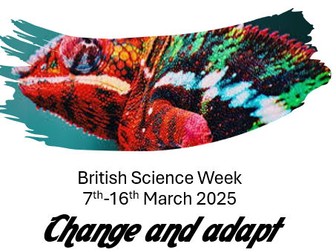
British Science weeks theme “Adapt and change.”
An engaging, interactive Ks3/Ks4 assembly for British Science week 2025. Includes how to get involved in Science week and the resources available online. The Assembly focuses on the words change and adapt with games and examples. The take home message of the assembly is about how we are all changing and adapting constantly. The idea that change is hard and sometimes overwhelming is touched upon and tips are given on how to overcome change.
Slide 1: Title slide.
Slide 2: Science week “What is it.”
Slide 3: Definitions.
Slide 4: Camouflage as an adaption.
Slides 5-11: Guess the Camouflaged animal in the photo.
Slides 12-14: Optional 2 min videos on amazing animal adaptations.
Slides 15-19: The question is all change good. A little game where students point to vote if the image is a good or bad change.
Slides 20-32: Looking at how we are always adapting to the change in our lives. How it can be overwhelming and top tips to embrace change.
Slides 33-37: How to get involved in science week. Activities and webinars online.
Around 15 minutes but bits can be cut out to shorten if needed.
Picture slides have some explanation in the notes. All resources have web links.
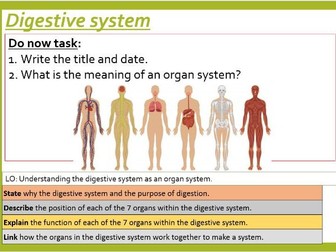
A lesson planned on describing and explaining the digestive system.
Included:
Exam questions and answers.
Higher and Lower independent task sheet.
SMSC Questions.
Challenge questions.
Help sheet
Diamond task for more able.
Success Criteria:
State why the digestive system and the purpose of digestion.
Describe the position of each of the 7 organs within the digestive system.
Explain the function of each of the 7 organs within the digestive system.
Link how the organs in the digestive system work together to make a system.
Reactions of metals and oxygen. (Oxidation)
PPT includes tasks and practical to be completed.
Success Criteria
State the meaning of oxidation.
Write a word equation for an oxidation reaction.
Explain why oxygen as a gas has mass.
Calculate masses of elements and compounds.
An assembly based on the most student engaging discoveries of 2018.
A look at what the future may hold for 2019.
Includes this years British Science Week science poster competition.
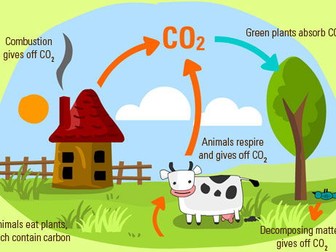
The Carbon Cycle.
Success Criteria:
State the processes within the carbon cycle.
Describe the transfer of carbon within the carbon cycle.
Explain how the stages of the carbon cycle are linked.
Conclude how Carbon dioxide emissions can be increased / reduced.
A KS3 / KS4 lesson designed on building and then writing about the carbon cycle. Written for an OFSTED lesson observation and designed for independent learning.
Includes:
Powerpoint
Starter and End progress task.
Build a carbon cycle task
Main task worksheets
Peer assessment sheet.
A starter task for students to write what they already know about the carbon cycle.
Youtube video’s included.
A3 build your own carbon cycle group task with levelled task cards and key words.
Students then complete independent choice of task (templates included) to be peer assessed.
Peer assessment sheet included.
Key words for SEN students
AFL Checkpoints
Progress check
Differentiated learning tasks.
Literacy focus
SMSC section.
The idea that animals all have different gestation periods, give birth and look after their young in different ways.
Powerpoint explains this idea and then the main task of the lesson is to create a presentation to present to the class about their favourite animal. Can be done in groups or individually.
Need laptops for research.
Assessment sheet to assess the presentation against the criteria
Plant reproduction lesson. PPT and worksheets
Intro to keywords using a wordsearch
Images to show reproductive parts of a plant
Worksheet to label the parts and link to functions
Quiz in powerpoint multiple choice questions
Ideas of self pollination and pollination by wind / animals.
This years theme is ‘Innovating for the future’
So this assembly is based on 2020’s possibly best innovation the Covid Vaccine. Timeline, how developed and how it works.
Includes info on Activity pack and competition on British Science Week website.
Measuring biodiversity. A lesson designed to measure diversity indoors. Includes the use of miniature quadrats to sample the number of dasies in a field and string as transects to limpets distribution on the beach (all on paper! ) Tasks include questions, calculating averages and other sampling tasks.
Used for KS3 & KS4
Included:
Powerpoint
Keywords definition sheet.
Literacy 8 mark question
Daisy field sheet
Beach sheet
Task sheet to go with both the daisy field and beach. (Lower worksheet also attached.)
Quadrat templates
Task help card.
GCSE exam questions worksheet.
Success Criteria:
Includes:
Starter and End progress task.
AFL Checkpoints
Progress check
Differentiated learning tasks.
Literacy focus
Powerpoint and worksheets.
Intro
Definition
Video to show the stages of fertilisation
Images to show the stages
Storyboard task (included worksheet)
Plenary self assessment quiz task
Powerpoint and 2 worksheets
Leveled tasks and differentiated worksheets.
Starter and plenary task to assess how much has been learnt that lesson.
Includes labels and functions of different parts of the reproductive organs and sex cells (Sperm and Egg)
GCSE AQA Chemistry C1.3 Crystallisation
A complete lesson including exam questions, introduction to Crystallisation and a practical.
Worksheet adapted from the AQA Crystallisation practical. Student practical worksheet includes learning outcomes, method and then summary questions. Aim: Evaporation can be used when the liquid (Solvent) in unwanted and crystal of the solute is wanted.
Success Criteria:
State what is separated in Crystallisation.
Describe the process of Crystallisation.
Explain the process of Crystallisation.
Do Now: Exam style question. (Link to previous lesson)
Main:
Students to be asked the difference between evaporation and boiling. Complete the task evaporation and boiling and then define the difference between them.
Student investigation. Crystallisation of salt water. It is advisable for students to work in groups of 3. Students should set up apparatus, this should then be checked by the teacher before Bunsen burners are turned on. Students to complete the practical carefully heating their mixture. Do Not allow the mixture to spit.
Students to pack up and be sat down after the practical.
Plenary:
Students to complete the summary section of the practical sheet.
High demand
Explain why crystallisation happens.
Practical: Carry out crystallisation of salt water


 Quick View