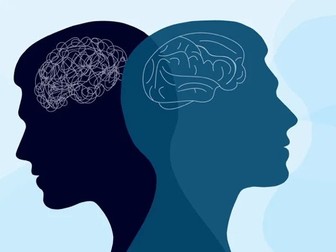
This comprehensive Biopsychology bundle provides everything you need to deliver high-quality, specification-aligned lessons with confidence. Designed for AQA A-Level Psychology, these resources combine clear core knowledge with embedded exam skills to help students secure top grades.
What’s included:
Full Biopsychology teaching pack (nervous system, endocrine system, key foundations)
Fully AQA Aligned
Ways of studying the brain (fMRI, EEG, ERPs, post-mortem) with evaluation
Hemispheric lateralisation & split-brain research (Sperry & Gazzaniga) with exam application
Localisation of function, including case studies and AO3 evaluation
Each lesson is structured to develop both knowledge and exam technique, ensuring students can not only understand key concepts but also apply and evaluate them effectively in assessments.
Perfect for teachers looking to deliver engaging, rigorous, and exam-focused Biopsychology lessons without reinventing the wheel.
AQA A-Level Psychology – Psychodynamic Approach Bundle (Lessons, Activities & Exam Skills)
A complete, ready-to-teach bundle covering the Psychodynamic Approach, designed to build deep understanding and strong exam performance. This pack moves beyond surface-level content, helping students grasp complex ideas like the unconscious mind, defence mechanisms, and early childhood influence.
What’s included:
Full lesson on the Psychodynamic Approach with clear explanations of core assumptions
Detailed teaching content on Freud’s theory (id, ego, superego) and psychosexual stages
Engaging defence mechanisms scenario tasks to apply knowledge in real contexts
Little Hans case study with clear AO1 and AO2 links
Structured evaluation tasks covering key AO3 points (evidence, gender bias, determinism, etc.)
Retrieval quiz and schema-based application tasks to build exam technique
AQA A-Level Psychology: Biopsychology Consolidation – Ways of Studying the Brain
This highly structured consolidation lesson is designed for AQA A-Level Psychology students studying Biopsychology, with a particular focus on brain scanning techniques, localisation of function, and neural plasticity.
The lesson begins with a clear Big Question – How do we know the brain is localised? – which anchors learning in core conceptual understanding and exam relevance. Students revisit prior knowledge of fMRI, EEG, ERP and post-mortem studies, alongside key terminology such as spatial and temporal resolution, before applying this knowledge to exam-style tasks.
A retrieval-focused Do Now includes a recap quiz and a 4-mark question, allowing teachers to quickly diagnose understanding. Students then complete a structured application task where they identify the correct research method, distinguish between AO1 and AO3, and practise converting points into exam-ready essay statements.
The lesson explicitly targets tricky core knowledge in Biopsychology through short, timed “brain dump” activities on:
Synaptic transmission
The central nervous system
These activities are designed to expose gaps in understanding and strengthen precision in biological explanations.
New learning is introduced through a short video case study linked to brain plasticity, followed by a Think, Pair, Share task that prompts students to consider:
What happened in the case
What this tells us about the brain
The strengths and limitations of methods used to study the brain
A clear, accessible reading on brain plasticity and functional recovery consolidates understanding and supports future AO3 evaluation.
This lesson is ideal for:
Consolidation or revision lessons
Pre-PPE or mock exam preparation
Strengthening AO1 accuracy and AO3 application
Addressing common misconceptions in Biopsychology
Includes:
Retrieval practice
Exam-focused application tasks
Timed brain dumps
Think-Pair-Share discussion
Clear links to the AQA specification
Suitable for a 60-minute lesson, with opportunities to adapt or extend depending on group needs.
AQA Psychology Biopsychology lesson on localisation of function with key case studies (Broca, Wernicke, Gage, HM), exam tasks, Do Now and success criteria.
Do Now retrieval quiz reviewing nervous system, synapses, endocrine system and fight-or-flight to activate prior knowledge.
Big Question & learning focus introducing localisation of function and its importance for exam success.
Key vocabulary teaching of localisation and case study terminology used throughout the lesson.
Core concept explanation of how specific brain areas are responsible for specific functions.
Modelled example: Broca’s “Tan” demonstrating how case study evidence supports localisation.
Think–Pair–Share discussion analysing the evidence link and extending with Phineas Gage.
Main written task where students explain each case study and judge its support for localisation.
Response improvement activity using a weak model answer to teach exam technique.
Success criteria framework (Claim–Evidence–Explanation–Judgement) for high-quality exam paragraphs.
Four major case studies covered: Broca, Wernicke, Phineas Gage and HM.
Explicit exam link supporting AO1 knowledge and AO3 discussion for 16-mark questions.
Included resources: full PowerPoint lesson, Do Now quiz and detailed case study handout.
LESSON 1 — What is Biopsychology?
Title: What is Biopsychology? — Complete Introduction Lesson with Nervous System and Exam Skills
Do Now recap quiz reviewing Biological Approach assumptions and core AO1/AO3 knowledge
Introduction to biopsychology covering brain, neurons, neurotransmitters, hormones and genetics
Key vocabulary teaching including CNS, PNS, somatic, autonomic, genotype and phenotype
Concept 1 task on the Central Nervous System (brain and spinal cord)
Concept 2 task on the Endocrine System and hormonal control of behaviour
Think–Pair–Share discussion linking brain structure and behaviour
AO3 evaluation questions on reductionism, science and nature–nurture
Explicit exam links to support assessment performance
Resources included: PowerPoint, reading, extension tasks, consolidation scaffold, recap quiz
LESSON 2 — The Nervous System
Title: The Nervous System Explained — CNS, PNS, Fight or Flight and Exam Application
Clear teaching of nervous system structure: CNS, PNS, ANS, sympathetic and parasympathetic
Reading resource explaining brain, spinal cord, reflexes and communication pathways
AO1 retrieval questions checking core knowledge and terminology
AO2 application tasks using real-life scenarios and reflex responses
Detailed focus on fight-or-flight and system balance
Exam-style questions building explanation and application skills
Resources included: PowerPoint, nervous system reading, AO1/AO2 worksheets
LESSON 3 — The Endocrine System
Title: The Endocrine System — Hormones, Glands and Behaviour
Clear explanation of the endocrine system as the body’s hormone communication network
Teaching of key glands: pituitary, thyroid, adrenal glands and pancreas
Explanation of major hormones including adrenaline, cortisol and insulin
Comparison of endocrine and nervous systems (speed and duration of effects)
Exam-style questions on hormones, glands and endocrine function
Fight-or-flight application using hormonal responses
Resources included: endocrine reading and structured exam practice tasks
LESSON 4 — Localisation of Function
Title: Localisation of Function — Complete Biopsychology Lesson with Case Studies and Exam Skills
Do Now retrieval quiz revising nervous system, synapses and endocrine content
Introduction to localisation of function and specialised brain areas
Modelled case study example using Broca’s patient “Tan”
Think–Pair–Share discussion extending with Phineas Gage
Main written task applying Broca, Wernicke, Phineas Gage and HM
Response improvement activity using exam technique
Success criteria framework: Claim, Evidence, Explanation, Judgement
Strong AO1 and AO3 focus for 16-mark essays
Resources included: PowerPoint, Do Now quiz, detailed case study pack
What this lesson includes
Do Now retrieval task revising localisation, neurons, synaptic transmission and the nervous system
Clear explanation of hemispheric lateralisation and specialised functions of left and right hemispheres
Teaching of key terminology including lateralisation, corpus callosum, visual field and hemisphere
Structured learning on the role of the corpus callosum and hemispheric communication
Detailed coverage of Sperry’s split-brain research including background, method and findings
Extension and supporting evidence from Gazzaniga including the left-hemisphere interpreter
Comprehension questions checking understanding of research design and findings
AO1 exam writing task with success criteria for high-level responses
AO3 evaluation lesson covering strengths, limitations, plasticity, ecological validity and population validity
Structured AO3 questions developing evaluation and critical thinking
Full 16-mark exam question on lateralisation with planning space and mark scheme guidance
Explicit links to PPE exam preparation and assessment performance
Resources included: PowerPoint lesson, main reading, AO3 handout, success criteria sheet, 16-mark exam question
Overview
A complete, engaging lesson sequence introducing Psychological Approaches with a deep focus on the Behaviourist Approach, designed for AQA A-Level Psychology (Year 12).
This resource pack builds strong conceptual understanding from the very first lesson, combining retrieval, concept formation, exam skills, and student discussion.
Perfect for:
First teaching of Approaches
Strong foundations before Biopsychology & Psychopathology
Stretch & challenge with structured support
Content:
Focused teaching of the Behaviourist Approach and its basic assumptions
High-challenge Do Now retrieval quiz using real-world scenarios
Concept-sorting & discussion task on explanations of aggression
Clear student explanation of what a psychological approach is
Coverage of the three core components of all approaches
Fully aligned with AQA AO1, AO2 and AO3 assessment objectives
Exam-style 6-mark AO1 question with guidance
Structured Think–Pair–Share activities
Designed for mixed-ability classes with built-in scaffolding
Promotes deep conceptual understanding and independent thinking
Supports long-term retention through retrieval and application
Ready-to-use PowerPoint and student worksheets
Suitable for first teaching, revision, or consolidation
First Lesson: Experimental Design
Do Now: IV vs DV Quiz
Introduction to Experimental Design
Key Terms: Independent Groups, Repeated Measures, Matched Pairs
Teaching slides on the three experimental designs
Strengths and weaknesses of each design
Participant variables, order effects, demand characteristics
Counterbalancing explained
Reading: Experimental Designs – How Psychologists Organise Participants
Comprehension questions
Examples from key studies (Loftus & Palmer, Milgram, Ainsworth, Watson & Rayner)
Exam questions:
2-mark (Repeated Measures)
4-mark (Independent Groups application)
8-mark (Discuss experimental design)
Success criteria for all exam questions
Second Lesson: Controlling Variables & Scientific Principles
Do Now: Retrieval questions on sampling, ethics, reliability & validity
Introduction to extraneous and confounding variables
Teaching slides on controlling variables
Key terms sheet: standardisation, control group, random allocation, etc.
Reading: Validity and Reliability
Reading: Controls and the Scientific Values of Psychology
Comprehension questions on scientific principles
Main task: Rewrite a flawed experiment using controls
Applied task: Where are the extraneous variables? scenario analysis
Exam questions (data response, 4-mark, 8-mark)
Exam technique guidance and structured support