Physical Theatre & Othello – 6–10 Lesson Scheme Using Frantic Assembly (KS3 Drama)Quick View
rhiannonwinters

Physical Theatre & Othello – 6–10 Lesson Scheme Using Frantic Assembly (KS3 Drama)

(0)
This flexible and highly detailed Key Stage 3 Drama Scheme of Work introduces students to Physical Theatre using techniques from Frantic Assembly, while exploring powerful themes from Shakespeare’s Othello. Ideal for Year 9 or high-attaining Year 8 classes, this scheme supports students to develop movement-based storytelling, ensemble work, and expressive physicality all while exploring themes of jealousy, power, trust, and manipulation. What’s Included: Full 6-lesson scheme (expandable to 8-10 lessons with built-in extension opportunities) Two fully planned extension lessons One classroom-based cover lesson - ideal for non-specialists One home learning task Lesson-by-lesson PowerPoint slides – designed to reduce cognitive overload and support clarity Teacher notes with detailed task instructions – no guesswork required! Built-in assessment opportunities, with success criteria and sentence starters Tasks designed to promote metacognition – students revisit and refine before final assessment Focus on Frantic Assembly techniques: Chair Duets, Round-By-Through, Push/Pull, Hymn Hands and more. Pedagogical Features: Carefully structured to build physical theatre skills, from ensemble trust to storytelling through movement Opportunities for revision and rehearsal before final performance assessment Embedded reflection tasks encourage students to think deeply about artistic intention and audience impact Designed with metacognitive strategies – students reflect on what, how, and why they perform each movement Extend or Adapt With Ease: This scheme can be taught over 6 weeks, or easily extended to 8–10 weeks by building in more rehearsal, reflection, or written elements. It’s ideal preparation for GCSE Drama without explicitly aligning with exam content helping students build confidence, creativity, and control on stage.
Greek Theatre Scheme of Work – Exploring Antigone through the Greek ChorusQuick View
rhiannonwinters

Greek Theatre Scheme of Work – Exploring Antigone through the Greek Chorus

(0)
This complete Year 8 Drama Scheme of Work explores Ancient Greek Theatre and Sophocles’ Antigone, guiding students to devise, rehearse, and perform their own Greek chorus performance. Across six carefully structured lessons, students develop an understanding of the origins, purpose, and power of Greek theatre, while applying choral techniques such as unison, canon, call and response, layered voice, gesture, and stillness to communicate meaning. This scheme of work could easily be extended to last over 8 lessons. Each lesson builds metacognitively — revisiting and refining prior learning — as students progress towards a final assessed ensemble performance inspired by Antigone. Includes a detailed Extension Lesson on the Gods and Fate, one Homework task, and a fully resourced Cover Lesson (ideal for non-specialists). Every lesson is supported by a clear PowerPoint presentation designed to reduce cognitive load. What’s Included: Full 6-Lesson Scheme of Work (editable, detailed lesson plans) Extension Lesson: The Voice of the Gods – explores fate and divine judgement through choral movement and voice Homework Task: Antigone’s Dilemma comprehension and reflection sheet Cover Lesson: Greek Theatre & Antigone comprehension with teacher answer guide All PowerPoints – clean design, consistent structure, and clear visuals Assessment Criteria & Student-Friendly Marking Grid Exit tickets, Do Now tasks, and teacher prompts included throughout Skills & Knowledge Developed: Understanding of Ancient Greek theatre as the foundation of Western drama Exploration of Antigone’s moral dilemma (divine law vs. human law) Application of choral performance techniques (unison, canon, formation, gesture) Development of ensemble awareness, focus, and vocal/physical control Creative devising and artistic intention writing using What / How / Why structure Reflective evaluation and peer feedback Lesson Breakdown: Lesson 1 – Origins of Greek Theatre and The Three Brothers Lesson 2 – The Grief of Thebes Lesson 3 – Antigone’s Dilemma Lesson 4 – Refining the Chorus Lesson 5 – The Consequence & Artistic Intention Lesson 6 – Final Performance & Written Evaluation Extension Lesson – The Voice of the Gods Assessment: Final choral performance assessed through voice, movement, focus, interpretation, and ensemble work. Includes a student-friendly self-assessment grid and written reflection using What / How / Why framework.
Brecht & Woyzeck Scene 5 Practical LessonQuick View
rhiannonwinters

Brecht & Woyzeck Scene 5 Practical Lesson

(0)
This dynamic, one-off practical A-Level Drama lesson explores how Brechtian performance techniques can be applied to Scene 5 of Georg Büchner’s Woyzeck to expose inequality, mock social power, and highlight class hypocrisy. Students engage physically and creatively through: Exaggerated gestus work Stylised group movement Political rhyme adaptation Spass-driven taunts And a high-impact mini performance task using a shortened version of Scene 5 Clear scaffolding supports exam-style reflection with director-based sentence starters and contextual links to Brecht’s Epic Theatre.
Year 7 or 8 Drama Booklets - Coronavirus prepQuick View
rhiannonwinters

Year 7 or 8 Drama Booklets - Coronavirus prep

(3)
Here are some booklets I have put together with resources iv found and some of my own for after easter (they only have Drama every other week so there are only 6 lessons altogether). They are not perfect and I threw them together but could be a good starting point…
Inference using The Landlady ExtractQuick View
rhiannonwinters

Inference using The Landlady Extract

(3)
A compilation of other resources from TES into this Year 7 full lesson (1 hour 10 minutes) with timers that I used for a job interview and got the job might I add. Numeracy and Literacy starter (all mine), Inference definition, inference task from images, a quick quiz style activity after reading extract, retrieving of quotes from the text and an exit pass (all mine). Extension task included but as a group with teacher modelling you could expand on one of the quotes as a plenary. In preperation for PEEL paragraphs in the next lesson.
Lysistrata Theme explorationQuick View
rhiannonwinters

Lysistrata Theme exploration

(2)
A two hour workshop where Year 13 pupils can explore the themes of the play. It's a good way of capturing moments they can use throughout performance as a chorus.
Drama Booklets - Coronavirus PrepQuick View
rhiannonwinters

Drama Booklets - Coronavirus Prep

(1)
Hello, I have attached some things I have put together for the corona virus work i am sending home to students in year 7 and 8 (who are doing the same thing as they did not have consecutive teaching last year), 9, 10 and 11. These are lesson for just 2 weeks of work… we work on a 2 week cycle so this is work for before Easter. These are not perfect by any means but they could be a useful start.
CPD Cross Curricular Drama PresentationQuick View
rhiannonwinters

CPD Cross Curricular Drama Presentation

(1)
I offered to do a Drama Inset in my school to try and raise awareness of benefits of Drama and visibility of Drama for students in a school where Drama is deemed as a doss about subject :(. I put this together and had some really good responses and since teachers started to use Drama within their lessons I've seen a vast improvement on pupils interaction in Drama and interest towards the subject. Teachers were reluctant at first but got into the swing of things. I ended up showing and demonstrating all of the techniques based on topics that teachers were studying at the moment, i.e. internet safety for the conscious alley, science apparatus for physical theatre, re-creating the life story of a painter in art through role play and so on... The discussion was opened up at the end of the session where I facilitated the content.
Myths and LegendsQuick View
rhiannonwinters

Myths and Legends

(0)
Introduction to Hercules legend with script writing and performance. The script was borrowed from another TES user and slightly adapted to fit with what I wanted my Year 7’s to do. (This is a cover lesson so it is not very detailed but something you could work from perhaps!)
Group Planning SheetQuick View
rhiannonwinters

Group Planning Sheet

(0)
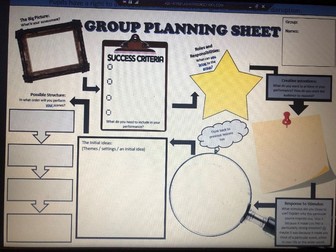
Much like the famous 5 minute planner for teachers, I have designed this group planner to help students quickly plan what their performances in Drama will be based on. Although it could be adapted for anything! It asks students for: The Big Picture Success Criteria Roles and Responsibilities Creative Intentions Stimulus Response Initial Ideas and thoughts Possible Structure
4 Weeks Intro to dramaQuick View
rhiannonwinters

4 Weeks Intro to drama

(0)
Just a quick intro used for year 7's to introduce Gesture, Expression, Movement and Space. Do what you will with it... it's by no means a completed scheme of work, however, it does help with focused feedback when asking pupils to specifically focus on these four main areas!
Year 6 Induction Physical Theatre LessonQuick View
rhiannonwinters

Year 6 Induction Physical Theatre Lesson

(0)
A short 50 minute lesson that could easily be shortened or extended with less warm up activities or more rehearsal times or performance time. A really quick lesson that I remember my PGCE mentor threw together (no lesson plan) whilst I was on placement with her. I have adapted it and rehashed it and created a PP and basic lesson plan to go with it. (Now 4 years into teaching!).