KS3 AQA Activate Cell Structure: Plant and Animal CellsQuick View
ErinCGarvey

KS3 AQA Activate Cell Structure: Plant and Animal Cells

(0)
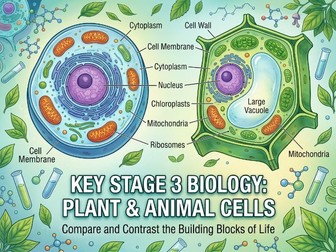
Ready to teach lesson detailing the differences between plant and animal cells. Suitable for Key Stage 3, Year 7 and 8 or foundation level year 9 students. Resource includes Ready-to-teach AQA Activate lesson on plant and animal cells. Features recall starter task, practice magnification calculation task, basics of cells, comparisons and contrasts of plant and animal cells with key structures hi-lighted, drawing of cells task with how to videos and plenary practice exam questions with answers Save hours of planning with this fully resourced, ready to teach lesson for AQA Activate plant and animal cells What’s Included: Starter: Retrieval/recall task to activate prior learning. Core Content: Recap of magnification and calculation task, basics of cell function, comparing and contrasting of plant and animal cells, drawing of cells Interactive Skill Task: students practice diagram skills by drawing plant and animals cells with a video to follow (according to teacher preference) Assessment & Plenary: exam-style practice questions with answers. Printable Resources: Diagrams and Practice Exam Questions are Ready-to-print resources embedded directly into the presentation, at teachers discretion, printing not necessary. I am a specialist Biology Teacher with 7 years experience teaching at KS3, GCSE, A-Level and IBDP Level. I hope this resource is helpful and saves you loads of time planning and prepping this unit!
AQA GCSE  Biology Hormonal Coordination Unit: 6 lessonsQuick View
ErinCGarvey

AQA GCSE Biology Hormonal Coordination Unit: 6 lessons

6 Resources
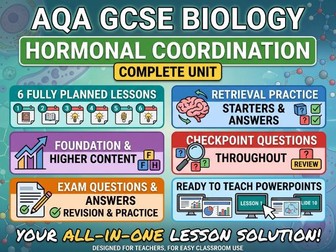
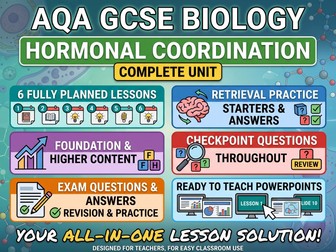
Ready-to-teach AQA GCSE Biology/Combined Science lesson bundle of 6 lessons of the Hormonal Coordination. Features recall starter tasks, recap/reteaching content, comprehensive lesson content, recap videos and Afl and plenary practice exam questions with answers. Save hours of planning with this complete AQA Biology Hormonal coordination in humans unit for Year 11 combined Science both foundation and higher tier. This resource contains six fully planned lessons designed for immediate classroom use, with all activities embedded directly into the lesson presentations. 1> Human Endocrine System 2>Feedback systems (HT only) 3>Control of blood glucose concentration 4>Hormones in human reproduction 5>Contraception 6> The use of hormones to treat infertility (HT only) All lessons include -AfL Checkpoint Question with answer -FT and HT Practice Exam Questions with answers plenary printable resources Learning Intents starter with recall Do Now Task and answers Most lessons also include video links to draw glands and organs video links for review printable infographics for revision Please read through the slide notes for helpful information about how to use some resources and also check all video links still work. Most video are embedded and all resources are included in the powerpoint to avoid outdated technology or using multiple platforms. I am a specialist Biology Teacher with 7 years experience teaching at KS3, GCSE, A-Level and IBDP Level. I hope this resource is helpful and saves you loads of time planning and prepping this unit!
AQA GCSE Biology Hormonal Coordination L6: Infertility Treatment (HT)Quick View
ErinCGarvey

AQA GCSE Biology Hormonal Coordination L6: Infertility Treatment (HT)

(0)
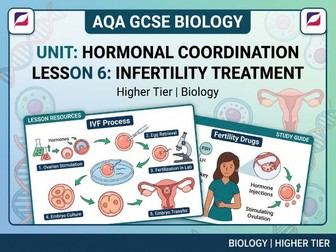
Ready-to-teach AQA GCSE Biology/Combined Science Higher Tier lesson 6 of Hormonal Coordination Unit: Infertility Treatment. Features recall starter, causes of infertility, comprehensive hormonal and non hormonal methods of infertility treatment as well as recap video and plenary practice exam questions with answers Save hours of planning with this fully resourced, ready to teach lesson for AQA GCSE Biology and Combined Science: Trilogy (Hormonal Coordination Lesson 6). What’s Included: Starter: Retrieval/recall task to activate prior learning. Core Content: causes of infertility in women and men, hormonal treatments of infertility and IVF including advantages, disadvantages and ethical concerns Assessment & Plenary: recap video and exam-style practice questions with answers. Printable Resources: Practice Exam Questions are Ready-to-print resources embedded directly into the presentation, at teachers discretion, printing not necessary. I am a specialist Biology Teacher with 7 years experience teaching at KS3, GCSE, A-Level and IBDP Level. I hope this resource is helpful and saves you loads of time planning and prepping this unit!
AQA GCSE Biology Hormonal Coordination Lesson 5: ContraceptionQuick View
ErinCGarvey

AQA GCSE Biology Hormonal Coordination Lesson 5: Contraception

(0)
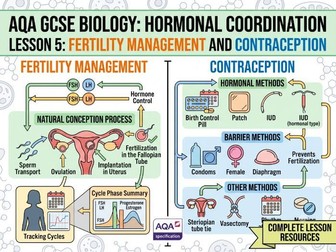
Ready-to-teach AQA GCSE Biology/Combined Science lesson of Hormonal Coordination Unit: Contaception. Features recall starter, Menstrual Cycle recap video, comprehensive hormonal and non hormonal methods of contraception for women and men as well as Afl and plenary practice exam questions with answers Save hours of planning with this fully resourced, ready to teach lesson for AQA GCSE Biology and Combined Science: Trilogy (Hormonal Coordination Lesson 5). What’s Included: Starter: Retrieval/recall task to activate prior learning. Core Content: Recap of menstrual cycle, hormonal methods of contraception (birth control pill) for women, non hormonal methods for women, and both hormonal and non hormonal methods in development for men Interactive Skill Task:AfL features practice exam question on contraception with model answer Assessment & Plenary: exam-style practice questions with answers. Printable Resources: Diagrams and Practice Exam Questions are Ready-to-print resources embedded directly into the presentation, at teachers discretion, printing not necessary. I am a specialist Biology Teacher with 7 years experience teaching at KS3, GCSE, A-Level and IBDP Level. I hope this resource is helpful and saves you loads of time planning and prepping this unit!
AQA GCSE Biology Hormonal Coordination Lesson 4: Human Reproductive HormonesQuick View
ErinCGarvey

AQA GCSE Biology Hormonal Coordination Lesson 4: Human Reproductive Hormones

(0)
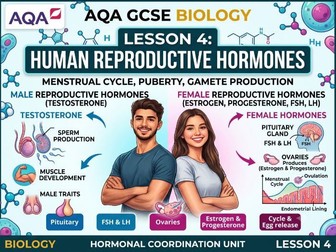
Ready-to-teach AQA GCSE Biology/Combined Science lesson 4 of the Hormonal Coordination Unit: Human Reproductive Hormones. Features recall starter, puberty and secondary sexual characteristics, reproductive hormones and menstrual cycle, higher tier content, Afl 6 mark question with model answer and plenary with differentiated Foundation and Higher Tier practice exam questions with answers Save hours of planning with this fully resourced, ready to teach lesson for AQA GCSE Biology and Combined Science: Trilogy (Hormonal Coordination Lesson 4). What’s Included: Starter: Retrieval/recall task to activate prior learning. Core Content: Reteaching of puberty and secndary sexual characteristics, clear breakdown of menstrual cycle, and roles of key hormones Interactive Skill Task: AfL features 6 mark practice exam question on menstrual cycle with model answer Assessment & Plenary: Higher and Foundation tier exam-style practice questions with answers. Printable Resources: Diagrams and Practice Exam Questions are Ready-to-print resources embedded directly into the presentation, at teachers discretion, printing not necessary. I am a specialist Biology Teacher with 7 years experience teaching at KS3, GCSE, A-Level and IBDP Level. I hope this resource is helpful and saves you loads of time planning and prepping this unit!
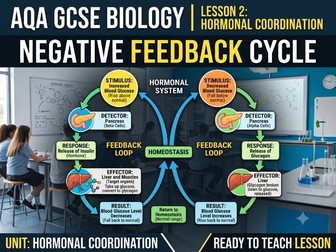
AQA GCSE Biology Hormonal Coordination Lesson 2: Negative FeedbackQuick View
ErinCGarvey

AQA GCSE Biology Hormonal Coordination Lesson 2: Negative Feedback

(0)
Ready-to-teach AQA GCSE Biology/Combined Science lesson 2 of Hormonal Coordination Unit: Negative Feedback Cycle (Higher Tier). Features recall starter, Negative Feedback Loop, Thyroxine and Adrenaline, Afl and plenary practice exam questions with answers Save hours of planning with this fully resourced, ready to teach lesson for AQA GCSE Biology and Combined Science: Trilogy (Hormonal Coordination Lesson 2). What’s Included: Starter: Retrieval/recall task to activate prior learning. Core Content: Reteaching of homeostasis, clear breakdown of negative feedback cycle, and roles of thyroxine and adrenaline Interactive Skill Task:AfL features practice exam question on homestasis with model answer Assessment & Plenary: Higher tier exam-style practice questions with answers. Printable Resources: Diagrams and Practice Exam Questions are Ready-to-print resources embedded directly into the presentation, at teachers discretion, printing not necessary. I am a specialist Biology Teacher with 7 years experience teaching at KS3, GCSE, A-Level and IBDP Level. I hope this resource is helpful and saves you loads of time planning and prepping this unit!
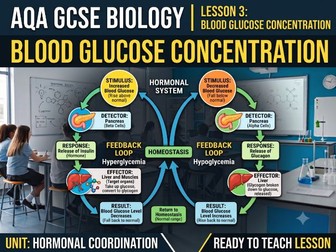
AQA GCSE Biology Hormonal Coordination Lesson 3: Blood GlucoseQuick View
ErinCGarvey

AQA GCSE Biology Hormonal Coordination Lesson 3: Blood Glucose

(0)
Ready-to-teach AQA GCSE Biology/Combined Science lesson 3 of Hormonal Coordination Unit:Blood Glucose Concentration Differentiated Higher and Foundation Tier Features recall starter, effect of insulin on controlling blood glucose table, checkpoint AfL, HT Glycogen and Glucagon negative feedback cycle, Type 1 and Type 2 Diabetes, graph analysis AfL, consolidation video, and differentiated HT and FT plenary practice exam questions with answers Save hours of planning with this fully resourced, ready to teach lesson for AQA GCSE Biology and Combined Science Hormonal Coordination Lesson 3. What’s Included: Starter: Retrieval/recall task to activate prior learning. Core Content: Recall of homeostasis, rose of insulin in maintaining blood glucose concentration, HT glycogen/glucagon negative feedback cycle, type 1 and type 2 diabetes Interactive Skill Task:AfL features practice exam questions on maintaining blood glucose concentrations and analysing graph and drawing conclusions Assessment & Plenary: Differentiated Higher and Foundation tier exam-style practice questions with answers. Printable Resources: Diagrams and Practice Exam Questions are Ready-to-print resources embedded directly into the presentation, at teachers discretion, printing not necessary. I am a specialist Biology Teacher with 7 years experience teaching at KS3, GCSE, A-Level and IBDP Level. I hope this resource is helpful and saves you loads of time planning and prepping this unit!
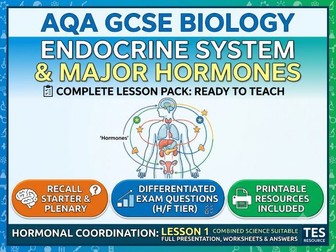
AQA GCSE Biology Hormonal Coordination Unit: Lesson 1: Endocrine SystemQuick View
ErinCGarvey

AQA GCSE Biology Hormonal Coordination Unit: Lesson 1: Endocrine System

(0)
Ready-to-teach AQA GCSE Biology/Combined Science lesson 1 of Hormonal Coordination Unit: Endocrine System. Features recall starter, system comparisons, and Higher/Foundation tier exam practice. Save hours of planning with this fully resourced, ready to teach lesson for AQA GCSE Biology and Combined Science: Trilogy (Hormonal Coordination Lesson 1). What’s Included: Starter: Retrieval/recall task to activate prior learning. Core Content: Clear breakdown of major hormones, key differences between the nervous and endocrine systems, and the role of the pituitary gland as the “master gland.” Interactive Skill Task: Step-by-step walkthrough for students to draw and label the pituitary gland. Assessment & Plenary: Differentiated Higher and Foundation tier exam-style practice questions with answers. Printable Resources: Ready-to-print resources embedded directly into the presentation, at teachers discretion, printing not necessary.
AS Biology Topic 1A1 Chemistry of Life Pearson Excel InternationalQuick View
ErinCGarvey

AS Biology Topic 1A1 Chemistry of Life Pearson Excel International

(0)
Pearson Excel International AS Biology Topic 1 Molecules Transport and Health 1A Chemistry for Biologists Complete lesson 1: Chemistry of Life Learning Objectives GCSE Recall Questions with answers Intro to course Basics of bonding Water Bonding Terminology Practice Exam Questions with answers All covered in slides- no printing required Google slides- easily converted to powerpoint or pdf
AQA KS3 Copper Sulfate Salts method and  plenary quizQuick View
ErinCGarvey

AQA KS3 Copper Sulfate Salts method and plenary quiz

(0)
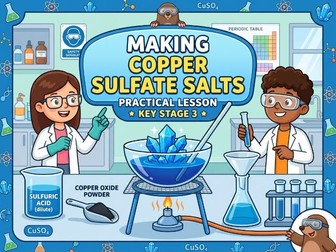
Ready to present! This resource us designed for a quick start practical lesson, students settle with their starter task, then move straight into the word equation allowing you to talk briefly about making salts and neutralisation reactions, leading into safety measures and straight into the practical method. Confident students can follow the steps on the board while you circulate the room and assist those with less confidence. A simple whiteboard or hands up quiz at the end to help settle them in the last 1-2 minutes of the lesson. Resource includes Lesson Plan Title slide with learning outcomes and starter task AQA Activate 1: 6.1.6 Making Salts Method Inc. word equation and safety instructions Plenary quiz with answers
AQA GCSE Chemistry Uncertainty & Concentration FT full lessonQuick View
ErinCGarvey

AQA GCSE Chemistry Uncertainty & Concentration FT full lesson

(0)
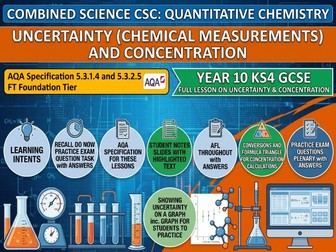
Combined Science CSc 5.3 Quantitative Chemistry Uncertainty (Chemical Measurements) and Concentration AQA Specification 5.3.1.4 and 5.3.2.5 FT Foundation Tier Year 10 KS4 GCSE Save hours of planning with this complete AQA Combined Science Chemistry Uncertainty and Concentration lesson for foundation tier year 10. This is a fully functional all in one lesson covering both uncertainty and concentration, designed for immediate classroom use, with all activities embedded directly into the lesson presentations, though slides are easily printable if you want to use them as printables. AfL is included within the presentation including reveal on click answers. Printable content is presented on its own hidden slides for easy printing, I recommend printing the full slide, then copying at A5, two to a page for students to easily glue into their books to refer back to later. This lesson is ready to go “out of the box”, you need only make copies of PEQ slide or graph slide if you want to. AQA spec is included and lesson has been designed according to the specification. Full lesson on Uncertainty and Concentration Includes : -learning intents -recall starter/do now task with answers AQA specification for these lessons notes slides with hilighted text for students to make note of AfL throughout with answers showing uncertainty on a graph including graph to print for students to practice conversions and formula triangle for concentration calculations -practice exam questions plenary with answers
AQA GCSE Biology Hormonal Coordination Unit: 6 lesson BUNDLEQuick View
ErinCGarvey

AQA GCSE Biology Hormonal Coordination Unit: 6 lesson BUNDLE

(0)
Ready-to-teach AQA GCSE Biology/Combined Science lesson bundle of 6 lessons of the Hormonal Coordination. Features recall starter tasks, recap/reteaching content, comprehensive lesson content, recap videos and Afl and plenary practice exam questions with answers. Save hours of planning with this complete AQA Biology Hormonal coordination in humans unit for Year 11 combined Science both foundation and higher tier. This resource contains six fully planned lessons designed for immediate classroom use, with all activities embedded directly into the lesson presentations. 1> Human Endocrine System 2>Feedback systems (HT only) 3>Control of blood glucose concentration 4>Hormones in human reproduction 5>Contraception 6> The use of hormones to treat infertility (HT only) All lessons include -AfL Checkpoint Question with answer -FT and HT Practice Exam Questions with answers plenary printable resources Learning Intents starter with recall Do Now Task and answers Most lessons also include video links to draw glands and organs video links for review printable infographics for revision Please read through the slide notes for helpful information about how to use some resources and also check all video links still work. Most video are embedded and all resources are included in the powerpoint to avoid outdated technology or using multiple platforms. I am a specialist Biology Teacher with 7 years experience teaching at KS3, GCSE, A-Level and IBDP Level. I hope this resource is helpful and saves you loads of time planning and prepping this unit!
AQA GCSE Chemistry Group 1 & 2 Metals Reactivity and propertiesQuick View
ErinCGarvey

AQA GCSE Chemistry Group 1 & 2 Metals Reactivity and properties

(0)
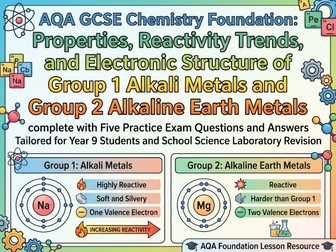
AQA Combined Science: Group 1 & 2 Metals (Yr 9). Premium ready to go lesson with starter, reactivity trends, and AfL tasks with answers Boost engagement with this AQA GCSE Combined Science (C2) Group 1 & 2 Metals lesson for Year 9. Plug and play lesson ready to go. Can be split into two lessons, includes videos of reactions with water and oxygen to recap or if students wont see these reactions in class. Covers properties and reactivity for both groups, Features clear learning intents, starter activities, and multiple embedded AfL opportunities. Includes hidden printable question slides for student books, quick interactive checks, and dedicated answer slides for easy self or peer marking. View in edit mode to access all hidden slides Thank you for viewing this lesson, I hope it saves you planning time!
GCSE Biology/Combined  AQA Biodiversity Lesson Ready to TeachQuick View
ErinCGarvey

GCSE Biology/Combined AQA Biodiversity Lesson Ready to Teach

(0)
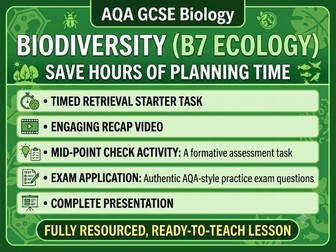
AQA GCSE Combined Science/ Biology: B7 Ecology Save hours of planning time with this fully resourced, ready-to-teach lesson tailored specifically for the Foundation Tier of the AQA GCSE Combined Science specification Designed to reduce workload while keeping students focused, this lesson requires zero prep: download, project, and teach! What’s Included in the Download? Retrieval Starter Task: A timed recall activity to reactivate prior learning and settle students immediately. Engaging Recap Video High-quality, curated visual check to reinforce key concepts and break up teacher-led delivery. Mid-Point Check Activity: A formative assessment task designed to check understanding before moving on, ensuring foundation students aren’t left behind. Exam Question Plenary Authentic AQA-style practice exam questions complete with answers for immediate self or peer assessment. Complete Presentation: Clear, structured slides guiding you step-by-step through the lesson content. Specification Coverage: AQA GCSE Combined Science: Trilogy (Biology Paper 2) Key Concept: 4.7.3.1 Biodiversity — Understanding the measure of the variety of all the different species of organisms on Earth, or within an ecosystem, and its importance for maintaining a stable environment. Why Teachers Love This Resource: Built for Foundation Tier: Accessible language, structured scaffolding, and clear visuals tailored to help lower-demand students access higher marks. Time-Saving: Everything you need for a high-quality 60-minute lesson is in one place. No extra printing or hunting for videos required. Perfect for Non-Specialists or Cover: Clear structure allows any science teacher or cover supervisor to deliver a high-impact lesson.
Lesson Plan: Developing Scientific Thinking (Working Scientifically)Quick View
ErinCGarvey

Lesson Plan: Developing Scientific Thinking (Working Scientifically)

(0)
Lesson Plan only Key Stage 4 55 minute lesson plan Topic: Working Scientifically Title: Developing Scientific Thinking Includes: Aim Learning Objectives List of Materials Introduction: 5 minutes 3 Activities Main Content: 35 minutes 3 possible activities 4 tasks each Conclusion: 10 minutes 1 Application activity 2 tasks Plenary: 5 minutes Discussion based 3 tasks Includes options for group work, pair work, think pair share, individual work and class discussion opportunities as well as in class assessment suggestions and learning outcomes. Large scope for mixing and matching ideas, or picking and choosing just those ideas appropriate for your class or which you’d like to focus on building further.
AQA Activate Year 7 Metamorphic Rocks ready to teach lessonQuick View
ErinCGarvey

AQA Activate Year 7 Metamorphic Rocks ready to teach lesson

(0)
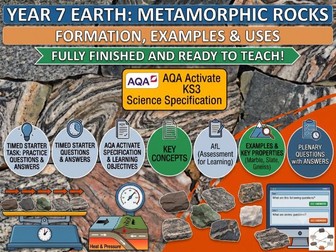
<Updated 2026!> Fully finished, ready-to-teach KS3 lesson package covering metamorphic rocks, focusing on their formation, examples, and uses, aligned to the AQA Activate Science Specification, year 7 Earth topic. The resource features: organized, clutter-free presentation interactive timed starter task complete with answers clear learning intentions focused student notes slides utilizing highlighted key text to scaffold independent note-taking. Formative Assessment for Learning (AfL) with starter and plenary questions featuring answers to effectively evaluate understanding. Please note: you should have a selection of metamorphic rocks on hand for students to interact with during this lesson.
GCSE Command Words; teaching students how to compare, full lessonQuick View
ErinCGarvey

GCSE Command Words; teaching students how to compare, full lesson

(0)
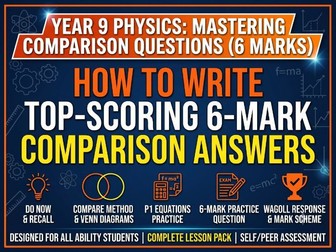
Unlock your students’ potential and demystify the dreaded 6-mark extended writing tasks with this complete, ready-to-teach resource. Specially designed for all-ability Year 9 students who have just completed Physics Topic 1 (Energy/P1), this lesson provides a clear, scaffolded roadmap to mastering comparative exam questions. Writing a high-scoring comparison is a distinct skill that students often struggle with, frequently listing facts instead of directly comparing features. This resource fixes that. It begins with a retrieval “Do Now” task and clear learning intentions, followed by a highly accessible introductory exercise that teaches students exactly what it means to “compare” objects. From there, the lesson builds confidence sequentially: Venn Diagram Scaffolding: Students learn to visually organize similarities and differences before writing. P1 Equation Retrieval: Integrated practice ensures core physics formulas and Topic 1 knowledge are fresh and ready to apply. Exam Application: Students tackle an authentic 6-mark practice exam question asking for a detailed comparison. WAGOLL Model Response: A “What A Good One Looks Like” exemplar answer is provided, giving students a clear benchmark for success and demonstrating exactly how to structure a top-tier response. Stress-Free Assessment: A comprehensive mark scheme is included, perfectly optimized for quick peer marking or self-assessment, reducing your grading workload while actively developing student metacognion. Whether you need a high-impact end-of-topic review, an exam preparation tool, or a structured sub-plan, this resource gives your Year 9 classes the exact tools and confidence they need to maximize their marks. It requires zero prep; just download, project, and teach!
Lesson Plan: Experimental Skills and Strategies (Working Scientifically)Quick View
ErinCGarvey

Lesson Plan: Experimental Skills and Strategies (Working Scientifically)

(0)
Lesson Plan only Key Stage 4 55 minute lesson plan Topic: Working Scientifically Title: Experimental Skills and Strategies Includes: SEN Differentiation Learning Objectives Introduction: 5 minutes 2 Activities Activity 1: Importance of Experimental Skills 15 minutes Activity 2: Reading Experimental Procedures (10 minutes) Activity 3: Numeracy in Data Analysis (Practical activity) (15 minutes): Conclusion: 5 minutes Includes options for group work, pair work, think pair share, individual work and class discussion opportunities as well as homework and assessment tasks. Large scope for mixing and matching ideas, or picking and choosing just those ideas appropriate for your class or which you’d like to focus on building further.
Reactivity of Metals: AQA GCSE Chem ChangesQuick View
ErinCGarvey

Reactivity of Metals: AQA GCSE Chem Changes

(0)
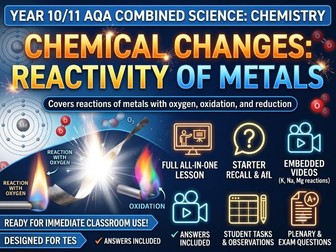
Updated 2026! Year 10 /11 AQA Combined Science Chemistry Chemical Changes Lesson 1: Reactivity of Metals Covers reactions of metals with oxygen and oxidation and reduction Save hours of planning with this complete AQA Combined Science Chemistry Reactivity of metals lesson for foundation tier year 10- chemical changes topic. This is a fully functional all in one lesson covering reactivity of metals with oxygen, designed for immediate classroom use, with all activities embedded directly into the lesson presentations, though slides are easily printable if you want to use them as printables. AfL is included within the presentation including reveal on click answers. Printable content is presented on its own slides for easy printing, I recommend printing the full slide, then copying at A5, two to a page for students to easily glue into their books to refer back to later. This lesson is ready to go “out of the box”, you need only make copies of PEQ slide or table slide if you want to. Lesson has been designed according to the AQA specification. Includes: Full lesson on reactivity of metals with oxygen Starter recall Questions with answers student task: detail observations of metal reactions with oxygen with their word equations in table, either copy from board or print and glue in videos for each of three chemical reactions with oxygen and notes detailing how to do the reactions in the lab if preferable link to Bitesize video detailing industrial process used to transform iron ore into useable metal (only available in UK and can be omitted if outside UK) mid lesson tasks with answers plenary- practice exam questions with answers
Lesson Plan: Analysis and Evaluation (Working Scientifically)Quick View
ErinCGarvey

Lesson Plan: Analysis and Evaluation (Working Scientifically)

(0)
Lesson Plan only Key Stage 3/4 55 minute lesson plan Topic: Working Scientifically Title: Analysis and Evaluation Includes: Aim Learning Objectives List of Materials Introduction: (5 minutes) 5 minutes 2 tasks Main Content: (35 minutes) 3 possible activities Plenary: (5 minutes) Discussion based 3 tasks Differentiated through out, with additional options for further differentiation. Includes options for group work, pair work, think pair share, individual work and class discussion opportunities as well as in class assessment suggestions and learning outcomes Large scope for mixing and matching ideas, or picking and choosing just those ideas appropriate for your class or which you’d like to focus on building further.