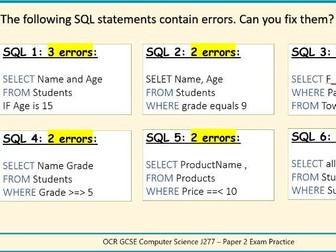
A complete, classroom‑ready PowerPoint covering databases and SQL for OCR GCSE Computer Science Paper 2. Clear explanations, worked examples, and exam‑style practice — ideal for Year 10–11.
his resource provides clear explanations, worked examples, and exam‑style SQL practice to help students confidently write and interpret queries.
Topics include:
Databases, tables, records, fields & primary keys
Relational databases
SQL: SELECT, FROM, WHERE
Comparison and logical operators (AND, OR, NOT)
Filtering data using single and multiple conditions
Includes structured “You Do” exam‑style questions, ideal for Year 10–11, revision lessons, or cover.
Classroom‑tested and aligned closely to OCR exam expectations — ready to teach with no prep required.
A 6–7 lesson unit in 1 interactive powerpoint that can be used is both teacher led (I do, we do slides) as well as interactive student slides to complete (you do). Providing a comprehensive and engaging introduction to Python programming, specifically designed for Year 7 students. It takes both teachers and students on a structured learning journey, culminating in the confidence and skills to begin developing simple text-based adventure games. The resource is ideal for teachers seeking a clear, well-sequenced introduction to coding that promotes independence, literacy, and logical thinking.
**Key Features: **
Introduction to Coding: The unit opens with an engaging image that highlights the real-world benefits of learning to code, sparking curiosity and relevance from the outset.
Assessment and Feedback Hub:
Built-in sections allow students to store their assessments and teacher feedback, helping monitor progress and support personalised learning.
**Differentiated Success Criteria: **
Clear Bronze, Silver, Gold, and Platinum levels guide students through the learning expectations. A checklist of slides and tasks linked to each grade supports self-assessment and targeted progression.
**Python Foundations: **
Students are introduced to Python’s syntax and usage through topics including:
Output (e.g., print())
Input (e.g., input())
Arrays (lists)
The random module
These concepts are applied gradually, building up to the creation of a simple adventure game.
**Key Vocabulary: **
A curated list of keywords runs through the unit, with interactive opportunities for students to define and revisit terms to reinforce understanding.
**Starter Activities: **
Four visually engaging starter slides are included to help settle students at the start of each lesson and re-engage prior learning.
Accessible Coding Platform:
Step-by-step guidance is given on how to use Python Online, ensuring no additional setup is needed.
**Pedagogical Structure: **
Lessons follow the I do, We do, You do model to support explicit instruction, guided practice, and independent coding.
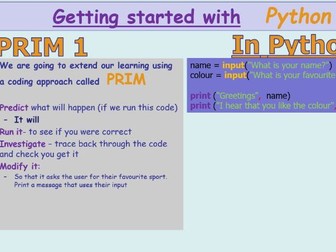
**PRIM Activity Model: **
All student coding tasks follow the Predict – Run – Investigate – Modify framework, encouraging computational thinking and problem-solving.
**Reading Integration: **
A dedicated reading slide supports literacy in Computing, linking comprehension skills to Python-related content.
**Formative Assessment: **
A quick mid-unit progress check enables teachers to assess and adapt teaching based on student understanding.
**Knowledge Recaps and Class Discussions: **
Recap slides focus on keyword consolidation and encourage whole-class discussion, aiding retrieval practice.
**Homework Tasks: **
Three homework slides ask students to explore and modify provided code, reinforcing skills learned in class.
This 6–7 lesson unit provides a comprehensive and engaging introduction to Python programming, specifically designed for Year 7 students. It takes both teachers and students on a structured learning journey, culminating in the confidence and skills to begin developing simple text-based adventure games. The resource is ideal for teachers seeking a clear, well-sequenced introduction to coding that promotes independence, literacy, and logical thinking. This resource is in PDF format, for the full teacher led, student participation powerpoint version, please click HERE
**Key Features: **
Introduction to Coding: The unit opens with an engaging image that highlights the real-world benefits of learning to code, sparking curiosity and relevance from the outset.
Assessment and Feedback Hub:
Built-in sections allow students to store their assessments and teacher feedback, helping monitor progress and support personalised learning.
**Differentiated Success Criteria: **
Clear Bronze, Silver, Gold, and Platinum levels guide students through the learning expectations. A checklist of slides and tasks linked to each grade supports self-assessment and targeted progression.
**Python Foundations: **
Students are introduced to Python’s syntax and usage through topics including:
Output (e.g., print())
Input (e.g., input())
Arrays (lists)
The random module
These concepts are applied gradually, building up to the creation of a simple adventure game.
**Key Vocabulary: **
A curated list of keywords runs through the unit, with interactive opportunities for students to define and revisit terms to reinforce understanding.
**Starter Activities: **
Four visually engaging starter slides are included to help settle students at the start of each lesson and re-engage prior learning.
Accessible Coding Platform:
Step-by-step guidance is given on how to use Python Online, ensuring no additional setup is needed.
**Pedagogical Structure: **
Lessons follow the I do, We do, You do model to support explicit instruction, guided practice, and independent coding.
**PRIM Activity Model: **
All student coding tasks follow the Predict – Run – Investigate – Modify framework, encouraging computational thinking and problem-solving.
**Reading Integration: **
A dedicated reading slide supports literacy in Computing, linking comprehension skills to Python-related content.
**Formative Assessment: **
A quick mid-unit progress check enables teachers to assess and adapt teaching based on student understanding.
**Knowledge Recaps and Class Discussions: **
Recap slides focus on keyword consolidation and encourage whole-class discussion, aiding retrieval practice.
**Homework Tasks: **
Three homework slides ask students to explore and modify provided code, reinforcing skills learned in class.


 Quick View