Topics:
Nazi views of the family
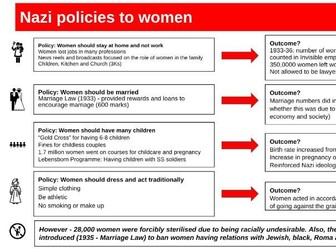
Nazi policies towards women
Nazi policies towards young people
Employment and living standards
The persecution of minorities, and racial policies
The persecution of Jewish People
Weimar and Nazi Germany GCSE
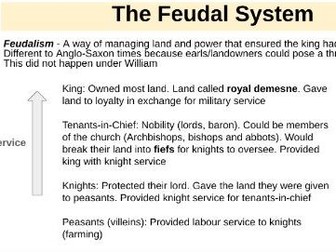
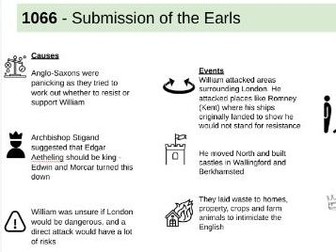
A revision resource for Unit 2 of the Anglo-Saxons and Normans (Edexcel). Includes rebellions against William and how he dealt with them
Flashcards/Knowledge Organisers
revision of Weimar and Nazi Germany Units 1-4. The resource covers:
Unit 1: Weimar Germany and post-WWI
Legacy of WWI
Weimar Constitution
Structure of the Weimar Government
The Early Weimar Government
Challenges to the Government (Left and Right Wing)
The Treaty of Versailles (June 1919)
1923 - The Nightmare Year
German Recovery (1924-29)
How stable was the Weimar government?
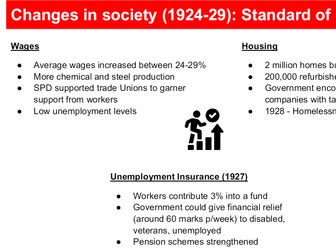
Changes in Society - Standard of Living
Changes in Society - Women
Changes in Society - Culture and Identity
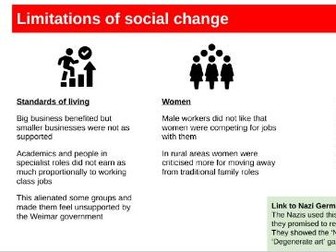
Limitations of social change
Unit 2: Hitler’s rise to power
Early Development of the Nazi Party (1919-22)
Early Growth of the Nazi Party
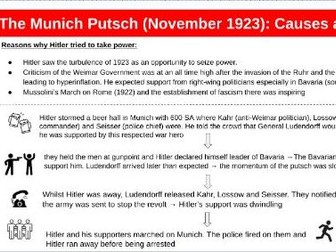
The Munich Putsch (1923)
Consequences of the Munich Putsch
Restructuring the Nazi Party
The Lean Years (1924-28)
The Wall Street Crash (1929) - Impact on Germany
The Growth in support for Communism
The Growth in support for the Nazis
How Hitler became Chancellor - Key people and context
How Hitler became Chancellor
Unit 3: Hitler creating a dictatorship
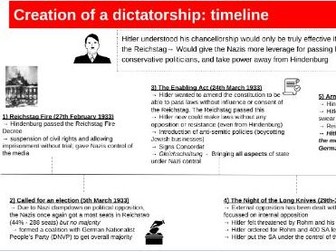
Creation of a dictatorship: timeline
Nazi Police (Terror) state
Nazi Police State: Controlling the German legal system
Nazi policies with the Church
Unity: Controlling and influencing German attitudes
Propaganda: control of the Media and culture
Opposition,resistance and obedience
Case studies: Opposition groups - The Churches
Case studies: Opposition groups - Youth Groups
Unit 4: Life in Nazi Germany
Nazi views of the family
Nazi policies towards women
Nazi policies towards young people
Employment and living standards
The persecution of minorities, and racial policies
The persecution of Jewish People
Creation of a dictatorship: timeline
Nazi Police (Terror) state
Nazi Police State: Controlling the German legal system
Nazi policies with the Church
Unity: Controlling and influencing German attitudes
Propaganda: control of the Media and culture
Opposition,resistance and obedience
Case studies: Opposition groups - The Churches
Case studies: Opposition groups - Youth Groups
Weimar and Nazi Germany GCSE
Early Development of the Nazi Party (1919-22)
Early Growth of the Nazi Party
The Munich Putsch (1923)
Consequences of the Munich Putsch
Restructuring the Nazi Party
The Lean Years (1924-28)
The Wall Street Crash (1929) - Impact on Germany
The Growth in support for Communism
The Growth in support for the Nazis
How Hitler became Chancellor - Key people and context
How Hitler became Chancellor
Legacy of WWI
Weimar Constitution
Structure of the Weimar Government
The Early Weimar Government
Challenges to the Government (Left and Right Wing)
The Treaty of Versailles (June 1919)
1923 - The Nightmare Year
German Recovery (1924-29)
How stable was the Weimar government?
Changes in Society - Standard of Living
Changes in Society - Women
Changes in Society - Culture and Identity
Limitations of social change
Weimar and Nazi Germany GCSE
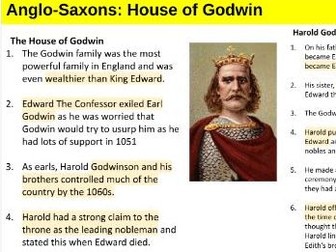
units 1-3 of Edexcel specification GCSE history of Anglo-Saxons and Normans
Can be used as flashcards or knowledge organiser to revise
Unit 1: Anglo-Saxon England
Unit 2: William taking control of England
Unit 3: Norman England
Includes:
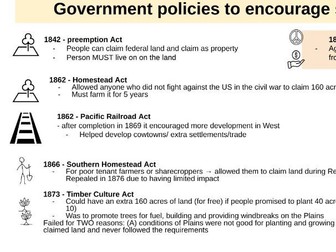
Government policies to encourage settlers
policies towards Plains Indians
Early migration
Donner Party
Mormon migration
Gold Rush
Law and order in America (w/ Case Studies of Billy the Kid, Wyatt Earp and the OK Corral, Johnson County War)
Growth of Cattle Industry
Pacific Railroad Act
Exoduster Movement
Oklahoma Land Rush


 Quick View