Spelling Quick-Fire Challenge Cards – 24 Fun ActivitiesQuick View
bekisteel

Spelling Quick-Fire Challenge Cards – 24 Fun Activities

(1)
Spelling Quick-Fire Challenge Cards – 24 Fun Activities Make spelling practice engaging and interactive with these 24 quick-fire spelling challenge cards. Perfect for individual work, pairs, small groups, interventions, or whole-class activities, each card contains a simple and fun task designed to help children rehearse and remember their spelling words. PERFECT FOR DYSLEXIC LEARNERS Activities include challenges such as: Say the word in a funny voice. Write the word three times. Spell the word with your eyes closed. Clap out the syllables. Use the word in a sentences. These low-prep cards are ideal for KS1 and KS2, spelling interventions, morning work, early finishers, and home learning. They add variety to spelling practice while encouraging repetition and recall in a playful way. What’s included: 24 colourful spelling activity cards Suitable for any spelling list or scheme Easy to print, laminate and reuse Great for developing confidence and making spelling practice fun A versatile resource that turns everyday spelling practice into an exciting challenge!
Spelling morphology Y1&2 bundle slideshowQuick View
bekisteel

Spelling morphology Y1&2 bundle slideshow

(0)
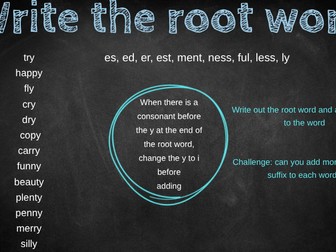
Teach the key Year 1 and Year 2 morphology and spelling rules with this comprehensive 74-slide interactive Power Point, packed with engaging explanations, games, videos and practical activities. Designed to make spelling fun and memorable, this ready-to-use resource takes pupils through each spelling rule step by step before providing plenty of opportunities to practice and apply their learning. This resource covers: Adding -s and -es Adding -ing, -ed, -er and -est No change – simply add the suffix Doubling the final consonant before adding a suffix Dropping the final ‘e’ before adding a suffix Changing ‘y’ to ‘i’ before adding a suffix Adding -ment, -ness, -ful, -less and -ly Understanding root words and suffixes What’s included? 74 fully editable PowerPoint slides Clear, child-friendly teaching explanations Examples Independent practice activities Interactive games (wordwall links) Challenge questions Links to engaging educational videos (youtube links) Perfect for: Year 1 Year 2 KS1 English Whole-class teaching Spelling lessons Morphology lessons Phonics follow-on sessions Literacy interventions Morning work SATs preparation Home learning
Semantic map - Mind map - vocabularyQuick View
bekisteel

Semantic map - Mind map - vocabulary

(0)
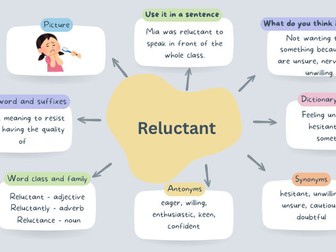
Help pupils develop a deeper understanding of ambitious vocabulary with this engaging Vocabulary Organiser. Perfect for guided reading, spelling lessons, writing sessions, and vocabulary instruction, this resource encourages children to explore new words in a meaningful way. For each word, pupils will: Draw a picture to represent the word Use the word in a sentence Predict its meaning Write the dictionary definition Identify synonyms and antonyms Record related words and connections Explore the word family (or root word) Ideal for introducing vocabulary from whole-class reading, spelling lists, or the statutory word list. One page for printing and one example page (using a year 5/6 spelling word)
Spelling Rules poster and activitiesQuick View
bekisteel

Spelling Rules poster and activities

(0)
Make spelling rules clear, memorable and engaging with these 3 printable spelling rule posters and accompanying ‘Your Turn’ activities. Designed for KS1/2 learners, each resource explains the rule with clear examples before giving pupils the opportunity to apply their learning independently. Perfect for spelling lessons, literacy interventions, independent practice, homework or classroom displays. This resource includes: 3 Spelling Rule Posters/Worksheets Change ‘y’ to ‘i’ before adding a suffix Double the final consonant before adding a suffix Drop the final ‘e’ before adding a suffix Each poster contains: A simple explanation of the spelling rule Worked examples Helpful reminders and tips A ‘Your Turn’ activity where pupils practice applying the rule
Functional Skills English Level 1 – Complete Reading & Writing PowerPoint (97 Slides)Quick View
bekisteel

Functional Skills English Level 1 – Complete Reading & Writing PowerPoint (97 Slides)

(0)
This fully comprehensive 97-slide PowerPoint covers the entire Functional Skills English Level 1 specification for Reading and Writing, including grammar, spelling, punctuation, and exam-style skills, all built into engaging, ready-to-teach activities. Designed for Functional Skills tutors, FE colleges, SEN learners, alternative provision, and adult learners, this resource is ideal for teaching the full course, revising the specification, or supporting targeted intervention. What is included: Complete coverage of Functional Skills English Level 1 (Reading & Writing) Built-in grammar, spelling and punctuation progression Clear explanations of key skills in student-friendly language A wide range of interactive activities and tasks throughout Opportunities for independent work, pair work, and group discussion Exam-style questions and practice tasks Structured to support step-by-step learning and retrieval No extra preparation needed - just download and deliver.
Wednesday (The Show) – Colourful Semantics Activity PackQuick View
bekisteel

Wednesday (The Show) – Colourful Semantics Activity Pack

(0)
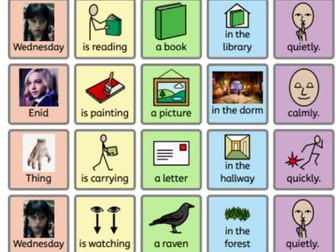
Description: Engage your students with this fun Colourful Semantics resource based on Wednesday! This pack is perfect for supporting sentence-building, descriptive writing, and character exploration. What’s included: Cut-and-Stick Sentence Activity: Six ready-made sentences from Wednesday for students to arrange using colourful semantics. Writing Extension: Students use the semantics to write out three sentences and create one of their own about their town. Character Description Sheet: A structured worksheet to describe the three main characters, encouraging observation and descriptive language skills. Ideal for: KS1/2 pupils working on sentence construction, vocabulary, and descriptive writing. Colourful semantics and structured literacy sessions. Fans of Wednesday looking for an engaging classroom activity. Skills Practiced: Sentence formation Vocabulary expansion Descriptive writing Sequencing and organization
The Cave – Complete Lesson Pack | Reading, Suspense & Creative WritingQuick View
bekisteel

The Cave – Complete Lesson Pack | Reading, Suspense & Creative Writing

(0)
This engaging 18-slide PowerPoint lesson is based on the short story The Cave and is designed to guide students through the text while developing key reading, analysis and writing skills. The lesson includes structured activities and accompanying worksheets to support students step-by-step as they explore vocabulary, characterisation, suspense and language techniques. Perfect for KS2 or lower KS3, this resource works well for whole-class teaching, guided reading, literacy lessons or cover work. What’s included: 18-slide editable PowerPoint Worksheets for each activity A range of interactive reading and writing tasks Activities included: • Vocabulary Scanning – students search the text for key words and develop dictionary skills. • Characterisation Discussion – analysing how the main character, Mary, is presented. • Suspense Detective – identifying moments that build tension in the story. • Comprehension & Visualisation – answering questions and drawing the scene to deepen understanding. • Language Techniques – highlighting and analysing the writer’s use of language. • Show, Not Tell – exploring descriptive writing techniques. • Tension Timeline – tracking how suspense builds throughout the story. • Whole Text Comprehension Questions – checking understanding of the full narrative. Creative Writing Task (Student Choice): Students finish the lesson by choosing one of three writing outcomes: Write a newspaper article Create an alternative ending Write a diary entry from a character’s perspective This resource encourages close reading, discussion, analytical thinking and creative response, making it ideal for building confidence with narrative texts and suspense writing. Ready to use with minimal preparation – just download and teach!
Stranger Things colourful semanticsQuick View
bekisteel

Stranger Things colourful semantics

(0)
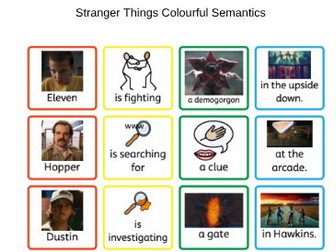
Motivate reluctant writers with this Stranger Things themed Colourful Semantics activity designed to support sentence structure in an engaging and visual way. This resource includes 10 sentences that pupils must rebuild using Colourful Semantics prompts before writing the completed sentence. The themed content helps capture the interest of older learners who may struggle with or avoid writing tasks. What’s included: 10 Stranger Things themed sentences Perfect for: Older reluctant writers SEN learners Speech and language support KS2/KS3 intervention groups Supporting understanding of who, what, where, and when in sentences This resource provides structured writing support while using a popular theme to increase engagement and confidence in writing.
Jack and the Beanstalk – Colourful Semantics Sentence Building & Writing WorksheetQuick View
bekisteel

Jack and the Beanstalk – Colourful Semantics Sentence Building & Writing Worksheet

(0)
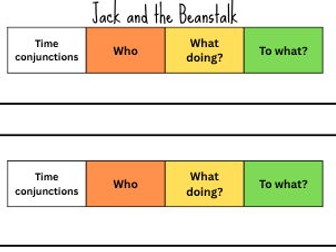
This engaging worksheet supports children in developing sentence structure using the Colourful Semantics approach. Pupils are provided with colour-coded semantic cards to cut out and stick onto sentence strips to build sentences linked to the story Jack and the Beanstalk. The activity focuses on identifying who, what doing, what, and where to form clear, complete sentences. Once the four sentences are correctly built using the Colourful Semantics prompts, pupils then move on to the second sheet, which contains sentence strips for copying. Here, they practice handwriting, sentence formation, and basic punctuation by writing out the sentences they created. This resource is ideal for: Early writers Pupils developing sentence structure Learners who benefit from visual scaffolds SEN/EAL learners using Colourful Semantics What’s included: Colourful Semantics cut-and-stick sentence building activity (4 sentences) Sentence strip worksheet for copying the completed sentences Perfect for literacy lessons, intervention groups, or supporting children who need extra structure when forming sentences.
Peppa Pig Colourful Semantics – Sentence Building (Who? Doing What? What?)Quick View
bekisteel

Peppa Pig Colourful Semantics – Sentence Building (Who? Doing What? What?)

(0)
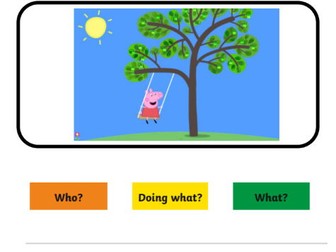
Peppa Pig Colourful Semantics – Sentence Building (Who? Doing What? What?) A fun and engaging colourful semantics writing resource using Peppa Pig characters to support children in building simple sentences. Each page includes a picture prompt and colour-coded cues to help pupils identify: Who? (the person/character) What doing? (the action/verb) What? (the object) Children use the prompts to say and then write a full sentence in the space provided below. This resource is ideal for supporting: Early sentence construction Understanding subject–verb–object structure Speech and language development SEND learners, EAL pupils, and early writers Colourful Semantics interventions Perfect for EYFS, KS1, and lower KS2 learners who benefit from visual scaffolds and structured sentence support. What’s included: 10 pages of ready to use resource
Addition and subtraction matching card gameQuick View
bekisteel

Addition and subtraction matching card game

(0)
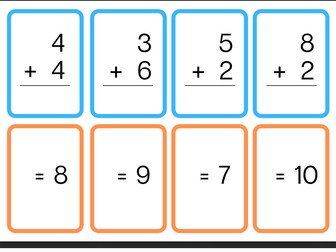
Simple Addition and Subtraction – Matching Activity Help children build confidence in early maths with this simple addition and subtraction matching activity. This resource begins with one-digit calculations and gradually progresses to two-digit numbers adding or subtracting one digit, making it ideal for developing fluency step by step. Pupils solve each calculation and match the question to the correct answer, encouraging problem-solving and reinforcing number skills in an engaging way. What’s included: Addition and subtraction questions Progression from single-digit to two-digit ±/- one-digit calculations Match the question to the answer activity format Printable flashcards suitable for classroom or home learning Perfect for: KS1 maths practice Early KS2 revision Maths centres or independent work Intervention groups and extra practice This resource is designed to make practising basic operations simple, interactive, and confidence-building for young learners.
Five Nights at Freddys Number Bonds to 10Quick View
bekisteel

Five Nights at Freddys Number Bonds to 10

(0)
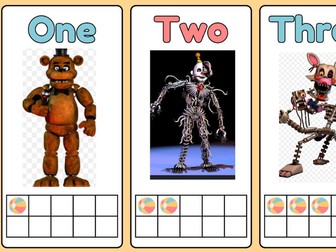
Engage your students with this fun Five Nights at Freddy’s themed maths activity designed to help children practice number bonds to 10. A matching activity Great for: Reinforcing number bonds to 10 Independent practice Maths starters or morning work Supporting learners who benefit from visual and themed resources This resource is especially helpful for motivating reluctant learners who enjoy game-inspired activities.
5 Day Colourful Semantics Sentence Writing Intervention Pack: Three little pigsQuick View
bekisteel

5 Day Colourful Semantics Sentence Writing Intervention Pack: Three little pigs

(0)
5–Day Colourful Semantics Sentence Writing Intervention Pack Looking for a clear, structured way to move pupils from sentence building to independent writing? This 5-day lesson sequence uses colourful semantics to develop sentence structure, transcription skills, recall, vocabulary expansion and independent sentence writing. Perfect for: KS1 and lower KS2 SEN pupils EAL learners Children needing structured writing support Intervention groups What’s Included: Day 1 – Sentence Structure LO: To build a complete sentence using who, what doing, what and where. Children cut and organise colour-coded sentence parts to build a complete sentence before reading it aloud. Day 2 – Transcription LO: To copy a structured sentence using correct letter formation, spacing, capital letters, full stops and spelling. Children copy the sentences they built, focusing on handwriting and punctuation accuracy. Day 3 – Recall, Oral Rehearsal and Sentence Construction LO: To recall and write a complete sentence using who, what doing, what and where. Visual prompts are partially removed. Pupils orally rehearse the full sentence (including missing parts) before writing independently. Day 4 – Add One Extra Detail LO: To expand a sentence by adding extra detail. Children collect adjectives and adverbs to improve their sentences. Day 5 – Independent Sentence Writing LO: To write three well-structured sentences including correct punctuation and added detail. Pupils independently write three sentences, highlighting key features beforehand to support self-checking. Why This Pack Works This resource follows a clear progression: Build → Copy → Recall → Expand → Write Independently It supports children in moving from heavily scaffolded sentence construction to confident, independent writing. Ideal for: Writing interventions SEND support Booster groups Teaching assistants Structured literacy sessions Everything is ready to print and use.
Three little pigs colourful semanticsQuick View
bekisteel

Three little pigs colourful semantics

(0)
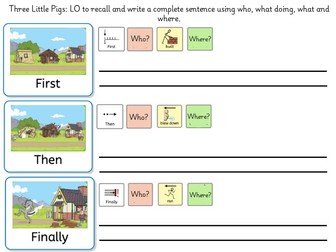
This resources begins with building the colourful semantic sentences (who, what doing, what and where.) Then the children have the opportunity to write the sentences, focusing on using the sentence starters (First, Then and Finally).
Roll & Write a sentenceQuick View
bekisteel

Roll & Write a sentence

(0)
This fun and engaging worksheet supports sentence building by encouraging children to create their own sentences using a who? what? where? and when? structure (colourful semantic style) Children roll a die to choose different options from each category and then combine their choices to form a complete sentence. This activity helps develop grammar, vocabulary, and early writing skills, while also supporting creativity and sentence structure awareness. Ideal for primary-aged learners who benefit from a game-based approach to writing. Great for independent practice, small group work, or intervention sessions.
Mastering Progressive and Perfect TensesQuick View
bekisteel

Mastering Progressive and Perfect Tenses

(0)
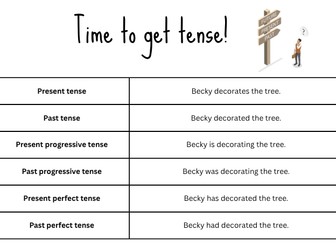
This worksheet supports children in practicing progressive and perfect tenses in a clear and simple way. It helps learners understand how verbs change to show actions happening now and actions that have already happened. 2 example pages for teaching 5 activities for independent learning