AAQ Early Childhood Development Unit 2 Initial Assessment Bundle Content Areas A–D with AnswersQuick View
natliverss

AAQ Early Childhood Development Unit 2 Initial Assessment Bundle Content Areas A–D with Answers

(0)
Find out what your students already know—and where teaching needs to begin—with this complete set of four initial assessments for AAQ Early Childhood Development Unit 2: Keeping Children Safe. Use each assessment before starting its content area to identify prior knowledge, gaps and misconceptions. Confidence checks help distinguish secure understanding from correct guesses and confidently held errors. The pack includes four separate assessments: A — Legal responsibilities and health and safety Explores duty of care, children’s rights, the purposes of legislation, policies and procedures, and safe information handling. B — Hazards, risks and infection control Explores hazard recognition, risk management, infection prevention, hand hygiene, immunisation, accident records and reporting. C — The EYFS and safeguarding Explores the EYFS, staff suitability and support, the key person role, inclusion, medicine arrangements, behaviour observations and confidentiality. D — Recognising and responding to child abuse Explores forms and indicators of abuse, responding to concerns, safe placement arrangements, online safety, recording and reporting, and contributions from safeguarding agencies. Included across the bundle: • Four editable Word documents, totalling 24 pages • Three printable student pages per assessment • Nine numbered questions and 20 diagnostic marks per assessment • Multiple-choice, matching and short-answer questions • Four original nursery case studies with application and reasoning tasks • Student confidence checks and reflection prompts • Teacher answers with suggested marking guidance • Diagnostic record sheets and content sampling maps • Common misconceptions and guidance for planning follow-up teaching Each assessment takes approximately 25–30 minutes and can be used independently. Students can select or write “unsure”, making the tasks suitable before formal teaching. The separate files allow you to assess starting points throughout the unit rather than completing one lengthy assessment at the beginning. They can also be revisited after teaching to support discussion of progress. No additional lesson purchase is required. This bundle provides an initial assessment for every Unit 2 content area, A–D. Each assessment samples selected knowledge and skills; the bundle is not an exhaustive test of every specification point or a full mock examination. All questions and scenarios are original. An independent teaching resource, not endorsed by Pearson. Suggested marks are for diagnostic classroom use and are not an official Pearson mark scheme.
Initial Assessment AAQ Early Childhood Development Unit 2: Content Area A with AnQuick View
natliverss

Initial Assessment AAQ Early Childhood Development Unit 2: Content Area A with An

(0)
Identify students’ starting knowledge before teaching Content Area A of AAQ Early Childhood Development Unit 2: Keeping Children Safe. This ready-to-use initial assessment explores legal responsibilities and approaches to health and safety in early years settings. It helps teachers identify existing understanding, knowledge gaps and misconceptions to inform lesson planning. Topics sampled include: • Duty of care and shared responsibility for children’s welfare • Children’s rights • The purposes of health and safety legislation, COSHH and food safety regulations • The difference between policies and procedures • Secure and accurate information handling • Applying safe practice in a nursery scenario Included in this six-page editable Word resource: • Three printable student assessment pages • Nine numbered questions worth 20 diagnostic marks • Multiple-choice, matching and short-answer questions • An original nursery case study with application and explanation tasks • Confidence checks to help distinguish secure knowledge from guesses • A student reflection prompt • Teacher answers with suggested marking guidance • A diagnostic record sheet, content sampling map and common misconceptions Allow approximately 25–30 minutes. Students can select or write “unsure”, making the assessment useful before formal teaching. Use the responses to target teaching, address misconceptions and identify students who need further challenge. The assessment can also be revisited after teaching to support discussion of progress. Designed specifically for Content Area A. It samples key starting knowledge rather than testing every specification point. No additional lesson purchase is required. An independent teaching resource, not endorsed by Pearson. Suggested marks are for classroom diagnostic use and are not an official Pearson mark scheme.
Misconception Cards AAQ Early Childhood Development Unit 2Quick View
natliverss

Misconception Cards AAQ Early Childhood Development Unit 2

(0)
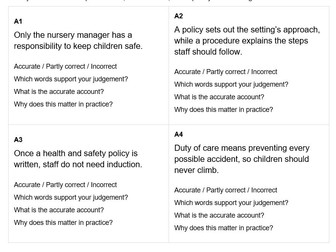
Can your students explain why a statement is wrong—or do they simply know it sounds wrong? This ready-to-use misconception pack helps students challenge misunderstandings about AAQ Early Childhood Development Unit 2: Keeping Children Safe. Students classify statements as accurate, partly correct or incorrect, then correct them where needed and explain why they matter in practice. The mixture of statement types encourages careful judgement rather than assuming every card contains an error. Included in this 21-page editable Word resource: 32 printable discussion cards, with eight for each Content Area A–D. Teacher answers with accurate explanations and the misconceptions to listen for. A follow-up question and suggested response for every card. An individual student recording sheet with confidence checks. A partner challenge and exit-check sheet. A teacher delivery guide with a suggested 20-minute activity. Ideas for mini whiteboards, paired discussion, starters and revision. Topics include: Content Area A: responsibilities, policies and procedures, duty of care, COSHH, children’s rights and personal information. Content Area B: hazards and risks, risk assessment, suitable challenge, infection control and accident recording. Content Area C: the EYFS, suitability checks, key persons, safeguarding training, supervision, medicines and inclusion. Content Area D: recognising concerns, responding to disclosures, reporting, confidentiality, neglect and agency roles. Use a few cards for a quick understanding check or a larger selection for discussion and written work. The teacher guide helps you explore students’ reasoning and check whether they understand the correction. Works independently—no additional lesson purchase required. It can also support targeted follow-up after an initial assessment. This original resource supports selected content across A–D; it does not cover every specification point or replace a full unit assessment. It uses early years examples from England and includes source notes and guidance for handling sensitive content. Independent teaching resource, not endorsed by Pearson.
AAQ Early Childhood Development Unit 2: Content Area B Initial Assessment with AnswersQuick View
natliverss

AAQ Early Childhood Development Unit 2: Content Area B Initial Assessment with Answers

(0)
Identify students’ starting knowledge before teaching Content Area B of AAQ Early Childhood Development Unit 2: Keeping Children Safe. This ready-to-use initial assessment explores hazards, risks and infection control in early years settings. It helps teachers identify knowledge gaps and misconceptions, alongside students’ ability to explain and apply safe practice. Topics sampled include: • The difference between hazards and risks • Implementing and reviewing risk assessments • Balancing children’s safety with opportunities for challenge • Routes of infection transmission • Hand hygiene and the use of gloves • The role of immunisation • Factual accident recording • Understanding that not every accident is reportable under RIDDOR Included in this six-page editable Word resource: • Three printable student assessment pages • Nine numbered questions worth 20 diagnostic marks • Multiple-choice, matching and short-answer questions • An original outdoor-play case study with application and explanation tasks • Confidence checks to distinguish secure knowledge from guesses • A student reflection prompt • Teacher answers with suggested marking guidance • A diagnostic record sheet, content sampling map and common misconceptions Allow approximately 25–30 minutes. Students can select or write “unsure”, making the assessment suitable for use before formal teaching. Use the results to plan teaching, address misconceptions and identify students who need further support or challenge. The assessment can also be revisited after teaching to support discussion of progress. Designed specifically for Content Area B, sampling both maintaining health and safety and infection prevention and control. It does not test every specification point. No additional lesson purchase is required. An independent teaching resource, not endorsed by Pearson. Suggested marks are for classroom diagnostic use and are not an official Pearson mark scheme.
Keeping Children Safe: Recognising and Responding to Abuse AAQ Unit 2 D Baseline AssessmentQuick View
natliverss

Keeping Children Safe: Recognising and Responding to Abuse AAQ Unit 2 D Baseline Assessment

(0)
Would your students know how to respond if a child shared something worrying? Can they distinguish a possible indicator of abuse from proof, or explain why practitioners must report concerns promptly? Establish their starting points with this baseline assessment for Content Area D of AAQ Early Childhood Development Unit 2: Keeping Children Safe. The questions explore students’ understanding of recognising abuse, safe working practices and responding to concerns. An original nursery case study asks students to consider a child’s welfare, challenge the suggestion to wait for proof and explain how agencies can contribute to safeguarding. Students will explore: • Forms of abuse and possible indicators • Taking concerns seriously without jumping to conclusions • Listening appropriately to a child • Supervision and safe arrangements for placement students • Supporting children’s online safety • Recording and reporting concerns • Appropriate safeguarding information sharing • Contributions from children’s social care, police and health services What you receive: • A six-page editable Word document • Three student assessment pages with written response space • Nine numbered questions worth 20 diagnostic marks • Multiple-choice, matching, short-answer and scenario tasks • Confidence checks and a student reflection prompt • Suggested answers and clear marking guidance • A teacher diagnostic record sheet • A content sampling map and common misconceptions to address Designed for approximately 25–30 minutes before teaching Content Area D. Students can respond “unsure”, helping teachers identify unfamiliar concepts alongside confidently held misconceptions. Use the findings to plan explanations, discussions and follow-up activities around your class’s needs. All scenarios are fictional, and teacher guidance includes advice for handling sensitive content. This assessment samples selected content from D1–D3; it is not a comprehensive end-of-topic test. It can be used independently alongside your own lessons. An original, independent resource, not endorsed by Pearson. Marks are suggested for diagnostic classroom
Assessment AAQ Early Childhood Development Unit 2: Content Area C Initial Assessment with AnswersQuick View
natliverss

Assessment AAQ Early Childhood Development Unit 2: Content Area C Initial Assessment with Answers

(0)
Identify students’ starting knowledge before teaching Content Area C of AAQ Early Childhood Development Unit 2: Keeping Children Safe. This ready-to-use initial assessment explores the Early Years Foundation Stage (EYFS) and safeguarding. It helps teachers identify existing understanding, knowledge gaps and misconceptions about how safeguarding and welfare requirements affect everyday nursery practice. Topics sampled include: • The statutory status of the EYFS in England • Safer recruitment and the role of DBS checks • Staff training, supervision and appraisal • The key person role • Recognising and recording changes in children’s behaviour • Inclusion and children’s physical welfare needs • Safe arrangements for administering medicines • Confidentiality and appropriate information sharing Included in this six-page editable Word resource: • Three printable student assessment pages • Nine numbered questions worth 20 diagnostic marks • Multiple-choice, matching and short-answer questions • An original nursery case study exploring medicine, accessible drinking water and confidentiality • Confidence checks to distinguish secure knowledge from guesses • A student reflection prompt • Teacher answers with suggested marking guidance • A diagnostic record sheet, content sampling map and common misconceptions Allow approximately 25–30 minutes. Students can select or write “unsure”, making the assessment suitable for use before formal teaching. Use the responses to plan teaching, address misconceptions and identify students who need further support or challenge. The assessment can also be revisited after teaching to support discussion of progress. Designed specifically for Content Area C. It samples key starting knowledge rather than testing every EYFS requirement or specification point. No additional lesson purchase is required. An independent teaching resource, not endorsed by Pearson. Suggested marks are for classroom diagnostic use and are not an official Pearson mark scheme.
AAQ Early Childhood Development Unit 2: Policies and Procedures Role Play PackQuick View
natliverss

AAQ Early Childhood Development Unit 2: Policies and Procedures Role Play Pack

(0)
Bring policies and procedures to life with this practical role-play pack for AAQ Early Childhood Development Unit 2: Keeping Children Safe. Help students move beyond describing a policy to understanding how practitioners implement it through their actions, communication and decisions. Working in groups of three, students explore four original early years scenarios: • Safe collection of a child • Confidentiality and sharing information • Reporting a safeguarding concern • Accident recording and communication Each scenario includes a shared situation brief, a fictional nursery policy and procedure, and three individual role cards. The role cards provide different information, responsibilities and suggested dialogue, helping students participate confidently while responding to realistic pressures and uncertainty. Included in this 17-page editable Word pack: • A suggested 60-minute lesson plan • Four scenario briefs and 12 printable role cards • Teacher pause-point questions with suggested responses • A reusable observer worksheet to keep the audience involved • Individual follow-up tasks with written response space • Suggested answers and formative assessment guidance • A replay activity so students can improve their response after feedback • An exit ticket, support suggestions and extension activity The activities encourage students to explain why procedures matter, recognise missed steps and consider the consequences for children, families and practitioners. Suitable for introducing, consolidating or revisiting selected Unit 2 content. The pack can be used independently alongside your own teaching materials; no additional lesson purchase is required. All scenarios and dialogue are original. Nursery procedures are fictional classroom examples. This is an independent supplementary teaching resource, not endorsed by Pearson, and does not cover the whole unit.
AAQ Early Childhood Development Unit 2: Hazards & Risks 24 Mini Whiteboard ActivitiesQuick View
natliverss

AAQ Early Childhood Development Unit 2: Hazards & Risks 24 Mini Whiteboard Activities

(0)
Make checking understanding quick, engaging and manageable with 24 ready-to-use mini whiteboard activities for AAQ Early Childhood Development Unit 2: Keeping Children Safe. Focused on B1: Maintaining health and safety, this pack helps students identify hazards, explain risks and apply their knowledge to realistic early years scenarios. Simply display the question, give students thinking time, reveal their boards together and move to the suggested answer slide. What’s included? An editable 53-slide PowerPoint with 24 activities and separate answer reveals. A matching PDF version of the slides. A 27-page teacher guide with specification links, suggested timings, support prompts, common misconceptions and follow-up teaching suggestions. Extension questions to deepen discussion and challenge students’ reasoning. Activities include: Hazard or risk? Quick sorting. Fixing flawed student answers. Prioritising hazards and justifying decisions. Sequencing the risk assessment process. Matching hazards to suitable control measures. “Keep, adapt or stop?” balanced risk decisions. A mini nursery safety audit. A final safety brief exit ticket. Topics covered Hazards and risks, risk assessment, implementing and reviewing controls, supervision, outings, age-appropriate resources, positive risk-taking, children’s views, accurate records and reporting hazards. Each activity takes approximately 2–4 minutes, making the pack suitable for starters, checks during teaching, plenaries and revision. No student printing is required when using mini whiteboards, and teachers can select or reorder activities to suit their existing lessons. Mapped to the Pearson AAQ Early Childhood Development specification, Issue 6, June 2026. Please note: this is a focused supplementary pack covering selected B1 content. It does not cover the whole of Unit 2 or B2 infection prevention and control. Suggested answers are teaching guidance, not an official mark scheme. An independent teaching resource with no Pearson endorsement or affiliation.
Mini Whiteboard AAQ Early Childhood Development Unit 2 B2: Infection ControlQuick View
natliverss

Mini Whiteboard AAQ Early Childhood Development Unit 2 B2: Infection Control

(0)
Make infection prevention and control interactive with 24 ready-to-use mini whiteboard activities for AAQ Early Childhood Development, Unit 2: Keeping Children Safe, Content Area B2. Use these short activities as starters, knowledge checks, revision tasks or plenaries. Learners respond to realistic early years scenarios, challenge misconceptions and explain how safer routines help prevent infection. Activities cover: How infections spread and common childhood infections Handwashing, respiratory hygiene and PPE Body-fluid spills, nappy changing and waste disposal Cleaning toys, equipment and the environment Food hygiene and cross-contamination Illness records, reporting procedures and exclusion guidance The role of immunisation Tasks include matching, correcting claims, spotting unsafe practice, choosing and justifying actions, and a return-time calculation. Included in your download: Editable 53-slide PowerPoint Matching slide PDF 24 activities, each followed by a suggested answer reveal Extension questions to deepen discussion Teacher guide with timings, specification links, response support, likely misconceptions and follow-up teaching prompts Activity index and reference links Most activities take 2–4 minutes. Simply display the slide, give learners thinking and writing time, ask them to show their boards, then reveal and discuss the answer. Designed to support selected B2 content alongside your existing lessons. Guidance checked in September 2026. This is an independent teaching resource and is not endorsed by Pearson.
NCFE Health & Social Care Content Area 3: Legislation 24 Mini Whiteboard ActivitiesQuick View
natliverss

NCFE Health & Social Care Content Area 3: Legislation 24 Mini Whiteboard Activities

(0)
Check understanding and bring legislation to life with 24 ready-to-use mini whiteboard activities for the NCFE CACHE Level 1/2 Technical Award in Health and Social Care. This pack supports Content Area 3: Legislation, Policies and Procedures in Health and Social Care. Use the short activities as starters, retrieval checks, revision tasks or plenaries. Learners apply knowledge to realistic care scenarios, correct misconceptions, justify decisions and improve explanations. Topics include: Legislation, policies and procedures and how they connect Equality Act 2010 Health and Safety at Work etc. Act 1974 Data Protection Act 2018 Health and Social Care Act 2012 Care Act 2014 Equality and inclusion, safe practice and confidentiality Regulatory and inspection bodies Practitioner responsibilities, professional boundaries and escalation Activities include sorting examples, matching regulators, correcting care notes, challenging claims and linking laws to practical care procedures. Included: Editable 53-slide PowerPoint Matching slide PDF 24 activities with suggested answer reveals Extension questions 28-page teacher guide with timings, specification links, response support, misconceptions and follow-up teaching prompts Activity and lesson index Most activities take approximately 3–4 minutes and require only mini whiteboards, pens and erasers. Paper can also be used. PLEASE NOTE: The teacher guide refers to Lessons 1–12 in my separate Content Area 3 lesson resources, with two activities linked to each lesson. Those lessons are available to purchase separately and are NOT included in this download. This activity pack can also be used independently alongside your own teaching. Mapped to selected content in specification version 1.5, January 2026. An independent teaching resource, not endorsed by NCFE.
NCFE Level 1/2 Tech Award Health & Social Care – Content Area 2 Complete Unit BundleQuick View
natliverss

NCFE Level 1/2 Tech Award Health & Social Care – Content Area 2 Complete Unit Bundle

(0)
A complete, ready-to-teach resource bundle for Content Area 2 of the NCFE Level 1/2 Technical Award in Health and Social Care. The bundle contains six fully planned one-hour lessons, a 20-page student workbook and an initial assessment with a complete mark scheme and diagnostic guidance. The lessons cover: • Healthcare practitioner roles • Social care practitioner roles • Person-centred care • The 6 Cs of care • Continuing professional development (CPD) • Content Area 2 revision and application Included in the bundle: • 6 editable PowerPoint presentations • 66 professionally designed lesson slides • Clear learning objectives and success criteria • Retrieval starters and assessment opportunities • Individual, paired and group activities • Original health and social care case studies • Application and exam-style questions • Plenary and exit-ticket activities • A 20-page editable student workbook aligned with the lessons • A 30-mark initial assessment to identify students’ starting points • Complete assessment mark scheme • Diagnostic guidance and question-level analysis grid Each presentation is designed to provide approximately one hour of teaching. The lessons follow a consistent structure and can be taught as a complete sequence or used individually. All resources have neutral branding, making them suitable for adaptation by any school, college or training provider. The PowerPoints and Word documents are fully editable, allowing teachers to add their own branding, timings or differentiated activities. This bundle is ideal for introducing Content Area 2, supporting classroom teaching, checking prior knowledge and preparing students to apply their knowledge to realistic health and social care scenarios.
NCFE Level 1/2 Tech Award Health & Social Care – Content Area 3 Complete Unit BundleQuick View
natliverss

NCFE Level 1/2 Tech Award Health & Social Care – Content Area 3 Complete Unit Bundle

(0)
A complete, ready-to-teach resource bundle for Content Area 3 of the NCFE Level 1/2 Technical Award in Health and Social Care: Legislation, Policies and Procedures in Health and Social Care. This comprehensive bundle contains 12 fully planned one-hour lessons, a 39-page student workbook and an initial assessment with a complete mark scheme, diagnostic guidance and question-level analysis. The lessons cover: • Legislation, policies and procedures • The relationship between legislation and workplace practice • Equality Act 2010 • Health and Safety at Work etc. Act 1974 • Data Protection Act 2018 • Health and Social Care Act 2012 • Care Act 2014 • Equality and inclusion procedures • Health and safety procedures • Confidentiality and information-management procedures • Regulatory and inspection bodies • Practitioner roles, responsibilities and professional boundaries • Content Area 3 revision and application Included in the bundle: • 12 editable PowerPoint presentations • 132 professionally designed lesson slides • Clear learning objectives and success criteria • Retrieval starters and regular assessment opportunities • Teacher input and guided practice • Individual, paired and group activities • Original health and social care case studies • Application and exam-style questions • Model points and self-assessment activities • Plenaries and exit-ticket questions • A 39-page editable student workbook aligned with the lessons • A 30-mark initial assessment to identify students’ starting points • Complete assessment mark scheme • Diagnostic guidance and question-level analysis grid Each presentation provides approximately one hour of teaching and follows a clear, consistent structure. The lessons can be delivered as a complete teaching sequence or selected individually to support existing schemes of work. The resources cover all required Content Area 3 specification points, including the five named Acts, key organisational procedures, the roles of regulatory bodies and practitioner responsibilities. All resources have neutral branding and are suitable for use in any school, college or training provider. The PowerPoints and Word documents are fully editable, allowing teachers to add their own branding, timings or differentiated activities. Ideal for specialist and non-specialist teachers looking for a complete, structured and specification-aligned Content Area 3 teaching package.
NCFE Level 2 Tech Award Health and Social Care Lessons and WorkbookQuick View
natliverss

NCFE Level 2 Tech Award Health and Social Care Lessons and Workbook

(0)
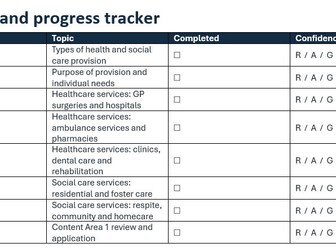
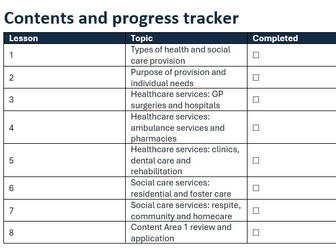
Content Area 1 teaching resource pack for the NCFE Level 2 Tech Award in Health and Social Care. Content Area 1: Health and social care provision and services - the package provides approximately eight hours of teaching and includes: Eight complete one-hour PowerPoint lessons 88 professionally designed presentation slides A 29-page student workbook A 30-mark initial assessment Complete assessment mark scheme Question-level analysis grid Student reflection and confidence checks Retrieval activities Guided practice Case studies Independent application tasks Model answers and feedback End-of-lesson exit checks The initial assessment can be used before teaching to establish students’ starting points, identify misconceptions and inform planning. The accompanying question-level analysis grid allows teachers to identify areas requiring additional support. The workbook follows the PowerPoints in lesson order, allowing students to complete retrieval questions, guided activities, case-study work, independent application and exit checks without requiring separate worksheets. All resources are fully editable and use neutral branding, making the package suitable for use in any school or college.
AAQ Early Childhood Development Unit 2: Keeping Children Safe  Complete Comprehension ActivitiesQuick View
natliverss

AAQ Early Childhood Development Unit 2: Keeping Children Safe Complete Comprehension Activities

(0)
Save planning time with this comprehensive comprehension bundle for AAQ Early Childhood Development Unit 2: Keeping Children Safe. This resource includes 34 comprehension activities covering Learning Aims A, B, C and D, providing students with opportunities to develop their knowledge, understanding and application of key concepts across the entire unit. Included in this Bundle Learning Aim A Comprehension Activity Pack (8 activities) Learning Aim B Comprehension Activity Pack (10 activities) Learning Aim C Comprehension Activity Pack (8 activities) Learning Aim D Comprehension Activity Pack (8 activities) Resource Features 34 comprehension activities Reading texts linked to specification content Retrieval questions Explain questions Apply tasks Challenge and evaluative questions Suitable for literacy development and subject knowledge Editable PowerPoint format Designed specifically for teachers delivering AAQ Early Childhood Development and looking for ready-to-use activities linked directly to Unit 2: Keeping Children Safe.
AAQ ECD Activity Pack Unit 2: Keeping Children Safe Learning Aim A ComprehensionionQuick View
natliverss

AAQ ECD Activity Pack Unit 2: Keeping Children Safe Learning Aim A Comprehensionion

(0)
Support the delivery of Learning Aim A with this ready-to-use comprehension activity pack for AAQ Early Childhood Development Unit 2: Keeping Children Safe. This resource contains 8 engaging reading activities designed to help students develop their knowledge and understanding of key concepts while improving their ability to apply information in context. Each comprehension includes a short reading passage followed by a range of retrieval, explanation, application and evaluative questions, making the activities suitable for a variety of classroom uses. Resource features: ✔ 8 comprehension activities ✔ Knowledge retrieval questions ✔ Explain and apply tasks ✔ Challenge and evaluative questions ✔ Specification-linked content ✔ Ready-to-use classroom activities Suitable for teachers delivering the AAQ Early Childhood Development qualification and looking for engaging resources linked directly to Unit 2: Keeping Children Safe – Learning Aim A. Resource provided in editable PowerPoint format.
AAQ ECD Unit 2: Keeping Children Safe Learning Aim B Comprehension ActivitiesQuick View
natliverss

AAQ ECD Unit 2: Keeping Children Safe Learning Aim B Comprehension Activities

(0)
Support the delivery of AAQ Early Childhood Development Unit 2: Keeping Children Safe with this comprehensive Learning Aim B Comprehension Activity Pack. Designed to develop students’ knowledge, understanding and application of key health and safety concepts, this resource includes 10 engaging reading activities with retrieval, explanation, application and evaluative questions. The comprehensions help students build confidence with key terminology and apply their learning to realistic early years contexts, making them ideal for classroom teaching, homework, revision and independent study. Topics Covered ✔ Hazards and risks ✔ Risk control measures ✔ Carrying out risk assessments ✔ Promoting health and safety ✔ A balanced approach to risk management ✔ Infection prevention and control ✔ How infections spread ✔ Personal Protective Equipment (PPE) ✔ Cleaning, disinfection and decontamination ✔ Recording and reporting incidents Resource Features 10 comprehension activities Knowledge retrieval questions Explain and apply tasks Challenge and evaluative questions Specification-linked content Editable PowerPoint format This resource is suitable for teachers delivering the AAQ Early Childhood Development qualification and provides a ready-to-use set of activities linked directly to Unit 2: Keeping Children Safe – Learning Aim B.
Unit 2: Keeping Children Safe Learning Aim C Comprehension Activity Pack SafeguardingQuick View
natliverss

Unit 2: Keeping Children Safe Learning Aim C Comprehension Activity Pack Safeguarding

(0)
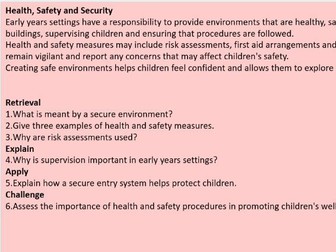
Support the delivery of Learning Aim C with this engaging comprehension activity pack for AAQ Early Childhood Development Unit 2: Keeping Children Safe. This resource contains 8 reading and comprehension activities designed to help students develop their knowledge, understanding and application of key concepts linked to the EYFS, safeguarding, professional responsibilities and working practices in early years settings. Each activity includes a reading passage followed by retrieval, explain, apply and challenge questions, making the resource ideal for developing subject knowledge, literacy skills and assessment confidence. Topics Covered ✔ Early Years Foundation Stage (EYFS) ✔ Safeguarding and Welfare Requirements ✔ Safer Recruitment and DBS Checks ✔ The Key Person Role ✔ Health, Safety and Security ✔ Equality, Inclusion and Anti-Discriminatory Practice ✔ Recognising and Recording Changes in Behaviour ✔ Confidentiality and Record Keeping Designed specifically for teachers delivering the AAQ Early Childhood Development qualification and looking for ready-to-use resources linked directly to Unit 2: Keeping Children Safe – Learning Aim C.
Unit 2: Keeping Children Safe Learning Aim D Comprehension Activity Pack SafeguardingQuick View
natliverss

Unit 2: Keeping Children Safe Learning Aim D Comprehension Activity Pack Safeguarding

(0)
Support the delivery of Learning Aim D with this engaging comprehension activity pack for AAQ Early Childhood Development Unit 2: Keeping Children Safe. This resource contains 8 reading and comprehension activities designed to help students develop their knowledge, understanding and application of key safeguarding and child protection concepts within early years settings. Each activity includes a reading passage followed by retrieval, explain, apply and challenge questions, helping students build confidence with safeguarding terminology while preparing for assessment. Topics Covered ✔ Understanding Safeguarding ✔ Types of Abuse ✔ Recognising Indicators of Abuse ✔ Listening to Children’s Voices ✔ Responding to a Disclosure ✔ Online Safety in Early Years Settings ✔ Multi-Agency Working ✔ The Role of the NSPCC and Other Safeguarding Organisations Resource Features 8 comprehension activities Retrieval questions Explain and apply tasks Challenge and evaluative questions Specification-linked content Editable PowerPoint format Designed specifically for teachers delivering the AAQ Early Childhood Development qualification and looking for ready-to-use safeguarding resources linked directly to Unit 2: Keeping Children Safe – Learning Aim D.
AAQ Early Childhood Development Unit 2: Keeping Children Safe  Learning Aim B Case Study PackQuick View
natliverss

AAQ Early Childhood Development Unit 2: Keeping Children Safe Learning Aim B Case Study Pack

(0)
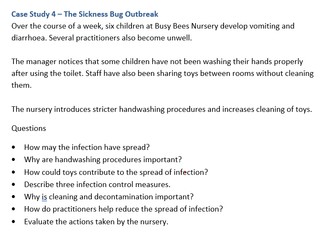
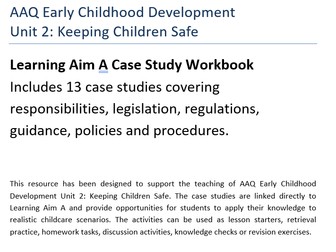
Support the delivery of Learning Aim B with this detailed case study pack for AAQ Early Childhood Development Unit 2: Keeping Children Safe. This resource includes six realistic and detailed childcare scenarios designed to develop students’ understanding of health and safety, risk management and infection prevention in early years settings. The case studies encourage students to apply their knowledge to real-life situations and can be used for retrieval practice, classroom discussion, independent learning, homework, revision or assessment preparation. Topics covered include: • Hazards and risks • Risk control measures • Risk assessments • Educational visits and outings • Promoting children’s health and safety • Balanced approaches to risk management • Infection prevention and control • Handwashing and hygiene procedures • PPE and safe handling of bodily fluids • Recording and reporting incidents Included case studies: • The Woodland Walk • The Climbing Frame Debate • The Wet Floor Incident • The Sickness Bug Outbreak • The Farm Visit Risk Assessment • The Blood Spill Incident Each case study includes a range of knowledge, application and evaluative questions, making the resource suitable for a variety of teaching and learning activities. Ideal for: • Classwork • Retrieval practice • Homework • Revision • Discussion activities • Cover lessons • Assessment preparation Resource provided in editable Word format.
AAQ Early Childhood Development Unit 2: Keeping Children Safe – Learning Aim A BundleQuick View
natliverss

AAQ Early Childhood Development Unit 2: Keeping Children Safe – Learning Aim A Bundle

(0)
Support the delivery of Learning Aim A with this ready-to-use resource bundle for AAQ Early Childhood Development Unit 2: Keeping Children Safe. This bundle includes: • Learning Aim A Student Workbook • Learning Aim A Case Study Pack • 14 realistic childcare case studies • Knowledge check activities • Application and discussion questions • End of learning aim assessment task • Learning aim references included throughout The resources have been designed to help students apply their knowledge to realistic childcare scenarios while developing their understanding of responsibilities, legislation, regulations, guidance, policies and procedures that support children’s health, safety and wellbeing. Suitable for: • Classwork • Independent study • Homework • Retrieval practice • Revision • Intervention sessions • Cover lessons Learning Aim A content covered: • A1.1 Responsibilities to children’s health and safety • A1.2 Legislation, regulations and guidance • A1.3 Policies and procedures Resources are provided in editable Word format. Ideal for teachers delivering the AAQ Early Childhood Development qualification who are looking for ready-made activities that promote knowledge recall, application and discussion.
AAQ Early Childhood Development Unit 2: Keeping Children Safe  Learning Aim C Case Study Pack  EYFQuick View
natliverss

AAQ Early Childhood Development Unit 2: Keeping Children Safe Learning Aim C Case Study Pack EYF

(0)
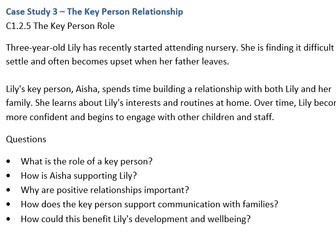
Support the delivery of Learning Aim C with this engaging case study pack for AAQ Early Childhood Development Unit 2: Keeping Children Safe. This resource contains a collection of realistic early years scenarios designed to help students apply their knowledge of the EYFS, safeguarding and welfare requirements, safer recruitment, equality and inclusion, confidentiality and the key person role. The case studies encourage discussion, application of knowledge and preparation for assessment while helping students make links between theory and practice in early years settings. Topics covered include: • The legal status and purpose of the EYFS • Safeguarding and welfare requirements • Safer recruitment procedures • Disclosure and Barring Service (DBS) checks • The key person role • Administering medication • Recognising and recording changes in behaviour • Equality, inclusion and anti-discriminatory practice • Recording information accurately • Confidentiality and information sharing Each case study includes a range of questions designed to develop knowledge, understanding, application and discussion. Ideal for: • Classwork • Retrieval practice • Homework • Independent learning • Revision activities • Discussion tasks • Assessment preparation • Cover lessons Resource provided in editable Word format. Suitable for teachers delivering AAQ Early Childhood Development and looking for ready-to-use activities linked directly to Learning Aim C.