Year 7 Introduction to Religious Studies  KS3Quick View
armanichy05

Year 7 Introduction to Religious Studies KS3

(0)
Year 7 Religious Education: Introduction to Religion Scheme of Work | Complete 6-Lesson Unit Introduce students to the foundations of Religious Education with this complete 6-lesson Year 7 Scheme of Work. This fully resourced unit is designed to support students as they transition into secondary RE, developing their understanding of religious beliefs, practices, symbols, places of worship, and different perspectives on belief. Throughout the scheme, students explore key religious concepts and vocabulary while developing their ability to ask questions, discuss different viewpoints, and appreciate the diversity of religious traditions around the world. The unit provides a structured introduction to RE through a variety of engaging and accessible activities that build confidence and curiosity. The scheme includes a wide range of activities including retrieval practice, video tasks with guided note-taking, image analysis, independent research, group activities, classroom carousel tasks, discussion questions, reflection activities, assessment preparation, and written tasks. Students develop their understanding through a mixture of individual and collaborative learning while building essential RE skills. This 6-Lesson Scheme Includes: 6 complete, ready-to-teach Year 7 RE lessons Interactive lesson presentations Retrieval activities to recap and reinforce learning Key vocabulary development activities Video-based learning with guided questions and note-taking Image analysis and interpretation tasks Exploration of world religions, beliefs, symbols, and places of worship Independent and group research activities Interactive classroom carousel activities Discussion and reflection tasks Baseline assessment resources with writing support Student worksheets and information sheets Challenge questions to extend learning Homework tasks to consolidate knowledge and encourage independent exploration Perfect for Year 7 Religious Education, this complete introductory scheme provides students with a strong foundation in understanding religion and worldviews. It encourages respectful discussion, critical thinking, and curiosity while developing the knowledge and skills needed for future RE learning.
KS3 Places of Worship y7Quick View
armanichy05

KS3 Places of Worship y7

(0)
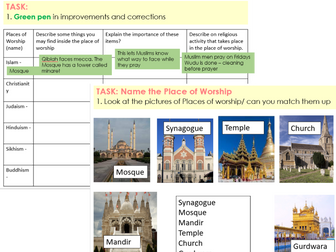
Year 7 Religious Education: Places of Worship | Complete Lesson Explore the importance and significance of places of worship across different religions with this engaging and flexible Year 7 Religious Education lesson. This lesson introduces students to a range of religious buildings and sacred spaces, helping them understand why these places are important to believers and how they are used for worship, community, and religious practice. Students complete a structured places of worship grid task, using information provided to research and record key details about different religious spaces. The lesson can be adapted to suit different classroom styles, allowing students to work independently in silence or collaboratively through group research activities. Information sheets can be printed and placed around the classroom, allowing the lesson to be delivered as an interactive carousel activity, where students move around the room collecting information, or as a more traditional independent retrieval task. What’s included: Complete ready-to-teach Year 7 RE lesson Information on a range of religious places of worship Structured student grid activity to complete throughout the lesson Independent and group information retrieval tasks Printable information sheets designed for classroom carousel activities Exploration of: Why places of worship are important What happens inside different religious buildings How believers use these spaces The role of worship and community Discussion and reflection activities to deepen understanding Opportunities to develop religious vocabulary and comparison skills Perfect for Year 7 Religious Education, this lesson provides an engaging introduction to sacred spaces around the world while encouraging students to explore different religious traditions, develop independent research skills, and appreciate the significance of places of worship for believers.
Year 7 Religious Symbols KS3Quick View
armanichy05

Year 7 Religious Symbols KS3

(0)
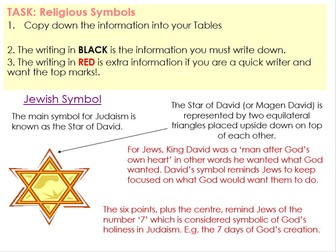
Year 7 Religious Education: Religious Symbols | Complete Lesson Explore the meaning and significance of religious symbols with this engaging Year 7 Religious Education lesson. This lesson introduces students to a range of symbols used across different religions and encourages them to investigate how symbols communicate beliefs, values, traditions, and identity. Students explore key information about religious symbols before completing structured tasks that develop their understanding of their meanings and importance within different faith communities. The lesson encourages curiosity and respectful discussion while helping students recognise the role symbols play in religious expression. Students are challenged to think critically through a range of challenge questions and discussion activities, allowing them to explore deeper questions about why symbols matter and how they influence the lives of believers. What’s included: Complete ready-to-teach Year 7 RE lesson Introduction to a range of religious symbols from different traditions Information sheets to support student understanding Student activities exploring the meaning and significance of symbols Challenge questions to extend learning Class discussion tasks encouraging critical thinking and respectful debate Opportunities to develop religious vocabulary and explanation skills Reflection activities to consolidate understanding Perfect for Year 7 Religious Education, this lesson helps students build their knowledge of world religions while developing their ability to explain, analyse, and discuss the importance of religious symbols in the lives of believers.
Year 7 World ReligionsQuick View
armanichy05

Year 7 World Religions

(0)
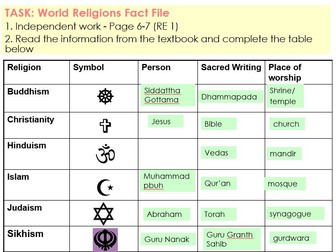
Year 7 Religious Education: World Religions | Complete Lesson Introduce students to the diversity of global religious traditions with this engaging Year 7 Religious Education lesson exploring different religions from around the world. This lesson provides students with the opportunity to develop their understanding of key beliefs, symbols, figures, sacred texts, and places of worship across a range of religions. Students use textbook information to complete a structured world religions worksheet grid, allowing them to independently research and organise key information. The activity encourages students to recognise similarities and differences between religions while developing their knowledge of important religious features and vocabulary. The lesson includes interactive learning activities that promote discussion, curiosity, and respectful exploration of different religious traditions. What’s included: Complete ready-to-teach Year 7 RE lesson Introduction to a range of world religions Structured worksheet grid activity Textbook research and information gathering task Students record: Religion Religious symbol Key religious figure/person Sacred writing/text Place of worship Interactive discussion and comparison activities Opportunities to develop religious literacy and key vocabulary Homework task to extend learning beyond the classroom Homework task: Research a place of worship (for example: Synagogue, Church, Gurdwara). Write 10 facts about this place of worship and bring your research to the next lesson. Perfect for Year 7 Religious Education, this lesson provides an engaging introduction to world religions while encouraging students to explore different beliefs, traditions, and practices with respect and curiosity. It supports students in building a strong foundation of religious knowledge for future RE learning.
Year 7 Religious Education: Baseline Assessment LessonQuick View
armanichy05

Year 7 Religious Education: Baseline Assessment Lesson

(0)
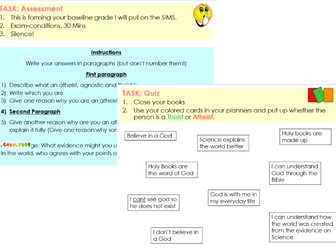
Year 7 Religious Education: Baseline Assessment Lesson | Complete Lesson Assess students’ understanding of key concepts and skills with this structured Year 7 Religious Education baseline assessment lesson. Designed to identify students’ starting points and support progress, this lesson provides an engaging way to revisit learning from previous lessons before completing a formal assessment. Students begin with retrieval activities to recall key ideas and vocabulary from previous learning, including definitions of theist, atheist, and agnostic. A RAG cards game is used to check student confidence and understanding, allowing teachers to identify misconceptions and address gaps in knowledge before the assessment. Students are then guided through the assessment process with clear explanations of how to approach RE questions, including how to structure answers and include key information. The lesson includes a supportive writing framework to help students demonstrate their understanding and build confidence in written responses. What’s included: Complete ready-to-teach Year 7 RE baseline assessment lesson Retrieval starter activity reviewing previous learning Key vocabulary recap: Theist Atheist Agnostic Interactive RAG cards game to assess understanding and confidence Baseline assessment question sheet Student writing frame to support extended responses Step-by-step breakdown of how to answer RE questions effectively Information sheet for students to use and stick into books Assessment preparation and reflection activities Perfect for Year 7 Religious Education, this lesson provides an effective starting point for assessing student knowledge, developing confidence in RE writing, and identifying areas for future support and progress. It is ideal for the beginning of a new unit or the start of the academic year.
KS3- How Do Some People Find God in Everyday Life?Quick View
armanichy05

KS3- How Do Some People Find God in Everyday Life?

(0)
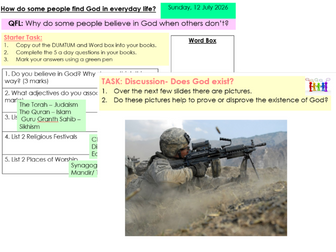
Year 7 Religious Education: How Do Some People Find God in Everyday Life? | Complete Lesson Help students explore different ways people experience and understand God with this engaging Year 7 Religious Education lesson. This lesson encourages students to consider how God may be understood as being present in everyday life through experiences, relationships, nature, and personal beliefs. Students begin by developing their understanding of key religious vocabulary through a keyword zoom-in activity, before analysing a range of images to explore different interpretations of how God may be present in the world. Video activities support further understanding and provide opportunities for students to reflect on religious experiences and perspectives. The lesson encourages students to think critically and personally through a structured reflection task, allowing them to explore their own ideas about God, including how they would define, describe, or explain the concept of God. Students also complete a homework investigation task, encouraging them to explore a range of viewpoints and recognise the diversity of beliefs people hold about God’s existence. What’s included: Complete ready-to-teach Year 7 RE lesson Keyword zoom-in starter activity to develop key vocabulary Image analysis tasks exploring how God may be present in everyday life Video activities with guided questions and note-taking Class discussion and reflection activities Personal reflection task exploring students’ own understanding of God Opportunities to develop explanation, evaluation, and critical thinking skills Homework interview task exploring different perspectives on God’s existence Homework task: Students interview as many people as possible to explore different views on God’s existence. They can ask friends, family members, and teachers to share their perspectives and record responses using the structure: Name: Atheist / Agnostic / Theist: Reason why: Perfect for Year 7 Religious Education, this lesson creates an inclusive environment for students to explore religious ideas, ask meaningful questions, and develop their understanding of different perspectives on God and belief. It encourages curiosity, respectful discussion, and an appreciation of diverse worldviews.
Introduction to Religious Studies - Year 7 KS3Quick View
armanichy05

Introduction to Religious Studies - Year 7 KS3

(0)
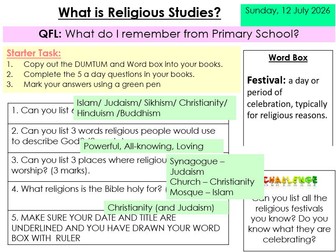
Year 7 Religious Education: Introduction to RE | Complete Lesson Introduce students to Religious Education with this engaging and accessible Year 7 lesson designed to support transition from primary to secondary school. This lesson helps students settle into their new RE classroom environment while exploring their existing knowledge, understanding, and experiences of religion. Students begin with retrieval activities to recall key ideas from primary school, followed by engaging video activities where they develop their understanding through guided note-taking. The lesson introduces important foundational concepts and vocabulary that students will use throughout their RE journey. What’s included: Complete ready-to-teach Year 7 RE lesson Settling-in and transition activities Retrieval tasks to assess prior knowledge from primary school Video activities with guided note-taking Introduction to key RE concepts and vocabulary Homework task introducing and consolidating key terms: Atheist Theist Agnostic Perfect for Year 7 Religious Education, this lesson provides a strong foundation for students beginning secondary RE while encouraging curiosity, discussion, and confidence in exploring different beliefs and worldviews.
Miracles Scheme of Work | Complete 7-Lesson Unit | AQA Philosophy of ReligionQuick View
armanichy05

Miracles Scheme of Work | Complete 7-Lesson Unit | AQA Philosophy of Religion

(0)
A-Level Philosophy: Miracles Scheme of Work | Complete 7-Lesson Unit | AQA Philosophy of Religion Save hours of planning with this comprehensive 7-lesson Scheme of Work covering the Miracles topic for AQA A-Level Philosophy of Religion. This fully resourced unit is designed to develop students’ knowledge, critical thinking, and exam skills through engaging, interactive lessons that build confidence and prepare learners for assessment. The scheme covers the key concepts and philosophical debates surrounding miracles, including biblical miracles, Realist and Anti-Realist interpretations, the views of David Hume, Maurice Wiles, Thomas Aquinas, John Hick, R.F. Holland, and Paul Tillich, as well as opportunities to compare and evaluate contrasting perspectives. Each lesson includes a variety of engaging activities such as retrieval practice, discussion and debate, independent and paired tasks, video-based learning, critical analysis, exam-style questioning, interactive worksheets, and structured consolidation activities. Students are encouraged to develop both AO1 knowledge and AO2 evaluative skills throughout the unit. The scheme concludes with an exam-style mini assessment focused on AO1 knowledge, allowing students to demonstrate their understanding before completing a revision homework task to consolidate learning across the entire unit. This bundle includes: 7 complete, ready-to-teach lessons Interactive lesson presentations Retrieval practice activities in every lesson Interactive A3 worksheets and structured note-taking tasks Critical thinking, discussion, and debate activities Independent, paired, and whole-class learning tasks Engaging video activities with guided questions Comparison and evaluation tasks Stretch and challenge activities for early finishers Consolidation tasks to reinforce learning Exam-style AQA questions and a mini assessment Homework tasks for every lesson, including revision and textbook activities Perfect for AQA A-Level Philosophy, Religious Studies, and Philosophy of Religion, this complete unit provides everything needed to teach the Miracles topic from start to finish while saving valuable planning time. Ideal for new and experienced teachers alike, this resource promotes high levels of engagement, develops exam confidence, and supports outstanding progress throughout the unit.
Mini Assessment – Hume and Wiles on Miracles (AO1, 10 Marks)Quick View
armanichy05

Mini Assessment – Hume and Wiles on Miracles (AO1, 10 Marks)

(0)
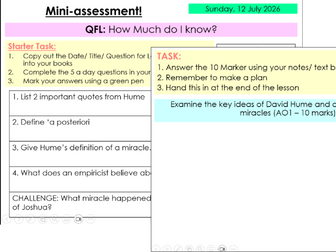
A-Level Philosophy: Mini Assessment – Hume and Wiles on Miracles (AO1, 10 Marks) Assess and strengthen students’ understanding of David Hume’s and Maurice Wiles’ views on miracles with this exam-focused A-Level Philosophy lesson. Designed around the AQA specification, this lesson provides students with the opportunity to prepare for and complete a 10-mark AO1 assessment, helping them develop confidence in demonstrating accurate knowledge and understanding under exam conditions. The lesson begins with a series of retrieval practice tasks to revisit key concepts from previous lessons before students are given dedicated preparation time to review their knowledge, discuss key ideas, and plan their responses. Students then complete the following exam-style question: Examine the key ideas of David Hume and Maurice Wiles on miracles. (AO1 – 10 marks) This lesson is ideal for checking student progress, identifying misconceptions, and preparing learners for future A-Level assessments. What’s included: Complete ready-to-teach assessment lesson presentation Retrieval practice activities to consolidate prior learning Structured preparation and revision time before the assessment AQA-style AO1 10-mark exam question Guidance to support planning and exam technique Independent assessment completed under timed conditions Reflection and self-assessment opportunities following the task Homework task requiring students to create their own consolidation and revision resource for the Miracles unit, helping to reinforce key knowledge and prepare for future assessments Perfect for AQA A-Level Philosophy, Religious Studies, and Philosophy of Religion courses, this lesson provides a structured and supportive approach to exam practice while encouraging students to consolidate their knowledge and build confidence in answering AO1 examination questions.
David Hume's Views on MiraclesQuick View
armanichy05

David Hume's Views on Miracles

(0)
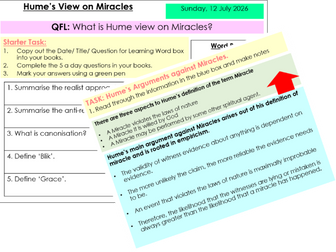
A-Level Philosophy: David Hume’s Views on Miracles | Complete Interactive Lesson Develop students’ understanding of David Hume’s influential critique of miracles with this engaging and fully resourced A-Level Philosophy lesson. Designed to support the AQA specification, this lesson breaks down Hume’s key arguments into clear, accessible sections, enabling students to confidently understand and evaluate one of the most significant philosophical challenges to belief in miracles. Through a variety of interactive activities, students explore Hume’s arguments, analyse their strengths and weaknesses, and consider whether his scepticism provides a convincing challenge to religious claims. The lesson encourages critical thinking, philosophical debate, and exam-focused evaluation. What’s included: Complete ready-to-teach interactive lesson presentation Clear breakdown of David Hume’s key arguments on miracles Structured notes and key information to support understanding Critical discussion and evaluation tasks Engaging video clips with guided note-taking activities Independent and paired learning activities Consolidation questions to reinforce key concepts Stretch and challenge tasks for early finishers Textbook reading task from the AQA A-Level Philosophy textbook with page references for further study and consolidation Perfect for AQA A-Level Philosophy, Religious Studies, and Philosophy of Religion courses, this lesson saves valuable planning time while helping students develop a thorough understanding of Hume’s arguments. An ideal resource for building confidence in analysing, evaluating, and applying Hume’s views on miracles in preparation for A-Level examinations.
Maurice Wiles' Views on MiraclesQuick View
armanichy05

Maurice Wiles' Views on Miracles

(0)
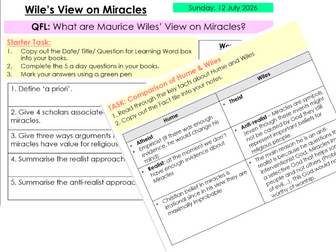
A-Level Philosophy: Maurice Wiles’ Views on Miracles | Complete Interactive Lesson Develop students’ understanding of Maurice Wiles’ views on miracles with this engaging and fully resourced A-Level Philosophy lesson. Designed to support the AQA specification, this lesson explores Wiles’ key arguments against the traditional understanding of miracles and encourages students to critically evaluate the strengths and weaknesses of his position. Students will examine Wiles’ belief that God does not intervene in the natural order through miraculous events and consider the implications of his views for Christian belief. The lesson also provides opportunities to compare Wiles’ arguments with those of David Hume, helping students identify similarities, differences, and the effectiveness of each philosopher’s approach. Through a range of independent, paired, and whole-class activities, students develop the analytical and evaluative skills needed for success in A-Level Philosophy while preparing for an upcoming assessment. What’s included: Complete ready-to-teach interactive lesson presentation Clear explanation of Maurice Wiles’ key views on miracles Critical analysis and evaluation tasks Comparison activities exploring the similarities and differences between Wiles’ and Hume’s views Independent written tasks to develop analytical skills Whole-class discussion and philosophical debate activities Consolidation questions to reinforce learning Structured opportunities for exam-focused evaluation Revision homework to prepare students for a mini assessment in the following lesson Perfect for AQA A-Level Philosophy, Religious Studies, and Philosophy of Religion courses, this lesson encourages students to think critically about the nature of miracles while developing the comparison and evaluation skills required for A-Level success. An excellent resource for preparing students for assessment and building confidence in philosophical analysis.
Jesus' Miracles A-level PhilosophyQuick View
armanichy05

Jesus' Miracles A-level Philosophy

(0)
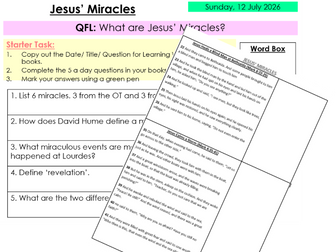
A-Level Philosophy: Jesus’ Miracles – Complete Interactive Lesson Bring the topic of Jesus’ miracles to life with this engaging and thought-provoking A-Level Philosophy lesson. This ready-to-teach resource explores key miracle accounts from the Bible while encouraging students to critically evaluate their significance and consider whether they provide convincing evidence for the existence of miracles. Students will analyse biblical miracle narratives, engage in philosophical discussion, and develop their evaluative skills through a range of interactive activities designed to deepen understanding and prepare them for A-Level assessment. What’s included: Complete interactive lesson presentation Exploration of key miracles performed by Jesus in the Bible Critical analysis of whether the miracle accounts are convincing Student worksheet with structured activities Video clip with guided questions Class discussion and debate tasks Independent written evaluation activities Homework task to consolidate learning and extend understanding Ideal for A-Level Philosophy and Philosophy of Religion courses, this lesson promotes critical thinking, evaluation, and classroom discussion while saving valuable planning time. A perfect resource for introducing or developing students’ understanding of biblical miracles and their philosophical significance.
Differing Understandings of Miracles – Anti-Realist ViewsQuick View
armanichy05

Differing Understandings of Miracles – Anti-Realist Views

(0)
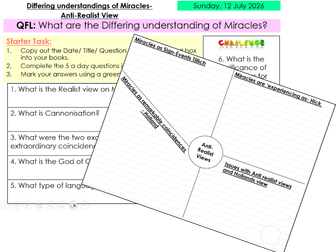
A-Level Philosophy: Differing Understandings of Miracles – Anti-Realist Views | Complete Interactive Lesson Help students develop a sophisticated understanding of Anti-Realist interpretations of miracles with this engaging and fully resourced A-Level Philosophy lesson. Focusing on the views of Paul Tillich, John Hick, and R.F. Holland, this lesson encourages students to compare and evaluate different perspectives while developing the critical analysis skills required for AQA examinations. Designed to promote active learning, students complete an interactive A3 worksheet throughout the lesson, enabling them to organise key information, compare philosophical arguments, and build evaluative responses. The lesson also includes stretch and challenge activities for early finishers, collaborative discussion tasks, and a consolidation question activity to reinforce learning before students complete an exam-style homework question. What’s included: Complete ready-to-teach interactive lesson presentation Interactive A3 worksheet completed throughout the lesson In-depth exploration of Tillich’s, Hick’s, and Holland’s Anti-Realist views on miracles Comparison and evaluation activities to develop critical thinking Stretch and challenge questions for early finishers Class discussion and paired learning tasks Consolidation question task to check understanding and reinforce key concepts AQA-style 15-mark homework question with structured guidance to develop exam technique and evaluative writing Perfect for AQA A-Level Philosophy, Religious Studies, and Philosophy of Religion courses, this lesson saves valuable planning time while encouraging independent thinking, discussion, and exam-focused evaluation. An excellent resource for building students’ confidence in analysing and comparing Anti-Realist interpretations of miracles while preparing for A-Level assessment.
Differing Understandings of Miracles – Realist ViewsQuick View
armanichy05

Differing Understandings of Miracles – Realist Views

(0)
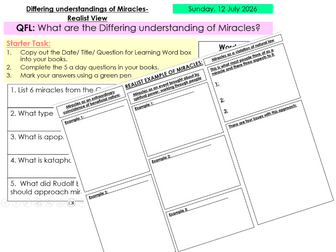
A-Level Philosophy: Differing Understandings of Miracles – Realist Views | Complete Interactive Lesson Explore the Realist understanding of miracles with this engaging and fully resourced A-Level Philosophy lesson. This lesson examines the Christian belief that miracles are genuine events that occur in the world through the power of God, encouraging students to evaluate key philosophical arguments and consider whether miracles provide convincing evidence for religious belief. Students investigate a range of biblical and modern examples of miracles, applying philosophical perspectives to analyse their significance. The lesson introduces and evaluates the views of Thomas Aquinas, David Hume, John Hick, and Maurice Wiles, helping students compare differing approaches to the possibility and purpose of miracles. Designed to promote active learning, students complete an interactive A3 worksheet throughout the lesson, organising key information, analysing examples of miracles, and developing evaluative responses. Stretch and challenge activities are included to extend higher-attaining students, while an interactive true-or-false plenary checks understanding before students complete an exam-style homework task. What’s included: Complete ready-to-teach interactive lesson presentation Interactive A3 worksheet completed throughout the lesson Exploration of the Realist view of miracles in Christianity Examples of biblical and contemporary miracles with analytical tasks Examination of the views of Aquinas, Hume, Hick, and Wiles Critical thinking, paired discussion, and evaluation activities Stretch and challenge questions for early finishers Interactive True or False plenary to consolidate learning AQA-style 10-mark homework question with structured guidance to develop exam technique Ideal for AQA A-Level Philosophy, Religious Studies, and Philosophy of Religion courses, this lesson encourages critical thinking, philosophical debate, and exam-focused evaluation while saving valuable planning time. A perfect resource for introducing or developing students’ understanding of Realist perspectives on miracles.
Introduction to Miracles - A-LevelQuick View
armanichy05

Introduction to Miracles - A-Level

(0)
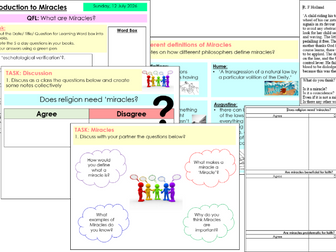
A-Level Philosophy: Introduction to Miracles – Complete Interactive Lesson Engage your students with this comprehensive and interactive A-Level Philosophy lesson introducing the topic of Miracles. Designed to spark curiosity and critical thinking, this ready-to-teach resource provides a strong foundation for one of the key topics in Philosophy of Religion. This lesson encourages students to explore what constitutes a miracle, examine different viewpoints, and reflect on their existing knowledge through thought-provoking discussions and engaging activities. What’s included: Complete, ready-to-use interactive lesson presentation Introduction to the concept of miracles Critical thinking and class discussion activities Retrieval and prior knowledge reflection tasks Student worksheet/task sheet Independent written activities Homework task to consolidate learning Perfect for teachers looking to save planning time while delivering an engaging and academically challenging introduction to the topic. The lesson promotes active participation, philosophical enquiry, and prepares students for further study of miracles at A-Level.