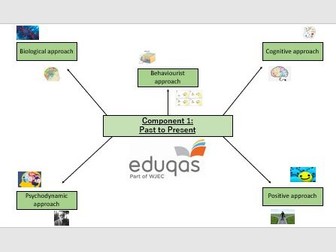
This document includes a knowledge organiser for each of the five approaches taught in component 1. Each knowledge organiser includes:
Key terms with definitions
The 3 assumptions
One therapy with evaluation (see below for which therapies are included)
Classic study with evaluation
Contemporary debate
Evaluation of the approach using D.R.A.I.N.S
Applications to component 3
Therapies:
Biological: Drug Therapy
Psychodynamic: Dream Analysis
Behaviourist: Systematic Densitisation
Cognitive: Cognitive Behavioural Therapy
Positive: Quality of Life Therapy
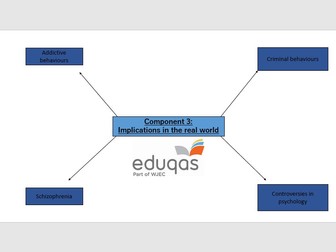
This document includes a knowledge organiser for addictive behaviours, criminal behaviours, schizophrenia and controversies in psychology. Below is a list of what is included in each knowledge organiser:
Addictive behaviours:
Key terms and definitions
Characteristics
Biological explanations with evaluation: dopamine and addiction gene
Individual differences explanations with evaluation: personality and cognitive biases
Social psychological explanations with evaluation: peer influence and the role of the media
Methods of modifying the behaviour with evaluation: agonist and antagonist substitution and aversion therapy
Criminal behaviours:
Key terms and definitions
Characteristics
Biological explanations with evaluation: inherited criminality and role of the amygdala
Individual differences explanations with evaluation: Eysenck’s criminal personality and cognitive factors
Social psychological explanations with evaluation: differential association theory and gender socialisation
Methods of modifying the behaviour with evaluation: anger management and restorative justice
Schizophrenia:
Key terms and definitions
Characteristics
Biological explanations with evaluation: dopamine hypothesis and structural abnormalities
Individual differences explanations with evaluation: psychodynamic approach and cognitive approach
Social psychological explanations with evaluation: dysfunctional family and sociocultural factors
Methods of modifying the behaviour with evaluation: antipsychotic drugs and CBT
Controversies:
Key terms and definitions
Ethical costs of conducting research
Scientific status
Non-human animals
Sexism
Cultural bias
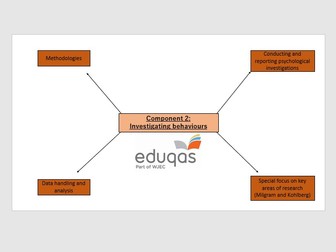
This document includes knowledge organisers for the 4 subheadings included in component 2. Below is a breakdown of what is included in each knowledge organiser:
Methodologies with evaluation of each: key terms and definitions; experiments; PET scans; CAT scans; observations; content analysis; case studies; longitudinal studies; cross-sectional studies; self-reports; types of sources and types of data
Conducting and reporting psychological investigations (design and report): key terms and definitions; issues and assessing reliability and validity; ethical issues and how to deal with these; deciding on a research question; experimental designs with evaluation; sampling techniques with evaluation and peer review with evaluation
Data handling and analysis: key terms and definitions; evaluation of the types of descriptive statistics; how to display quantitative data (graphs) with exam tips; data distributions and inferential statistics
Special focus on key areas of research: description and evaluation of Milgram and Kohlberg
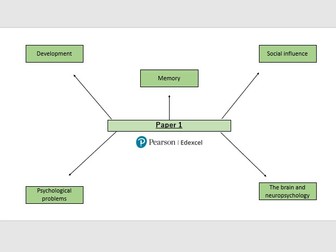
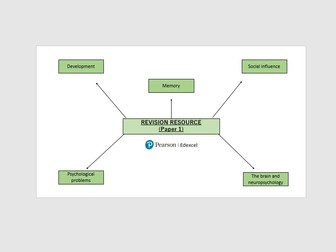
This document includes a knowledge organiser for each of the five units taught for paper 1 (development, memory, psychological problems, social influence and the brain and neuropsychology) . Each knowledge organiser includes:
An outline of required content
Key terms and definitions
Key theories
The two key studies with evaluation
The issue and debate
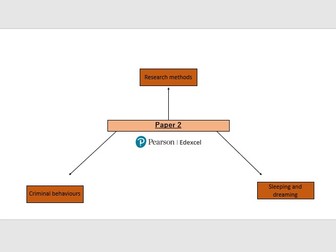
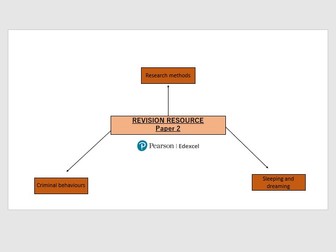
This document includes a knowledge organiser for research methods,criminal psychology and sleeping and dreaming. Below is a list of what is included in each knowledge organiser:
Research methods:
Key terms and definitions
Types of experiments with evaluation
Types of observations with evaluation
Self-reports with evaluation
Correlations with evaluation
Experimental designs with evaluation
Sampling techniques with evaluation
Ethical issues and ways of dealing with them
Types of data with evaluation
Descriptive statistics with evaluation
Displaying quantitative data
Criminal psychology:
A list of required content
Key terms and definitions
Learning theories
Biological explanations
Understanding the effects of punishment on recidivism
Rehabilitation
Two key studies
Sleeping and dreaming:
A list of required content
Key terms and definitions
Freud’s Theory of Dreaming
Hobson and McCarley’s Activation Synthesis with evaluation
Two key studies
This document includes revision worksheets for each of the units for paper 1 (development, memory, social influence, psychological problems and the brain and neuropsychology) as well as a breakdown of GRAVES and improvements of research.
It includes blank revision sheets as well as completed ones.
This document includes revision worksheets for research methods, criminal behaviour and sleeping and dreaming.
It includes blank revision sheets as well as completed ones.


 Quick View