 Quick View
Letter formation, letter practice RWI themed Early Writing
How to Use This Resource
Making early writing fun, playful and pressure-free
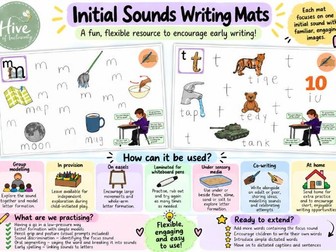
This flexible resource can be used in lots of different ways to encourage children to have a go at writing, build confidence and develop early literacy skills.
Where and how to use it
Group modelling: Explore the sound together, model how to form the letter and think aloud as you write.
In provision: Leave the resource available for children to explore independently during child-initiated play.
On easels: Encourage large movements and whole-arm letter formation before moving on to smaller writing.
Laminated with whiteboard pens: Practise, rub out and try again as many times as needed.
In sensory media: Place a laminated copy under or beside foam, slime, sand or salt to explore letter formation through touch and movement.
Co-writing: Write alongside an adult or peer, sharing ideas, modelling sounds and celebrating attempts.
At home: Send the resource home to encourage short, enjoyable practice with family members.
What are we practicing?
Having a go: Creating a low-pressure environment where children feel safe to try, make mistakes and try again.
Letter formation: Providing simple, clear models to support correct letter formation.
Pencil grip and posture: Gently prompting children to hold their pencil comfortably and sit in a position that supports writing.
Sound discrimination: Listening carefully to identify the focus sound in words.
Oral segmenting: Saying a word slowly and breaking it into its individual sounds before attempting to write it.
Early spelling: Linking sounds to letters and having a go at spelling simple words.
Make it work for every child
Start with what the child can do. Model the letter or word, say the sounds aloud and encourage the child to have a try. Offer prompts and support when needed, but allow plenty of time for independent attempts.
The aim is progress, not perfection. Praise effort, celebrate emerging skills and keep writing playful, meaningful and motivating.
Ready to extend?
When children are ready, build on the activity by:
Adding more words containing the focus sound.
Encouraging children to write their own words.
Introducing simple dictated words.
Moving on to dictated captions and sentences.
Encouraging children to say a sentence aloud before attempting to write it.
Keep the experience achievable, positive and responsive to each child’s stage of development.