To Write a Recount Planning Template - Charlotte's WebQuick View
DW92x

To Write a Recount Planning Template - Charlotte's Web

(0)
This one-page template is designed to help pupils to plan a recount from the perspective of Charlotte, the beloved spider from E.B. White’s classic tale, “Charlotte’s Web.” The template encourages deep engagement with the text and the characters, particularly focusing on Charlotte’s experience and her relationship with Wilbur. Headings Included: Character Event: Adjectives to Describe Wilbur’s Appearance: Adjectives to Describe Wilbur’s Personality: What was Wilbur Doing When Charlotte Entered the Barn? How Did Charlotte Feel When Entering the Barn? What Did Wilbur and Charlotte Do? Overall, this template serves as a valuable tool for students to organise their thoughts and ideas.
KS2 Extreme Earth (8 Lessons)Quick View
DW92x

KS2 Extreme Earth (8 Lessons)

(1)
In this unit, children will delve into the fascinating world of extreme natural phenomena that shape our planet. They will start by exploring the layers of the Earth, discovering the different zones and processes that make our planet unique before investigating volcano formation and eruption, examining the different types of volcanoes and the devastating impact they can have on our communities. Children will then learn about tornadoes, tsunamis and hurricanes and understanding how these powerful storms form and the importance of preparedness. The unit will also cover earthquakes and tsunamis, including the science behind these natural disasters and their effects on different regions, such as Alaska and California. Then with a focus on preparing for earthquakes, using San Francisco as a case study to explore how communities can be better equipped to respond to these events. Through a combination of hands-on activities, videos, and interactive simulations, children will develop a deeper understanding of these extreme events and learn valuable lessons about resilience, preparedness, and community response. A sequence of 8 lessons (no resources attached) Lesson 1 - Understanding the Layers of Earth To understand the main layers of the Earth and their characteristics To describe what can be found in each layer To locate and identify the main tectonic plates on a world map and globe Lesson 2 - Volcano Formation and Eruption To understand the concept of volcanic eruptions and the formation of volcanoes. To develop an understanding of the different types of landforms and geological processes. To practice problem-solving and critical thinking skills. Lesson 3 - Impact of Volcanoes To understand the positive and negative impacts of volcanic eruptions. To describe the effects on people and the environment. Lesson 4 - Tornadoes To understand what tornadoes are and how they form. Lesson 5 - Earthquakes and Tsunamis To understand what earthquakes and tsunamis are and how they occur. Lesson 6 -Hurricanes – Understanding the power of Hurricane Beryl To understand what hurricanes are and how they form, with a focus on Hurricane Beryl 2024. Lesson 7 - Earthquakes in California and Alaska To understand why California and Alaska are prone to earthquakes, and to research specific examples of significant earthquakes in these regions. Lesson 8 - Preparing for Earthquakes – A study on San Francisco To understand how people prepare for and respond to earthquakes. To learn about San Francisco’s preparedness for earthquakes, including emergency procedures, building codes, and community response.
KS2 - Let Me Take You To Rio (7 Lessons)Quick View
DW92x

KS2 - Let Me Take You To Rio (7 Lessons)

(0)
In this unit children will be learning about the beautiful country of Brazil and the vibrant city of Rio de Janeiro. They will begin by locating South America and Brazil on a map, and then delve into the diverse and unique culture of Brazil. The children will study the human and physical features of Brazil, including the differences between urban and rural areas. A particular focus will be on the lives of people living in Rio de Janeiro and how urbanisation is impacting the city. Children will compare the geography of Brazil to that of the UK, allowing them to gain a deeper understanding of the similarities and differences between these two fascinating places. A sequence of 7 lessons (no resources attached) Lesson 1 - To locate South America and Brazil on a world map. Lesson 2 - To introduce pupils to the diverse and unique culture of Brazil. Lesson 3 - To study the human and physical features of Brazil. Lesson 4 - To describe the differences between rural and urban areas in Brazil, focusing on Rio de Janeiro as a case study. Lesson 5 -To investigate urbanisation in Rio de Janeiro and its impact on people’s lives. Lesson 6 - To investigate recent changes happening in Rio de Janeiro and their impact on people’s lives. Lesson 7 - To make a comparison between living in and Rio de Janeiro with a focus on diversity and difference.
KS2 - All Around the World (6 Lessons)Quick View
DW92x

KS2 - All Around the World (6 Lessons)

(0)
Unit Overview: This unit allows children to take a closer look at where the countries of the world are located, and some of the ways geographers describe locations. Children will learn to locate and describe places using longitude and latitude, and find out about some of the important lines that delineate specific areas of the Earth – the Equator, the hemispheres, the Poles and the Tropics. Finally, by looking more closely at the lines of longitude, children will develop their understanding of time zones. A sequence of 6 lessons (no resources attached) Lesson 1 - To be able to identify the hemispheres and tropics on a map or globe. Lesson 2 - To explore the tropic region and understand the characteristics of the tropical biomes. Lesson 3 - To explore the Polar Regions and identify their key features. Lesson 4 - To understand the concept of the Prime Meridian and its significance. Lesson 5 - To be able to identify and explain the concept of time zones and how they are related to the Prime Meridian. Lesson 6 - To understand why countries have different time zones and be able to identify and locate them on a world map.
KS2 - Changing Landscapes (8 Lessons)Quick View
DW92x

KS2 - Changing Landscapes (8 Lessons)

(0)
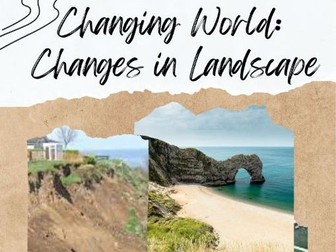
In this unit, children will explore the dynamic world of changing landscapes. They will by examining the UK’s coastlines, identifying and locating key features. They will then delve into the fascinating world of coastal erosion, conducting an experiment to simulate the effects of erosion and learning about the impact of weathering and human activities on coastlines. Pupils will investigate how landscapes change over time through case studies of landslides in the UK and the rapid transformation of Dubai. Through this unit children will also consider why boundaries change, both physically and through human activity, and reflect on what can’t be changed about certain landscapes. Children will also think about sustainability and how we can work together to protect and preserve our planet’s precious landscapes for future generations. Through a range of engaging lessons and activities, they will develop a deeper understanding of the complex and ever-changing nature of our world’s landscapes. A sequence of 8 lessons (no resources attached) Lesson 1 - Coastlines, Coastal Features and Locating UK coastlines Lesson 2 - Coastal Erosion Experiment Lesson 3 - Weathering and Erosions Lesson 4 - Changing Landscapes (Case Study – Landslides) Lesson 5 - Why do boundaries change? Lesson 6 - Changing Landscapes Over Time – Dubai Lesson 7 - Changing Landscapes – Why some things can’t be changed Lesson 8 - What next? Sustainability in the UK
Our Journey Through Africa and World Trade (8 Lessons)Quick View
DW92x

Our Journey Through Africa and World Trade (8 Lessons)

(0)
In this unit, “Our Journey through Africa and World Trade”, children will embark on an adventure to explore the vast and diverse continent of Africa by exploring Africa’s physical features, discovering the different countries, deserts, mountains, and rivers that shape the continent. They will delve into the biomes and climate zones of Africa, learning about the unique ecosystems and environments that support a wide range of plant and animal life. They will also investigate Africa’s natural resources. After discovering Africa they will shift our focus to world trade, examining how countries trade goods and services with each other and how this affects their economies. They will explore the UK’s trade links with Africa and other countries and investigate what fair trade means for both consumers and producers. Children will also learn about the impact of weathering and climate change on farming practices in Africa and how world trade has improved people’s lives over time. Throughout this unit, children will develop their geographical skills, critical thinking, and global awareness as they learn about the interconnectedness of our world. A sequence of 8 lessons (no resources attached) Lesson 1 - Exploring Africa’s Physical Features Lesson 2 - Biomes and Climate Zone Lesson 3 - Natural Resources Lesson 4 - Exploring World Trade Lesson 5 - UK’s Trade Links Lesson 6 - Fair Trade Lesson 7 - Weather and Climate Impact on Farming Lesson 8 - How World Trade Improved
KS2 - Extreme Earth (Bundle)Quick View
DW92x

KS2 - Extreme Earth (Bundle)

(0)
They will start by exploring the layers of the Earth, discovering the different zones and processes that make our planet unique before investigating volcano formation and eruption, examining the different types of volcanoes and the devastating impact they can have on our communities. Children will then learn about tornadoes, tsunamis and hurricanes and understanding how these powerful storms form and the importance of preparedness. The unit will also cover earthquakes and tsunamis, including the science behind these natural disasters and their effects on different regions, such as Alaska and California. Then with a focus on preparing for earthquakes, using San Francisco as a case study to explore how communities can be better equipped to respond to these events. Through a combination of hands-on activities, videos, and interactive simulations, children will develop a deeper understanding of these extreme events and learn valuable lessons about resilience, preparedness, and community response. This pack includes; A sequence of 8 lessons (planning) Lesson 1 - Understanding the Layers of Earth To understand the main layers of the Earth and their characteristics To describe what can be found in each layer To locate and identify the main tectonic plates on a world map and globe Lesson 2 - Volcano Formation and Eruption To understand the concept of volcanic eruptions and the formation of volcanoes. To develop an understanding of the different types of landforms and geological processes. To practice problem-solving and critical thinking skills. Lesson 3 - Impact of Volcanoes To understand the positive and negative impacts of volcanic eruptions. To describe the effects on people and the environment. Lesson 4 - Tornadoes To understand what tornadoes are and how they form. Lesson 5 - Earthquakes and Tsunamis To understand what earthquakes and tsunamis are and how they occur. Lesson 6 -Hurricanes – Understanding the power of Hurricane Beryl To understand what hurricanes are and how they form, with a focus on Hurricane Beryl 2024. Lesson 7 - Earthquakes in California and Alaska To understand why California and Alaska are prone to earthquakes, and to research specific examples of significant earthquakes in these regions. Lesson 8 - Preparing for Earthquakes – A study on San Francisco To understand how people prepare for and respond to earthquakes. To learn about San Francisco’s preparedness for earthquakes, including emergency procedures, building codes, and community response. End of Unit Assessment End of Unit Assessment Answers Key Questions for Places - USA Key Questions for Places - Caribbean Islands Key Questions for Places - Indonesia Key Questions for Places - Tonga Key Questions for Places - Japan
KS1 - Weather and Seasons (7 lessons)Quick View
DW92x

KS1 - Weather and Seasons (7 lessons)

(0)
In this unit, children will embark on an exciting journey to explore the fascinating world of weather and seasons. A sequence of 7 lessons (no resources attached) Lesson 1 - What is Weather? (To understand what weather is and identify daily weather patterns in the context of the UK.) Lesson 2 - How Does the Weather affect us? (To understand how seasonal weather patterns in the UK affect us.) Lesson 3 - Forecasting the Weather (To identify daily weather patterns in the UK and understand what weather forecasts show.) Lesson 4 - Weather Dangers (To identify daily weather patterns in the UK and understand the dangers associated with adverse weather.) Lesson 5 - Keeping a Weather Log - Fieldwork (Learning Objective: To record and track daily weather patterns over time.) Lesson 6 - Hot and Cold Weather (To identify hot and cold areas of the world in relation to the Equator and the North and South Pole.) Lesson 7 - The Polar Regions vs The UK (To understand human/physical geography of a cold area such as the polar regions in comparison to the UK.)
KS2 - Our European Neighbours(8 Lessons)Quick View
DW92x

KS2 - Our European Neighbours(8 Lessons)

(0)
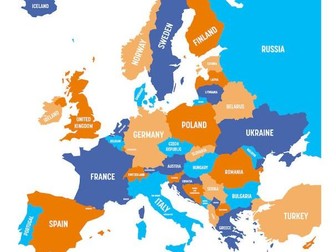
In the unit about our European neighbours, children will be learning a wide range of concepts related to geography and cultural studies. They will start by being able to locate Europe on a World Map and identify other countries and their capital cities. Through the study of human and physical geography, they will understand the geographical similarities and differences between European countries. Students will also have the opportunity to compare two European capital cities with Birmingham, allowing them to recognize landmarks and cultural differences. They will learn about human features such as currency, flags, and government structures, as well as physical features of the countries they are studying. By the end of the unit, children will have a greater appreciation for our European neighbours and the diversity that exists within this region. A sequence of 7 lessons (no resources attached) Lesson 1 - Introduction to Europe Locate Europe on a World Map and identify the continent it shares a border with and the oceans that surround it. Lesson 2 - Countries of Europe To identify and locate European countries. Lesson 3 - Europe’s Physical Features To understand physical features of European countries. Lesson 4 - Human Features - Flags To identify and explain the importance of flags in European countries. Lesson 5 - Human Features - Currency and Government To understand the importance of currency in different cultures and how governments work in different cultures. Lesson 6 - Capital Cities and Landmarks To be able to identify capital cities and landmarks in Europe. Lesson 7 - Comparing Capital Cities (Research Lesson) To compare two European capital cities, Berlin and Paris, with London, identifying similarities and differences in their physical and human characteristics. Lesson 8 - Comparing Capital Cities (Double Page Spread) To compare two European capital cities, Berlin and Paris, with London, identifying similarities and differences in their physical and human characteristics.
KS2 - Rainforests (8 lessons)Quick View
DW92x

KS2 - Rainforests (8 lessons)

(0)
In the unit about rainforests and global warming, children will be learning about the location of the world’s rainforests, the unique climate of these regions, the different layers of the rainforest, the diverse life that inhabits this ecosystem, with a specific focus on the Amazon rainforest. They will also explore ways in which we can protect the rainforest and mitigate the effects of global warming. Additionally, students will compare and contrast different biomes, examining the similarities and differences between these distinct ecosystems. They will also delve into the importance of rainforests and rivers for all living beings, highlighting the crucial role they play in sustaining life on Earth and the need to preserve these vital habitats for future generations. A sequence of 8 lessons (no resources attached) Lesson 1 - To understand the concept of rainforests, compare and contrast with other biomes, and identify the importance of rainforests and rivers. Lesson 2 - To understand the unique climate of rainforests. Lesson 3 - To locate the world’s major rainforests on a map. Lesson 4 - To understand the different layers of the rainforest ecosystem. Lesson 5 - To be able to identify and describe the main features of the Amazon Rainforest and River, including its location, climate, and importance to the environment. Lesson 6 - To understand the diversity of life in the Amazon rainforest. Lesson 7 - To understand how indigenous communities live in harmony with nature in Amazonian ecosystems. Lesson 8 - To understand ways in which humans are impacting the Amazon rainforest and how this affects global climate change.
Let's Go To China - KS1 Planning (6 lessons)Quick View
DW92x

Let's Go To China - KS1 Planning (6 lessons)

(0)
In this unit, children will embark on a journey to discover the wonders of this vast and fascinating country. A sequence of 6 lessons (no resources attached) Lesson 1 - Where is China? To locate China on a world map and understand its geographical location. Lesson 2 - Exploring China To understand the human features and physical features of China. Lesson 3 -Exploring China and Understanding Culture, traditions and celebrations To understand Chinese culture, traditions and celebrations. Lesson 4 - Beijing To compare life in Beijing, China with life in the UK. Lesson 5 - Comparing School Life To compare school life in Beijing to my school. Lesson 6 - Farming To understand the different types of farming in China. Throughout the unit, they will explore China’s geographical location, learning where it is situated and its physical features, such as mountains, rivers, and deserts. They will also delve into the human features that make China so unique, including its diverse population and cities. As they delve deeper into Chinese culture, traditions, and celebrations, children will learn about the significance of festivals like Chinese New, as well as the importance of family and community in Chinese society. A special focus will be placed on Beijing, China’s capital city, where children will learn about its famous landmarks like the Great Wall and Forbidden City. Comparing school life in China to their own experiences in England will provide a fascinating insight into the differences and similarities between the two cultures. Finally, children will explore farming practices in China, discovering how different farming methods are used to produce a wide range of crops. Through this engaging unit, children will develop a deeper understanding of China’s geography, culture, and daily life, broadening their horizons and fostering a sense of curiosity and respect for this incredible country.
Beaches, Coasts and Holidays (7 lessons) - KS1Quick View
DW92x

Beaches, Coasts and Holidays (7 lessons) - KS1

(0)
In this unit, children will embark on a journey to discover the wonders of beaches, coasts, and holidays by exploring what the seaside is and where it is located, before delving into the geography of the UK’s coastline and identifying different types of beaches. They will learn about the features of a seaside town and discover what people do at the seaside and explore the reasons why it’s a popular holiday destination. Through a case study of Weston Super Mare, students will develop their map skills and learn about the importance of this seaside town. They will also take time to explore how seasides have changed over the centuries and what life was like in the past. Finally, they will investigate beach sustainability and think critically about how we can protect our coastlines for future generations. This unit will combine geographical inquiry, research skills, and creative expression to help them develop a deeper understanding of beaches, coasts and holidays. A sequence of 7 lessons (no resources attached) Lesson 1 - What is the Seaside and Where is it? To understand the concept of a seaside and locate seaside towns in the UK. Lesson 2 - Locating UK Beaches To locate UK beaches. Lesson 3 - What are the features of a seaside? To identify and describe physical features of the seaside. Lesson 4 - What do people do at the seaside? To understand what people do at the seaside today. Lesson 5 - Case Study - Weston-Super-Mare To learn about a specific UK beach town (Weston Super Mare) and its features. Lesson 6 - What Were Seasides Like? To understand what seaside holidays were like in the past and how they have changed over time. Lesson 7 - Beach Sustainability To understand sustainability issues related to beaches and coastal areas.
KS2 - Our European Neighbours (Bundle)Quick View
DW92x

KS2 - Our European Neighbours (Bundle)

(0)
Planned for Year 4 but could be used across Key Stage 2. In the unit about our European neighbours, children will be learning a wide range of concepts related to geography and cultural studies. They will start by being able to locate Europe on a World Map and identify other countries and their capital cities. Through the study of human and physical geography, they will understand the geographical similarities and differences between European countries. Students will also have the opportunity to compare two European capital cities with Birmingham, allowing them to recognize landmarks and cultural differences. They will learn about human features such as currency, flags, and government structures, as well as physical features of the countries they are studying. By the end of the unit, children will have a greater appreciation for our European neighbours and the diversity that exists within this region. This pack includes; A sequence of 8 lessons End of Unit Assessment End of Unit Assessment Answers Key Questions for Place - Spain Key Questions for Place - France Key Questions for Place - Germany
KS2 - Rivers and Mountains (Bundle)Quick View
DW92x

KS2 - Rivers and Mountains (Bundle)

(0)
In this unit, children will explore the fascinating world of mountains and rivers. This pack includes; A sequence of 7 lessons End of Unit Assessment End of Unit Assessment Answers Key Questions for Place - USA Key Questions for Place - Canada Key Questions for Place - Russia They will discover the different types of mountain ranges found around the world and learn about how mountains are formed through geological processes like plate tectonics. Children will also delve into the effects of mountains on climate and how they attract tourists from all over the world. Moving on to rivers, they will define what a river is and explore its features and characteristics, such as its course, tributaries, and delta. Children will learn about some of the world’s most famous rivers, including the River Lena in Russia, and explore how humans use and manage rivers for recreation, transportation, and water supply. Throughout the unit, we will also consider the importance of conservation and sustainability in managing our water resources.
KS2 - Water Wonders (Bundle)Quick View
DW92x

KS2 - Water Wonders (Bundle)

(0)
In this unit, children will embark on a journey to explore the wonders of water! This pack includes; A sequence of 8 lessons End of Unit Assessment End of Unit Assessment Answers They will discover the fascinating world of water and its many transformations. They will learn about how water changes state from solid to liquid to gas and back again, understanding the concept of evaporation and condensation. Be introduced to the water cycle, following the journey of water as it circulates around our planet. They will investigate the role of clouds and rain in this process, and learn about the importance of rain in sustaining life on Earth. Building on this knowledge, children will delve into the world of water treatment, discovering how we purify and clean water to make it safe for drinking and use and about the devastating impact of floods and water pollution on our environment and communities, and how we can work together to mitigate these effects. Through hands-on activities, discussions, and real-life examples, children will develop a deeper appreciation for the value and importance of water in our daily lives.
Year 2 - Let's Go To China (Bundle)Quick View
DW92x

Year 2 - Let's Go To China (Bundle)

(0)
In this unit, children will embark on a journey to discover the wonders of this vast and fascinating country. This pack includes; Sequence of 6 lessons Unit Title Page End of Unit Assessment End of Unit Assessment Answers Questions for Places - China Throughout the unit, they will explore China’s geographical location, learning where it is situated and its physical features, such as mountains, rivers, and deserts. They will also delve into the human features that make China so unique, including its diverse population and cities. As they delve deeper into Chinese culture, traditions, and celebrations, children will learn about the significance of festivals like Chinese New, as well as the importance of family and community in Chinese society. A special focus will be placed on Beijing, China’s capital city, where children will learn about its famous landmarks like the Great Wall and Forbidden City. Comparing school life in China to their own experiences in England will provide a fascinating insight into the differences and similarities between the two cultures. Finally, children will explore farming practices in China, discovering how different farming methods are used to produce a wide range of crops. Through this engaging unit, children will develop a deeper understanding of China’s geography, culture, and daily life, broadening their horizons and fostering a sense of curiosity and respect for this incredible country.
KS1 - Oceans and Continents  (8 lessons)Quick View
DW92x

KS1 - Oceans and Continents (8 lessons)

(0)
Children will learn about the location of countries, continents and oceans of the world in relation to the position of the UK and their own locality within the UK. Children will develop global awareness by looking in detail at the position of the seven continents and five oceans of the world, understanding that the world is spherical and creating their own journeys across the world. Children will concentrate on their map skills, using atlases and globes widely, along with using aerial photographs to recognise human and physical features including landmarks. A sequence of 8 lessons (no resources attached) Lesson 1 - Introduction to Our Wonderful World To understand that the world is a big place, and we can use maps to explore it. Lesson 2 - Continents and Oceans To name and locate the world’s seven continents and five oceans. Lesson 3 - Exploring Our Continents To recall and describe the key physical and human features of the continent of Africa. Lesson 4 - Journey Around Our Continents To understand how we make journeys around the world. Lesson 5 - Hot and Cold Climates Identify and describe the characteristics of hot and cold climates Lesson 6 - Touring Kenya through Aerial Photographs To tour a country using aerial photographs. Lesson 7 - Using Atlases To use atlases effectively when exploring our wonderful world. Lesson 8 - Putting It All Together To demonstrate understanding of our wonderful world by creating their own journey across the globe.
KS2 - Water Wonders (8 Lessons)Quick View
DW92x

KS2 - Water Wonders (8 Lessons)

(0)
In this unit, children will embark on a journey to explore the wonders of water! They will discover the fascinating world of water and its many transformations. They will learn about how water changes state from solid to liquid to gas and back again, understanding the concept of evaporation and condensation. Be introduced to the water cycle, following the journey of water as it circulates around our planet. They will investigate the role of clouds and rain in this process, and learn about the importance of rain in sustaining life on Earth. Building on this knowledge, children will delve into the world of water treatment, discovering how we purify and clean water to make it safe for drinking and use and about the devastating impact of floods and water pollution on our environment and communities, and how we can work together to mitigate these effects. Through hands-on activities, discussions, and real-life examples, children will develop a deeper appreciation for the value and importance of water in our daily lives. A sequence of 8 lessons (no resources attached) Lesson 1 - Changing State To understand that water can change state from solid to liquid to gas. To be able to describe the three main states of water. Lesson 2 - Introduction to the Water Cycle To understand the concept of the water cycle and its processes. Lesson 3 - Clouds and Rain To understand how clouds form and what they are made of. To be able to describe how clouds produce rain. Lesson 4 - Water Treatment Process To understand the importance of treating water for human consumption. To be able to describe the basic steps involved in treating drinking water. Lesson 5 - Floods To understand what floods are and why they occur. To be able to describe some effects of floods on people and environments. Lesson 6 - Flooded Community To understand the impact of floods on communities and environments To explore ways to mitigate flood effects To design and implement a flood-resistant community Lesson 7 - Water Pollution To understand what pollution is and how it affects water sources. To be able to describe some ways people can help prevent water pollution. Lesson 8 - Preserve Water Supplies To evaluate the effectiveness of human efforts to preserve water supplies and suggest ways to improve them.
Y3 - Marvellous Maps (Bundle)Quick View
DW92x

Y3 - Marvellous Maps (Bundle)

(0)
In this unit, children to further explore the range of maps available to geographers and to develop their understanding of the key features of maps. This pack includes; A sequence of 8 lessons Unit Title Page End of Unit Assessment End of Unit Assessment Answers They will study a range of maps and atlases, including digital maps, and compare their features. They will learn to use the eight digit compass points to give directions and give grid references to locate places on a map. By comparing maps of the same place, children will learn about the way that places have changed over time.
KS1 Oceans and Continents (Bundle)Quick View
DW92x

KS1 Oceans and Continents (Bundle)

(0)
Children will learn about the location of countries, continents and oceans of the world in relation to the position of the UK and their own locality within the UK. This pack includes; Sequence of 8 lessons Unit Title Page End of Unit Assessment End of Unit Assessment Answers Key Questions on Places - Europe Key Questions on Places - Africa Key Questions on Places - Australia Key Questions on Places - Kenya Children will develop global awareness by looking in detail at the position of the seven continents and five oceans of the world, understanding that the world is spherical and creating their own journeys across the world. Children will concentrate on their map skills, using atlases and globes widely, along with using aerial photographs to recognise human and physical features including landmarks.
KS1 You're Great Britain (Bundle)Quick View
DW92x

KS1 You're Great Britain (Bundle)

(0)
Children will embark on an exciting adventure to explore the geographical wonders of Great Britain. This pack includes; Sequence of 6 lessons Unit Title Page End of Unit Assessment End of Unit Assessment Answers Key Question of Places (Great Britain and Northern Ireland) This unit will introduce them to the concept of countries and capital cities, specifically focusing on England, Scotland, Wales, and Northern Ireland, and understanding that Northern Ireland is part of the United Kingdom and not Great Britain. Using maps and simple compass directions, children will learn to plan a day out and navigate their way through familiar routes. They will also develop their observational skills by identifying human and physical features of the countries, such as mountains, rivers, and buildings. Furthermore, children will learn to distinguish between villages, towns, and cities, and understand the meanings of “urban” and “rural” environments. To further develop their geographical knowledge, they will study the unique features of London and locate key landmarks. Additionally, children will have the opportunity to plan a day out in each of the Great Britain capital cities, combining their new skills with fun and interactive activities.