 Quick View
Deluxe pack: Trends in Global Water Consumption and Scarcity - Complete 5.1.3 Lesson Pack 2027 9696
This Deluxe 5.1.3 Trends in Water Consumption Lesson Package is a high-impact, multi-modal resource suite designed to master the complexities of global water demand and scarcity. This comprehensive toolkit provides everything required to deliver an expert-level lesson on the spatial and economic disparities of freshwater usage.
What is within the package
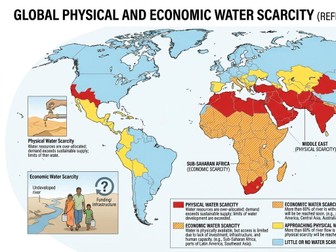
Comprehensive Geography Resource Booklet: A detailed guide covering physical versus economic water scarcity, UN statistical thresholds, and the “water consumption ladder”.
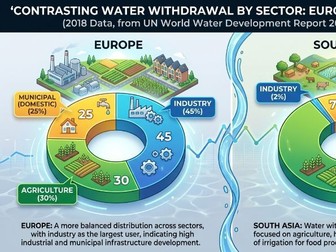
Differentiated Student Workbooks: Two volumes featuring knowledge checks, data-response tasks comparing Europe and South Asia, and structured 15-to-20-mark essay scaffolds.
Ready-to-Teach Slide Deck: A multi-slide presentation with teacher scripts, animated sectoral demand charts, and interactive prompts for classroom role-play.
Water Scarcity Masterclass Video: A university-tier explainer video providing top-tier revision strategies, in-depth analysis of the Ogallala Aquifer, and systems-level prompts connecting water to migration [Notebook Artifacts].
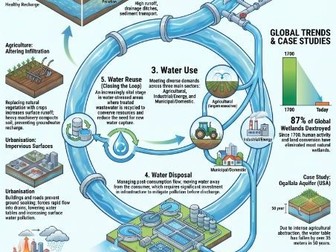
Virtual Water Infographic: A high-impact visual detailing the “hidden” water costs of consumer goods, specifically visualizing the 7,000 litres of water required for one pair of jeans and the water footprint of beef production.
Deep-Dive Audio Podcast: An engaging audio overview exploring why safely managed sanitation remains uneven and how climate change exacerbates global water quality [Notebook Artifacts].
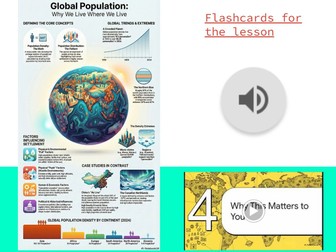
Digital Revision Flashcards: A set of interactive cards designed for quick-fire term mastery, including concepts like virtual water, water footprints, and transboundary cooperation [Notebook Artifacts].
Benefits for Teachers
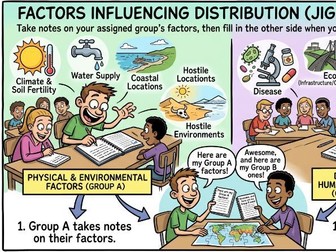
Zero-Prep Multi-Modal Teaching: Teachers can cater to all learning styles—visual, auditory, and kinesthetic—using the integrated video, podcast, and active role-play instructions [19, 22, Notebook Artifacts].
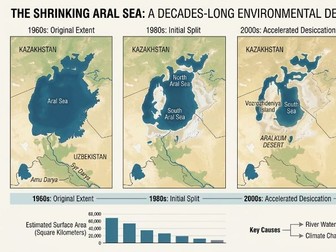
Curriculum-Specific Case Studies: Access ready-made deep dives into the Aral Sea environmental disaster, Indian agricultural demand, and infrastructure challenges in the Democratic Republic of the Congo.
Assessment Ready: Built-in data tasks and essay scaffolds allow for immediate tracking of student progress toward high-tariff evaluative questions.
Benefits for Students
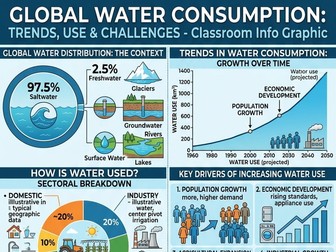
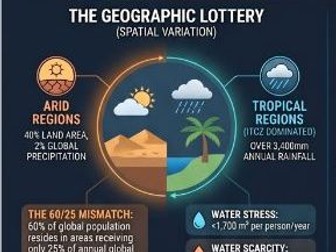
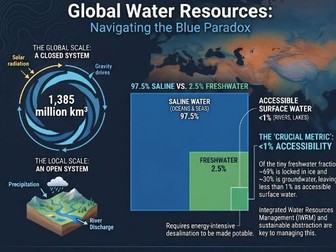
Mastery of Complex Thresholds: Students gain clarity on UN benchmarks, learning to distinguish between water stress (1,700 m³) and scarcity (1,000 m³).
Critical Systems Thinking: Engaging with “hidden water” concepts helps students connect local consumer choices to global environmental impacts.
Enhanced Exam Performance: Differentiated workbooks and flashcards provide structured practice for analyzing the tenuous relationship between GDP per capita and water withdrawal.