Dynamo 1, Unit 3.0 - Point de départ (weather)Quick View
SrLlopis

Dynamo 1, Unit 3.0 - Point de départ (weather)

(1)
PPT lesson based on Dynamo 1, Module 3 (point de départ) about weather and phonics. All main tasks have an extension activity to cater for the more able students. STARTER: introduction to some French phonics using basic French words (neige, guitare, maison, etc). Students write down the vocab and try to guess the English translation using the pictures for support. LANGUAGE INPUT: new vocab about the weather is introduced and practised. A sheet has been provided at the end of the PPT so that students can stick this into their books. MINI-PLENARY - assessment for learning opportunity ACTIVITY 1: listening task based on the weather vocab introduced at the start of the lesson. A transcript is provided for teachers who don’t have access to Active Learn. ACTIVITY 2: more challenging listening task including seasons. Transcript provided. MINI-PLENARY - assessment for learning opportunity ACTIVITY 3: writing task differentiated by outcome (based on the mini-plenary). Students write a short paragraph including the information required by each level. ACTIVITY 4: speaking task where students need to link the weather phrases to a verb in the present tense (eg. quand il fait beau, je joue au foot). FINAL PLENARY
Module 3, Unit 1 - Esta es mi genteQuick View
SrLlopis

Module 3, Unit 1 - Esta es mi gente

(0)
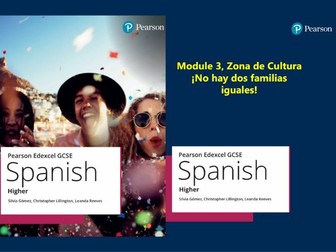
This PowerPoint contains two lessons based on the new Pearson Edexcel GCSE Higher textbook based on the new GCSE being assessed in 2026. It also includes a sentence builder for students to complete. Starter: practice of different physical feature (hair, eyes, body) Language practice: filling in the sentence builder and vocab practice with mini-whiteboards A range of translation, reading and listening tasks (includes dictation task based on the new GCSE specs). In the second lesson, the focus is photo description (based on the new GCSE specs).
Module 3, Zona de Cultura - ¡No hay dos familias iguales!Quick View
SrLlopis

Module 3, Zona de Cultura - ¡No hay dos familias iguales!

(0)
This PowerPoint contains two lessons based on the Pearson Edexcel GCSE Higher textbook based on the new GCSE being assessed in 2026. It also includes a sentence builder for students to complete. Starter: cultural task on International Family Day Language practice: filling in the sentence builder and vocab practice with mini-whiteboards A range of translation, reading and listening tasks.
Viva 1 - Unit 1.6 - Writing Skills (revision)Quick View
SrLlopis

Viva 1 - Unit 1.6 - Writing Skills (revision)

(1)
A revision lesson on all the topics from Viva 1, Module 1. It also includes exercises to practise writing skills and a section for DIRT (Dedicated Improvement and Reflection Time). This can easily be adapted to WWW/EBI or any other feedback system used by your school. STARTER: students write down the six sentences in Spanish. Then, they write down the English translation including the missing word, which they need to come up with themselves. Extension: match up the sentence to the correct picture. MINI-PLENARY - assessment for learning opportunity to check how confident students feel with translation. TASK 1: reading activity linked to the outcome of the mini-plenary. Students answer six short questions after reading a paragraph in Spanish. TASK 2: match-up translation task (questions using cómo, dónde, cuántos, cuándo, qué, cuál). MINI-PLENARY - assessment for learning opportunity to check learning so far. TASK 3: writing task answering four questions DIRT - the rest of the lesson includes some writing support structures to guide students in answering the four questions from task 3.
Dynamo 1, Unit 2.2 - Qu'est-ce que tu portes?Quick View
SrLlopis

Dynamo 1, Unit 2.2 - Qu'est-ce que tu portes?

(0)
Lesson on school uniform based on Dynamo 1, Unit 2.2 (Qu’est-ce que tu portes?) Starter: recap of colours which will be used to describe different parts of the uniform (this task also includes an extension for higher ability students). Input: this slide shows the grammar rule for which colours always go after the noun. Task 1: oral practice of the different clothes with the question ‘qu’est-ce que tu portes au collège?’ Task 2: scaffolded translation practice of different clothes and colours (English-French). Task 3: scaffolded translation practice of different clothes and colours (French-English). Plenary: using emojis to assess learning at the end of the lesson.
Viva 1 - Unit 2.3 ¿Qué haces cuando llueve?Quick View
SrLlopis

Viva 1 - Unit 2.3 ¿Qué haces cuando llueve?

(1)
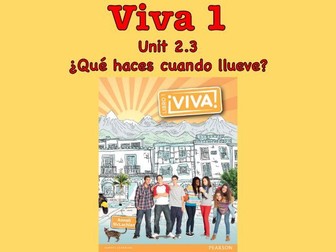
PPT lesson based on Viva 1, Module 2, Unit 3 on talking about the weather using ‘cuando’ and regular -AR verbs in the present tense (1st person). STARTER: short match-up activity where students match the Spanish and English weather phrases using the photos for support. MINI-PLENARY - assessment for learning opportunity) LISTENING TASK: students need to recognise the correct weather phrases (teachers can read these aloud or access the recording on Active Learn if they have a subscription). TRANSLATION TASK: using the vocab sheet for support, the students translate the Spanish sentences into English. MINI-PLENARY - assessment for learning opportunity) READING TASK: students read the four paragraphs where different people talk about the weather where they live during different seasons. This task is differentiated by outcome based on what the students chose in the mini-plenary.
Dynamo 1, Unit 3.4 - Tu aimes faire ça?Quick View
SrLlopis

Dynamo 1, Unit 3.4 - Tu aimes faire ça?

(0)
PPT lesson based on Dynamo 1, Module 3, Unit 4 (Tu aimes faire ça?) about activities that you like to do. All main tasks have an extension activity to cater for the more able students. STARTER: translation of some opinion verbs and cognates. GRAMMAR POINT: introduction of the ‘infinitive’ with the endings in French (er, ir, re) which follows all the opinion verbs (j’aime, je n’aime, j’adore, je déteste, etc). LANGUAGE INPUT: practise of opinion verbs with different infinitives (free time activities). ACTIVITY 1: short translation task based on the vocab learnt up to this point. MINI-PLENARY - assessment for learning opportunity ACTIVITY 2: listening task with different opinion verbs and infinitives based on the outcome of the mini-plenary MINI-PLENARY - assessment for learning opportunity ACTIVITY 5: differentiated writing task. Students need to write about what activities they like to do using opinion verbs and infinitives. FINAL PLENARY
Dynamo 1, Unit 3.3 - Le sport dans les pays francophonesQuick View
SrLlopis

Dynamo 1, Unit 3.3 - Le sport dans les pays francophones

(0)
PPT lesson based on Dynamo 1, Module 3, Unit 3 (Le sport dans les pays francophones) about sports in French-speaking countries. This unit also covers how to use cognates and context to find out the meaning of new vocabulary. All main tasks have an extension activity to cater for the more able students. STARTER: gap-filling translation activity about the new vocab. The missing words are all cognates. LANGUAGE INPUT: new vocab about sports using the verb ‘on fait’ is introduced and practised. MINI-PLENARY - assessment for learning opportunity ACTIVITY 1: reading task linked to the mini-plenary (differentiation by outcome). Students read a short paragraph and answer the questions in English. MINI-PLENARY - assessment for learning opportunity ACTIVITY 2: match-up task with the phrases learnt so far and the matching photos. MINI-PLENARY - assessment for learning opportunity ACTIVITY 3: listening gap-filling task in French. A transcript is provided for teachers who don’t have access to Active Learn. ACTIVITY 4: walking translation game One student per table gets up to read the translations on the sheet. They note the French translation to the first sentence in their book. They go back to their seat, share the translation with the other students. Another students gets up and repeats the procedure as above. While you wait for the translation à write down the sentences in English in your book. MINI-PLENARY - assessment for learning opportunity ACTIVITY 5: differentiated writing task about sport (including challenge for more able students). FINAL PLENARY
Dynamo 1, Unit 3.1 - Tu es sportif/sportive?Quick View
SrLlopis

Dynamo 1, Unit 3.1 - Tu es sportif/sportive?

(0)
PPT lesson based on Dynamo 1, Module 3, Unit 1 (Tu es sportif/sportive?) about sports and the verb ‘jouer à’. All main tasks have an extension activity to cater for the more able students. STARTER: translation task with cognates (these are some of the sports introduced in this unit). LANGUAGE INPUT: new vocab about sports is introduced and practised. GRAMMAR POINT: stressing the prepositions AU / À LA / AUX when translating ‘I play + sport’. This is because in English there is no preposition and this often causes confusion to students when translating from English into French. MINI-PLENARY - assessment for learning opportunity ACTIVITY 1: writing task where students write in French what sport is played in each pictures using the verb ‘I play’. ACTIVITY 2: listening task linked to the mini-plenary (differentiation by outcome). Transcript provided. MINI-PLENARY - assessment for learning opportunity ACTIVITY 3: writing task differentiated by outcome (based on the mini-plenary). Students write a short paragraph including the information required by each level. FINAL PLENARY: check for understanding of the prepositions AU / À LA / AUX.
Zip & Zap (film lesson)Quick View
SrLlopis

Zip & Zap (film lesson)

(0)
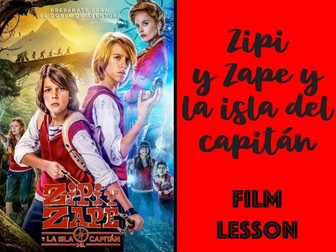
A film lesson based on the 2016 film ‘Zipi y Zape y la isla del capitán’ (English: Zip & Zap and the Captain’s Island). Starter: a simple translation task using possible translations given in the exercise. Show the trailer before task 2 (link in the PPT). Task 1: practising opinion verbs using the 1st and 3rd person. Mini-plenary using traffic lights as an assessment for learning opportunity. Task 2: describing the film poster using the GCSE photo description format from the speaking exam. You can now play the film and follow the instructions on slide 6. Task 3: describing the main characters’ clothes (revision of colours and clothes vocab) Resume the film and follow the instructions on slide 8. Task 4: photo description of one of most important scenes in the film Resume the film and follow the instructions on slide 10. Task 5: photo description of the villain.
Dynamo 1, Unit 3.2 - Qu’est-ce que tu fais?Quick View
SrLlopis

Dynamo 1, Unit 3.2 - Qu’est-ce que tu fais?

(0)
PPT lesson based on Dynamo 1, Module 3, Unit 2 (Qu’est-ce que tu fais?) about hobbies and activities with the verb ‘faire’. All main tasks have an extension activity to cater for the more able students. STARTER: translation task with cognates (these are some of the activities/hobbies introduced in this unit). LANGUAGE INPUT: new vocab about activities/hobbies is introduced and practised. MINI-PLENARY - assessment for learning opportunity ACTIVITY 1: listening task linked to the mini-plenary (differentiation by outcome). Transcript provided (this task can also be done as a reading). ACTIVITY 2: more challenging listening task listening task linked to the mini-plenary (differentiation by outcome). Transcript provided. MINI-PLENARY - assessment for learning opportunity ACTIVITY 3: writing task differentiated by outcome (based on the mini-plenary). Students write a short paragraph including the information required by each level. FINAL PLENARY
Dynamo 1, Module 2 - En classe (in the classroom)Quick View
SrLlopis

Dynamo 1, Module 2 - En classe (in the classroom)

4 Resources
You can get a 40% discount by purchasing the PPT lessons for Dynamo 1, Module 2 as a bundle. This bundle includes: Dynamo 1, Unit 2.1 - Qu’est-ce que tu penses de tes matières? (school subjects) Dynamo 1, Unit 2.2 - Qu’est-ce que tu portes? (school uniform) Dynamo 1, Unit 2.3 - Ta journée scolaire (school day) Dynamo 1, Unit 2.4 - C’est comment, un collège français? (description of a French school) Dynamo 1, Unit 2.5 - Un collège super cool! (facilities in a French school).
Dynamo 1, Unit 4.2 - Où habites-tu?Quick View
SrLlopis

Dynamo 1, Unit 4.2 - Où habites-tu?

(0)
A lesson on describing where you live based on Dynamo 1, Module 4, Unit 2. Each task includes an extension to cater for the more able students. STARTER: students recall previous learning by answering the question ‘où habites-tu?’ MINI-PLENARY - using red/amber/green emojis to check that students are confident with previous learning. LANGUAGE INPUT - a series of sentences containing the verb ‘j’habite’ and different places. CONTROLLED PRACTICE - multiple choice game to check if students remember the vocab just introduced. TASK 1: short translation task (8 sentences) with the verb ‘J’HABITE’ and different places. MINI-PLENARY: assessment for learning opportunity to check for understanding and gauge how confident students are with the topic so far. TASK 2: listening task linked to outcome of the mini-plenary. Students complete a different questions depending on the level they chose. A transcript is provided for teachers without access to Pearson Active Learn. MINI-PLENARY: assessment for learning opportunity. This is particularly helpful for the teacher as it gives an insight into how difficult students found the language introduced up to this point. TASK 3: writing task linked to outcome of the mini-plenary. Students complete a different task based on their level of confidence. PLENARY: final opportunity to assess learning within the lesson.
Dynamo 1, Unit 2.1 - Qu’est-ce que tu penses de tes matières?Quick View
SrLlopis

Dynamo 1, Unit 2.1 - Qu’est-ce que tu penses de tes matières?

(0)
Lesson on school subjects based on Dynamo 1, Unit 2.1 (Qu’est-ce que tu penses de tes matières?). Starter: sorting some school subjects into J’AIME and JE N’AIME PAS (this is to revise opinion verbs and introduce some cognate school subjects). Task 1: introducing more school subjects and practising pronunciation with the verb J’AIME Task 2: more pronunciation practice Task 3: sorting out task with J’AIME and JE N’AIME PAS and the school subjects in French (this includes an extension for higher ability students that included adding a reason - e.g ‘car c’est amusant’). Plenary with emojis to assess learning at the end of the lesson. A support is sheet is included at the end of the powerpoint.
Spanish phonics and alphabetQuick View
SrLlopis

Spanish phonics and alphabet

(0)
An introductory lesson to the Spanish phonics and alphabet. The lesson also has a variety of exercises to practise pronunciation as well as videoclips with songs. STARTER: writing down the phonics with the examples. LANGUAGE INPUT: teacher repeat some of the phonics out loud to help students memorise the correct pronunciation. TASK 1 - speaking task where students repeat to each other words containing the phonics just explained. LANGUAGE INPUT: choral repetition of the Spanish alphabet. TASK 2 - students write down a list of 5 words and spell them out in Spanish. PLENARY - using a song to assess learning at the end of the lesson. This can be stopped to pick on incorrect pronunciations.
Viva 1 - Unit 2.4 ¿Qué deportes haces?Quick View
SrLlopis

Viva 1 - Unit 2.4 ¿Qué deportes haces?

(0)
PPT lesson based on Viva 1, Module 2, Unit 4 on saying what sports you do using JUGAR and HACER (present tense, 1st person). STARTER: short translation task with an extension (identify the infinitive verb). ACTIVITY 1: match the pictures with the correct sentence in Spanish. LANGUAGE INPUT: this is delivered by showing photos of different sports with the verbs ‘hago’ and ‘juego’. MINI-PLENARY - assessment for learning opportunity ACTIVITY 2: students listen for the correct sport played by each person. This task is linked to the mini-plenary. A transcript is provided so that teachers who don’t have access to Active Learn can read this aloud to their students. ACTIVITY 3: reading gap-filling task with ‘hago’ and ‘juego’. PLENARY: students complete the sentences with either ‘hago’ and ‘juego’. This can be done by show of hands or by getting students to stand up to select the correct option.
Dynamo 1, Unit 2.4 - C'est comment, un collège français?Quick View
SrLlopis

Dynamo 1, Unit 2.4 - C'est comment, un collège français?

(0)
PPT lesson based on Dynamo 1, Module 2, Unit 4 on describing a typical French school. STARTER: revision task on dates (numbers and months). This is to introduce when school holidays are in France. MINI-PLENARY - assessment for learning opportunity (linked to the next task) ACTIVITY 1: translation of a typical school canteen menu (mostly cognates are used to support students in completing this task). MINI-PLENARY - assessment for learning opportunity (linked to the next task). ACTIVITY 2: students write down the vocab in French and try to translate it into English based on their choice from the mini-plenary. MINI-PLENARY - assessment for learning opportunity (linked to the next task). ACTIVITY 3 - listening task where students fill in the gaps with a word from a list.
Dynamo 1, Unit 2.3 - Ta journée scolaireQuick View
SrLlopis

Dynamo 1, Unit 2.3 - Ta journée scolaire

(0)
PPT lesson based on Dynamo 1, Module 2, Unit 3 on talking about your school day using regular -er verbs in the present tense. STARTER: writing down a list of verbs in the present tense in French and English. For some verbs the English translation is missing. Students need to come up with the translation themselves using their previous knowledge of cognates. READING TASK: students read the 8 sentences in French and match these up with the correct translation in English. MINI-PLENARY - assessment for learning opportunity (linked to the next task) LISTENING TASK: students listen and fill in the gaps with the missing verb (list provided). The audio file can be found on Active Learn. For those teachers who cannot access it, the transcript is provided so they can read it aloud to their students. MINI-PLENARY - assessment for learning opportunity (linked to the next task) WRITING TASK: students write a short paragraph including different structures according to their confidence with the topic so far (see mini-plenary before). A handout is provided to support students in the reading task.
Spanish GCSE revision lesson (higher)Quick View
SrLlopis

Spanish GCSE revision lesson (higher)

(0)
**PLEASE NOTE: this lesson is based on the previous specs Edexcel (2016). ** A revision lesson on reading, writing and translation skills based on the Pearson Edexcel specs (higher tier). TASK 1: given the picture, students need to guess what the category is (eg. stadium >> deporte, coffee >> bebida, etc).GRAMMAR POINT: reflexive verbsBRAINSTORM TASK: students try to remember as many examples as possible of the different tenses and other grammatical structures.TASK 2: guided photo task practice.TASK 3: guided translation task.TASKS 4, 5, 6, 7: reading practice.TASK 8: practice of the general conversation modules.
Spanish GCSE revision lesson (foundation)Quick View
SrLlopis

Spanish GCSE revision lesson (foundation)

(0)
PLEASE NOTE: this lesson is based on the previous Edexcel specs (2016). A revision lesson on reading, writing and translation skills based on the Pearson Edexcel specs (foundation tier). TASK 1: guided example o how to complete a photo task. TASK 2: photo task without support. TASK 3: mini-test to check memorisation of key verbs. TASK 4: photo task without support. TASK 5: guided translation task. TASKS 6, 7, 8, 9: reading. TASK 10: practice of the general conversation modules.
Dynamo 1, Unit 4.3 - Qu’est-ce que tu manges au petit déjeuner?Quick View
SrLlopis

Dynamo 1, Unit 4.3 - Qu’est-ce que tu manges au petit déjeuner?

(0)
A lesson on breakfast and partitive articles based on Dynamo 1, Module 4, Unit 3. Each task includes an extension to cater for the more able students. LANGUAGE INPUT: students write simple sentences using the verb ‘JE MANGE’ followed by the foods shown in the slide. They do the same using the verb ‘JE BOIS’ with drinks. MINI-PLENARY - using red/amber/green emojis to check how confident students feel with the new vocab. TASK 1: listening task linked to the outcome of the mini-plenary. Students complete different questions based on their level. The more challenging questions contain vocab that hasn’t been covered in the language input. A transcript is provided for teachers without access to Active Learn. MINI-PLENARY: assessment for learning opportunity to check for understanding and gauge how confident students are with the topic so far. TASK 2: listening task linked to outcome of the mini-plenary. Students complete a different questions depending on the level they chose. A transcript is provided for teachers without access to Pearson Active Learn. MINI-PLENARY: assessment for learning opportunity. This is particularly helpful for the teacher as it gives an insight into how difficult students found the language introduced up to this point. TASK 3: writing task linked to outcome of the mini-plenary. Students complete a different task based on their level of confidence. TASK 4: gap-filling activity. PLENARY: final opportunity to assess learning within the lesson.