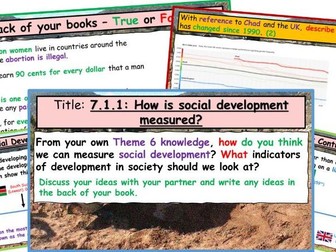
Lesson 1 in Unit of Work within Theme 6: Development & Resource Issues. These lessons include content, revision, assessment and then feedback - all lessons are fully resourced with clear instructions, modelled answers, effective feedback, videos are linked.
All 15 lessons including a formative assessment included in this bundle. Everything covered for GCSE Theme 5 looking at weather and climate and biomes. Worksheets, videos, clear instructions, modelled answers.
Lesson 13 in Unit of Work within Theme 5: Weather, Climate & Ecosystems. This lesson gives revision, assessment and then feedback - all lessons are fully resourced with clear instructions, modelled answers, effective feedback, videos are linked.
DESCRIPTION
Drawing on my experience as a teacher and analysis of past papers, mark schemes and examiner reports, I’ve created a lesson with ‘model answer’ questions and mark scheme that cover every point on the WJEC specification of this part of Theme 7.
These lesson are presented in an easy-to-use, teacher friendly format. Colour coding, diagrams, clear instructions and a simple layout makes teaching & learning easy.
You’ll find many GCSE style questions with student friendly mark schemes.
Having refined these lessons over the last 6 years working as a teacher, I’ve seen first-hand the results they can achieve. I’m confident that they will be an invaluable tool to you.
This lesson covers:
How we measure social development
Human Development Index
Social Development Continuum
Gender Inequality Index
Past Paper Questions
Drawing on my experience as a teacher and analysis of past papers, mark schemes and examiner reports, I’ve created a lesson with ‘model answer’ questions and mark scheme that cover every point on the WJEC specification of this part of Theme 2.
These lessons are presented in an easy-to-use, teacher friendly format. Colour coding, diagrams, clear instructions and a simple layout makes teaching & learning easy.
You’ll find many GCSE style questions with student friendly mark schemes.
Having refined these lessons over the last 6 years working as a teacher, I’ve seen first-hand the results they can achieve. I’m confident that they will be an invaluable tool to you.
This lesson covers:
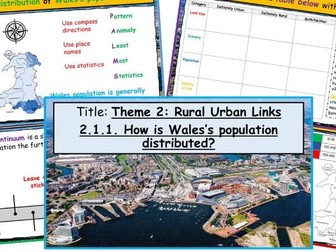
Introduces Theme 2, What is a Rural-Urban Continuum, How is Wales’s population distributed, GCSE style question, features of different types of settlements
DESCRIPTION
Drawing on my experience as a teacher and analysis of past papers, mark schemes and examiner reports, I’ve created a lesson with ‘model answer’ questions and mark scheme that cover every point on the WJEC specification of this part of Theme 3.
These lesson are presented in an easy-to-use, teacher friendly format. Colour coding, diagrams, clear instructions and a simple layout makes teaching & learning easy.
You’ll find many GCSE style questions with student friendly mark schemes.
Having refined these lessons over the last 6 years working as a teacher, I’ve seen first-hand the results they can achieve. I’m confident that they will be an invaluable tool to you.
This lesson covers:
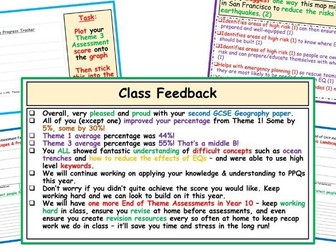
*WJEC Assessment - Theme 3*
*Pre-Assessment Warm Up Quiz*
*Feedback - Purposeful & Whole Lesson*
DESCRIPTION
Drawing on my experience as a teacher and analysis of past papers, mark schemes and examiner reports, I’ve created a lesson with ‘model answer’ questions and mark scheme that cover every point on the WJEC specification of this part of Theme 3.
These lesson are presented in an easy-to-use, teacher friendly format. Colour coding, diagrams, clear instructions and a simple layout makes teaching & learning easy.
You’ll find many GCSE style questions with student friendly mark schemes.
Having refined these lessons over the last 6 years working as a teacher, I’ve seen first-hand the results they can achieve. I’m confident that they will be an invaluable tool to you.
This lesson covers:
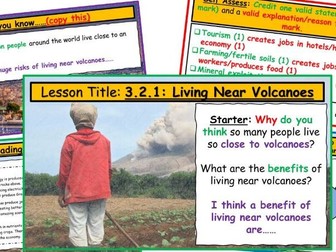
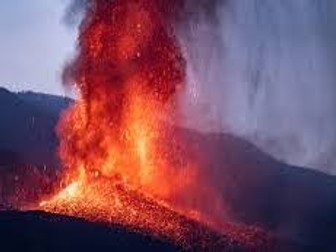
*Reasons why people live near volcanoes (volcanic benefits)*
*How Iceland benefits from volcanic activity*
*GCSE Style Question*
Lesson 4 in Unit of Work within Theme 5: Weather, Climate & Ecosystems. This lesson gives revision, assessment and then feedback - all lessons are fully resourced with clear instructions, modelled answers, effective feedback, videos are linked.
AQA GCSE Geography – Living with the Physical Environment – 3.1 – Section A (Living with Natural Hazards). All lessons included here in a series of lessons that looks at:
• Natural hazards (tectonic hazards, weather hazards)
• Causes, effects, impacts & responses.
• HICs vs LICs and how wealth creates opportunities and problems for countries trying to reduce the risks.
• Climate change – its causes and its evidence
• Tropical storms – causes & effects
• UK’s Extreme Cold Weather – causes & effects
• Mitigating the effects of climate change
• All lessons are fully resourced, clear instructions and tasks, with Youtube videos provided where needed and modelled answers consistently given with mark schemes.
Easy to follow lessons with clear learning outcomes. Please leave a review and check out the rest of my content!
Lesson 5 in Unit of Work within Theme 5: Weather, Climate & Ecosystems. This lesson gives revision, assessment and then feedback - all lessons are fully resourced with clear instructions, modelled answers, effective feedback, videos are linked.
Lesson 15 in Unit of Work within Theme 5: Weather, Climate & Ecosystems. This lesson gives revision, assessment and then feedback - all lessons are fully resourced with clear instructions, modelled answers, effective feedback, videos are linked.
Lesson 3 in Map Skills Unit. This lesson teaches the students how to find 4 figure grid references. All resources included and instructions given for teacher where appropriate at the bottom of the slide.
DESCRIPTION
Drawing on my experience as a teacher and analysis of past papers, mark schemes and examiner reports, I’ve created a lesson with ‘model answer’ questions and mark scheme that cover every point on the WJEC specification of this part of Theme 1: River Landscapes.
These lesson are presented in an easy-to-use, teacher friendly format. Colour coding, diagrams, clear instructions and a simple layout makes teaching & learning easy.
You’ll find many GCSE style questions with student friendly mark schemes.
Having refined these lessons over the last 6 years working as a teacher, I’ve seen first-hand the results they can achieve. I’m confident that they will be an invaluable tool to you.
This lesson covers:
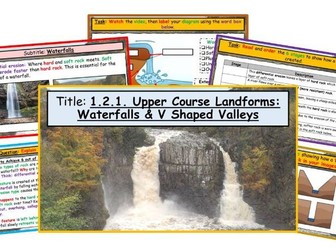
Upper course of a river, how waterfalls are created and how V-shaped valleys are formed, GCSE Style Question
DESCRIPTION
Drawing on my experience as a teacher and analysis of past papers, mark schemes and examiner reports, I’ve created a lesson with ‘model answer’ questions and mark scheme that cover every point on the WJEC specification of this part of Theme 1: River Landscapes.
These lesson are presented in an easy-to-use, teacher friendly format. Colour coding, diagrams, clear instructions and a simple layout makes teaching & learning easy.
You’ll find many GCSE style questions with student friendly mark schemes.
Having refined these lessons over the last 6 years working as a teacher, I’ve seen first-hand the results they can achieve. I’m confident that they will be an invaluable tool to you.
This lesson covers:
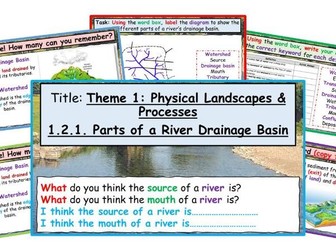
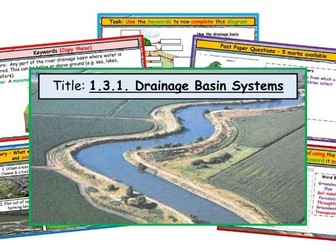
Drainage basin, with keywords and diagrams to show the different parts & features, important first lesson for learnng rivers at GCSE
DESCRIPTION
Drawing on my experience as a teacher and analysis of past papers, mark schemes and examiner reports, I’ve created a lesson with ‘model answer’ questions and mark scheme that cover every point on the WJEC specification of this part of Theme 1: River Landscapes.
These lesson are presented in an easy-to-use, teacher friendly format. Colour coding, diagrams, clear instructions and a simple layout makes teaching & learning easy.
You’ll find many GCSE style questions with student friendly mark schemes.
Having refined these lessons over the last 6 years working as a teacher, I’ve seen first-hand the results they can achieve. I’m confident that they will be an invaluable tool to you.
This lesson covers:
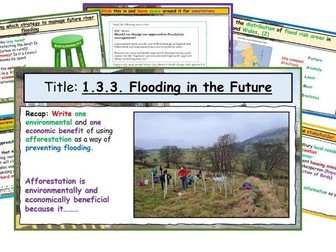
Reasons why flooding is increasing in the UK (climate change), and different approaches to resolving this problem - hard vs soft engineering and the sustainability of each option, GCSE Question to bring together all the learning
Lesson 7 in Unit of Work within Theme 5: Weather, Climate & Ecosystems. This lesson gives revision, assessment and then feedback - all lessons are fully resourced with clear instructions, modelled answers, effective feedback, videos are linked.
Lesson 8 in Unit of Work within Theme 5: Weather, Climate & Ecosystems. This lesson gives revision, assessment and then feedback - all lessons are fully resourced with clear instructions, modelled answers, effective feedback, videos are linked.
Lesson 6 in Unit of Work within Theme 5: Weather, Climate & Ecosystems. This lesson gives revision, assessment and then feedback - all lessons are fully resourced with clear instructions, modelled answers, effective feedback, videos are linked.
Lesson 14 in Unit of Work within Theme 5: Weather, Climate & Ecosystems. This lesson gives revision, assessment and then feedback - all lessons are fully resourced with clear instructions, modelled answers, effective feedback, videos are linked.
Lesson 12 in Unit of Work looking at Rivers. This lesson looks at managing rivers from flooding - all lessons are fully resourced with clear instructions, modelled answers, effective feedback, videos are linked.
DESCRIPTION
Drawing on my experience as a teacher and analysis of past papers, mark schemes and examiner reports, I’ve created a lesson with ‘model answer’ questions and mark scheme that cover every point on the WJEC specification of this part of Theme 1: River Landscapes.
These lesson are presented in an easy-to-use, teacher friendly format. Colour coding, diagrams, clear instructions and a simple layout makes teaching & learning easy.
You’ll find many GCSE style questions with student friendly mark schemes.
Having refined these lessons over the last 6 years working as a teacher, I’ve seen first-hand the results they can achieve. I’m confident that they will be an invaluable tool to you.
This lesson covers:
Drainage Basin Systems - looking at inputs, flows and outputs - students learn about the water cycle (e.g. precipitation, infiltration, evaporation etc)