Pitta pocketsQuick View
mehtaab_rashad

Pitta pockets

(0)
This resource provides a simple, step-by-step guide for children to make healthy Mini Pitta Pockets. Using clear photos and child-friendly instructions, pupils learn how to wash and prepare vegetables, safely use a knife to slice ingredients, and assemble a balanced snack using mini pittas, chicken, cheese, lettuce, cucumber, and tomato. The included visual recipe card outlines the skills practised—such as cutting, filling, and choosing nutritious foods—along with the ingredients and equipment needed. This activity supports independence in the kitchen, promotes healthy eating, and helps pupils develop practical food preparation and presentation skills. Key Stage 1 or Lower Key Stage 2 KS1 (ages 5–7): Appropriate with adult supervision, especially for basic cutting and safe knife handling. Lower KS2 (ages 7–9): Suitable for practising independence and building confidence in food preparation.
Food Spoilage & SafetyQuick View
mehtaab_rashad

Food Spoilage & Safety

(0)
The Food Spoilage & Safety Fun Worksheet introduces students to essential concepts about food hygiene, microorganisms, and how food goes bad. It includes a mix of vocabulary, comprehension and creative tasks to help learners understand: What microorganisms are? What food spoilage and contamination mean How bacteria grow and cause food poisoning Safe food-handling practices Visual and creative thinking through drawing a microbe The worksheet is divided into four sections: Vocabulary Match – Students match key scientific terms to their meanings. True or False – Tests understanding of food safety facts. Fill in the Blanks – Focuses on conditions needed for microbial growth and the temperature danger zone. Creative Challenge – A drawing task where students create their own cartoon microbe and describe it. It blends science, real-world application, and creativity, making it accessible and engaging
Measuring in Cooking: Using Scales and Measuring JugsQuick View
mehtaab_rashad

Measuring in Cooking: Using Scales and Measuring Jugs

(0)
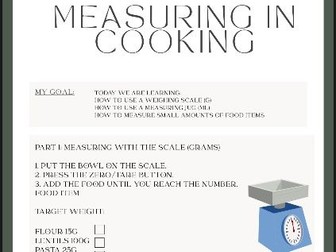
This worksheet introduces learners to practical measuring skills used in cooking. Pupils follow simple step-by-step instructions to: Use a weighing scale to measure ingredients in grams Use a measuring jug to measure liquids in millilitres practise measuring small quantities of common cooking items (e.g., flour, lentils, pasta, water, oil) The sheet includes clear tasks, checkboxes for completion, and goal statements to support structured, hands-on learning. This worksheet is best suited for Key Stage 2 (Years 3–6) because it teaches pupils to read scales in grams and millilitres and apply measurement skills in a real-life cooking context.