Practice Questions: 2025 Edexcel A-Level Poems of the Decade and Unseen PoemsQuick View
EsalanG

Practice Questions: 2025 Edexcel A-Level Poems of the Decade and Unseen Poems

(0)
**25 practice questions for the Poems of the Decade anthology and unseen poetry comparison for Edexcel English Literature A-Level Poetry Paper 3. ** INCLUDES Practice questions that include every poem. Accurate phrasing and style mimicking the real exam questions. More difficult questions (Edexcel are known for their tricky questions, as they move towards more writer’s method questions such as use of setting or imagery) Perfect revision resources in the final stretch before your exams. Intended as a revision resource for A-Level English Literature students for the Edexcel exam board studying for the Poems of the Decade section of Poetry Paper 3.
A-Level Edexcel John Donne Practice Questions - English Literature Paper 3Quick View
EsalanG

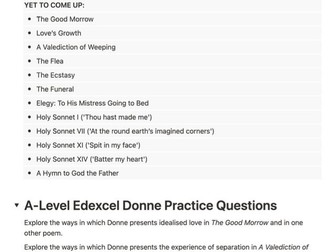
A-Level Edexcel John Donne Practice Questions - English Literature Paper 3

(0)
**20 practice questions for John Donne Edexcel A-Level, based on predictions for the 2025 paper. ** INCLUDES Practice questions based on predictions and poems that have not yet come up on past papers. Accurate phrasing and style mimicking the real exam questions. More difficult questions (Edexcel are known for their tricky questions, as they move towards more writer’s method questions such as use of setting or symbolism) Perfect revision resources in the final stretch before your exams. Intended as a revision resource for A-Level Edexcel students studying for the John Donne anthology. Useful for those studying the Metaphysical anthology, but not intended for this selection.
2025 Edexcel GCSE Macbeth Predicted Questions and ExtractsQuick View
EsalanG

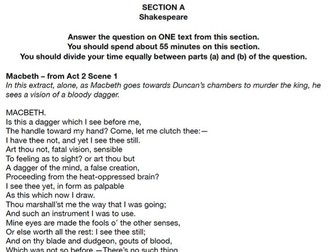
2025 Edexcel GCSE Macbeth Predicted Questions and Extracts

(0)
12 extracts and questions for ‘Macbeth’ Edexcel GCSE, based on predictions for the 2025 paper. INCLUDES An extract from each major scene and moment in the play that has not yet come up on past papers. Accurate phrasing and style mimicking the real exam paper layout. More difficult extracts (Edexcel are known for their tricky questions, we all remember the Porter scene from 2019!) Perfect revision resources in the final stretch before your exams. Intended as a revision resource for GCSE Edexcel students studying for the ‘Macbeth’ text.
2025 A-Level Edexcel ‘Othello’ Practice QuestionsQuick View
EsalanG

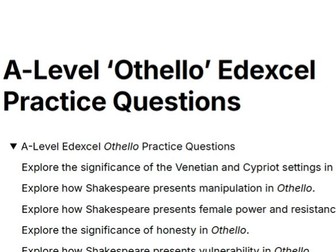
2025 A-Level Edexcel ‘Othello’ Practice Questions

(0)
28 practice questions for ‘Othello’ Edexcel A-Level, based on predictions for the 2025 paper. INCLUDES Practice questions based on predictions and topic that have not yet come up on past papers, but have appeared for other Shakespeare texts (Edexcel frequently repeat questions). Accurate phrasing and style mimicking the real exam questions. More difficult questions (Edexcel are known for their tricky questions, as they move towards more writer’s method questions such as use of setting or symbolism) Perfect revision resources in the final stretch before your exams. Intended as a revision resource for A-Level Edexcel students studying for the ‘Othello’ text.
2025 Eduqas GCSE Romeo and Juliet Predicted Questions and ExtractsQuick View
EsalanG

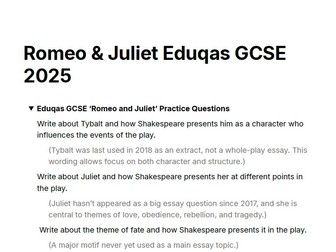
2025 Eduqas GCSE Romeo and Juliet Predicted Questions and Extracts

(0)
11 essay questions and 7 extract recommendations to revise for ‘Romeo and Juliet’ Eduqas GCSE, based on predictions for the 2025 paper. INCLUDES Accurate phrasing and style mimicking the real exam questions. 7 extract recommendations of scenes to look at that have been underused in previous papers, including possible themes relevant to the extract. More difficult questions (we’re all dreading a question on the Nurse!) Perfect revision resources in the final stretch before your exams. Intended as a revision resource for GCSE Eduqas students studying for the ‘Romeo & Juliet’ text.
Extensive Structural Techniques Chart: GCSE & A-Level EnglishQuick View
EsalanG

Extensive Structural Techniques Chart: GCSE & A-Level English

(0)
Master Structural Techniques for English Language and Literature! Struggling with structural analysis? This detailed chart of structural techniques is the ultimate guide for students and teachers alike. Tailored for GCSE English Language (all boards) and A-Level English, this resource demystifies structural features, offering a clear path to understanding and using them effectively in exams. What’s Included: Techniques for All Levels: Covers a wide range of techniques, from basic to advanced, making it suitable for both GCSE and A-Level students. Clear Definitions: each structural feature is clearly explained to help students grasp its meaning. Impact on the Reader:understand the purpose and effect of each technique in depth to meet key assessment objectives. Examples: practical examples illustrate how structural features appear in texts, helping students recognise and analyse them in their own reading. Why Use This Resource? Perfect for teaching structural techniques in the classroom or as a revision tool. Helps students confidently answer questions about structure in GCSE Language Papers. Supports higher-level analysis for A-Level Literature and Unseen Texts. Encourages independent study with easy-to-follow charts. Whether you’re preparing students for their GCSE Language exams, teaching advanced literary analysis at A-Level, or looking for a go-to reference for structural techniques, this resource is a must-have!
Macbeth Quote Bank: Characters, Themes, Techniques, and Modern EnglishQuick View
EsalanG

Macbeth Quote Bank: Characters, Themes, Techniques, and Modern English

(0)
All the Key Quotes from Macbeth in One Comprehensive Resource! This Macbeth Quote Bank is the ultimate tool for GCSE and A-Level English Literature students studying Shakespeare’s iconic tragedy. Covering every major character and theme, this resource provides not only the essential quotes but also their techniques, effects, and a modern English translation to aid understanding and analysis. What’s Included: Quotes for Every Character and Theme: Organised clearly, covering all the key moments in the play. Literary Techniques and Analysis: Each quote is paired with an explanation of the techniques used. Modern English Translations: Perfect for making Shakespeare’s language accessible to all students. Exam-Focused Design: Helps students link quotes to key themes like ambition, power, guilt, and fate, as well as characters like Macbeth, Lady Macbeth, and the Witches. Why Use This Resource? Ideal for revision, classwork, or essay preparation. Encourages detailed textual analysis and deepens understanding of Shakespeare’s craft. Helps students memorise key quotes with context and explanations to maximise marks in exams. Perfect for teachers to support differentiated learning with translations and techniques. This resource is your one-stop shop for tackling Shakespeare’s Macbeth with confidence and clarity. Struggling with other areas of Literature? Check out my resources on Unseen Poetry, Rhetorical Techniques, and Power and Conflict Poetry for more expert guidance in English Literature.
Unseen Poetry Checklist: What to Look for and How to AnalyseQuick View
EsalanG

Unseen Poetry Checklist: What to Look for and How to Analyse

(0)
Take the Mystery Out of Unseen Poetry! This clear and practical checklist is a game-changer for students tackling unseen poetry in GCSE and A-Level English exams. Designed to help students approach any poem with confidence, it provides a structured way to identify key features and analyse their effects, ensuring no marks are left on the table. What’s Included: Comprehensive Checklist: A step-by-step guide to what students should look for in an unseen poem, including: Language features (e.g., metaphors, similes, imagery). Structural techniques (e.g., enjambment, caesura, stanza breaks). Form and rhyme scheme. Themes and tone. Contextual hints within the poem itself. Key Questions to Ask: Prompting deeper analysis and helping students think critically about meaning and effect. Sample Framework for Writing: A clear outline of how to structure a response, making it easier for students to articulate their ideas. Why Use This Resource? Perfect for preparing students for English Literature exams. Provides a consistent, reliable approach to analysing poetry. Builds confidence in engaging with unfamiliar texts. A useful revision tool for both teachers and students. This checklist is a must-have for exam preparation and classroom learning, giving students the tools to demystify even the trickiest of poems.
Essential Rhetorical Techniques Chart: GCSE, A-Level & BeyondQuick View
EsalanG

Essential Rhetorical Techniques Chart: GCSE, A-Level & Beyond

(0)
Master the Art of Persuasion with Rhetorical Techniques! This in-depth rhetorical techniques chart is designed for GCSE and A-Level English students, but it’s just as useful for those studying Speech Writing, Media Studies, or Debating. It breaks down a wide variety of rhetorical devices, helping students identify, understand, and analyse their impact in speeches, essays, and creative writing. What’s Included: Comprehensive List of Rhetorical Devices: Covers key techniques such as anaphora, rhetorical questions, antithesis, and more, catering to both foundational and advanced levels. Clear Definitions: Easy-to-understand explanations of each device to demystify rhetoric. Effects on the Audience: Detailed analysis of how each technique works to persuade, influence, or engage the audience. Why Use This Resource? Perfect for English Language Paper 2, as well as studying famous speeches and persuasive texts. Helps students craft powerful, persuasive essays and speeches. A must-have for teachers teaching rhetorical analysis or debating. Complements the Language Techniques and Structural Techniques charts (available separately or as a bundle). Whether you’re studying or teaching rhetoric, this resource is your go-to guide for persuasive power!
An Inspector Calls: Universal Essay Plan for AQA GCSEQuick View
EsalanG

An Inspector Calls: Universal Essay Plan for AQA GCSE

(0)
Your Ultimate Essay Planning Tool for An Inspector Calls! This resource is designed to make essay writing for An Inspector Calls straightforward and effective. Perfect for AQA GCSE English Literature, this universal essay plan provides a complete guide for tackling character analysis, themes, and contextual understanding. What’s Included: Every Major Character Covered: Each character’s complete arc is broken down with 3 carefully selected quotes to represent key moments. Contextual links to deepen students’ understanding and boost their AO3 marks. Adaptable for Any Question: This plan works for virtually any character- or theme-based essay question, helping students confidently structure their answers. Contextual Elements: Key points about the play’s social, historical, and political context, seamlessly linked to characters and themes. Why This Resource? Students often struggle to balance detailed analysis, thematic exploration, and context in essays. This universal essay plan provides an easy-to-follow structure that ensures they hit all the assessment objectives every time. Perfect for: Class handouts to support essay planning. Homework or independent revision. Supporting lower- and higher-ability students to structure responses effectively.
Extensive Language Techniques Chart: GCSE & A-Level EnglishQuick View
EsalanG

Extensive Language Techniques Chart: GCSE & A-Level English

(0)
Unlock the Power of Language Analysis! This detailed chart of language techniques is an essential resource for GCSE and A-Level English students. Designed to enhance understanding and analysis of language, it covers a wide range of techniques, providing the tools needed to confidently tackle both Language and Literature exams. What’s Included: Wide Range of Techniques: From similes and metaphors to more advanced techniques like euphemism and semantic fields, this chart supports all ability levels. Clear Definitions: Each technique is explained in a straightforward, accessible way. Effects on the Reader: Understand how writers use language to create meaning and evoke emotion. Examples: Includes practical examples to help students recognise and apply the techniques effectively. Why Use This Resource? Perfect for classroom teaching, independent revision, or homework tasks. Helps students analyse unseen texts and set texts in both Language and Literature exams. Builds confidence in recognising and writing about language techniques. A valuable companion to the Structural Techniques Chart (available separately). Whether you’re a teacher looking for a clear way to explain language analysis or a student aiming to ace your exams, this resource is a must-have!
AQA Power and Conflict Poetry Pack: Complete GCSE Resource BundleQuick View
EsalanG

AQA Power and Conflict Poetry Pack: Complete GCSE Resource Bundle

(0)
Unlock Top Grades with this Comprehensive Power and Conflict Poetry Pack! This resource is perfect for AQA GCSE English Literature teachers and students looking for a structured, clear, and accessible approach to the Power and Conflict poetry cluster. Designed to boost confidence and understanding, this pack provides everything needed to tackle the exam with ease. What’s Included: Exam Tips and Strategies: Step-by-step guidance on how to approach the poetry section of the GCSE exam. Theme Breakdown: A detailed analysis of key themes across all 15 poems to help students draw connections and plan comparisons. Poem-by-Poem Summaries: A concise one-sentence summary for each poem to solidify understanding. Key language or structural features per poem with clear explanations. Essential contextual facts to enhance analysis and meet AO3 requirements. Engaging and Easy-to-Use Layout: Ideal for use in lessons, independent study, or revision. Why Choose This Pack? Proven to help students progress from lower grades to achieving Grade 7-9. Saves hours of planning and preparation for both students and teachers alike. Tailored specifically to the AQA specification with exam success in mind. Ideal For: Teachers seeking a ready-made, high-quality resource for lessons or revision. Students aiming to boost their grades with focused and practical support.
FREE AQA Power and Conflict Poetry: Themes and Exam Tips (Mini Resource)Quick View
EsalanG

FREE AQA Power and Conflict Poetry: Themes and Exam Tips (Mini Resource)

(0)
Kickstart Your Teaching of AQA’s Power and Conflict Poetry Cluster! This FREE mini resource provides: Key Themes Breakdown: A concise overview of the major themes across all 15 poems, designed to help students quickly identify connections. Exam Tips: Practical advice for tackling the poetry section of the AQA GCSE English Literature exam, with strategies to plan, compare, and write effectively under timed conditions. Whether you’re just starting to teach the Power and Conflict cluster or need a quick revision tool, this resource is the perfect starting point. Want More? If you love this mini resource, check out my Power and Conflict Complete Pack, which includes: One-sentence summaries for each poem to clarify meaning. Analysis of key language and structural features per poem. Important contextual facts for every poem to enhance exam answers. Find the complete pack on TES for a comprehensive guide to mastering Power and Conflict!