A-Level Literature DisplayQuick View
dktasixx

A-Level Literature Display

(0)
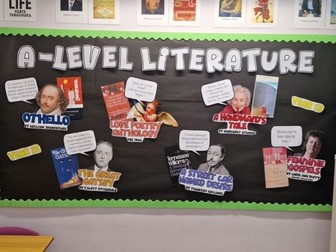
A-Level English Literature Display (AQA) Create an inspiring sixth form classroom with this AQA A-Level English Literature Display, designed to showcase the core texts studied across Year 12 and Year 13. This eye-catching display introduces students to the set texts while celebrating the authors behind them through engaging visuals, famous quotations, and book cover artwork. The display features William Shakespeare’s Othello, F. Scott Fitzgerald’s The Great Gatsby, the AQA Love Poetry Anthology (Pre-1900), Margaret Atwood’s The Handmaid’s Tale, Tennessee Williams’ A Streetcar Named Desire, and Carol Ann Duffy’s Feminine Gospels. Each text is accompanied by a memorable quotation and striking visual elements to create an engaging learning environment throughout the academic year. Perfect for A-Level English classrooms, sixth form centres, and literature corridors, this display serves as a constant reminder of the texts students will study while promoting wider literary discussion and revision. What’s included: High-quality PDF display pack Display title and heading Individual text and author display pieces Famous quotations for each text Year 12 and Year 13 labels Designed specifically for the AQA A-Level English Literature specification Suitable for classroom displays, sixth form areas, and English departments A professional, ready-to-print display that helps create a stimulating literature classroom while celebrating the key texts studied in AQA A-Level English Literature.
Posters - Instead of SHOWS use...Quick View
dktasixx

Posters - Instead of SHOWS use...

(0)
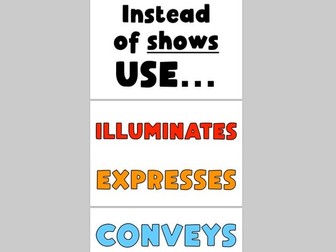
Instead of “Shows”… Use These! Ambitious Vocabulary Poster Expand students’ analytical vocabulary with this “Instead of Shows… Use These!” classroom poster. Featuring a wide range of ambitious alternatives to the overused word shows, this resource helps students write more precise, varied, and sophisticated analytical responses in GCSE English. Ideal for English classrooms, writing displays, revision sessions, and independent learning, the poster encourages students to improve the quality of their analysis and avoid repetitive vocabulary. Features: Wide range of ambitious synonyms for shows Supports analytical writing in GCSE English Language and Literature Encourages varied and sophisticated vocabulary Perfect for classroom displays, revision, and writing support Clear, colourful, and easy-to-reference design
Transactional Writing LessonQuick View
dktasixx

Transactional Writing Lesson

(0)
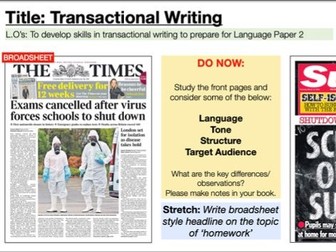
Absolutely! Based on your resource, here’s a polished TES description in the same style as your others: AQA GCSE English Language Paper 2 – Transactional Writing Lesson Help students master AQA GCSE English Language Paper 2, Question 5 with this fully scaffolded lesson on transactional writing. This resource provides a clear, step-by-step approach to planning and writing a successful broadsheet newspaper article, helping students understand the requirements of the 40-mark writing task while building confidence in persuasive and viewpoint writing. Students explore the differences between broadsheet and tabloid newspapers, analyse audience and purpose, and learn how to structure an effective article from headline to conclusion. The lesson models each stage of the writing process, including planning, creating headlines and subheadings, crafting engaging introductions, developing counterarguments, varying sentence structures, and proofreading for technical accuracy. An exemplar response, success criteria, and independent writing task are also included. What’s Included Editable Apple Keynote (.key), Microsoft PowerPoint (.pptx), and PDF versions Introduction to broadsheet vs tabloid newspapers Focus on AQA GCSE English Language Paper 2, Question 5 Step-by-step guide to planning and structuring a broadsheet article Audience, purpose, tone, and register activities Guidance on headlines, subheadings, bylines, and introductory paragraphs DAFOREST persuasive writing techniques Counterargument and rebuttal sentence stems Sentence variety and vocabulary development Success criteria linked to the AQA mark scheme Model article and independent writing task Proofreading and self-assessment activities Perfect for Year 10 and Year 11 GCSE English Language, revision lessons, intervention sessions, or introducing transactional writing in a clear, engaging, and accessible way.
2 Lessons - Descriptive WritingQuick View
dktasixx

2 Lessons - Descriptive Writing

(0)
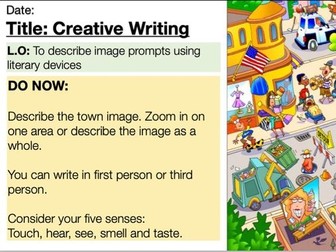
Descriptive Writing Mini Scheme of Work Develop students’ confidence in creative writing with this engaging 2-lesson descriptive writing pack, designed to guide learners through the writing process step by step. Perfect for KS3 and lower KS4, this resource helps students create vivid, imaginative descriptions using structured support, visual inspiration, and collaborative feedback. Students are introduced to descriptive writing techniques through clear modelling and carefully sequenced activities before applying their skills to atmospheric Gothic writing prompts. The lessons also incorporate carefully selected video stimuli to inspire imagery and encourage students to engage their senses when writing. What’s included: Editable Apple Keynote (.key), Microsoft PowerPoint (.pptx), and PDF versions Complete 2-lesson mini Scheme of Work Step-by-step guidance for planning and writing descriptive pieces Video links to inspire imagery and creative ideas Gothic-themed writing prompts Opportunities for drafting, improving, and editing Structured peer review and feedback activities Suitable for KS3 English, creative writing units, and GCSE skills development Perfect for developing descriptive writing, expanding vocabulary, and building students’ confidence in crafting engaging, detailed, and imaginative pieces of writing.
Library Lesson TasksQuick View
dktasixx

Library Lesson Tasks

(0)
Library Lesson Activities – 9 Independent Reading Tasks Make library lessons purposeful and engaging with this collection of 9 independent literacy activities, designed to encourage reading for pleasure while developing students’ creativity, comprehension, and writing skills. Ideal for KS3 English, cover lessons, or library sessions, these ready-to-use tasks require minimal preparation and keep students focused throughout their visit. Each activity encourages students to engage with books in a different way, from reflecting on what they have read to completing creative and persuasive writing tasks. The pack also includes a printable student worksheet containing all nine activities, allowing students to stick it into their exercise books and complete tasks independently over multiple library sessions. What’s included: Editable Apple Keynote (.key), Microsoft PowerPoint (.pptx), and PDF versions 9 engaging library lesson activities Printable worksheet for students to stick into their books Independent reading and reflection tasks Creative and transactional writing activities Suitable for KS3 English, library lessons, cover lessons, and reading intervention Perfect for promoting reading for pleasure, encouraging independent learning, and making every library lesson meaningful with a variety of engaging literacy activities.
Romeo and Juliet SEND BookletQuick View
dktasixx

Romeo and Juliet SEND Booklet

(0)
Romeo and Juliet SEND Workbook – Act 1 to Act 2 Scene 4 Support students with additional needs through Shakespeare’s Romeo and Juliet with this comprehensive 27-page SEND-friendly workbook, covering the play from Act 1, Scene 1 through to Act 2, Scene 4. Designed to make Shakespeare accessible without compromising on challenge, this resource uses clear explanations, visual support, retrieval practice, and carefully scaffolded analytical activities to build students’ confidence and understanding. Each scene is broken down into manageable sections, beginning with accessible summaries before progressing to a wide variety of engaging activities. Students complete vocabulary tasks, comprehension questions, sequencing activities, quotation work, inference, prediction, and creative responses before gradually developing GCSE analytical skills through language analysis and structured paragraph writing. The workbook also introduces key literary concepts such as imagery, metaphor, soliloquies, connotations, characterisation, and quotation analysis using student-friendly explanations and step-by-step scaffolds. Larger sections, including the famous Balcony Scene, provide opportunities for deeper analysis while remaining accessible to SEND learners. What’s included: Editable Apple Pages, Microsoft Word, and PDF versions Covers Act 1, Scene 1 to Act 2, Scene 4 Scene summaries to support understanding Vocabulary-building activities with visual prompts Retrieval practice, quizzes, gap fills, and sequencing tasks Reading comprehension and inference activities Character and quotation exploration GCSE language analysis and paragraph-writing scaffolds Creative writing, discussion, and reflection tasks SEND-friendly layout designed to reduce cognitive overload while promoting independent learning Ideal for KS3, KS4, SEND, intervention groups, nurture provision, and lower-attaining GCSE students, this workbook provides a structured and engaging approach to studying Romeo and Juliet, helping learners develop confidence in both Shakespeare and the analytical skills needed for GCSE English Literature.
Britain's Got Talent Reading DisplayQuick View
dktasixx

Britain's Got Talent Reading Display

(0)
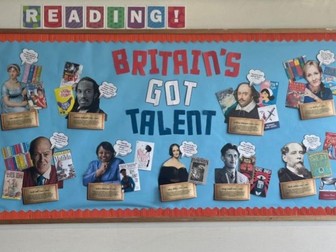
Britain’s Got Talent Reading Display Celebrate Britain’s rich literary heritage with this engaging Britain’s Got Talent themed reading display, designed to inspire students to discover some of the nation’s most influential authors. This eye-catching classroom display showcases a range of celebrated British writers, including William Shakespeare, Charles Dickens, Mary Shelley, J.K. Rowling, Benjamin Zephaniah, and many more. Each author is presented with a display plaque, their most famous works, and a memorable quote, encouraging students to explore classic and contemporary literature. Perfect for English classrooms, libraries, reading corners, and literacy events, this display promotes a love of reading while introducing students to key literary figures and their contributions to British literature. Features: “Britain’s Got Talent” themed classroom display Includes a range of famous British authors Author plaques with key information Most well-known books and plays for each writer Famous quotations to inspire discussion and reading Bright, engaging design suitable for secondary English classrooms An ideal resource for creating an inspiring reading environment, celebrating British literature, and encouraging students to broaden their reading choices throughout the academic year.
Finished? Extension Activity PostersQuick View
dktasixx

Finished? Extension Activity Posters

(0)
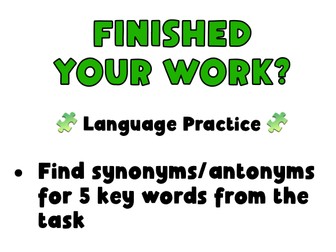
Finished? Extension Activity Posters Encourage independence and challenge your students with these “Finished?” Extension Activity Posters. Packed with engaging ideas for early finishers, they help students stretch their thinking, deepen their understanding, and remain productive once they have completed their main task. Perfect for English classrooms, intervention groups, and general classroom displays, these posters promote independent learning while reducing interruptions and supporting a purposeful learning environment.
GCSE AQA A01 A02 A03 A04 PostersQuick View
dktasixx

GCSE AQA A01 A02 A03 A04 Posters

(0)
GCSE AQA English Literature Assessment Objectives (AO1–AO4) Posters Support students in mastering the AQA GCSE English Literature Assessment Objectives with this set of clear, engaging classroom posters. Each poster breaks down AO1, AO2, AO3, and AO4 into student-friendly language, helping learners understand exactly what examiners are looking for and how to improve their responses. Ideal for classroom displays, revision sessions, intervention groups, and exam preparation, these posters provide a constant visual reminder of the skills needed to achieve success in English Literature. Features: Individual posters for AO1, AO2, AO3, and AO4 Student-friendly explanations of each assessment objective Perfect for GCSE English Literature classrooms Ideal for revision, exam preparation, and independent learning Clear, colourful design for easy reference throughout the year A practical display resource to help students develop confident literary analysis, use evidence effectively, explore writer’s methods, understand context, and communicate accurate written responses.
There They're Their PostersQuick View
dktasixx

There They're Their Posters

(0)
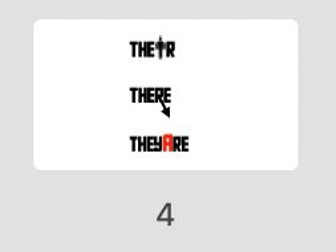
There, They’re, Their Posters A simple, colourful classroom display to help students remember the difference between there, they’re, and their. Perfect for English classrooms, literacy displays, and ongoing spelling support.
English Language GCSE AQA PAPER 1 DisplayQuick View
dktasixx

English Language GCSE AQA PAPER 1 Display

(0)
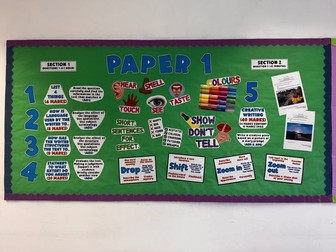
AQA GCSE English Language Paper 1 Display Support students throughout their preparation for AQA GCSE English Language Paper 1 with this engaging and informative classroom display. Featuring key descriptive writing techniques, question paper examples, and practical writing tips, this resource helps students develop the skills needed for both the reading and creative writing sections of the exam. The display includes memorable reminders for crafting effective descriptions, including techniques such as drop, shift, zoom in, and zoom out, helping students vary their writing and create more engaging, detailed responses. Features: Covers all sections of AQA GCSE English Language Paper 1 Includes question paper examples to familiarise students with the exam format Highlights key descriptive writing techniques and creative writing strategies Features practical prompts, including drop, shift, zoom in, and zoom out Engaging visuals to reinforce learning and aid recall Ideal for GCSE English classrooms, revision displays, intervention sessions, and exam preparation Perfect for Year 10 and Year 11 classrooms, this display provides students with an accessible, at-a-glance revision resource they can refer to throughout the GCSE course.
English Language GCSE AQA PAPER 2 DisplayQuick View
dktasixx

English Language GCSE AQA PAPER 2 Display

(0)
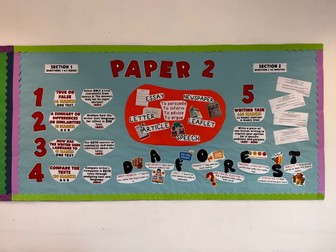
AQA GCSE English Language Paper 2 Display Support students with every section of AQA GCSE English Language Paper 2 using this engaging classroom display. Featuring clear visuals, question paper examples, and a handy reminder of the DAFOREST persuasive writing techniques, this resource helps students build confidence and recall key exam skills throughout the year. Designed to be both informative and visually appealing, the display provides students with quick-reference prompts while reinforcing the structure and expectations of Paper 2. Features: Covers all sections of AQA GCSE English Language Paper 2 Includes question paper examples to familiarise students with the exam format Visual reminders of the DAFOREST persuasive writing techniques Engaging images to support memory and student engagement Ideal for GCSE English classrooms, revision displays, intervention sessions, and exam preparation Perfect for Year 10 and Year 11 classrooms, this display offers a practical, at-a-glance revision aid that students can refer to throughout the course.
English SEND Extra Time DisplayQuick View
dktasixx

English SEND Extra Time Display

(0)
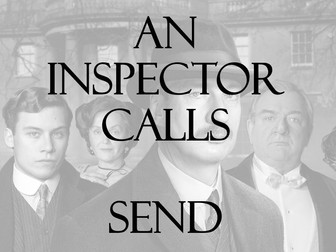
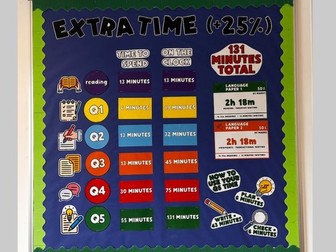
AQA GCSE ENGLISH LANGUAGE EXTRA TIME DISPLAY FOR SEND STUDENTS English SEND Extra Time Display Support students with effective time management during English assessments with this clear, visual display. Designed with SEND learners in mind, this resource breaks down how long students should spend on each exam question using simple visuals and a clean, uncluttered layout to reduce cognitive load and avoid sensory overload. Perfect for displaying in classrooms, intervention spaces, or exam rooms, it helps students pace themselves independently and build confidence during timed tasks. What’s included: Visual breakdown of recommended time per question SEND-friendly, low-stimulation design Ideal for small notice boards or classroom displays Can be printed in A3 for larger displays Printing notes: Originally designed for a small notice board. For a 1m × 1m display board, I printed the resource at 80% in the printer settings, which worked well.
4 Lessons - KS3 Debating - Transactional Speech SOWQuick View
dktasixx

4 Lessons - KS3 Debating - Transactional Speech SOW

(0)
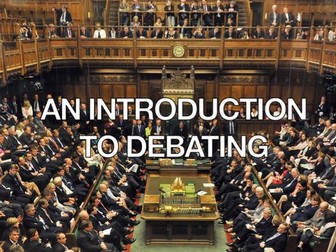
Good catch! Here’s the corrected product description: KS3 Debating Scheme of Work A fully resourced 4-lesson Scheme of Work designed to introduce KS3 students to the fundamentals of debating. This engaging unit explores the difference between debating and arguing, introduces students to famous debating settings such as Speakers’ Corner and Parliament, and develops persuasive speaking through the use of DAFOREST techniques in transactional speech and writing. Students build confidence in presenting ideas, structuring persuasive arguments, responding to opposing viewpoints, and speaking effectively in formal and informal debate situations. The scheme gradually develops key oracy skills before culminating in a range of exciting classroom debates. What’s Included Complete 4-lesson Scheme of Work Editable PowerPoint (.pptx), Apple Keynote (.key), and PDF versions Introduction to the differences between debating and arguing Exploration of Speakers’ Corner, Parliament, and everyday debates Teaching and application of DAFOREST persuasive techniques (Direct Address, Alliteration, Facts, Opinions, Rhetorical Questions, Emotive Language, Statistics, and Triples) Scaffolded activities to develop persuasive speaking and transactional writing Opportunities to practise argument, rebuttal, and public speaking skills A wide variety of engaging debate scenarios and end-of-unit debating tasks Ready-to-teach resources ideal for KS3 English, PSHE, Citizenship, and Oracy Perfect for developing oracy, persuasive writing, critical thinking, and public speaking, this comprehensive scheme provides everything needed to introduce debating in a structured, engaging, and confidence-building way. The editable formats also make it easy to adapt lessons to suit different classes and abilities.
5 Lessons - Macbeth Quote, Theme, Context and Exam Question PracticeQuick View
dktasixx

5 Lessons - Macbeth Quote, Theme, Context and Exam Question Practice

(0)
Macbeth Quote, Theme, Character, Context & Exam Question Practice 5 LESSONS WORTH OF MATERIAL A comprehensive revision and lesson resource designed to support students studying AQA GCSE English Literature: Macbeth. This pack helps students develop their knowledge of key themes, characters, context, and quotations while providing regular opportunities to practise GCSE-style exam questions. Students explore the major themes of ambition, the supernatural, violence, guilt, and false appearances, analysing key quotations and considering how Shakespeare presents these ideas throughout the play. The resource also includes focused character exploration, contextual links, and exam practice to build confidence and prepare students for assessments. What’s included: Editable Apple Keynote (.key), Microsoft PowerPoint (.pptx), and PDF versions Key quotation analysis and retrieval activities Exploration of the themes of ambition, the supernatural, violence, guilt, and false appearances Character-focused tasks and discussion activities Context linked to Shakespeare’s Macbeth GCSE-style exam question practice Suitable for revision, intervention, independent learning, and classroom teaching Perfect for Year 10 and Year 11 GCSE English Literature, this resource provides everything students need to strengthen their understanding of Macbeth while developing the analytical skills required for exam success.
6 Lessons - Lady of Shallot - Scheme of WorkQuick View
dktasixx

6 Lessons - Lady of Shallot - Scheme of Work

(0)
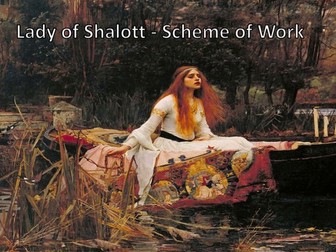
The Lady of Shalott Complete Scheme of Work A fully resourced Scheme of Work based on Alfred Lord Tennyson’s The Lady of Shalott, designed to develop students’ reading, analytical, and writing skills through a range of engaging, creative activities. This comprehensive unit introduces students to the Arthurian legends before exploring the poem in depth through close language analysis, discussion, and interpretation. Alongside poetry analysis, students complete a variety of writing tasks, including creative writing, newspaper writing, persuasive writing, and hot seating, allowing them to explore characters and themes from different perspectives. What’s included: Fully planned lessons with engaging PowerPoint slides Annotation and analysis of The Lady of Shalott Context on King Arthur and the Arthurian legends Creative writing opportunities Newspaper writing tasks Persuasive writing activities Hot seating and speaking & listening tasks Retrieval quizzes, discussion prompts, and independent activities Editable PowerPoint (.pptx), Apple Keynote (.key) and PDF versions of the complete Scheme of Work A PDF Camelot newspaper template for the newspaper writing activity Suitable for KS3 English and adaptable for mixed-ability classes, this ready-to-teach unit provides everything you need to deliver an engaging poetry sequence while developing students’ analytical, creative, and communication skills.
3 Lessons - PEE Paragraphs and Inference SkillsQuick View
dktasixx

3 Lessons - PEE Paragraphs and Inference Skills

(0)
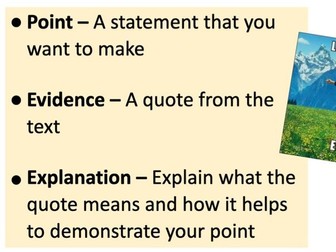
PEE & Inference Mini Scheme of Work Develop students’ analytical reading and writing skills with this 3-lesson mini Scheme of Work focusing on PEE (Point, Evidence, Explanation) paragraph writing and making accurate inferences. Designed for KS3 English, this ready-to-teach unit builds students’ confidence in using evidence to support their ideas before applying these skills to independent writing tasks. Students begin by learning how to structure analytical paragraphs using PEE before developing inference skills through engaging image and text-based activities. They then apply their knowledge to extracts from Oliver Twist and a comparison task on the Bubonic and Pneumonic Plague, reinforcing comprehension, comparison, and analytical writing. What’s included: Complete 3-lesson mini Scheme of Work Editable Apple Keynote (.key), Microsoft PowerPoint (.pptx), and PDF versions of all lessons Step-by-step introduction to PEE paragraph writing Lessons developing inference skills through images and short texts Guided and independent analytical writing activities Oliver Twist extract and PEE writing tasks Comparison activity on the Bubonic and Pneumonic Plague Model answers, sentence starters, peer assessment, and retrieval activities Perfect for introducing analytical writing at KS3, preparing students for GCSE-style responses, or providing additional support for learners who need to develop confidence in using evidence and explaining their ideas.
Posters - T.E.A Analytical Paragraph Sentence StartersQuick View
dktasixx

Posters - T.E.A Analytical Paragraph Sentence Starters

(0)
T.E.A. Analytical Paragraph Sentence Starters Help students write clear, structured analytical paragraphs with these T.E.A. (Technique, Evidence, Analysis) sentence starter posters. Designed to support GCSE English students, this resource provides useful prompts for introducing techniques, embedding evidence, and developing thoughtful analysis with confidence. Perfect for classroom displays, writing scaffolds, intervention sessions, and independent learning, these posters encourage students to build detailed, analytical responses while reducing reliance on teacher support. Features: Sentence starters for each stage of the T.E.A. paragraph structure Supports analytical writing in GCSE English Language and Literature Ideal for classroom displays and revision Encourages independent, high-quality written responses Clear, colourful, and easy-to-follow design
Tigrinya to English Worksheets EALQuick View
dktasixx

Tigrinya to English Worksheets EAL

(0)
Here’s a TES-friendly description: Tigrinya EAL Worksheet Support newly arrived EAL (English as an Additional Language) learners with this bilingual Tigrinya-English worksheet, designed to help students access learning with greater confidence. This resource provides key vocabulary and instructions in both Tigrinya and English, making it ideal for helping Tigrinya-speaking students settle into the classroom and develop their English language skills. Perfect for use in mainstream classrooms, EAL intervention, induction programmes, or one-to-one support, the worksheet helps reduce language barriers while promoting independent learning. What’s included: Bilingual Tigrinya-English worksheet Supports newly arrived EAL learners Clear, accessible layout Ideal for classroom use, intervention, or home learning Suitable for primary and secondary settings A practical resource to help Tigrinya-speaking students feel more confident, included, and supported as they develop their English language skills.
Library Lesson ActivitiesQuick View
dktasixx

Library Lesson Activities

(0)
Library Lesson Activities – KS3 English A collection of engaging library lesson activities designed to encourage reading, creativity, and independent thinking. Ideal for KS3 English, cover lessons, library sessions, or enrichment activities, this resource provides a variety of tasks that help students explore books while developing their reading and writing skills. The activities are easy to use and require minimal preparation, making them perfect for both classroom teachers and librarians. What’s included: Editable Apple Keynote (.key), Microsoft PowerPoint (.pptx), and PDF versions DAFOREST spotting activity Letter writing task Book reflection activity Diary entry writing task Creative writing activity Design a character task Library exit etiquette slide to reinforce expectations Perfect for promoting reading for pleasure, supporting literacy, and keeping students engaged during library visits with a range of purposeful and creative activities.
AQA GCSE English Language & Literature Timings DisplayQuick View
dktasixx

AQA GCSE English Language & Literature Timings Display

(0)
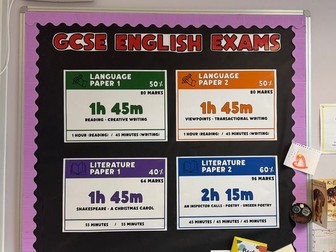
AQA GCSE English Language & Literature Timings Display Help students stay on track during their GCSE English exams with this set of clear, easy-to-follow timing displays for AQA GCSE English Language and English Literature. This resource provides a visual breakdown of how long students should spend on each question for: English Language Paper 1 English Language Paper 2 English Literature Paper 1 English Literature Paper 2 The Literature timings are tailored for the following set texts: Macbeth A Christmas Carol An Inspector Calls Designed with a clean, uncluttered layout, these displays are ideal for classroom walls, revision sessions, intervention groups, and exam preparation. They provide students with a quick visual reminder of recommended timings, helping them develop effective pacing and improve exam confidence. Printing notes: Designed to be displayed individually or as a complete set. Suitable for standard classroom notice boards and can be enlarged to A3 or larger for greater visibility.