This is a revision PowerPoint that I have made for my year 11s. It covers the main content that they need to know for their their trilogy paprer 2 exam. It covers homeostasis, inheritance and ecology. There are 70 slides in total. There are a range of activities including past exam questions, tables and questions. All have answers and some have examiners comments too. Please leave a review!
Now avaliable, physics paper 1 revision powerpoint, see the link below:
https://www.tes.com/teaching-resource/physics-paper-1-aqa-revision-powerpoint-new-9-1-gcse-12027874
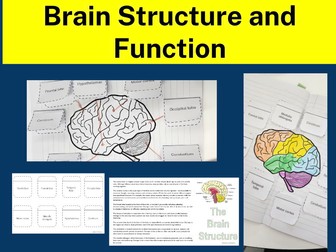
This pack includes an information sheet, a flap page focusing on key brain structures, a flap page outlining their functions, a labelled brain diagram, and an answer sheet. Students use the information provided to create a flip-flap booklet, supporting active learning and helping them link brain structures to their functions in a clear, visual way.
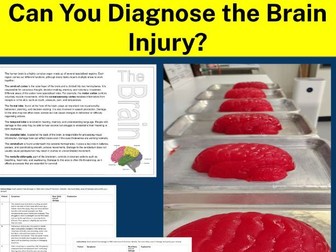
The main activity requires students to analyse each patient’s symptoms, identify the most likely area of brain damage, and justify their reasoning using their knowledge of brain function
This resource includes:
a clear summary page of brain function
six patient case studies with symptoms
a structured table for students to complete
two challenge questions
full answers
An optional hands-on extension uses six ‘brain moulds’. We filled them with agar and food colouring and left them to set overnight. I then used toothpicks and placed them in the different regions of the patient’s brains. This tested their understanding of the parts of the brain, and also added a bit more fun to the lesson! If you would like more information about the jelly set-up, please feel free to ask.
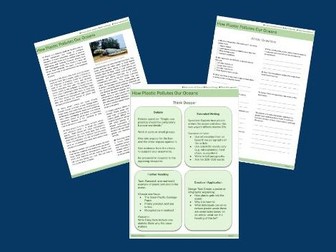
This science article and sub-plan is provided as a single printable PDF and includes a full answer key.
The resource contains four pages:
1 page which is the scientific article.
1 page of comprehension and application questions
1 page of answers
1 page of optional extension activities (debate, creative task, extended writing and further reading)
The article length is carefully chosen to be accessible while still scientifically meaningful, encouraging students to read independently and complete the tasks with confidence.
SUMMARY:
From Land to Sea: How Plastic Pollutes Our Oceans explains how everyday plastic waste reaches the ocean and breaks down into microplastics. Students explore the impact of plastic pollution on marine life, ecosystems, and food chains, while considering how human choices contribute to the problem.
Please leave a review!
C10: Using resources. Metal Exraction: Phytomining and Bioleaching for the new GCSE
Do now: problems with current exraction of copper
Main: Phytomining and Bioleaching method. Advantages/ disadvantages of both
Plenary: video
I have taken some resources from other Tes users.
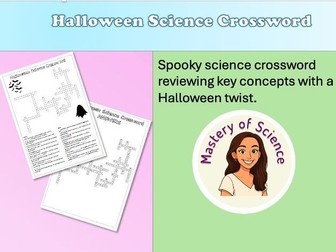
Bring some Halloween spirit into your science classroom with this engaging Halloween Science Crossword Puzzle!
Students will review key scientific concepts while solving creative, spooky-themed clues featuring mad scientists, potions, and eerie experiments. Perfect for a seasonal review, early finisher task, or bell-ringer activity in October.
Example Clues:
Dr. Scissorhands reads the bottom of the curve in a to measure liquids accurately.
What technique does Selene use to obtain pure water from saltwater?
What’s Included:
1 Halloween Science Crossword Puzzle
1 Answer Key
Printable and digital versions
Ideal for Grades 6-9
Topics Covered
Laboratory skills and equipment (meniscus reading, flame tests, distillation)
States of matter and particle behavior (expansion when heated, gases, subatomic particles)
Periodic table and elements (metals, hydrogen, mercury, oxygen)
Acids, bases, and chemical reactions (acetic acid, carbon dioxide production, chlorine in water)
Electricity and circuits (flow of electrons)
Human biology and anatomy (femur, iris, red blood cells)
Digestion and food groups (carbohydrates breaking into glucose)
Classification and ecology (predators, invertebrates)
Chemical tests and indicators (anhydrous copper sulfate turning blue with water)
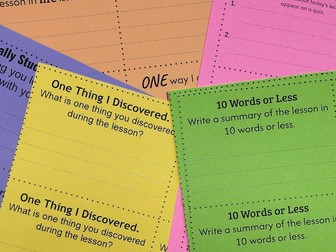
Looking for easy, no-prep ways to wrap up your lessons? This resource gives you Fifteen different plenary activities that students can stick straight into their books at the end of class.
Each activity is designed to:
Check for understanding
Encourage students to reflect on their learning.
Just print, cut, and hand out. No extra planning needed.
These plenaries work across all subjects and year groups, so you will always have a quick, meaningful way to finish your lessons.
Please see my instagram Mastery.of.science for more resources and teaching ideas.
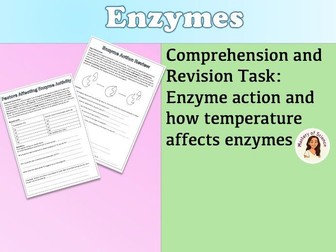
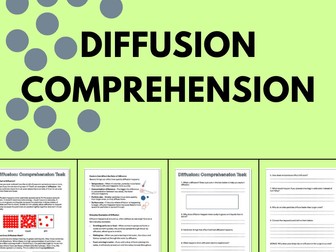
Enzyme action comprehension and questions.
Factors affecting enzyme practical: results provided and students have to draw a graph and analyse the graph.
Answer key included.
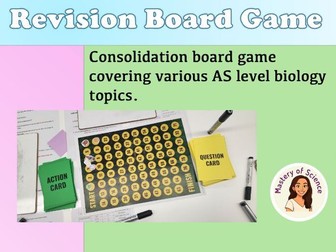
Board game to help with AS Biology revision.
The pack contains: board game, question cards, action cards, answer key.
Does not include tokens (I printed out animal faces).
The youngest player goes first. They pick up a question card and answer the question. They then pick up an action card which tells them what to do (e.g. move forward two spaces, or everyone has to answer the next question correct for you to move forward 3 spaces).
A great way to revise!
This covered the main content in the Edexcel specification but would also be useful for other exam boards such as AQA.
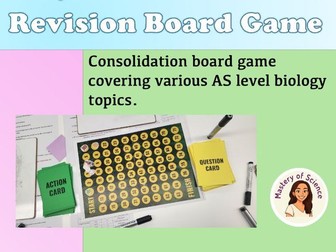
A fun way to revise key AS-level topics. This resource contains PDF files of a board game, action cards, question cards and answers.
Students take turns by picking up a question card, they then answer it and then pick up an action card. The action card consists of statements such as “Pick up another question, if anyone gets it wrong you move back two spaces” or “Move forward one space if you got it wrong and one space forward if you got it correct”.
The winner is the first one to get to the end of the board.
Topics covered: lifestyle, health and risk, genes and health, voice of the genome, biodiversity and natural resources.
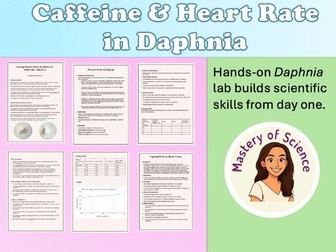
In this lab, students explore the effect of caffeine on the heart rate of Daphnia (water fleas) while building essential science skills for the year ahead.
This ready-to-use resource guides students through the full scientific write-up process - including hypothesis writing, designing and following a method, collecting and analyzing data, and writing clear conclusions.
What is Included:
Technician notes with full risk assessment
Student worksheet for complete practical write-up (hypothesis, method, results table, conclusion, evaluation)
Background information for students: including ethical considerations
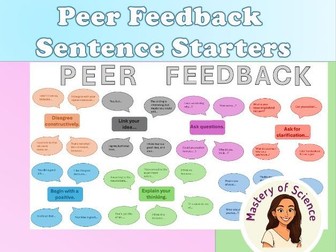
This resource provides students with a wide range of sentence starters to help them give clear, respectful, and constructive feedback to their peers. It includes prompts for six key areas: Ask for Clarification, Begin with a Positive, Ask Questions, Disagree Constructively, Make Suggestions, and Link Your Idea.
Designed for a science classroom bulletin board, these prompts are each A5 in size and support collaborative learning, encourage thoughtful discussion, and help students build confidence in communicating their ideas. While the examples are tailored for science, the sentence starters are versatile and can be used in any subject and with students of all ages.
If you would like a black and white version, please ask!!
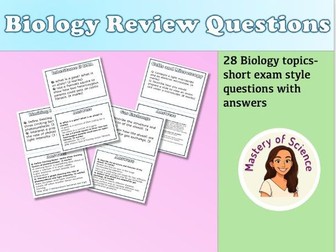
This resource covers 28 different GCSE biology topics and has between 2 and 3 questions for each topic. The answers are included.
These can be used for KS3 extension, revision lessons, do now activities or plenaries.
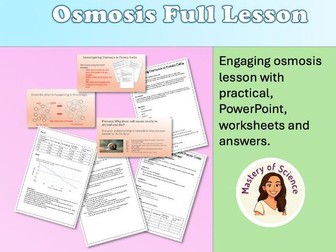
This complete Osmosis Lesson Resource Pack is perfect for teaching GCSE or middle school biology. It includes everything you need for a successful, engaging lesson:
A full PowerPoint with a student-friendly explanation of osmosis (can be edited to suit needs)
“Do Now” starter activity and plenary quiz
Potato practical investigation idea with equipment list and method
Student write-up template with sections for hypothesis, method, results, conclusion, and evaluation
Model write-up answer with sample results and graph
All answer keys and teacher guidance included
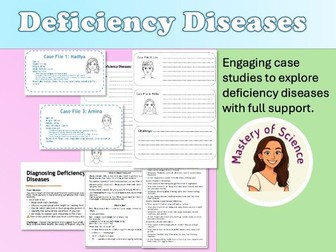
Lesson on deficiency diseases for secondary science.
The activity allows students to work independently or in groups to diagnose fictional patients using symptoms, diet notes, and vital signs.
Perfect for lessons where textbooks or Internet access are not available, this download includes:
5 detailed patient case files
Student-friendly information sheets on blood pressure, bmi, and key deficiency diseases
Clear student instructions and extension tasks
Printable task cards, answer sheets, and full teacher answer key
Diseases covered are: anemia, scurvy, kwashiorkor, rickets, and obesity (red herring disease).
No prior knowledge or external resources needed - just print and go!
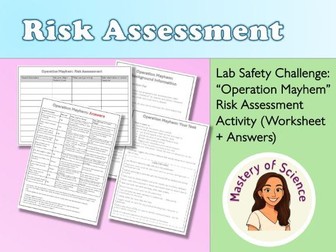
Make your lab safety lessons unforgettable with this high-engagement challenge!
“Operation Mayhem” that introduces students to key safety concepts while developing real-world skills in writing risk assessments.
What is included:
Printable student worksheet with a chaotic fictional lab scenario
Clear instructions for identifying hazards, ranking risks, and suggesting safety measures
A concise, easy-to-mark answer sheet for quick assessment
Built-in extension challenge to stretch critical thinking
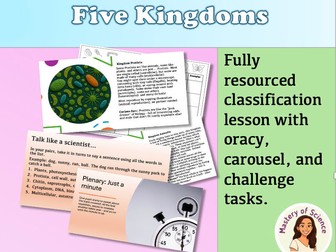
A fully resourced lesson on the Five Kingdoms.
Includes: carousel task with worksheet and posters, review task, challenge questions, oracy task. All answers included.
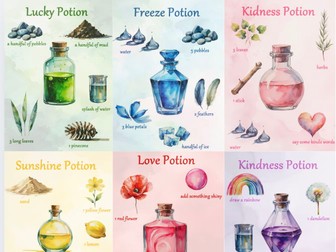
Outdoor Potion Play!
Encourage your little explorers to dive into the magic of nature with pretend potions! From a Kindness Potion to a Freeze Potion. Outdoor potion-making is a fun, creative way to engage with the natural world.
Potion play encourages observation, mixing materials, and using scientific language like ingredients and reactions.
Perfect for forest school, backyard fun, or weekend nature walks!


 Quick View
 Quick View
 Quick View
 Quick View
 Quick View
 Quick View
 Quick View
 Quick View
 Quick View
 Quick View
 Quick View
 Quick View
 Quick View
 Quick View
 Quick View
 Quick View
 Quick View