AQA A-Level Geography Glaciers: Full Set of LessonsQuick View
cameronpowell1102

AQA A-Level Geography Glaciers: Full Set of Lessons

(0)
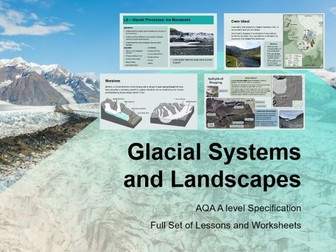
AQA A-Level Geography 7037 Glacial Systems and Landscapes full set of lessons and worksheets This bundle includes 19 PowerPoint lessons (.ppt), 8 additional worksheets (.docx) and 1 ‘notes for teachers’ guide. Lessons are highly detailed, include up-to-date case studies, high-resolution images, and author-own unique diagrams. Content follows the structure given by the AQA Scheme of Work, updated February 2025, following the specification in a logical order: the nature and distribution of cold environments; glacial systems and mass balance; the geomorphic processes and landscapes of glacial, fluvioglacial and periglacial environments; fragility and human impacts; and case studies of presently-glaciated, past-glaciated, and fragile cold environments. Each lesson begins in the same format: introductory slide and then the lesson ‘starter’ slide containing the title, objectives, key words and an invocative picture and question. Lessons are designed to invoke discussion, link to other areas of the specification, and provide a comprehensive resource for learning. The ‘notes for teachers’ guide contains information regarding each lesson, the predicted time to complete the lesson, and links to the specification. I also add any additional information or links that teachers may find useful. The lessons run as follows: L1 – Glaciers and Cold Environments L2 – The Distribution of Cold Environments L3 – Characteristics of Cold Environments L4 – The Ice Age and Past Distribution of Cold Environments L5 – The Glacial System L6 – Glacier Mass Balance (includes additional worksheet) L7 – Historical Accumulation and Ablation Patterns L8 – Glacial Processes: Ice Movement L9 – Glacial Processes: Weathering, Erosion and Deposition L10 – Landscapes of Glacial Erosion (includes additional worksheet) L11 – Landscapes of Glacial Deposition L12 – Case Study 1: North Wales (Palaeo Glacial Systems) (includes 3 additional worksheets) L13 – Fluvioglacial Processes and Landscapes L14 – Case Study 2: Iceland (Contemporary Glacial Systems) (includes 2 additional worksheets) L15 – Periglacial Processes and Landscapes L16 – Human Impacts on Cold Environments – Local L17 – Human Impacts on Cold Environments – Climate Change L18 – Management of Cold Environments (includes additional worksheet) L19 – Case Study 3: The Arctic (Contrasting Glaciated Landscape) I am happy to answer any questions you may have or to preview the slides prior to purchase. Please contact me at cameronpowell1102@gmail.com
AQA A-Level Geography Glaciers: L14 Iceland Case StudyQuick View
cameronpowell1102

AQA A-Level Geography Glaciers: L14 Iceland Case Study

(0)
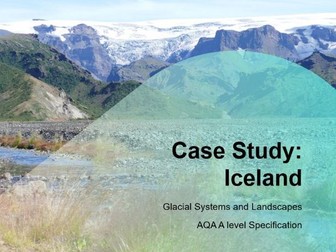
AQA A-Level Geography 7037 Glacial Systems and Landscapes lesson 14 of 19, Case Study 2: Iceland (Contemporary Glacial Landscape) Includes 1 lesson PowerPoint, 2 worksheets, and 1 ‘notes for teachers’ guide. An additional case study to address modern glacial systems and landscapes. Lesson looks at the location and environment of Iceland before addressing its glaciated landforms. Time to Complete: 1 - 2 Hours The ‘notes for teachers’ guide contains information regarding the lesson, but also provides a preview for all other lessons in the full set and any additional information or links that teachers may find useful. Information on the full set of lessons Lessons are highly detailed, include up-to-date case studies, high-resolution images, and author-own unique diagrams. Content follows the structure given by the AQA Scheme of Work, updated February 2025, following the specification in a logical order: the nature and distribution of cold environments; glacial systems and mass balance; the geomorphic processes and landscapes of glacial, fluvioglacial and periglacial environments; fragility and human impacts; and case studies of presently-glaciated, past-glaciated, and fragile cold environments. Each lesson begins in the same format: introductory slide and then the lesson ‘starter’ slide containing the title, objectives, key words and an invocative picture and question. Lessons are designed to invoke discussion, link to other areas of the specification, and provide a comprehensive resource for learning. The lessons run as follows: L1 – Glaciers and Cold Environments L2 – The Distribution of Cold Environments L3 – Characteristics of Cold Environments L4 – The Ice Age and Past Distribution of Cold Environments L5 – The Glacial System L6 – Glacier Mass Balance (includes additional worksheet) L7 – Historical Accumulation and Ablation Patterns L8 – Glacial Processes: Ice Movement L9 – Glacial Processes: Weathering, Erosion and Deposition L10 – Landscapes of Glacial Erosion (includes additional worksheet) L11 – Landscapes of Glacial Deposition L12 – Case Study 1: North Wales (Palaeo Glacial Systems) (includes 3 additional worksheets) L13 – Fluvioglacial Processes and Landscapes L14 – Case Study 2: Iceland (Contemporary Glacial Systems) (includes 2 additional worksheets) L15 – Periglacial Processes and Landscapes L16 – Human Impacts on Cold Environments – Local L17 – Human Impacts on Cold Environments – Climate Change L18 – Management of Cold Environments (includes additional worksheet) L19 – Case Study 3: The Arctic (Contrasting Glaciated Landscape) I am happy to answer any questions you may have or to preview the slides prior to purchase. Please contact me at cameronpowell1102@gmail.com
AQA A-Level Geography Glaciers: L12 North Wales Case StudyQuick View
cameronpowell1102

AQA A-Level Geography Glaciers: L12 North Wales Case Study

(0)
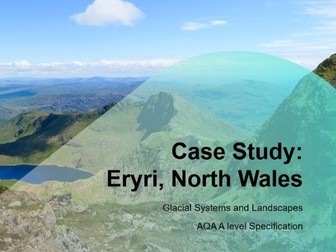
AQA A-Level Geography 7037 Glacial Systems and Landscapes lesson 12 of 19, Case Study 1: Eryri (Snowdonia), North Wales (Palaeo Glacial Landscape) Includes 1 lesson PowerPoint, 3 worksheets, and 1 ‘notes for teachers’ guide. Lesson introduces North Wales (including Eryri/Snowdonia) as a case study of a characteristic glacial landscape, applying knowledge of glacial systems, erosional and depositional processes to a palaeo glacial landscapes. It is not necessary to have covered fluvioglacial and periglacial landscapes for this session. Time to Complete: 1 - 2 Hours The ‘notes for teachers’ guide contains information regarding the lesson, but also provides a preview for all other lessons in the full set and any additional information or links that teachers may find useful. Information on the full set of lessons Lessons are highly detailed, include up-to-date case studies, high-resolution images, and author-own unique diagrams. Content follows the structure given by the AQA Scheme of Work, updated February 2025, following the specification in a logical order: the nature and distribution of cold environments; glacial systems and mass balance; the geomorphic processes and landscapes of glacial, fluvioglacial and periglacial environments; fragility and human impacts; and case studies of presently-glaciated, past-glaciated, and fragile cold environments. Each lesson begins in the same format: introductory slide and then the lesson ‘starter’ slide containing the title, objectives, key words and an invocative picture and question. Lessons are designed to invoke discussion, link to other areas of the specification, and provide a comprehensive resource for learning. The lessons run as follows: L1 – Glaciers and Cold Environments L2 – The Distribution of Cold Environments L3 – Characteristics of Cold Environments L4 – The Ice Age and Past Distribution of Cold Environments L5 – The Glacial System L6 – Glacier Mass Balance (includes additional worksheet) L7 – Historical Accumulation and Ablation Patterns L8 – Glacial Processes: Ice Movement L9 – Glacial Processes: Weathering, Erosion and Deposition L10 – Landscapes of Glacial Erosion (includes additional worksheet) L11 – Landscapes of Glacial Deposition L12 – Case Study 1: North Wales (Palaeo Glacial Systems) (includes 3 additional worksheets) L13 – Fluvioglacial Processes and Landscapes L14 – Case Study 2: Iceland (Contemporary Glacial Systems) (includes 2 additional worksheets) L15 – Periglacial Processes and Landscapes L16 – Human Impacts on Cold Environments – Local L17 – Human Impacts on Cold Environments – Climate Change L18 – Management of Cold Environments (includes additional worksheet) L19 – Case Study 3: The Arctic (Contrasting Glaciated Landscape) I am happy to answer any questions you may have or to preview the slides prior to purchase. Please contact me at cameronpowell1102@gmail.com
AQA A-Level Geography Glaciers: L18 Management of Cold EnvironmentsQuick View
cameronpowell1102

AQA A-Level Geography Glaciers: L18 Management of Cold Environments

(0)
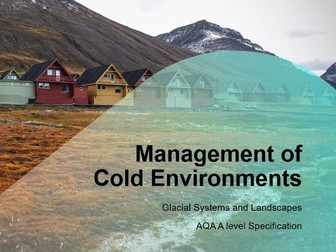
AQA A-Level Geography 7037 Glacial Systems and Landscapes lesson 18 of 19, Management of Cold Environments Includes 1 lesson PowerPoint, 1 worksheet, and 1 ‘notes for teachers’ guide. Lesson explores the different methods of management used to tackle problems in cold environments. Small case studies are used as examples to focus on different strategies in different environments. Time to Complete: 1 - 2 Hours The ‘notes for teachers’ guide contains information regarding the lesson, but also provides a preview for all other lessons in the full set and any additional information or links that teachers may find useful. Information on the full set of lessons Lessons are highly detailed, include up-to-date case studies, high-resolution images, and author-own unique diagrams. Content follows the structure given by the AQA Scheme of Work, updated February 2025, following the specification in a logical order: the nature and distribution of cold environments; glacial systems and mass balance; the geomorphic processes and landscapes of glacial, fluvioglacial and periglacial environments; fragility and human impacts; and case studies of presently-glaciated, past-glaciated, and fragile cold environments. Each lesson begins in the same format: introductory slide and then the lesson ‘starter’ slide containing the title, objectives, key words and an invocative picture and question. Lessons are designed to invoke discussion, link to other areas of the specification, and provide a comprehensive resource for learning. The lessons run as follows: L1 – Glaciers and Cold Environments L2 – The Distribution of Cold Environments L3 – Characteristics of Cold Environments L4 – The Ice Age and Past Distribution of Cold Environments L5 – The Glacial System L6 – Glacier Mass Balance (includes additional worksheet) L7 – Historical Accumulation and Ablation Patterns L8 – Glacial Processes: Ice Movement L9 – Glacial Processes: Weathering, Erosion and Deposition L10 – Landscapes of Glacial Erosion (includes additional worksheet) L11 – Landscapes of Glacial Deposition L12 – Case Study 1: North Wales (Palaeo Glacial Systems) (includes 3 additional worksheets) L13 – Fluvioglacial Processes and Landscapes L14 – Case Study 2: Iceland (Contemporary Glacial Systems) (includes 2 additional worksheets) L15 – Periglacial Processes and Landscapes L16 – Human Impacts on Cold Environments – Local L17 – Human Impacts on Cold Environments – Climate Change L18 – Management of Cold Environments (includes additional worksheet) L19 – Case Study 3: The Arctic (Contrasting Glaciated Landscape) I am happy to answer any questions you may have or to preview the slides prior to purchase. Please contact me at cameronpowell1102@gmail.com
AQA A-Level Geography Glaciers: L15 Periglacial LandscapesQuick View
cameronpowell1102

AQA A-Level Geography Glaciers: L15 Periglacial Landscapes

(0)
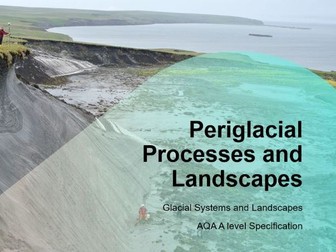
AQA A-Level Geography 7037 Glacial Systems and Landscapes lesson 15 of 19, Periglacial Processes and Landscapes Includes 1 lesson PowerPoint and 1 ‘notes for teachers’ guide. Lesson introduces periglacial landscapes, before exploring their associated processes and landforms. Landforms are split into active layer and slope process landforms. Time to Complete: 2 - 3 Hours The ‘notes for teachers’ guide contains information regarding the lesson, but also provides a preview for all other lessons in the full set and any additional information or links that teachers may find useful. Information on the full set of lessons Lessons are highly detailed, include up-to-date case studies, high-resolution images, and author-own unique diagrams. Content follows the structure given by the AQA Scheme of Work, updated February 2025, following the specification in a logical order: the nature and distribution of cold environments; glacial systems and mass balance; the geomorphic processes and landscapes of glacial, fluvioglacial and periglacial environments; fragility and human impacts; and case studies of presently-glaciated, past-glaciated, and fragile cold environments. Each lesson begins in the same format: introductory slide and then the lesson ‘starter’ slide containing the title, objectives, key words and an invocative picture and question. Lessons are designed to invoke discussion, link to other areas of the specification, and provide a comprehensive resource for learning. The lessons run as follows: L1 – Glaciers and Cold Environments L2 – The Distribution of Cold Environments L3 – Characteristics of Cold Environments L4 – The Ice Age and Past Distribution of Cold Environments L5 – The Glacial System L6 – Glacier Mass Balance (includes additional worksheet) L7 – Historical Accumulation and Ablation Patterns L8 – Glacial Processes: Ice Movement L9 – Glacial Processes: Weathering, Erosion and Deposition L10 – Landscapes of Glacial Erosion (includes additional worksheet) L11 – Landscapes of Glacial Deposition L12 – Case Study 1: North Wales (Palaeo Glacial Systems) (includes 3 additional worksheets) L13 – Fluvioglacial Processes and Landscapes L14 – Case Study 2: Iceland (Contemporary Glacial Systems) (includes 2 additional worksheets) L15 – Periglacial Processes and Landscapes L16 – Human Impacts on Cold Environments – Local L17 – Human Impacts on Cold Environments – Climate Change L18 – Management of Cold Environments (includes additional worksheet) L19 – Case Study 3: The Arctic (Contrasting Glaciated Landscape) I am happy to answer any questions you may have or to preview the slides prior to purchase. Please contact me at cameronpowell1102@gmail.com
AQA A-Level Geography Glaciers: L19 Arctic Case StudyQuick View
cameronpowell1102

AQA A-Level Geography Glaciers: L19 Arctic Case Study

(0)
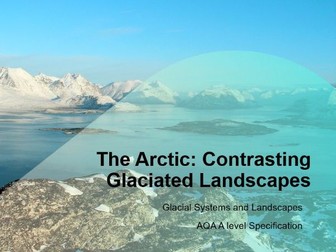
AQA A-Level Geography 7037 Glacial Systems and Landscapes lesson 19 of 19, Case Study 3: The Arctic Includes 1 lesson PowerPoint and 1 ‘notes for teachers’ guide. This large case study of The Arctic begins by addressing the Arctic as a whole, exploring its place and environments, before zooming in on the Trans-Alaskan Pipeline System. As with other case studies, other examples are available, however, the Arctic provides a valuable opportunity to explore contemporary physical and human connections. Importantly, there is a major focus on Indigenous Peoples in the Arctic, and the wider resilience (via mitigation and adaptation) these Time to Complete: 2 - 3 Hours The ‘notes for teachers’ guide contains information regarding the lesson, but also provides a preview for all other lessons in the full set and any additional information or links that teachers may find useful. Information on the full set of lessons Lessons are highly detailed, include up-to-date case studies, high-resolution images, and author-own unique diagrams. Content follows the structure given by the AQA Scheme of Work, updated February 2025, following the specification in a logical order: the nature and distribution of cold environments; glacial systems and mass balance; the geomorphic processes and landscapes of glacial, fluvioglacial and periglacial environments; fragility and human impacts; and case studies of presently-glaciated, past-glaciated, and fragile cold environments. Each lesson begins in the same format: introductory slide and then the lesson ‘starter’ slide containing the title, objectives, key words and an invocative picture and question. Lessons are designed to invoke discussion, link to other areas of the specification, and provide a comprehensive resource for learning. The lessons run as follows: L1 – Glaciers and Cold Environments L2 – The Distribution of Cold Environments L3 – Characteristics of Cold Environments L4 – The Ice Age and Past Distribution of Cold Environments L5 – The Glacial System L6 – Glacier Mass Balance (includes additional worksheet) L7 – Historical Accumulation and Ablation Patterns L8 – Glacial Processes: Ice Movement L9 – Glacial Processes: Weathering, Erosion and Deposition L10 – Landscapes of Glacial Erosion (includes additional worksheet) L11 – Landscapes of Glacial Deposition L12 – Case Study 1: North Wales (Palaeo Glacial Systems) (includes 3 additional worksheets) L13 – Fluvioglacial Processes and Landscapes L14 – Case Study 2: Iceland (Contemporary Glacial Systems) (includes 2 additional worksheets) L15 – Periglacial Processes and Landscapes L16 – Human Impacts on Cold Environments – Local L17 – Human Impacts on Cold Environments – Climate Change L18 – Management of Cold Environments (includes additional worksheet) L19 – Case Study 3: The Arctic (Contrasting Glaciated Landscape) I am happy to answer any questions you may have or to preview the slides prior to purchase. Please contact me at cameronpowell1102@gmail.com
AQA A-Level Geography Glaciers: L1 Introduction to Glaciers and Cold EnvironmentsQuick View
cameronpowell1102

AQA A-Level Geography Glaciers: L1 Introduction to Glaciers and Cold Environments

(0)
AQA A-Level Geography 7037 Glacial Systems and Landscapes lesson 1 of 19, Introduction to Glaciers and Cold Environments Includes 1 lesson PowerPoint and 1 ‘notes for teachers’ guide. Lesson introduces glaciers and cold environments. It defines what glaciers are, what other cold environments there are, and begins touch on their distribution. Teaching should revolve around a discussion of glaciers, what is meant by a glacial landscape, and why they are important to study. Time to Complete: 1 Hour The ‘notes for teachers’ guide contains information regarding the lesson, but also provides a preview for all other lessons in the full set and any additional information or links that teachers may find useful. Information on the full set of lessons Lessons are highly detailed, include up-to-date case studies, high-resolution images, and author-own unique diagrams. Content follows the structure given by the AQA Scheme of Work, updated February 2025, following the specification in a logical order: the nature and distribution of cold environments; glacial systems and mass balance; the geomorphic processes and landscapes of glacial, fluvioglacial and periglacial environments; fragility and human impacts; and case studies of presently-glaciated, past-glaciated, and fragile cold environments. Each lesson begins in the same format: introductory slide and then the lesson ‘starter’ slide containing the title, objectives, key words and an invocative picture and question. Lessons are designed to invoke discussion, link to other areas of the specification, and provide a comprehensive resource for learning. The lessons run as follows: L1 – Glaciers and Cold Environments L2 – The Distribution of Cold Environments L3 – Characteristics of Cold Environments L4 – The Ice Age and Past Distribution of Cold Environments L5 – The Glacial System L6 – Glacier Mass Balance (includes additional worksheet) L7 – Historical Accumulation and Ablation Patterns L8 – Glacial Processes: Ice Movement L9 – Glacial Processes: Weathering, Erosion and Deposition L10 – Landscapes of Glacial Erosion (includes additional worksheet) L11 – Landscapes of Glacial Deposition L12 – Case Study 1: North Wales (Palaeo Glacial Systems) (includes 3 additional worksheets) L13 – Fluvioglacial Processes and Landscapes L14 – Case Study 2: Iceland (Contemporary Glacial Systems) (includes 2 additional worksheets) L15 – Periglacial Processes and Landscapes L16 – Human Impacts on Cold Environments – Local L17 – Human Impacts on Cold Environments – Climate Change L18 – Management of Cold Environments (includes additional worksheet) L19 – Case Study 3: The Arctic (Contrasting Glaciated Landscape) I am happy to answer any questions you may have or to preview the slides prior to purchase. Please contact me at cameronpowell1102@gmail.com
AQA A-Level Geography Glaciers: L3 Characteristics of Cold EnvironmentsQuick View
cameronpowell1102

AQA A-Level Geography Glaciers: L3 Characteristics of Cold Environments

(0)
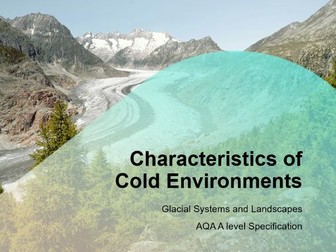
AQA A-Level Geography 7037 Glacial Systems and Landscapes lesson 3 of 19, Characteristics of Cold Environments Includes 1 lesson PowerPoint and 1 ‘notes for teachers’ guide. Lesson is centred around a research task exploring the nature (climate, soils, vegetation) of the four different cold environments, with opportunities to present findings. Time to Complete: 2 Hours The ‘notes for teachers’ guide contains information regarding the lesson, but also provides a preview for all other lessons in the full set and any additional information or links that teachers may find useful. Information on the full set of lessons Lessons are highly detailed, include up-to-date case studies, high-resolution images, and author-own unique diagrams. Content follows the structure given by the AQA Scheme of Work, updated February 2025, following the specification in a logical order: the nature and distribution of cold environments; glacial systems and mass balance; the geomorphic processes and landscapes of glacial, fluvioglacial and periglacial environments; fragility and human impacts; and case studies of presently-glaciated, past-glaciated, and fragile cold environments. Each lesson begins in the same format: introductory slide and then the lesson ‘starter’ slide containing the title, objectives, key words and an invocative picture and question. Lessons are designed to invoke discussion, link to other areas of the specification, and provide a comprehensive resource for learning. The lessons run as follows: L1 – Glaciers and Cold Environments L2 – The Distribution of Cold Environments L3 – Characteristics of Cold Environments L4 – The Ice Age and Past Distribution of Cold Environments L5 – The Glacial System L6 – Glacier Mass Balance (includes additional worksheet) L7 – Historical Accumulation and Ablation Patterns L8 – Glacial Processes: Ice Movement L9 – Glacial Processes: Weathering, Erosion and Deposition L10 – Landscapes of Glacial Erosion (includes additional worksheet) L11 – Landscapes of Glacial Deposition L12 – Case Study 1: North Wales (Palaeo Glacial Systems) (includes 3 additional worksheets) L13 – Fluvioglacial Processes and Landscapes L14 – Case Study 2: Iceland (Contemporary Glacial Systems) (includes 2 additional worksheets) L15 – Periglacial Processes and Landscapes L16 – Human Impacts on Cold Environments – Local L17 – Human Impacts on Cold Environments – Climate Change L18 – Management of Cold Environments (includes additional worksheet) L19 – Case Study 3: The Arctic (Contrasting Glaciated Landscape) I am happy to answer any questions you may have or to preview the slides prior to purchase. Please contact me at cameronpowell1102@gmail.com
AQA A-Level Geography Glaciers: L4 The Ice AgeQuick View
cameronpowell1102

AQA A-Level Geography Glaciers: L4 The Ice Age

(0)
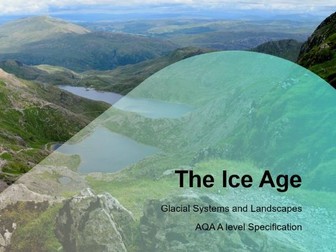
AQA A-Level Geography 7037 Glacial Systems and Landscapes lesson 4 of 19, The Ice Age Includes 1 lesson PowerPoint and 1 ‘notes for teachers’ guide. Lesson completes the first area of the specification by exploring the past distribution of cold environments. It discusses the ice age, reasons for long-term natural climate change, and past glaciation from concept to recent research. Time to Complete: 1 - 2 Hours The ‘notes for teachers’ guide contains information regarding the lesson, but also provides a preview for all other lessons in the full set and any additional information or links that teachers may find useful. Information on the full set of lessons Lessons are highly detailed, include up-to-date case studies, high-resolution images, and author-own unique diagrams. Content follows the structure given by the AQA Scheme of Work, updated February 2025, following the specification in a logical order: the nature and distribution of cold environments; glacial systems and mass balance; the geomorphic processes and landscapes of glacial, fluvioglacial and periglacial environments; fragility and human impacts; and case studies of presently-glaciated, past-glaciated, and fragile cold environments. Each lesson begins in the same format: introductory slide and then the lesson ‘starter’ slide containing the title, objectives, key words and an invocative picture and question. Lessons are designed to invoke discussion, link to other areas of the specification, and provide a comprehensive resource for learning. The lessons run as follows: L1 – Glaciers and Cold Environments L2 – The Distribution of Cold Environments L3 – Characteristics of Cold Environments L4 – The Ice Age and Past Distribution of Cold Environments L5 – The Glacial System L6 – Glacier Mass Balance (includes additional worksheet) L7 – Historical Accumulation and Ablation Patterns L8 – Glacial Processes: Ice Movement L9 – Glacial Processes: Weathering, Erosion and Deposition L10 – Landscapes of Glacial Erosion (includes additional worksheet) L11 – Landscapes of Glacial Deposition L12 – Case Study 1: North Wales (Palaeo Glacial Systems) (includes 3 additional worksheets) L13 – Fluvioglacial Processes and Landscapes L14 – Case Study 2: Iceland (Contemporary Glacial Systems) (includes 2 additional worksheets) L15 – Periglacial Processes and Landscapes L16 – Human Impacts on Cold Environments – Local L17 – Human Impacts on Cold Environments – Climate Change L18 – Management of Cold Environments (includes additional worksheet) L19 – Case Study 3: The Arctic (Contrasting Glaciated Landscape) I am happy to answer any questions you may have or to preview the slides prior to purchase. Please contact me at cameronpowell1102@gmail.com
AQA A-Level Geography Glaciers: L5 Glacial SystemsQuick View
cameronpowell1102

AQA A-Level Geography Glaciers: L5 Glacial Systems

(0)
AQA A-Level Geography 7037 Glacial Systems and Landscapes lesson 5 of 19, Glacial Systems Includes 1 lesson PowerPoint and 1 ‘notes for teachers’ guide. Lesson introduces glaciers; how we can classify them per size, location, and environment; and introduces the glacial system with inputs, outputs, flows and stores. Time to Complete: 1 Hour The ‘notes for teachers’ guide contains information regarding the lesson, but also provides a preview for all other lessons in the full set and any additional information or links that teachers may find useful. Information on the full set of lessons Lessons are highly detailed, include up-to-date case studies, high-resolution images, and author-own unique diagrams. Content follows the structure given by the AQA Scheme of Work, updated February 2025, following the specification in a logical order: the nature and distribution of cold environments; glacial systems and mass balance; the geomorphic processes and landscapes of glacial, fluvioglacial and periglacial environments; fragility and human impacts; and case studies of presently-glaciated, past-glaciated, and fragile cold environments. Each lesson begins in the same format: introductory slide and then the lesson ‘starter’ slide containing the title, objectives, key words and an invocative picture and question. Lessons are designed to invoke discussion, link to other areas of the specification, and provide a comprehensive resource for learning. The lessons run as follows: L1 – Glaciers and Cold Environments L2 – The Distribution of Cold Environments L3 – Characteristics of Cold Environments L4 – The Ice Age and Past Distribution of Cold Environments L5 – The Glacial System L6 – Glacier Mass Balance (includes additional worksheet) L7 – Historical Accumulation and Ablation Patterns L8 – Glacial Processes: Ice Movement L9 – Glacial Processes: Weathering, Erosion and Deposition L10 – Landscapes of Glacial Erosion (includes additional worksheet) L11 – Landscapes of Glacial Deposition L12 – Case Study 1: North Wales (Palaeo Glacial Systems) (includes 3 additional worksheets) L13 – Fluvioglacial Processes and Landscapes L14 – Case Study 2: Iceland (Contemporary Glacial Systems) (includes 2 additional worksheets) L15 – Periglacial Processes and Landscapes L16 – Human Impacts on Cold Environments – Local L17 – Human Impacts on Cold Environments – Climate Change L18 – Management of Cold Environments (includes additional worksheet) L19 – Case Study 3: The Arctic (Contrasting Glaciated Landscape) I am happy to answer any questions you may have or to preview the slides prior to purchase. Please contact me at cameronpowell1102@gmail.com
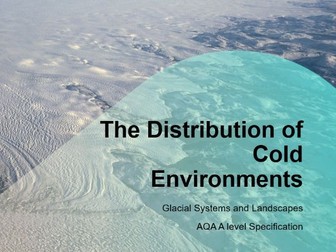
AQA A-Level Geography Glaciers: L2 Distribution of Cold EnvironmentsQuick View
cameronpowell1102

AQA A-Level Geography Glaciers: L2 Distribution of Cold Environments

(0)
AQA A-Level Geography 7037 Glacial Systems and Landscapes lesson 2 of 19, The Distribution of Cold Environments Includes 1 lesson PowerPoint and 1 ‘notes for teachers’ guide. Lesson explores where cold environments are distributed around the globe and the climatological reasons for their distribution. There is opportunity to research the locations, processes and feedback loops operating in each landscape; an activity focused on Svalbard; and an extension task looking at the Köppen Climate Classification system. Time to Complete: 1 - 2 Hours The ‘notes for teachers’ guide contains information regarding the lesson, but also provides a preview for all other lessons in the full set and any additional information or links that teachers may find useful. Information on the full set of lessons Lessons are highly detailed, include up-to-date case studies, high-resolution images, and author-own unique diagrams. Content follows the structure given by the AQA Scheme of Work, updated February 2025, following the specification in a logical order: the nature and distribution of cold environments; glacial systems and mass balance; the geomorphic processes and landscapes of glacial, fluvioglacial and periglacial environments; fragility and human impacts; and case studies of presently-glaciated, past-glaciated, and fragile cold environments. Each lesson begins in the same format: introductory slide and then the lesson ‘starter’ slide containing the title, objectives, key words and an invocative picture and question. Lessons are designed to invoke discussion, link to other areas of the specification, and provide a comprehensive resource for learning. The lessons run as follows: L1 – Glaciers and Cold Environments L2 – The Distribution of Cold Environments L3 – Characteristics of Cold Environments L4 – The Ice Age and Past Distribution of Cold Environments L5 – The Glacial System L6 – Glacier Mass Balance (includes additional worksheet) L7 – Historical Accumulation and Ablation Patterns L8 – Glacial Processes: Ice Movement L9 – Glacial Processes: Weathering, Erosion and Deposition L10 – Landscapes of Glacial Erosion (includes additional worksheet) L11 – Landscapes of Glacial Deposition L12 – Case Study 1: North Wales (Palaeo Glacial Systems) (includes 3 additional worksheets) L13 – Fluvioglacial Processes and Landscapes L14 – Case Study 2: Iceland (Contemporary Glacial Systems) (includes 2 additional worksheets) L15 – Periglacial Processes and Landscapes L16 – Human Impacts on Cold Environments – Local L17 – Human Impacts on Cold Environments – Climate Change L18 – Management of Cold Environments (includes additional worksheet) L19 – Case Study 3: The Arctic (Contrasting Glaciated Landscape) I am happy to answer any questions you may have or to preview the slides prior to purchase. Please contact me at cameronpowell1102@gmail.com
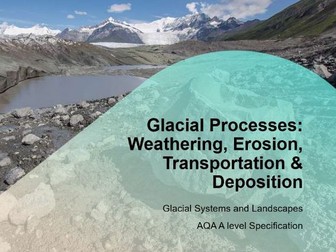
AQA A-Level Geography Glaciers: L9 Glacial Processes Weathering, Erosion, Transportation, DepositionQuick View
cameronpowell1102

AQA A-Level Geography Glaciers: L9 Glacial Processes Weathering, Erosion, Transportation, Deposition

(0)
AQA A-Level Geography 7037 Glacial Systems and Landscapes lesson 9 of 19, Glacial Geomorphological Processes: Weathering, Erosion, Transportation and Deposition Includes 1 lesson PowerPoint and 1 ‘notes for teachers’ guide. Lesson explores the processes of weathering, mass movement, erosion, transportation, and deposition in glacial environments and how they form characteristic glacial landscapes. Session includes many unique diagrams, pictures and annotations to help teach geomorphological processes. Learning works best when discussions are had surrounding the factors affecting each of the processes. Time to Complete: 1 Hour The ‘notes for teachers’ guide contains information regarding the lesson, but also provides a preview for all other lessons in the full set and any additional information or links that teachers may find useful. Information on the full set of lessons Lessons are highly detailed, include up-to-date case studies, high-resolution images, and author-own unique diagrams. Content follows the structure given by the AQA Scheme of Work, updated February 2025, following the specification in a logical order: the nature and distribution of cold environments; glacial systems and mass balance; the geomorphic processes and landscapes of glacial, fluvioglacial and periglacial environments; fragility and human impacts; and case studies of presently-glaciated, past-glaciated, and fragile cold environments. Each lesson begins in the same format: introductory slide and then the lesson ‘starter’ slide containing the title, objectives, key words and an invocative picture and question. Lessons are designed to invoke discussion, link to other areas of the specification, and provide a comprehensive resource for learning. The lessons run as follows: L1 – Glaciers and Cold Environments L2 – The Distribution of Cold Environments L3 – Characteristics of Cold Environments L4 – The Ice Age and Past Distribution of Cold Environments L5 – The Glacial System L6 – Glacier Mass Balance (includes additional worksheet) L7 – Historical Accumulation and Ablation Patterns L8 – Glacial Processes: Ice Movement L9 – Glacial Processes: Weathering, Erosion and Deposition L10 – Landscapes of Glacial Erosion (includes additional worksheet) L11 – Landscapes of Glacial Deposition L12 – Case Study 1: North Wales (Palaeo Glacial Systems) (includes 3 additional worksheets) L13 – Fluvioglacial Processes and Landscapes L14 – Case Study 2: Iceland (Contemporary Glacial Systems) (includes 2 additional worksheets) L15 – Periglacial Processes and Landscapes L16 – Human Impacts on Cold Environments – Local L17 – Human Impacts on Cold Environments – Climate Change L18 – Management of Cold Environments (includes additional worksheet) L19 – Case Study 3: The Arctic (Contrasting Glaciated Landscape) I am happy to answer any questions you may have or to preview the slides prior to purchase. Please contact me at cameronpowell1102@gmail.com
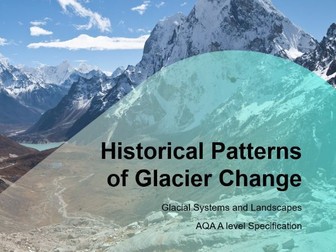
AQA A-Level Geography Glaciers: L7 Historical Patterns of ChangeQuick View
cameronpowell1102

AQA A-Level Geography Glaciers: L7 Historical Patterns of Change

(0)
AQA A-Level Geography 7037 Glacial Systems and Landscapes lesson 7 of 19, Historical Patterns of Glacier Change Includes 1 lesson PowerPoint and 1 ‘notes for teachers’ guide. Lesson returns to the Quaternary Ice Age, linking ice and climate. Patterns of glacial change in decreasing timescale are addressed using Mer de Glace as a research example. Changes from Quaternary scale, to stadial-interstadial, and small climatic events are investigated for their effect on glacial extent. The lesson works best when you link everything back to the glacial system and ideas of accumulation and ablation. Time to Complete: 1 Hour The ‘notes for teachers’ guide contains information regarding the lesson, but also provides a preview for all other lessons in the full set and any additional information or links that teachers may find useful. Information on the full set of lessons Lessons are highly detailed, include up-to-date case studies, high-resolution images, and author-own unique diagrams. Content follows the structure given by the AQA Scheme of Work, updated February 2025, following the specification in a logical order: the nature and distribution of cold environments; glacial systems and mass balance; the geomorphic processes and landscapes of glacial, fluvioglacial and periglacial environments; fragility and human impacts; and case studies of presently-glaciated, past-glaciated, and fragile cold environments. Each lesson begins in the same format: introductory slide and then the lesson ‘starter’ slide containing the title, objectives, key words and an invocative picture and question. Lessons are designed to invoke discussion, link to other areas of the specification, and provide a comprehensive resource for learning. The lessons run as follows: L1 – Glaciers and Cold Environments L2 – The Distribution of Cold Environments L3 – Characteristics of Cold Environments L4 – The Ice Age and Past Distribution of Cold Environments L5 – The Glacial System L6 – Glacier Mass Balance (includes additional worksheet) L7 – Historical Accumulation and Ablation Patterns L8 – Glacial Processes: Ice Movement L9 – Glacial Processes: Weathering, Erosion and Deposition L10 – Landscapes of Glacial Erosion (includes additional worksheet) L11 – Landscapes of Glacial Deposition L12 – Case Study 1: North Wales (Palaeo Glacial Systems) (includes 3 additional worksheets) L13 – Fluvioglacial Processes and Landscapes L14 – Case Study 2: Iceland (Contemporary Glacial Systems) (includes 2 additional worksheets) L15 – Periglacial Processes and Landscapes L16 – Human Impacts on Cold Environments – Local L17 – Human Impacts on Cold Environments – Climate Change L18 – Management of Cold Environments (includes additional worksheet) L19 – Case Study 3: The Arctic (Contrasting Glaciated Landscape) I am happy to answer any questions you may have or to preview the slides prior to purchase. Please contact me at cameronpowell1102@gmail.com
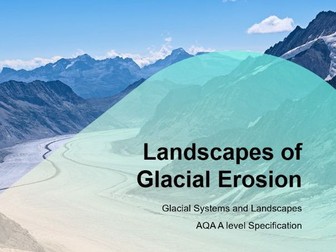
AQA A-Level Geography Glacier: L10 Erosional LandscapesQuick View
cameronpowell1102

AQA A-Level Geography Glacier: L10 Erosional Landscapes

(0)
AQA A-Level Geography 7037 Glacial Systems and Landscapes lesson 10 of 19, Landscapes of Glacial Erosion Includes 1 lesson PowerPoint, 1 worksheet, and 1 ‘notes for teachers’ guide. Lesson investigates the landforms of glacial erosion beginning with those at a macro-scale to those at a micro-scale, and how these landforms come together to form a landscape. Examples, from within and outside the UK are given to show these landforms and landscapes at different point in their development. Time to Complete: 2 - 3 Hours The ‘notes for teachers’ guide contains information regarding the lesson, but also provides a preview for all other lessons in the full set and any additional information or links that teachers may find useful. Information on the full set of lessons Lessons are highly detailed, include up-to-date case studies, high-resolution images, and author-own unique diagrams. Content follows the structure given by the AQA Scheme of Work, updated February 2025, following the specification in a logical order: the nature and distribution of cold environments; glacial systems and mass balance; the geomorphic processes and landscapes of glacial, fluvioglacial and periglacial environments; fragility and human impacts; and case studies of presently-glaciated, past-glaciated, and fragile cold environments. Each lesson begins in the same format: introductory slide and then the lesson ‘starter’ slide containing the title, objectives, key words and an invocative picture and question. Lessons are designed to invoke discussion, link to other areas of the specification, and provide a comprehensive resource for learning. The lessons run as follows: L1 – Glaciers and Cold Environments L2 – The Distribution of Cold Environments L3 – Characteristics of Cold Environments L4 – The Ice Age and Past Distribution of Cold Environments L5 – The Glacial System L6 – Glacier Mass Balance (includes additional worksheet) L7 – Historical Accumulation and Ablation Patterns L8 – Glacial Processes: Ice Movement L9 – Glacial Processes: Weathering, Erosion and Deposition L10 – Landscapes of Glacial Erosion (includes additional worksheet) L11 – Landscapes of Glacial Deposition L12 – Case Study 1: North Wales (Palaeo Glacial Systems) (includes 3 additional worksheets) L13 – Fluvioglacial Processes and Landscapes L14 – Case Study 2: Iceland (Contemporary Glacial Systems) (includes 2 additional worksheets) L15 – Periglacial Processes and Landscapes L16 – Human Impacts on Cold Environments – Local L17 – Human Impacts on Cold Environments – Climate Change L18 – Management of Cold Environments (includes additional worksheet) L19 – Case Study 3: The Arctic (Contrasting Glaciated Landscape) I am happy to answer any questions you may have or to preview the slides prior to purchase. Please contact me at cameronpowell1102@gmail.com
AQA A-Level Geography Glaciers: L11 Depositional LandscapesQuick View
cameronpowell1102

AQA A-Level Geography Glaciers: L11 Depositional Landscapes

(0)
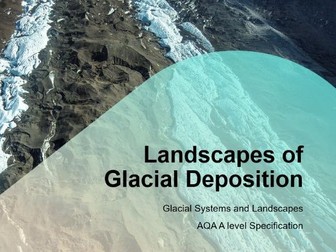
AQA A-Level Geography 7037 Glacial Systems and Landscapes lesson 11 of 19, Landscapes of Glacial Deposition Includes 1 lesson PowerPoint and 1 ‘notes for teachers’ guide. Lesson discusses the ice-marginal and subglacial depositional landforms. There-after, content focuses on glacial sediments and their characterisitcs. Detailed discussions are included alongside activities both within and outside the presentation. Time to Complete: 2 - 3 Hours The ‘notes for teachers’ guide contains information regarding the lesson, but also provides a preview for all other lessons in the full set and any additional information or links that teachers may find useful. Information on the full set of lessons Lessons are highly detailed, include up-to-date case studies, high-resolution images, and author-own unique diagrams. Content follows the structure given by the AQA Scheme of Work, updated February 2025, following the specification in a logical order: the nature and distribution of cold environments; glacial systems and mass balance; the geomorphic processes and landscapes of glacial, fluvioglacial and periglacial environments; fragility and human impacts; and case studies of presently-glaciated, past-glaciated, and fragile cold environments. Each lesson begins in the same format: introductory slide and then the lesson ‘starter’ slide containing the title, objectives, key words and an invocative picture and question. Lessons are designed to invoke discussion, link to other areas of the specification, and provide a comprehensive resource for learning. The lessons run as follows: L1 – Glaciers and Cold Environments L2 – The Distribution of Cold Environments L3 – Characteristics of Cold Environments L4 – The Ice Age and Past Distribution of Cold Environments L5 – The Glacial System L6 – Glacier Mass Balance (includes additional worksheet) L7 – Historical Accumulation and Ablation Patterns L8 – Glacial Processes: Ice Movement L9 – Glacial Processes: Weathering, Erosion and Deposition L10 – Landscapes of Glacial Erosion (includes additional worksheet) L11 – Landscapes of Glacial Deposition L12 – Case Study 1: North Wales (Palaeo Glacial Systems) (includes 3 additional worksheets) L13 – Fluvioglacial Processes and Landscapes L14 – Case Study 2: Iceland (Contemporary Glacial Systems) (includes 2 additional worksheets) L15 – Periglacial Processes and Landscapes L16 – Human Impacts on Cold Environments – Local L17 – Human Impacts on Cold Environments – Climate Change L18 – Management of Cold Environments (includes additional worksheet) L19 – Case Study 3: The Arctic (Contrasting Glaciated Landscape) I am happy to answer any questions you may have or to preview the slides prior to purchase. Please contact me at cameronpowell1102@gmail.com
AQA A-Level Geography Glaciers: L13 Fluvioglacial LandscapesQuick View
cameronpowell1102

AQA A-Level Geography Glaciers: L13 Fluvioglacial Landscapes

(0)
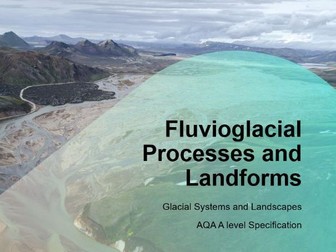
AQA A-Level Geography 7037 Glacial Systems and Landscapes lesson 13 of 19, Fluvioglacial Processes and Landscapes Includes 1 lesson PowerPoint and 1 ‘notes for teachers’ guide. Lesson investigates the processes and landforms (ice-contact to proglacial) created by glacial meltwater using both UK and global examples. Similar to other lessons on glaciated landscapes, each landform is addressed in turn, with discussions on each. Landforms are taught from ice-proximal to ice-distal, as if you were moving away from the glacier front, much like the movement of meltwater. Both UK and global examples are given in the table on the final slide. Time to Complete: 2 Hours The ‘notes for teachers’ guide contains information regarding the lesson, but also provides a preview for all other lessons in the full set and any additional information or links that teachers may find useful. Information on the full set of lessons Lessons are highly detailed, include up-to-date case studies, high-resolution images, and author-own unique diagrams. Content follows the structure given by the AQA Scheme of Work, updated February 2025, following the specification in a logical order: the nature and distribution of cold environments; glacial systems and mass balance; the geomorphic processes and landscapes of glacial, fluvioglacial and periglacial environments; fragility and human impacts; and case studies of presently-glaciated, past-glaciated, and fragile cold environments. Each lesson begins in the same format: introductory slide and then the lesson ‘starter’ slide containing the title, objectives, key words and an invocative picture and question. Lessons are designed to invoke discussion, link to other areas of the specification, and provide a comprehensive resource for learning. The lessons run as follows: L1 – Glaciers and Cold Environments L2 – The Distribution of Cold Environments L3 – Characteristics of Cold Environments L4 – The Ice Age and Past Distribution of Cold Environments L5 – The Glacial System L6 – Glacier Mass Balance (includes additional worksheet) L7 – Historical Accumulation and Ablation Patterns L8 – Glacial Processes: Ice Movement L9 – Glacial Processes: Weathering, Erosion and Deposition L10 – Landscapes of Glacial Erosion (includes additional worksheet) L11 – Landscapes of Glacial Deposition L12 – Case Study 1: North Wales (Palaeo Glacial Systems) (includes 3 additional worksheets) L13 – Fluvioglacial Processes and Landscapes L14 – Case Study 2: Iceland (Contemporary Glacial Systems) (includes 2 additional worksheets) L15 – Periglacial Processes and Landscapes L16 – Human Impacts on Cold Environments – Local L17 – Human Impacts on Cold Environments – Climate Change L18 – Management of Cold Environments (includes additional worksheet) L19 – Case Study 3: The Arctic (Contrasting Glaciated Landscape) I am happy to answer any questions you may have or to preview the slides prior to purchase. Please contact me at cameronpowell1102@gmail.com
AQA A-Level Geography Glaciers: L8 Glacial Processes Ice MovementQuick View
cameronpowell1102

AQA A-Level Geography Glaciers: L8 Glacial Processes Ice Movement

(0)
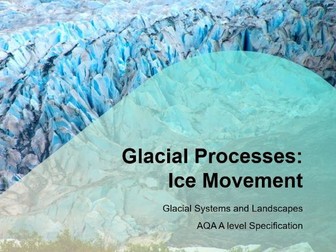
AQA A-Level Geography 7037 Glacial Systems and Landscapes lesson 8 of 19, Glacial Processes Ice Movement Includes 1 lesson PowerPoint and 1 ‘notes for teachers’ guide. Over two sessions, glacial processes are uncovered. This lesson addresses warm- and cold-based and polythermal glaciers, before investigating the mechanisms of ice movement. Importantly, this lesson extends from the specification to address all three mechanisms of ice movement, the characteristics of ice flow (crevassing; extensional, compressional and rotational flow), and provides additional information on ogives and glacier surging. Time to Complete: 2 Hours The ‘notes for teachers’ guide contains information regarding the lesson, but also provides a preview for all other lessons in the full set and any additional information or links that teachers may find useful. Information on the full set of lessons Lessons are highly detailed, include up-to-date case studies, high-resolution images, and author-own unique diagrams. Content follows the structure given by the AQA Scheme of Work, updated February 2025, following the specification in a logical order: the nature and distribution of cold environments; glacial systems and mass balance; the geomorphic processes and landscapes of glacial, fluvioglacial and periglacial environments; fragility and human impacts; and case studies of presently-glaciated, past-glaciated, and fragile cold environments. Each lesson begins in the same format: introductory slide and then the lesson ‘starter’ slide containing the title, objectives, key words and an invocative picture and question. Lessons are designed to invoke discussion, link to other areas of the specification, and provide a comprehensive resource for learning. The lessons run as follows: L1 – Glaciers and Cold Environments L2 – The Distribution of Cold Environments L3 – Characteristics of Cold Environments L4 – The Ice Age and Past Distribution of Cold Environments L5 – The Glacial System L6 – Glacier Mass Balance (includes additional worksheet) L7 – Historical Accumulation and Ablation Patterns L8 – Glacial Processes: Ice Movement L9 – Glacial Processes: Weathering, Erosion and Deposition L10 – Landscapes of Glacial Erosion (includes additional worksheet) L11 – Landscapes of Glacial Deposition L12 – Case Study 1: North Wales (Palaeo Glacial Systems) (includes 3 additional worksheets) L13 – Fluvioglacial Processes and Landscapes L14 – Case Study 2: Iceland (Contemporary Glacial Systems) (includes 2 additional worksheets) L15 – Periglacial Processes and Landscapes L16 – Human Impacts on Cold Environments – Local L17 – Human Impacts on Cold Environments – Climate Change L18 – Management of Cold Environments (includes additional worksheet) L19 – Case Study 3: The Arctic (Contrasting Glaciated Landscape) I am happy to answer any questions you may have or to preview the slides prior to purchase. Please contact me at cameronpowell1102@gmail.com
AQA A-Level Geography Glaciers: L6 Glacier Mass BalanceQuick View
cameronpowell1102

AQA A-Level Geography Glaciers: L6 Glacier Mass Balance

(0)
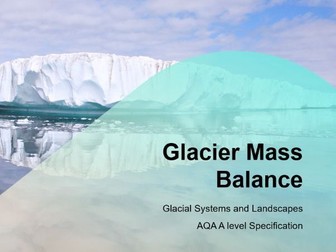
AQA A-Level Geography 7037 Glacial Systems and Landscapes lesson 6 of 19, Glacier Mass Balance Includes 1 lesson PowerPoint, 1 worksheet, and 1 ‘notes for teachers’ guide. Lesson explores how glaciers and glacial ice form, answering the question why is glacial ice blue? Then looks at mass balance and the glacial budget, from a visual perspective. Opportunities are given to use Spearman’s rank correlation coefficient (activity sheet provided), and to extend the theory by exploring how mass balance is calculated with a real-world example. Time to Complete: 1 - 2 Hours The ‘notes for teachers’ guide contains information regarding the lesson, but also provides a preview for all other lessons in the full set and any additional information or links that teachers may find useful. Information on the full set of lessons Lessons are highly detailed, include up-to-date case studies, high-resolution images, and author-own unique diagrams. Content follows the structure given by the AQA Scheme of Work, updated February 2025, following the specification in a logical order: the nature and distribution of cold environments; glacial systems and mass balance; the geomorphic processes and landscapes of glacial, fluvioglacial and periglacial environments; fragility and human impacts; and case studies of presently-glaciated, past-glaciated, and fragile cold environments. Each lesson begins in the same format: introductory slide and then the lesson ‘starter’ slide containing the title, objectives, key words and an invocative picture and question. Lessons are designed to invoke discussion, link to other areas of the specification, and provide a comprehensive resource for learning. The lessons run as follows: L1 – Glaciers and Cold Environments L2 – The Distribution of Cold Environments L3 – Characteristics of Cold Environments L4 – The Ice Age and Past Distribution of Cold Environments L5 – The Glacial System L6 – Glacier Mass Balance (includes additional worksheet) L7 – Historical Accumulation and Ablation Patterns L8 – Glacial Processes: Ice Movement L9 – Glacial Processes: Weathering, Erosion and Deposition L10 – Landscapes of Glacial Erosion (includes additional worksheet) L11 – Landscapes of Glacial Deposition L12 – Case Study 1: North Wales (Palaeo Glacial Systems) (includes 3 additional worksheets) L13 – Fluvioglacial Processes and Landscapes L14 – Case Study 2: Iceland (Contemporary Glacial Systems) (includes 2 additional worksheets) L15 – Periglacial Processes and Landscapes L16 – Human Impacts on Cold Environments – Local L17 – Human Impacts on Cold Environments – Climate Change L18 – Management of Cold Environments (includes additional worksheet) L19 – Case Study 3: The Arctic (Contrasting Glaciated Landscape) I am happy to answer any questions you may have or to preview the slides prior to purchase. Please contact me at cameronpowell1102@gmail.com
AQA A-Level Geography Glaciers: L17 Climate ChangeQuick View
cameronpowell1102

AQA A-Level Geography Glaciers: L17 Climate Change

(0)
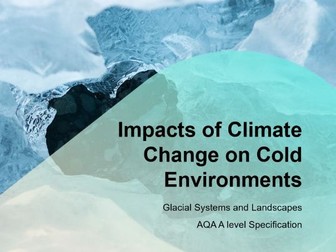
AQA A-Level Geography 7037 Glacial Systems and Landscapes lesson 17 of 19, Impacts of Climate Change on Cold Environments Includes 1 lesson PowerPoint and 1 ‘notes for teachers’ guide. Lesson approaches climate change by addressing the observed impacts on each area of the cryosphere before focusing on the future projected impacts. This lesson is structured around a discussion on climate change and is best taught with time for thought and peer discussion. Climate change is defined and resources provided to prove its anthropogenic nature. Time to Complete: 1 - 2 Hours The ‘notes for teachers’ guide contains information regarding the lesson, but also provides a preview for all other lessons in the full set and any additional information or links that teachers may find useful. Information on the full set of lessons Lessons are highly detailed, include up-to-date case studies, high-resolution images, and author-own unique diagrams. Content follows the structure given by the AQA Scheme of Work, updated February 2025, following the specification in a logical order: the nature and distribution of cold environments; glacial systems and mass balance; the geomorphic processes and landscapes of glacial, fluvioglacial and periglacial environments; fragility and human impacts; and case studies of presently-glaciated, past-glaciated, and fragile cold environments. Each lesson begins in the same format: introductory slide and then the lesson ‘starter’ slide containing the title, objectives, key words and an invocative picture and question. Lessons are designed to invoke discussion, link to other areas of the specification, and provide a comprehensive resource for learning. The lessons run as follows: L1 – Glaciers and Cold Environments L2 – The Distribution of Cold Environments L3 – Characteristics of Cold Environments L4 – The Ice Age and Past Distribution of Cold Environments L5 – The Glacial System L6 – Glacier Mass Balance (includes additional worksheet) L7 – Historical Accumulation and Ablation Patterns L8 – Glacial Processes: Ice Movement L9 – Glacial Processes: Weathering, Erosion and Deposition L10 – Landscapes of Glacial Erosion (includes additional worksheet) L11 – Landscapes of Glacial Deposition L12 – Case Study 1: North Wales (Palaeo Glacial Systems) (includes 3 additional worksheets) L13 – Fluvioglacial Processes and Landscapes L14 – Case Study 2: Iceland (Contemporary Glacial Systems) (includes 2 additional worksheets) L15 – Periglacial Processes and Landscapes L16 – Human Impacts on Cold Environments – Local L17 – Human Impacts on Cold Environments – Climate Change L18 – Management of Cold Environments (includes additional worksheet) L19 – Case Study 3: The Arctic (Contrasting Glaciated Landscape) I am happy to answer any questions you may have or to preview the slides prior to purchase. Please contact me at cameronpowell1102@gmail.com
AQA A-Level Geography Glaciers: L16 Local Human ImpactsQuick View
cameronpowell1102

AQA A-Level Geography Glaciers: L16 Local Human Impacts

(0)
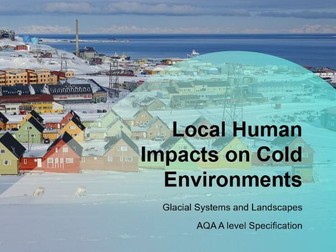
AQA A-Level Geography 7037 Glacial Systems and Landscapes lesson 16 of 19, Local Human Impacts on Cold Environments Includes 1 lesson PowerPoint and 1 ‘notes for teachers’ guide. Lesson first addresses the fragility of cold environments before focusing on opportunities, hazards, and impacts humans have on current and palaeo cold environments. Time to Complete: 2 Hours The ‘notes for teachers’ guide contains information regarding the lesson, but also provides a preview for all other lessons in the full set and any additional information or links that teachers may find useful. Information on the full set of lessons Lessons are highly detailed, include up-to-date case studies, high-resolution images, and author-own unique diagrams. Content follows the structure given by the AQA Scheme of Work, updated February 2025, following the specification in a logical order: the nature and distribution of cold environments; glacial systems and mass balance; the geomorphic processes and landscapes of glacial, fluvioglacial and periglacial environments; fragility and human impacts; and case studies of presently-glaciated, past-glaciated, and fragile cold environments. Each lesson begins in the same format: introductory slide and then the lesson ‘starter’ slide containing the title, objectives, key words and an invocative picture and question. Lessons are designed to invoke discussion, link to other areas of the specification, and provide a comprehensive resource for learning. The lessons run as follows: L1 – Glaciers and Cold Environments L2 – The Distribution of Cold Environments L3 – Characteristics of Cold Environments L4 – The Ice Age and Past Distribution of Cold Environments L5 – The Glacial System L6 – Glacier Mass Balance (includes additional worksheet) L7 – Historical Accumulation and Ablation Patterns L8 – Glacial Processes: Ice Movement L9 – Glacial Processes: Weathering, Erosion and Deposition L10 – Landscapes of Glacial Erosion (includes additional worksheet) L11 – Landscapes of Glacial Deposition L12 – Case Study 1: North Wales (Palaeo Glacial Systems) (includes 3 additional worksheets) L13 – Fluvioglacial Processes and Landscapes L14 – Case Study 2: Iceland (Contemporary Glacial Systems) (includes 2 additional worksheets) L15 – Periglacial Processes and Landscapes L16 – Human Impacts on Cold Environments – Local L17 – Human Impacts on Cold Environments – Climate Change L18 – Management of Cold Environments (includes additional worksheet) L19 – Case Study 3: The Arctic (Contrasting Glaciated Landscape) I am happy to answer any questions you may have or to preview the slides prior to purchase. Please contact me at cameronpowell1102@gmail.com