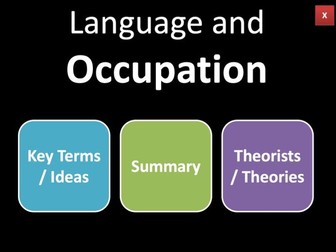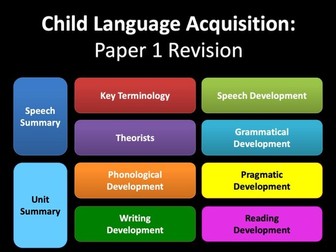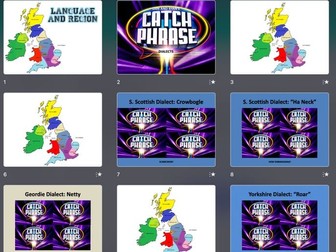
Interactive PowerPoint resource for Child Language Acquisition.
Includes subpages for theorists, key learning points, terminology and different sections of development.
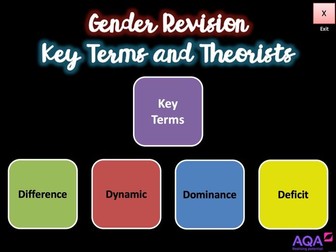
Interactive PowerPoint resource for Language & Gender.
Includes subpages for theorists grouped in difference, dynamic, dominance and deficit models.
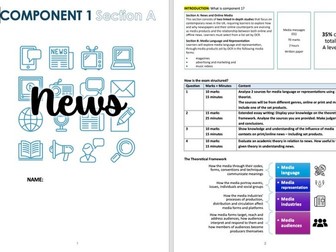
Scheme of work booklet for Paper 1 Section A of OCR Media Studies: Newspapers Case Study. Focusing on Daily Mail and The Guardian.
Exam practice questions included throughout with an exam walkthrough section including question plans and exemplar answers at the end of the booklet.
Big question focus includes:
What is component 1?
What are the differences between tabloids and broadsheets?
What is the purpose of newspapers?
How is the newspaper industry structured?
How are news values represented?
How are print newspaper audiences targeted?
How do newspapers utilise media language?
How do newspapers incorporate viewpoints and ideologies?
What is online news?
How are online audiences reached?
How is media language used in online news?
How does online news construct representations?
Can I apply knowledge to a specific newspaper case study?
COMPARING COVERS - Examples for revision
What does Paper 1 look like?
What is Question 1?
What is Question 2?
What is Question 3?
What is Question 4?
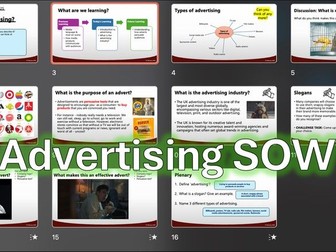
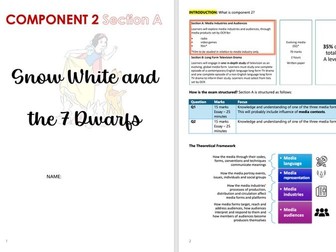
Ideal for Key Stage 3 Media Studies, or as a GCSE case study. A six lesson unit based around advertising in media. Could be used alongside English lessons to aid in persuasive writing and understanding rhetoric devices.
Lessons include:
What is advertising?
How do adverts persuade?
What is celebrity endorsement?
What is a target audience?
Can I analyse an advert?
How do I create an effective advert?
Lessons feature big question and do now activity to start, along with sections of explicit teaching and a range of practical tasks.
Assessment at the end of the unit includes task around designing a print advert utilising skills and knowledge gained from the topic.
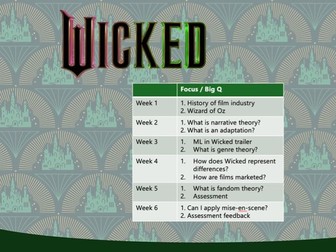
Ideal for Key Stage 3 Media Studies, or could be used as a GCSE case study. A 14 lesson unit based around the film of Wicked. Lessons feature big questions, do now activities and a range of tasks.
Links to GCSE Media Studies theories integrated throughout to aid knowledge of academic theory as well as media theoretical framework.
Lessons include:
Understanding history of cinema and conglomerates
Exploring the Wizard of Oz as a film using technicolour
Learning about narrative theory
Investigating movie adaptations in preparation for introducing Wicked
Media language in the Wicked trailer
Learning about genre theory
considering representation of differences in a clip from Wicked
How are films marketed?
learning about fandom theory
Assessment lesson - writing an analysis of another Wicked trailer - model answer included
Applying mise-en-scene understanding to a costume or set design
Assessment feedback lesson with designated improvement tasks
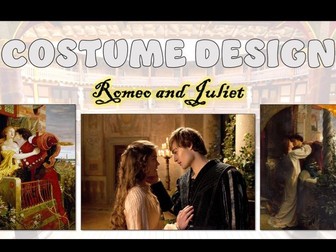
Key stage 3 Drama costume design unit, focused on Romeo & Juliet as a case study.
6 lessons, includes:
Exploring scene & costumes
Examining interpretations & creating own
Exploring & researching time period
Devising a mood board
Creating designs
Presenting work
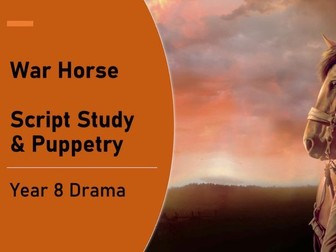
Scheme of work based around puppetry & staging War Horse the play. 6 lessons based on practical exploration with various tasks around constructing puppets and using them in a scene
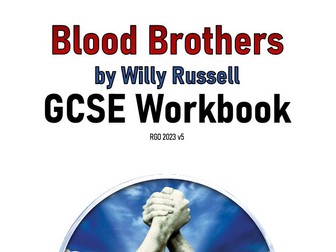
Blood Brothers set text workbook for GCSE Drama - tailored to OCR exam board. Includes performance and design tasks as well as practice exam questions.