

 Quick ViewQuick View
 Quick View
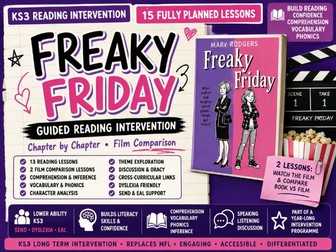
Freaky Friday Guided Reading Intervention
A complete 15-lesson guided reading intervention based on the novel Freaky Friday, designed specifically for lower ability KS3 learners, including pupils with SEND, dyslexia and EAL needs. This structured literacy intervention develops reading fluency, comprehension, phonics awareness, vocabulary, inference, discussion skills and confidence through accessible, engaging lessons linked to the text and film adaptation.
This intervention forms part of a wider long-term literacy and dyslexia support programme and is suitable for use as a replacement curriculum pathway for Modern Foreign Languages (MFL) studies. The resource has been carefully designed for learners who require additional support with reading age, processing, decoding, comprehension and written responses, whilst still accessing age-appropriate themes and discussions.
Lessons explore themes including identity, family relationships, sibling rivalry, prejudice, responsibility, empathy and self-awareness. Activities are varied and engaging, helping reluctant readers develop confidence whilst building core literacy skills. The intervention also introduces wider cultural and social topics through accessible discussion tasks, including budgeting, civil rights and stereotypes.
The lessons are highly scaffolded and designed to reduce cognitive overload through repetition, routine, visual prompts and structured comprehension practice. The combination of reading and film comparison tasks helps learners develop engagement, sequencing skills, prediction and deeper understanding of narrative structure.
The resource is ideal for:
Intervention groups
SEND literacy support
Dyslexia intervention
EAL learners
Alternative curriculum pathways
Small group guided reading
Nurture provision
SEMH literacy support
Reading age recovery programmes
Functional literacy development
 Quick View
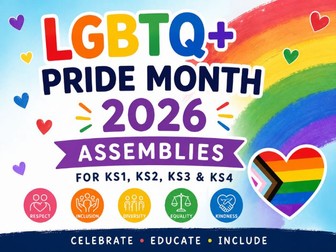
LGBTQ+ Pride Month 2026 Assemblies
A complete set of age-appropriate LGBTQ+ Pride Month 2026 assemblies for KS1, KS2, KS3 and KS4. This comprehensive resource has been carefully designed to promote inclusion, equality, diversity and respectful behaviour through engaging and educational assemblies tailored to the developmental stage of each key stage.
The pack includes four fully written assemblies with detailed slide content and teacher notes throughout. Each assembly has been differentiated to ensure appropriate language, depth and discussion points for primary and secondary learners, allowing schools to approach Pride Month in a thoughtful, balanced and safeguarding-aware way.
The KS1 assembly focuses on kindness, belonging, different families and celebrating differences in a warm and accessible way suitable for younger pupils. The KS2 assembly introduces pupils to LGBTQ+ terminology, the meaning of Pride Month, equality and inclusion, alongside simple historical context and discussions around respectful behaviour and anti-bullying.
The KS3 assembly explores Pride in greater depth, including LGBTQ+ rights, the Stonewall protests, representation, allyship, respectful language, social media, mental health and inclusion within modern society. Students are encouraged to think critically about fairness, representation and respectful communities through structured reflection and discussion activities.
The KS4 assembly provides a mature and balanced exploration of Pride, rights and contemporary society. Topics include historical discrimination, the Equality Act 2010, media representation, intersectionality, global LGBTQ+ rights, respectful debate, social movements, online culture, mental health and safeguarding. The assembly encourages thoughtful reflection, critical thinking and respectful discussion while reinforcing school expectations around behaviour, inclusion and dignity for all.
Throughout the resource, there is a strong focus on safeguarding, British values, equality, respectful communication and creating inclusive school environments. The assemblies are ideal for whole-school delivery, tutor time, PSHE, citizenship, diversity education and anti-bullying work during Pride Month 2026 or wider equality and inclusion topics across the academic year.
This resource is professionally written in a school-ready format and is suitable for primary schools, secondary schools, pastoral leaders, PSHE coordinators, equality leads and senior leadership teams looking for high-quality, age-appropriate Pride Month assembly materials.
 Quick View
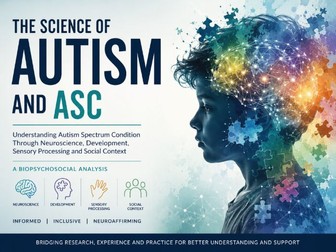
The Science of Autism and ASC
A comprehensive, research-informed exploration of Autism Spectrum Condition (ASC), designed for teachers, SENCOs, trainee educators, support staff, leaders, therapists and professionals working with children and young people. This resource moves far beyond simplistic descriptions of autism and instead examines ASC through a biopsychosocial lens, integrating neuroscience, psychology, sensory processing, development, trauma, attachment and lived experience.
Written to a high academic and professional standard, this paper critically explores autism as a complex neurodevelopmental difference rather than a purely deficit-based disorder. It challenges outdated assumptions and provides a nuanced understanding of how autistic individuals experience communication, sensory input, relationships, education and wider society.
Unlike many autism resources, this document avoids overly simplistic “traits lists” and instead explores the deeper mechanisms, experiences and systemic factors that shape autistic lives. It critically examines current diagnostic systems, challenges assumptions around behaviour and communication, and promotes a more humane, informed and inclusive understanding of autism.
Topics explored include:
Neurobiological foundations of autism
Brain development, connectivity and sensory processing
Executive functioning and predictive processing
Early developmental presentation and subtle indicators
Differences in presentation across gender
Masking and camouflaging
Social communication and the double empathy problem
Autism, trauma and attachment
Environmental influence and social conditioning
Intersectionality, inequality and barriers to diagnosis
Implications for education, healthcare and workplace practice
Inclusive and neuroaffirming approaches
 Quick View
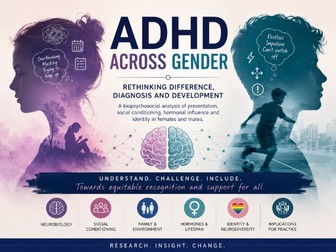
ADHD Gender Differences Research Resource
A comprehensive ADHD resource exploring gender differences, female presentation, masking, social conditioning and hormonal influences. Ideal for psychology, health and social care, and teacher training.
This high-level academic resource is based on a full research paper examining ADHD across gender through a biopsychosocial lens. It is designed to support teaching, professional development and advanced study, particularly within further education, adult learning and teacher training contexts.
The resource includes:
A full-length, structured research paper (approx. 10,000 words)
In-depth analysis of ADHD presentation in males vs females
Exploration of masking, internalising symptoms and diagnostic bias
Sections on social conditioning, family expectations and education systems
Detailed consideration of hormonal influences across the lifespan
Inclusion of sexuality, gender identity and intersectionality perspectives
Implications for practice across education, healthcare and workplace settings
Academic glossary to support understanding of key terminology
 Quick View
Holocaust Memorial Day Assembly Pack
A complete set of Holocaust Memorial Day assemblies for Primary, Lower Secondary and Upper Secondary learners, fully aligned with the 2026 theme Bridging Generations. These ready-to-use PowerPoints provide age-appropriate explanations, clear historical context and structured reflection opportunities to support remembrance and understanding. Ideal for whole-school assemblies, tutor time or PSHE.
Each presentation offers comprehensive, fully written slide text so staff can deliver confidently without additional planning. The assemblies explore key ideas including prejudice, discrimination, how the Holocaust unfolded, and why remembrance remains essential as survivor numbers decline. The theme of Bridging Generations is woven throughout, helping pupils understand their role in carrying forward memory, promoting respect and building inclusive communities.
The Primary assembly introduces the Holocaust sensitively, focusing on kindness, fairness and stories of courage, supported by clear explanations about Jewish communities and the importance of choosing respect.
The Lower Secondary assembly provides structured historical context, survivor perspectives and reflective links to modern responsibility and inclusion.
The Upper Secondary assembly delivers a more analytical exploration of genocide, propaganda, human rights and the enduring significance of memory, asking students to consider their part in confronting prejudice today.
This pack is suitable for schools seeking a high-quality, professionally written resource that supports thoughtful, meaningful commemoration across age groups while meeting curriculum and pastoral needs.
undefined
 Quick View
LGBT+ Inclusion & School Staff Training
A complete LGBT+ inclusion, safeguarding and responsive practice training package for schools, including a full CPD programme and staff workbook.
This comprehensive resource provides everything schools need to deliver high-quality, legally compliant training on LGBT+ inclusion and responsive practice. It includes a fully developed 50-slide training programme with detailed standalone content, and a complete staff workbook designed for individual, team or whole-school use. The training aligns with current UK law, the Equality Act 2010, PSED, Keeping Children Safe in Education, RSHE guidance and Ofsted expectations.
The pack supports staff in developing confidence, consistent language and strong pastoral and safeguarding responses. It covers identity development, inclusive practice, curriculum representation, nurture principles, trauma-informed approaches and responding to discriminatory behaviour. Clear explanations, practical strategies, case studies and reflective tasks help staff understand their responsibilities and apply them effectively.
The accompanying workbook provides concise summaries, reflection prompts and space for notes, making it suitable as a CPD take-away resource. Staff can use it to deepen understanding, record actions and strengthen practice across the school. This training ensures a coherent, whole-school approach to creating safe, respectful, inclusive learning environments for all pupils, including those who are LGBT+ or questioning their identity.
 Quick View
Football Skills & Writing Workbook
A complete football-themed workbook that develops writing skills, confidence and resilience through stories, player profiles and creative activities. Suitable for KS2–KS3.
This 40-page resource uses football to engage learners who benefit from high-interest, structured tasks. Its purpose is to build stronger writing skills, support personal reflection and help pupils recognise their strengths through relatable scenarios. Activities guide pupils to explore identity, teamwork, goal-setting and handling challenges while practising clear, confident writing.
The workbook includes identity tasks, player spotlights, reading comprehension activities, creative writing prompts, match reports, kit and boot design challenges and end-of-unit reflection pages. It is designed to support literacy, motivation and self-belief in a format that feels accessible and enjoyable for reluctant or lower-confidence writers.
Ideal for use in class, small-group interventions, mentoring sessions or independent work. No preparation is required.
 Quick View
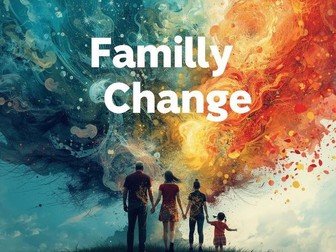
Family Change Intervention Pack: 6-Session Programme
A complete six-session intervention for supporting children through family change, with an editable workbook, practitioner guide and printable resources.
This comprehensive intervention pack has been designed for ELSAs, HLTAs, pastoral staff, counsellors and inclusion teams supporting children experiencing family change, separation, divorce or blended family transitions. The full programme spans six structured sessions and provides everything needed to deliver the intervention with confidence, consistency and sensitivity.
The pack includes a fully editable student workbook, detailed practitioner guidance, formatted worksheets and a complete suite of supporting resources. All materials use a neutral, accessible tone suitable for children aged 7 to 14, and have been created with clarity, emotional safety and best practice in mind.
What’s included in the pack:
Complete 6-session intervention plan
Practitioner guidance for delivery, pacing and emotional safety
Fully editable student workbook (A4), organised by session
17 worksheets with structured prompts
Printable resources
Reflection and future-thinking activities
Feelings, strengths, coping and belonging tasks
Editable resource sheets and structured writing pages
Progress and review prompts for pupils
Clear, calm visual layouts designed for school use
All files supplied in editable formats for easy adaptation
 Quick View
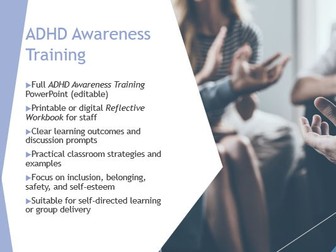
ADHD Awareness CPD Training & Workbook
A complete ADHD Awareness CPD package with an editable training presentation and reflective workbook for teachers and support staff.
This resource provides everything needed to deliver an engaging and informative ADHD awareness session for school staff. It is suitable for whole-school CPD, departmental meetings, or self-directed professional learning. The PowerPoint presentation explores what ADHD is, how it presents differently in children and young people, and how it can affect learning, behaviour, and wellbeing. The accompanying workbook encourages staff to reflect on their own practice, make notes, and plan practical changes to support pupils effectively.
The training includes clear explanations, reflection prompts, and examples of classroom strategies that promote focus, belonging, and emotional safety. It also explores the importance of self-esteem and reasonable adjustments under the SEND Code of Practice. Designed to last around 45–60 minutes, the session can be adapted for shorter or longer formats and delivered by SENCOs, pastoral leads, or classroom practitioners.
By completing the training, staff will gain a deeper understanding of ADHD as a neurodevelopmental condition rather than a behaviour issue. They will learn to recognise symptoms, apply inclusive strategies, and reflect on how small adjustments can make a significant difference to pupil engagement and wellbeing.
Both the PowerPoint and workbook are fully editable, making it easy to adapt the content for different settings, age groups, or staff needs. This resource is ideal for schools looking to strengthen inclusive practice, build confidence among staff, and create a supportive learning environment for all pupils.
 Quick View
A–Z of Wellbeing for Teens Workbook
A complete A–Z of Wellbeing workbook for teens. Packed with reflections, creative tasks and positive psychology activities to build confidence and resilience.
The A–Z of Wellbeing is a beautifully written and practical workbook designed to help young people understand, reflect on and improve their mental wellbeing. Covering 26 key topics from Affirmations and Body Image to Resilience, Self-Esteem, and ZZZs (Sleep), this resource supports emotional literacy, confidence, and positive mental health in an accessible, age-appropriate way.
Each section includes clear, supportive information, reflective prompts, and creative activities such as journaling, drawing, and self-assessment tasks. It can be completed independently by students or used by teachers, tutors, or counsellors as part of PSHE, wellbeing, or pastoral sessions.
The workbook encourages young people to:
Explore thoughts and feelings in a safe, structured way
Develop self-awareness, empathy, and resilience
Build practical coping skills for everyday challenges
Recognise the importance of balance, rest, and self-care
The tone is calm, inclusive, and supportive — ideal for use in secondary schools, colleges, youth settings, or mental health workshops.
Perfect for:
PSHE and wellbeing lessons
Tutor time or pastoral programmes
School counsellors and mentors
Youth groups and community projects
Self-directed use for teenagers
Young people finish this workbook with a deeper understanding of themselves and a set of tools they can return to whenever life feels overwhelming. It’s not just a resource — it’s a wellbeing companion designed to build lifelong emotional awareness and confidence.