Factors and multiples, prime factorizationQuick View
sino2536

Factors and multiples, prime factorization

(0)
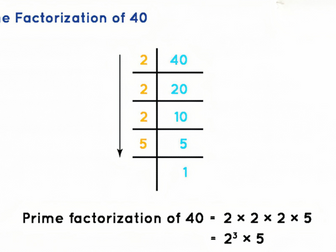
• Factors are smaller numbers that divide evenly into a larger number. • Prime numbers have only two factors: 1 and themselves. • Prime factorization is a way to break down a number into its prime factors by multiplying them together.
Order of operations (PEMDAS/BODMAS)Quick View
sino2536

Order of operations (PEMDAS/BODMAS)

(0)
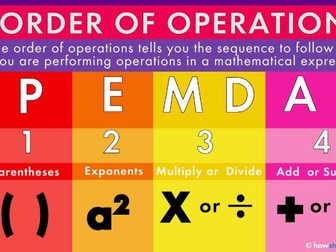
• PEMDAS is a rule that tells us the order to solve math problems with different operations like adding, subtracting, multiplying, and dividing. • PEMDAS stands for Parentheses, Exponents, Multiplication, Division, Addition, and Subtraction, and it helps us get the same answer even if we solve the problem in a different way. • PEMDAS is like a recipe for solving math problems and helps us avoid confusion and get the right answer. Note : Course include (Questions and Answers + Activities)
What is the difference between mass and weight?Quick View
sino2536

What is the difference between mass and weight?

(0)
• Mass is how much stuff is in an object, while weight is how hard gravity pulls on that object. • The same rock will have the same mass on Earth and the moon, but it will weigh less on the moon because the moon’s gravity is weaker. • Mass is measured in kilograms (kg) and weight is measured in Newtons (N). Note : Course include (Questions and Answers + Activities)
What are the main events of the American Revolution?Quick View
sino2536

What are the main events of the American Revolution?

(0)
The American Revolution was a long and difficult fight for the thirteen colonies to gain independence from British rule. The colonists were upset about unfair taxes imposed by the British and wanted a say in how their money was spent. After many battles and years of fighting, the colonists finally won their independence in 1783, forming the United States of America. Note : Course include (Questions and Answers + Activities)
Rational numbers and their operationsQuick View
sino2536

Rational numbers and their operations

(0)
Rational numbers are numbers that can be written as a fraction, like 1/2 or 3/4. Rational numbers can also be decimals that either end or repeat. We can add, subtract, multiply, and divide rational numbers. Note : Course include (Questions and Answers + Activities)
Factors and multiples, prime factorizationQuick View
sino2536

Factors and multiples, prime factorization

(0)
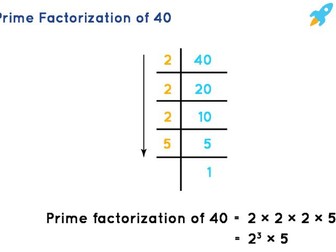
• Factors are numbers that divide evenly into another number. • Prime numbers have only two factors: 1 and themselves. • Prime factorization is a way to break down a number into its prime factors. Note : Course include (Questions and Answers + Activities)
How do I solve equations with variables on both sides?Quick View
sino2536

How do I solve equations with variables on both sides?

(0)
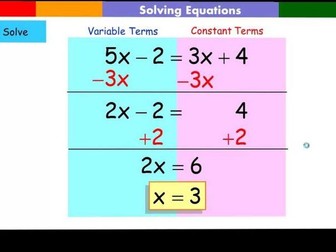
• To solve equations with variables on both sides, move all the variables to one side and all the numbers to the other side. • You can do this by adding or subtracting the same number from both sides of the equation. • Once you’ve done that, solve for the variable by dividing both sides of the equation by the coefficient of the variable. Note : Course include (Questions and Answers + Activities)