Visual Timetable Symbols / Now and Next Symbols | SEN Classroom RoutineQuick View
InclusiveInk

Visual Timetable Symbols / Now and Next Symbols | SEN Classroom Routine

(0)
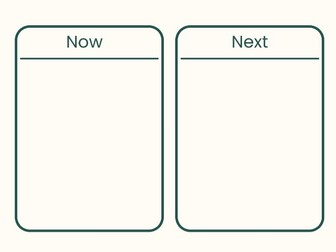
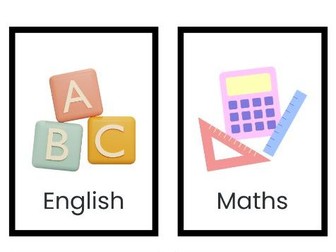
These visual timetable symbols are a clear and practical way to help pupils understand their daily routine and transitions throughout the school day. Designed for children who benefit from structure and predictable routines, the symbols support communication, independence and confidence in the classroom. The simple visuals make it easier for pupils to see what is happening now, what is coming next, and what their day will look like. This can significantly reduce anxiety around transitions and help children feel calmer and more prepared for learning. These symbols can be used on a visual timetable, classroom schedule, or Now & Next board to break the day into smaller, manageable steps. A free Now & Next board is available to download on my TES page to use alongside these symbols. Perfect for supporting pupils with: • Autism • ADHD • Speech and language needs • Anxiety • Additional learning needs • Early years and KS1 learners Use them to: • Support smooth transitions between activities • Build independence and understanding of routines • Reduce behaviour challenges linked to uncertainty • Create calm and predictable classroom environments Examples of routine sequences: Maths → Break Snack → Playtime Reading → Home Included: Printable visual timetable / Now & Next symbols (PDF) Clear design with bold outlines - ready to print, laminate, and use with Velcro on a timetable or Now & Next board. These visuals are designed to help create calm, inclusive classrooms where children feel safe, understood and ready to learn.
5 x Unicorn Themed Counting SheetsQuick View
InclusiveInk

5 x Unicorn Themed Counting Sheets

(0)
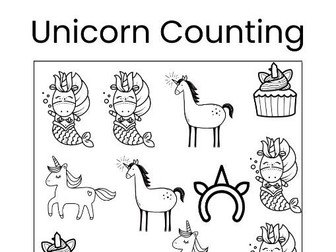
Unicorn-themed counting worksheets (numbers to 10) including roll-and-colour games and number tracing - perfect for playful maths, transitions and SEN support. These simple, engaging worksheets build early number confidence through structure, repetition and play. Designed with SEN learners in mind, they combine clear layouts with a motivating unicorn theme to increase participation and focus. What’s Included: 5 unicorn-themed worksheets Roll and colour games (numbers to 10) Simple number tracing practice Clear, uncluttered layouts Counting and matching opportunities The roll-and-colour sheets can be used as turn-taking games - take turns to roll the dice, count and colour. This supports number recognition while naturally developing waiting, sharing and “my turn, your turn” skills. Perfect for: SEN / SEND classrooms Early Years and KS1 Maths intervention Transition times Early finishers Calm, regulating table activities For many children - particularly those with SEN - unstructured “in-between” moments can be challenging. Having ready-made, low-demand but purposeful activities to hand helps maintain focus, reduce dysregulation and keep learning on track. Following children’s interests (like unicorns!) increases engagement and makes early maths feel safe and enjoyable. Small, playful resources can make a big difference - especially when they combine structure, regulation and fun.
Pencil Control Worksheets x 2Quick View
InclusiveInk

Pencil Control Worksheets x 2

(0)
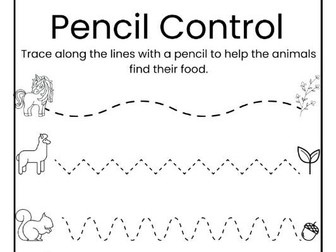
These Pencil Control Worksheets are simple, practical tools designed to build fine motor strength, pencil grip control and early writing confidence - especially for children who benefit from clear structure and low-demand tasks. I use resources like these during short pockets of time in the school day - when some children have finished and others haven’t, during transitions, after play, or as a calm settling activity. For many learners, particularly those with SEN, that “in-between” time can be the trickiest part of the day. Having ready-made, purposeful activities to hand helps maintain focus, reduce dysregulation and keep learning on track. Rather than unstructured waiting time, pupils can engage in meaningful practice that supports long-term writing development. Perfect for SEN, SEND, early years, intervention groups or whole-class inclusive teaching, these worksheets provide repetition, predictability and achievable success. What’s Inside: Two clear, easy-to-follow pencil control worksheets featuring: Structured line-tracing patterns Gradual changes in direction to build control Clear visual layout with minimal distraction Repetition to strengthen motor memory Opportunities to practise consistent pressure and direction They can be used: As a morning fine motor starter During transition times For early finishers As part of handwriting intervention To support children developing a pincer grip Alongside OT or fine motor programmes As a calm, regulating table task The predictable layout helps children understand exactly what they are expected to do, reducing overwhelm and increasing independence. Why Teachers Love Them: Ready to print and use instantly Perfect for those “in-between” moments Supports fine motor development without needing lots of explanation Helps maintain routine and structure Encourages focus and sustained attention Provides purposeful practice instead of passive waiting time Particularly supportive for pupils who struggle with unstructured time For many children with additional needs, uncertainty can lead to dysregulation. Having consistent, structured tasks available creates security and helps them stay engaged. Backed by Research: “Fine motor skills are foundational to later academic achievement.” Cameron et al. “When children experience success in manageable tasks, motivation increases.” Albert Bandura Structured pencil control practice builds both skill and confidence. Repetition strengthens neural pathways, and predictable tasks reduce cognitive overload, allowing pupils to focus on the physical skill itself. Perfect For: SEN / SEND classrooms Fine motor intervention Early Years and KS1 Occupational therapy follow-up Morning settling activities Early finishers Nurture and ELSA sessions Children developing pencil grip and control Small, structured resources can make a big difference - especially in the moments between the big lessons.
Alphabet MatQuick View
InclusiveInk

Alphabet Mat

(0)
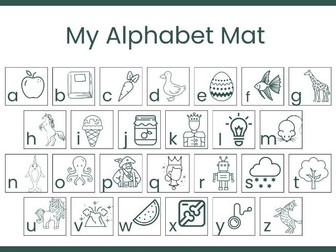
This Alphabet Mat is a simple, practical tool to make word games, speaking activities and literacy tasks more inclusive for all learners - especially those who need visual structure and reduced language load. I use this mat in class during ‘guess the word’ games, phonics sessions and quick-fire vocabulary activities. It gives pupils a clear visual reference, helping them participate confidently rather than feeling put on the spot. Perfect for SEN, SEND, early years, intervention groups or whole-class inclusive teaching, this mat supports communication, engagement and active learning. What’s Inside: A clear, easy-to-read alphabet mat featuring: All 26 letters in a simple, uncluttered layout Clear letter formation to support recognition A consistent visual structure to reduce overwhelm Space to point, trace, build or cover letters It can be used: During guessing games (e.g. “I’m thinking of a word that starts with…”) For phonics and initial sound work To support spelling and segmenting With playdough so pupils can experiment with forming letters As a visual prompt during speaking and listening activities As a scaffold for children who need help knowing what to look for The visual layout helps children understand what they are searching for, making activities more accessible and less abstract. Why Teachers Love It: Makes word games and questioning more inclusive Reduces cognitive load during speaking tasks Supports pupils who struggle with recall under pressure Encourages participation from quieter or less confident learners Can be used flexibly across subjects It allows children to show their thinking by pointing, building or selecting - not just saying it aloud. Backed by Research: “Cognitive load theory suggests that reducing unnecessary demands allows working memory to focus on learning.” — John Sweller “Learning is mediated by tools and signs.” — Lev Vygotsky Visual scaffolds like alphabet mats act as supportive tools, enabling children to access language tasks that might otherwise feel overwhelming. When we provide structure, we increase independence. Perfect For: SEN / SEND classrooms Speech and language support Phonics and early reading Intervention groups Whole-class inclusive practice Non-verbal, pre-verbal or anxious learners Nurture or ELSA sessions Small visual supports can make a big difference. If your vision - like mine - is to create classrooms where every child can join in confidently, this Alphabet Mat is a simple step towards that.
Chatter MatQuick View
InclusiveInk

Chatter Mat

(1)
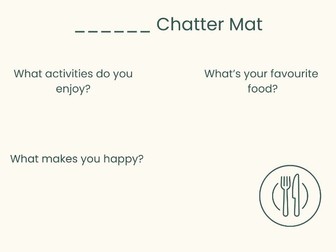
This simple Chatter Mat is designed to help children share a little bit about themselves in a low-pressure, visual way - perfect for children with autism or those who find talking difficult. With three clear, child-friendly questions, it helps teachers quickly learn what each pupil enjoys and what helps them feel happy and settled in class. Ideal for mainstream settings, SEN classrooms, ELSA sessions and nurture groups, this chatter mat supports inclusion, confidence and connection right from the start. What’s Inside: A one-page chatter mat with space for children to share: Their favourite activities What makes them happy Their favourite food Children can respond using drawings, photos, symbols or written words, making it accessible for verbal, non-verbal and pre-verbal learners. Why Teachers Love It: Helps pupils feel seen, understood and safe Builds rapport quickly in busy classrooms Supports children with autism by offering structured, visual communication Encourages positive interaction and confidence Great for transition days, getting-to-know-you activities, All About Me work or pupil profiles Perfect For: Mainstream classrooms supporting children with autism SEN / SEND settings ELSA and nurture groups Speech and language support Visual communication systems Start-of-year or transition activities This chatter mat offers a gentle, reassuring way for children to share what they love - helping staff create calm, trusting environments where every learner feels valued.
All About MeQuick View
InclusiveInk

All About Me

(1)
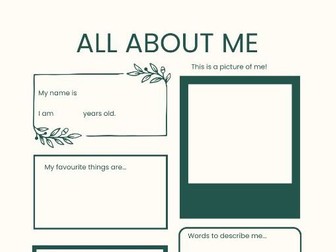
This All About Me printable is a simple, thoughtful way to get to know your pupils - especially those who find it hard to communicate their feelings or needs. It’s designed to be completed with parents or carers, so you can build a full picture of each child from the people who know them best. Perfect for SEN, nurture, ELSA or transition work, this sheet helps staff understand what each pupil enjoys, what helps them feel safe, and how they show different emotions. What’s Inside: A clear, one-page template with space for: Name and age Favourite things Things they find tricky Things that help them What they look like when they are happy, calm or content What they look like when they are anxious, frustrated or upset Parents can fill in the sheet or work through it with their child using photos, drawings or visuals, making it fully accessible for non-verbal or pre-verbal learners. Why Teachers Love It: Helps you understand each child’s unique cues and preferences Builds stronger, more trusting relationships between home and school Encourages empathy and consistent support across staff Great for transitions, pupil profiles and EHCP evidence Quick to complete but packed with insight Backed by Research: “Students will not respond to strategies if they don’t trust us.” — Leslie Blome, Practical Strategies “Problem behaviour is often an attempt to regulate arousal or simply the outward expression of an inward state.” — Janzem & Jenko (2012) When we understand what’s behind a child’s behaviour and how they communicate, we can support them in ways that truly work. Perfect For: SEN / SEND classrooms Nurture or ELSA work Transition or home-school introductions EHCP meetings and pupil profiles Non-verbal and pre-verbal learners
Now & Next BoardQuick View
InclusiveInk

Now & Next Board

(0)
This Now & Next board is a simple yet powerful visual tool designed to support pupils who benefit from structure and routine. Featuring clear “Now” and “Next” sections, this resource allows you to place symbols or pictures above each heading to show pupils what is happening now and what will happen next. Perfect for reducing anxiety around transitions, this resource breaks the day into smaller, manageable steps - ideal for learners who find change challenging. Use it to: Support smooth transitions between activities Increase independence and understanding of routines Reduce behavioural challenges linked to uncertainty Examples include: “Maths” → “Break” “Snack” → “Playtime” “Reading” → “Home” This resource is especially helpful for pupils with autism, ADHD, speech and language needs, or anxiety. Included: Printable Now & Next board (PDF format) Clear design with bold outlines - ready to print, laminate, and use with Velcro symbols or pictures of your choice.