Who should be the next King of England in 1066?Quick View
MJones1966

Who should be the next King of England in 1066?

(0)
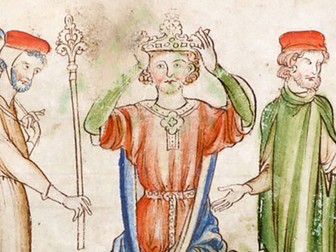
When Edward the Confessor died on 5th January 1066 he had no children. As a result, it was unclear who was to become king. After Edward’s death there were many powerful men who put forward their claim to the throne, three of whom presented the strongest claims. However, the claimants came from different countries and had differing levels of support. This in turn, meant that whoever became the new king had the potential to change England forever. In order to understand the causes of conflict in 1066 as well as the subsequent conquest of England, its significance and the changes made by the Normans, students need to find out about the rivalry that existed internally and externally. This is also an extremely pertinent opportunity to assess students understanding as well as their ability to ‘write historically’. The work produced will be of value as they will have taken time and care when producing their responses and therefore merits detailed feedback and the opportunity to respond to feedback individually and collectively in detail. Substantiating arguments and judgments is a key skill that they will work on throughout their time at school and therefore this provides an excellent early opportunity for it to be introduced.
What was England like before 1066?Quick View
MJones1966

What was England like before 1066?

(0)
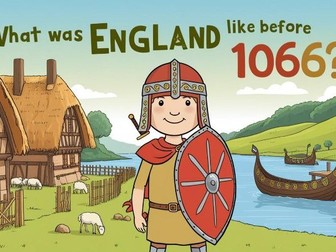
This is a short unit of work that aims to bridge the gap between KS2 and Year 7 history. The KS2 NC states that students could study: • Britain’s settlement by Anglo-Saxons and Scots • the Viking and Anglo-Saxon struggle for the Kingdom of England to the time of Edward the Confessor Some students will therefore have good understanding of the period and context/ chronological understanding, when they commence KS3 whereas others will have limited knowledge. Following on from an introduction to historical terms and the skills of an historian, these lessons aim to answer three complex questions: Who were the Anglo Saxons? What was Anglo Saxon England like? Why did the Vikings invade England? To understand this period, students will need to focus upon the people who came to and left Britain, and the different empires that Britain belonged to from c790. The overarching objectives are to explore the history of invaders and settlers in ‘Britain’, to examine how Britain came to be under Anglo Saxon rule, and to explain the reasons why the Vikings invaded in the 790s. This will also benefit students when studying Norman England, especially with complex terminology (Witan, Danelaw etc) when teaching the crises of 1066.
Initial Year 7 History unit of workQuick View
MJones1966

Initial Year 7 History unit of work

(0)
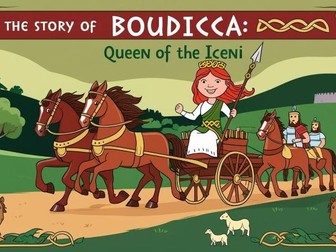
The purpose of the unit is to introduce students to some of the techniques historians employ when interrogating sources of evidence and when making statements or putting forward hypotheses about the past. The fact that the subject matter concerns Boudicca and Roman Britain is not that important, although it does tell us something about the nature of power, which forms much of the work covered across the year 7 curriculum. The main purposes of the unit are to introduce the techniques and problems of historical enquiry and to enable students to acquire some of the skills which will be developed throughout KS3. • What is history? • How do historians go about the business of studying and writing history? • What problems do historians encounter and how do they deal with them?