KS3 Geography - Lesson 7 - How do Geographers read maps? OS Map Symbols, references, investigation!Quick View
GeoVistaLearning

KS3 Geography - Lesson 7 - How do Geographers read maps? OS Map Symbols, references, investigation!

(0)
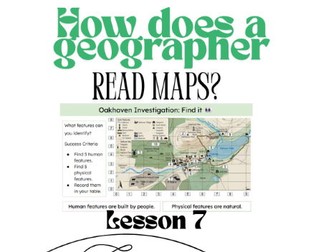
KS3 Geography, OS map symbols, grid references, atlas skills, map reading, enquiry skills, mixed‑ability lesson, September curriculum, scheme of learning This KS3 Geography lesson is part of a September‑ready scheme of learning, introducing students to OS map symbols, map keys, grid boxes, and the foundations of geographical map enquiry. Learners take part in symbol‑matching challenges, key‑creation tasks, recall starters, and a full Oakhaven map investigation, where they identify human and physical features, classify landforms, and record grid references. Students explore why symbols are essential for communication, how keys help decode maps, and how geographers use maps to understand places clearly and accurately. The lesson includes SEND scaffolds, challenge tasks, guided enquiry questions, and mixed‑ability adaptations, making it ideal for diverse KS3 classrooms. With structured modelling, hands‑on mapwork, and opportunities for independent and paired reasoning, this lesson fits seamlessly into a fully sequenced KS3 Geography scheme launching before the end of August. Lesson 7 continues the progression established in Lessons 1–6, forming part of a 12‑lesson KS3 Geography Scheme of Learning that will be released before the end of August. This resource provides a complete introduction to map symbols, OS map conventions, keys, grid references, and map‑based enquiry, supported by a full Oakhaven investigation including symbol keys, feature tables, classification grids, and route‑planning tasks. Students practise identifying human and physical features, selecting appropriate symbols, and explaining why settlements, campsites, and viewpoints are located where they are. Teachers receive adaptable materials suitable for SEND, EAL, and high‑challenge learners, including symbol‑matching grids, Oakhaven worksheets, map keys, and sentence‑starter scaffolds. The lesson is rich in geographical skills, map interpretation, spatial reasoning, and enquiry‑based questioning, making it ideal for departments seeking a knowledge‑rich, September‑built KS3 curriculum. As part of the full scheme, teachers will receive a medium‑term plan, key vocabulary lists, push & challenge tasks, and consistent pedagogy across all 12 lessons — perfect for mixed‑ability KS3 groups and for teachers wanting a ready‑to‑teach, high‑quality geography curriculum.
KS3 Geography - Lesson 5 - Place and Space - The UK and Europe - September Ready!Quick View
GeoVistaLearning

KS3 Geography - Lesson 5 - Place and Space - The UK and Europe - September Ready!

(0)
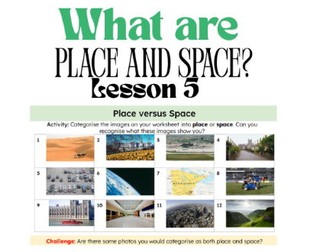
KS3 Geography, place and space, scale, local regional national international, UK geography, mixed‑ability lesson, September curriculum, scheme of learning This KS3 Geography lesson is part of a September‑ready scheme of learning, introducing students to the core concepts of place, space, and geographical scale. Learners engage in recall starters, keyword building, image‑sorting activities, Diamond 9 scale ranking, and UK mapping tasks to develop a secure understanding of how geographers interpret locations at different levels. Students explore the meaning of place (locations with personal or cultural significance) and space (the arrangement of areas and connections between them), then apply these ideas through categorisation tasks using real‑world examples such as Buckingham Palace, the Sahara Desert, airports, shopping malls, and local town centres. The lesson includes SEND scaffolds, challenge tasks, and mixed‑ability adaptations, making it ideal for diverse KS3 classrooms. With explicit vocabulary instruction, cross‑curricular links, and structured enquiry, this lesson fits seamlessly into a fully sequenced KS3 Geography scheme launching before the end of August. Lesson 5 continues the progression established in Lessons 1–4, forming part of a 12‑lesson KS3 Geography Scheme of Learning that will be released before the end of August. This resource provides a complete introduction to place and space, local–regional–national–international scales, and the geographical identity of the UK and the British Isles. Teachers receive a wide range of adaptable materials: Place vs Space image grids, Diamond 9 scale sorting cards, UK outline maps, British Isles mapping tasks, and structured writing frames suitable for SEND, EAL, and high‑challenge learners. The lesson is rich in geography keywords, scale interpretation, spatial thinking, and enquiry‑based questioning, making it ideal for departments seeking a knowledge‑rich, September‑built KS3 curriculum. As part of the full scheme, teachers will receive a medium‑term plan, key vocabulary lists, push & challenge tasks, and consistent pedagogy across all 12 lessons. Perfect for mixed‑ability KS3 groups and for teachers wanting a ready‑to‑teach, high‑quality geography curriculum.
KS3 Geography - Lesson 6: Where Is the UK?  UK Nations, Physical Geography & Europe Mapping!Quick View
GeoVistaLearning

KS3 Geography - Lesson 6: Where Is the UK? UK Nations, Physical Geography & Europe Mapping!

(0)
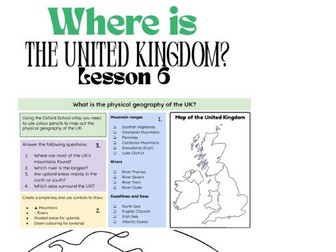
KS3 Geography, UK physical geography, Europe mapping, continents and countries, atlas skills, mixed‑ability lesson, September curriculum, scheme of learning This KS3 Geography lesson is part of a September‑ready scheme of learning, introducing students to the location of the UK, the difference between countries and continents, and the UK’s position within Europe. Learners take part in atlas‑based mapping, physical geography identification, guided vocabulary building, quick‑check retrieval tasks, and Europe‑wide country mapping to develop secure locational knowledge. Students map the four nations of the UK, identify major cities, rivers, mountain ranges, and surrounding seas, then extend their understanding by plotting European countries and oceans using the Oxford School Atlas. The lesson includes SEND scaffolds, challenge tasks, peer‑assessment routines, and mixed‑ability adaptations, making it ideal for diverse KS3 classrooms. With explicit vocabulary instruction, structured enquiry, and hands‑on mapping practice, this lesson fits seamlessly into a fully sequenced KS3 Geography scheme launching before the end of August. Lesson 6 continues the progression established in Lessons 1–5, forming part of a 12‑lesson KS3 Geography Scheme of Learning that will be released before the end of August. This resource provides a complete introduction to UK physical geography, including mountain ranges (Scottish Highlands, Pennines, Snowdonia), major rivers (Thames, Severn, Trent, Clyde), and surrounding seas (North Sea, Irish Sea, English Channel, Atlantic Ocean). Students practise atlas skills, key creation, map shading, and locational reasoning, supported by structured worksheets and clear modelling. The lesson also tackles a common misconception: whether the UK is part of Europe. Students learn the difference between Europe as a continent and the European Union, then map all major European countries and seas. Teachers receive adaptable materials suitable for SEND, EAL, and high‑challenge learners, including mapping grids, country lists, physical geography prompts, and plenary tasks. As part of the full scheme, teachers will receive a medium‑term plan, key vocabulary lists, push & challenge tasks, and consistent pedagogy across all 12 lessons — ideal for departments seeking a knowledge‑rich, September‑built KS3 curriculum.
KS3 Geography - Lesson 3 - Geographic enquiry and fieldwork skills - September Ready!Quick View
GeoVistaLearning

KS3 Geography - Lesson 3 - Geographic enquiry and fieldwork skills - September Ready!

(0)
KS3 Geography, enquiry skills, observation skills, analysis skills, mixed‑ability teaching, September curriculum, scheme of learning, questioning skills, geography pedagogy This KS3 Geography lesson is part of a September‑ready scheme of learning designed to build strong geographical enquiry skills from the very start of Year 7. Students engage in guided observation tasks, paired inference discussions, question‑building activities, and carousel fieldwork‑style stations to develop the core skill of “thinking like a geographer.” Through structured modelling, learners practise using the Observe–Infer–Question matrix, analyse images, and transform simple questions into high‑quality geographical enquiry questions focused on location, processes, change, impact, and connections. The lesson includes adaptations for SEND, challenge tasks for high attainers, and mixed‑ability scaffolds, making it ideal for a diverse classroom. With explicit vocabulary instruction, cross‑curricular links, and opportunities for collaborative learning, this lesson fits seamlessly into a fully sequenced KS3 Geography scheme launching before the end of August. Lesson 3 continues the progression established in Lessons 1 and 2, forming part of a 12‑lesson KS3 Geography Scheme of Learning that will be released before the end of August. This resource helps students master the foundations of geographical enquiry, including observation, evidence, analysis, and question‑building. Teachers will find a wide range of adaptable materials: question wordmats, enquiry prompts, carousel posters, Observe–Infer–Question worksheets, and structured writing frames suitable for SEND learners, EAL learners, and high‑challenge groups. The lesson is rich in geography keywords, enquiry processes, image interpretation, and fieldwork‑style thinking, making it ideal for departments seeking a knowledge‑rich, September‑built curriculum. As part of the full scheme, teachers will receive a medium‑term plan, key vocabulary lists, push & challenge tasks, and consistent pedagogy across all 12 lessons. Perfect for mixed‑ability KS3 groups and for teachers wanting a ready‑to‑teach, high‑quality geography curriculum.
KS3 Geography - Lesson 4 - What are Settlements? - September Ready!Quick View
GeoVistaLearning

KS3 Geography - Lesson 4 - What are Settlements? - September Ready!

(0)
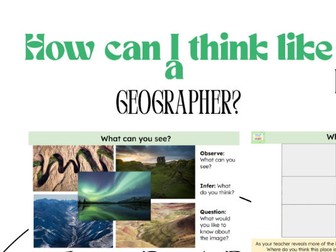
KS3 Geography, settlements, site factors, hierarchy, rural urban geography, mixed‑ability lesson, September curriculum, scheme of learning, geography skills**** This KS3 Geography lesson is part of a September‑ready scheme of learning, designed to introduce students to settlements, settlement hierarchy, site factors, and geographic questioning. Learners take part in guided classification tasks, Guess‑Who settlement games, site factor investigations, and a creative city‑building starter to develop core geographical understanding. Students explore isolated dwellings, hamlets, villages, towns, and cities, then analyse dispersed, linear, and nucleated settlement patterns using structured examples and visual prompts. The lesson includes SEND‑friendly scaffolds, challenge tasks for high attainers, and mixed‑ability adaptations, making it ideal for diverse KS3 classrooms. Through map‑based enquiry, group discussion, and vocabulary building, students learn how physical factors such as water supply, flat land, natural resources, and defensive positions influence where settlements develop. This lesson fits seamlessly into a fully sequenced KS3 Geography scheme launching before the end of August. Lesson 4 continues the progression established in Lessons 1–3, forming part of a 12‑lesson KS3 Geography Scheme of Learning that will be released before the end of August. This resource provides a complete introduction to settlements, including settlement hierarchy, settlement patterns, and the physical site factors that shape human geography. Teachers receive a wide range of adaptable materials: Guess‑Who settlement cards, site factor worksheets, entry slips, classification tables, and structured writing frames suitable for SEND, EAL, and high‑challenge learners. The lesson is rich in geography keywords, map‑reading skills, site analysis, and enquiry‑based questioning, making it ideal for departments seeking a knowledge‑rich, September‑built KS3 curriculum. As part of the full scheme, teachers will receive a medium‑term plan, key vocabulary lists, push & challenge tasks, settlement hierarchy diagrams, and consistent pedagogy across all 12 lessons. Perfect for mixed‑ability KS3 groups and for teachers wanting a ready‑to‑teach, high‑quality geography curriculum.
KS3 Geography – Lesson 2: Types of Geography & Human–Environment Interactions | September-ready!Quick View
GeoVistaLearning

KS3 Geography – Lesson 2: Types of Geography & Human–Environment Interactions | September-ready!

(0)
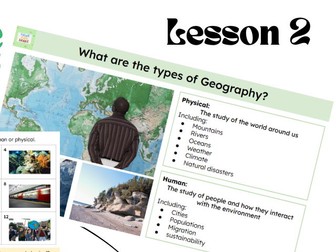
This second KS3 Geography lesson sits within a September‑ready scheme of learning, building directly on Lesson 1 by deepening students’ understanding of human and physical geography. Learners take part in recall starters, guided classification tasks, image‑sorting activities, and structured written explanations to strengthen geographical knowledge and literacy. Through teacher‑led discussion, students identify physical features (mountains, rivers, climate, natural hazards) and human features (cities, migration, sustainability), then apply this knowledge by categorising images, explaining links between humans and the environment, and analysing the Little Pond story to explore positive and negative human impacts. The lesson includes cross‑curricular links to science, maths, and PSHE, explicit vocabulary instruction, and scaffolded writing frames to support SEND learners while offering challenge tasks for high attainers. Ideal for teachers seeking a fully sequenced, September-built KS3 geography curriculum with strong pedagogy and clear progression. This KS3 Geography lesson forms part of a 12‑lesson, fully resourced scheme of learning designed for September curriculum planning. Teachers will find structured activities that help students distinguish between human geography and physical geography, classify geographical features, and understand how human actions shape the natural world. The lesson includes key vocabulary (settlement, landscape, sustainability), SEND scaffolds, push‑and‑challenge tasks, and literacy‑rich activities such as analysing the Little Pond environmental change narrative. As with Lesson 1, this resource is built for departments seeking a knowledge‑rich, progression‑focused KS3 geography curriculum, complete with a medium‑term plan, assessment opportunities, and consistent pedagogical routines. The extended scheme covers physical processes, human systems, environmental change, and geographical skills, making it ideal for teachers wanting a coherent September scheme, or those exploring new schemes of learning for KS3.
KS3 Geography – Lesson 1: What Is Geography? | Human & Physical Geography Introduction lessonQuick View
GeoVistaLearning

KS3 Geography – Lesson 1: What Is Geography? | Human & Physical Geography Introduction lesson

(0)
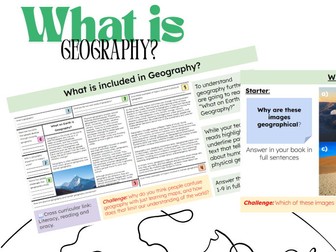
This introductory KS3 Geography lesson forms part of a full September-built scheme of learning designed for Year 7 baseline teaching. In this lesson, students engage in guided reading, key word retrieval, map and image interpretation, myth‑busting activities, and structured written responses to build foundational geographical understanding. Learners explore the difference between human geography and physical geography through teacher-led reading of What on Earth Is Geography?, highlighting and annotating key concepts, followed by comprehension questions that develop literacy and geographical thinking. The lesson includes starter image analysis, vocabulary building, challenge questions, and cross‑curricular links to reading and oracy, ensuring strong pedagogical sequencing for early KS3. This scheme is ideal for teachers seeking a fully resourced, knowledge-rich, September-ready geography curriculum with clear progression, explicit instruction, and high-quality activities aligned to modern classroom practice. This KS3 Geography lesson introduces students to the core principles of geography, including landscapes, environments, people, place, location, physical processes, human activity, and global challenges. As part of a wider scheme of learning, it supports curriculum planning for September with structured tasks, clear learning objectives, and differentiated challenge. Teachers will find activities covering physical geography (rivers, mountains, climate, ecosystems) and human geography (cities, population, migration, transport). The lesson includes literacy integration, geographical skills development, and opportunities for critical thinking. Ideal for teachers building a new KS3 curriculum, departments refreshing their September schemes, or educators seeking high-quality geography resources aligned with modern pedagogical practice.