I'm a Tsar...Get me out of here! (A Level taster lesson)Quick View
QualityHistoryResources

I'm a Tsar...Get me out of here! (A Level taster lesson)

(0)
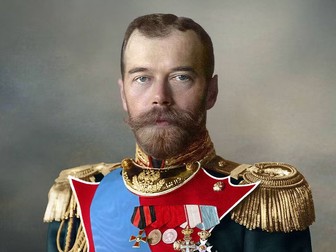
“I’m a Tsar… Get Me Out of Here!” – A-Level History Taster Lesson This engaging and interactive resource is designed to hook students into the fascinating world of Russian history and the challenges faced by Tsar Nicholas II. Inspired by the popular reality TV format, the lesson transforms the classroom into a “Russian Revolutionary Jungle” where learners take on the role of decision-makers in a series of trials. What’s included? A dynamic PowerPoint packed with vibrant visuals and themed activities. Five immersive “trials” covering key issues: peasant poverty, demands for democracy, industrial unrest, Rasputin’s influence, and the First World War. Decision-making tasks where students choose options and justify their reasoning, encouraging critical thinking and debate. A fun “True or False” starter quiz on Russia before 1917. A clear link to the February and October Revolutions, helping students understand why the Tsar’s decisions mattered. Why is it a great idea? Perfect for A-Level taster sessions: It grabs attention, builds curiosity, and introduces core historical themes in an accessible way. Highly interactive: Students aren’t passive - they actively participate, make choices, and reflect on consequences. Develops key skills: Analysis, evaluation, and argument - essential for success at A-Level. Memorable and motivating: The game-show style makes complex history fun and relatable, leaving a lasting impression. If you want a resource that combines academic rigour with creativity and excitement, this is it. Ideal for open evenings, induction days, or first lessons to spark enthusiasm for History.
History Hundred - Edition 1 - Half version (End of Term quiz)Quick View
QualityHistoryResources

History Hundred - Edition 1 - Half version (End of Term quiz)

(1)
This is the half version of Edition 1. This time they have 50 questions and bonus rounds. A shorter version but still as fun and engaging. The History Hundred Edition 1 Half Version PowerPoint is a dynamic and engaging classroom resource designed as a competitive quiz game for history students. Here’s a breakdown of what makes it so fun and effective: What It Is: A 50-question history quiz covering a wide range of topics from medieval to modern history. Designed for individuals or teams, each with 3 lives—lose all lives and you’re out! Includes bonus questions to restore lives, adding a strategic twist. Ends with a score reveal and a tie-breaker based on remaining lives. Why It’s Great for History Classes Interactive Learning Students actively participate rather than passively listen. The game format encourages engagement and retention of historical facts. Wide Historical Coverage Topics span from the Battle of Hastings to World War I, the Industrial Revolution, and the Suffragettes. Includes key figures like Henry VIII, Elizabeth I, Lenin, and Frida Kahlo. Gamified Structure Lives system adds tension and excitement. Bonus questions offer redemption opportunities, keeping students involved even if they fall behind. Visual and Varied Mix of multiple-choice questions, image-based identification, and event recognition. Encourages critical thinking and team collaboration. Flexible Use Can be used as a starter activity, revision session, or end-of-term challenge. Suitable for KS3 and KS4 students, adaptable for different age groups. If you like this then download the FULL edition 1 OR wait for the next FULL edition. Edition 2 coming soon. There will also be a Weimar and Nazi Germany edition coming in time for any mock exams in 25/26 academic year.
Brain Gym revision activity - IGCSE History 0977Quick View
QualityHistoryResources

Brain Gym revision activity - IGCSE History 0977

(0)
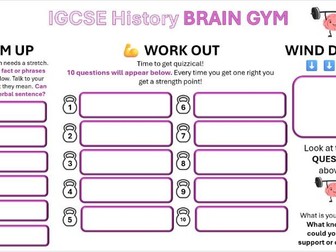
This engaging and interactive PowerPoint resource is designed to support IGCSE History students in revising key topics through a fun and structured format. The “Brain Gym” approach combines warm-up vocabulary tasks, quiz-style workouts, and reflective wind-down activities to reinforce historical knowledge and critical thinking. Topics Covered: Treaty of Versailles League of Nations Hitler’s Foreign Policy Origins of the Cold War Weimar Germany (1918–1923, 1923–1929, 1929–1933) Nazi Germany (Parts 1, 2, and 3) Structure of Each Slide: Warm-Up: Students discuss six key terms or phrases from the topic to activate prior knowledge. Workout: A set of 10 quiz questions to test understanding and recall. Wind-Down: A “Big Question” encourages students to form opinions and use evidence to support or challenge historical interpretations. Features: Student-friendly layout with visual icons and motivational language. Encourages peer discussion and active learning. Covers all major IGCSE History themes with a consistent format. Ideal for classroom use, homework, or revision sessions. Perfect For: IGCSE History teachers looking for a ready-to-use revision tool. Students preparing for exams who benefit from active recall and discussion. Tutors and homeschoolers seeking structured topic reviews.
A Level Politics Taster lesson - How powerful are Prime Ministers?Quick View
QualityHistoryResources

A Level Politics Taster lesson - How powerful are Prime Ministers?

(0)
Lesson Summary: The Power of UK Prime Ministers from Thatcher to Starmer This A Level Politics taster lesson is designed to engage and challenge Year 10 and 11 students, providing a structured yet dynamic exploration of how Prime Ministerial power has evolved from Margaret Thatcher to Keir Starmer. Through interactive debates, case studies, and critical analysis, students will assess leadership styles, constitutional constraints, media influence, and the wider political landscape. This resource includes: Comparative Case Studies – Small group research on each PM’s leadership, challenges, and influence. Are Prime Ministers becoming more powerful? A quiz on recent Prime Ministers Why Purchase This Lesson? -Fully planned with engaging activities tailored to A Level-style thinking. Encourages debate & independent analysis, ideal for fostering political curiosity. Perfect for taster sessions, showing students what studying Politics at A Level involves. Adaptable across teaching styles, with a mix of discussion, evaluation, and teamwork. This resource is ideal for teachers seeking an impactful and thought-provoking introduction to A Level Politics, ensuring students leave with a deeper understanding of political leadership and power.
What if AI made History? - HistorAI wall displayQuick View
QualityHistoryResources

What if AI made History? - HistorAI wall display

(0)
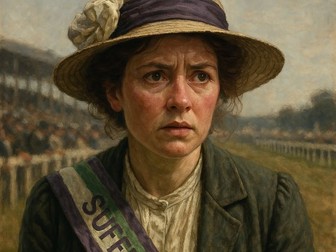
This is a series of 25 posters from across the KS3 curriculum. On each poster there is the title HistorAI, an AI generated image of a significant figure from history or event and the year. The idea is that this would go in a classroom. The students have to guess who the person is or what event is being portrayed based on the image or date. Each image was created using AI and then incorprated into a poster for classroom or history corridor use. Individuals on the posters range: William of Normandy Thomas Becket Eleanor of Aquitaine Elizabeth I Matthew Hopkins Olaudah Equiano Winston Churchill Soldier from WW1 Emily Davison
History Hundred - (Edition 1) End of Year QuizQuick View
QualityHistoryResources

History Hundred - (Edition 1) End of Year Quiz

(0)
The History Hundred is a new engaging quiz format designed for those at Key Stage 3 and GCSE/A Level. What is the format? Simple really. 100 questions. 5 lives. Lose all your lives you are out. However, there are bonus rounds where you can win lives back to allow you back in the game. That way everyone has a chance of making it all the way to the end. Scores are recorded and compared across the class. Who will get the nearest to 100? There is a chance to go beyond 100 too. In the final round the value of points increases as you get nearer 100! The intention here is to create some last minute twists in the game. What is in this first edition? This is the first of many editions to come. In edition 1 the questions cover a whole range of topics from across the three Year groups, Year 7 to Year 9. It ties in with the History National Curriculum, but it could be used in any year group as an end of year activity or a start of the academic year activity. It could also be used in form times as an activity too. This edition goes from Medieval history to Modern history. The intention now and for the future? Make history fun and engaging. Perfect for retrieval and revision. Make History Hundreds in the same format for specific year groups (E.g. An end of Year 7 quiz on Medieval history) Make History Hundreds for GCSE and A Level revision purposes. Will you be a History Hundred Centurion?
What if AI made History? - Women in HistorAIQuick View
QualityHistoryResources

What if AI made History? - Women in HistorAI

(0)
This is the second HistorAI wall display. The theme of this set of 24 posters is Women from History. This would look good as a lone display or as part of a display on significant women from history. The aim of this display is to highlight the role women have had in history and also to generate discussion as pupils walk into a classroom. There are a range of women from different spheres. Politicians, Activists, Scientists, philosophers, warriors, Mathematicians and Medics. They range from Boudica to Thatcher. There is also representation of women of colour such as Claudette Colvin and Rani Lakshmibai of Jhansi. This will go well if merged with the original HistorAI set of posters also in my shop which has a mixture of men and women from history.
History Hundred - Edition 2 - GCSE Weimar and Nazi Germany 1933-1939 FULL VERSION End of Year quizQuick View
QualityHistoryResources

History Hundred - Edition 2 - GCSE Weimar and Nazi Germany 1933-1939 FULL VERSION End of Year quiz

(0)
This is the FULL version of this quiz. Look at my shop for the free MINI version and the HALF version. The “History Hundred Edition 2: Weimar and Nazi Germany 1918–1939” quiz is a dynamic and engaging PowerPoint-based game designed to test and reinforce knowledge of German history between the end of World War I and the beginning of World War II. It features 100 multiple-choice and true/false questions, covering key events, figures, ideologies, and policies from the Weimar Republic through the rise of the Nazi regime. The quiz is structured as a competitive game where individuals or teams start with five lives, losing one for each incorrect answer. Bonus questions scattered throughout offer opportunities to regain lost lives, adding a strategic and interactive element to the experience. The content spans a wide range of historical topics, including the Treaty of Versailles, hyperinflation, the rise of Hitler, Nazi propaganda, opposition groups, and significant laws and events like the Enabling Act and Kristallnacht. It also includes visual identification rounds and German vocabulary related to the era. The quiz is both educational and entertaining, making it ideal for classroom use or revision sessions. Its format encourages participation, memory recall, and a deeper understanding of the complex political and social changes in Germany during this critical period in history.
History Hundred - Edition 3 - Tudors and Stuarts FULL Version End of Year quiz 2025Quick View
QualityHistoryResources

History Hundred - Edition 3 - Tudors and Stuarts FULL Version End of Year quiz 2025

(0)
This is the THIRD edition of the History Hundred. This is the FULL version. You can find the FREE taster MINI edition to trial it out or the cheaper HALF edition. This is perfect for: Tudors and Stuarts end of topic quiz End of Year or term fun activity Retrieval activity as you go along a topic (do the quiz in sections of 10) The “History Hundred: Tudors and Stuarts” is a fast-paced quiz game featuring 100 questions across nine themed rounds, covering key monarchs and events from Henry VII to Queen Anne. Players or teams start with five lives and lose one for each incorrect answer, with chances to regain lives through bonus questions. Each round focuses on a different ruler or era, such as Henry VIII’s marriages and religious reforms, Elizabeth I’s leadership and the Spanish Armada, the English Civil War under Charles I, and the Glorious Revolution. The quiz also includes fun anagram challenges and historical trivia to reinforce learning. The game is designed to be both educational and competitive, encouraging engagement through visuals, scoring, and interactive elements. It’s ideal for classrooms or group learning environments focused on British history.
History Hundred Editions 1, 2 and 3 Quiz bundleQuick View
QualityHistoryResources

History Hundred Editions 1, 2 and 3 Quiz bundle

3 Resources
For £4 you can buy the first three FULL editions of the History Hundred quizzes. Edition 1 - A General history knowledge quiz suitable for Key Stage 3. Edition 2 - GCSE Weimar and Nazi Germany edition 1933-1939 Edition 3 - Tudors and Stuarts quiz suitable for Key stage 2 and 3.
History Hundred quiz editions 1 and 2Quick View
QualityHistoryResources

History Hundred quiz editions 1 and 2

2 Resources
Only £3 for the first two editions of the History Hundred quiz. 100 questions. Bonus rounds. 5 lives ❤️ ❤️ ❤️ ❤️ ❤️ 1 objective. Win! Get the all right become a centurion. Edition 1 End of year quiz. Covers a range of history from Medieval to modern. suitable for KS3 and KS4. Edition 2 GCSE Weimar and Nazi Germany quiz. Suitable for Edexcel and Aqa Germany GCSE units. Questions cover a range of knowledge from across the whole topic. Two fun, engaging quizzes. A perfect way to fill a lesson and second quiz really helpful for retrieval practice.
History Hundred - Edition 3 - Tudors and Stuarts HALF versionQuick View
QualityHistoryResources

History Hundred - Edition 3 - Tudors and Stuarts HALF version

(0)
This is the THIRD edition of the History Hundred. This is the HALF version. You can find the FREE taster MINI edition to trial it out or the FULL edition. This is perfect for: Tudors and Stuarts end of topic quiz End of Year or term fun activity Retrieval activity as you go along a topic (do the quiz in sections of 10) The “History Hundred: Tudors and Stuarts” is a fast-paced quiz game featuring 100 questions across nine themed rounds, covering key monarchs and events from Henry VII to Queen Anne. Players or teams start with five lives and lose one for each incorrect answer, with chances to regain lives through bonus questions. Each round focuses on a different ruler or era, such as Henry VIII’s marriages and religious reforms, Elizabeth I’s leadership and the Spanish Armada, the English Civil War under Charles I, and the Glorious Revolution. The quiz also includes fun anagram challenges and historical trivia to reinforce learning. The game is designed to be both educational and competitive, encouraging engagement through visuals, scoring, and interactive elements. It’s ideal for classrooms or group learning environments focused on British history.
History Hundred - Edition 2 - GCSE Weimar and Nazi Germany 1933-1939 HALF VERSIONQuick View
QualityHistoryResources

History Hundred - Edition 2 - GCSE Weimar and Nazi Germany 1933-1939 HALF VERSION

(0)
This is the HALF version of this quiz. Look at my shop for the free MINI version and the FULL version. The “History Hundred Edition 2: Weimar and Nazi Germany 1918–1939” quiz is a dynamic and engaging PowerPoint-based game designed to test and reinforce knowledge of German history between the end of World War I and the beginning of World War II. It features 100 multiple-choice and true/false questions, covering key events, figures, ideologies, and policies from the Weimar Republic through the rise of the Nazi regime. The quiz is structured as a competitive game where individuals or teams start with five lives, losing one for each incorrect answer. Bonus questions scattered throughout offer opportunities to regain lost lives, adding a strategic and interactive element to the experience. The content spans a wide range of historical topics, including the Treaty of Versailles, hyperinflation, the rise of Hitler, Nazi propaganda, opposition groups, and significant laws and events like the Enabling Act and Kristallnacht. It also includes visual identification rounds and German vocabulary related to the era. The quiz is both educational and entertaining, making it ideal for classroom use or revision sessions. Its format encourages participation, memory recall, and a deeper understanding of the complex political and social changes in Germany during this critical period in history.
History Hundred (HALF versions) Editions 1, 2 and 3 Quiz bundleQuick View
QualityHistoryResources

History Hundred (HALF versions) Editions 1, 2 and 3 Quiz bundle

3 Resources
For £2 you can buy the first three HALF editions of the History Hundred quizzes. There are 50 questions plus bonus questions in each quiz. These are NOT the FULL editions. Edition 1 - A General history knowledge quiz suitable for Key Stage 3. Edition 2 - GCSE Weimar and Nazi Germany edition 1933-1939 Edition 3 - Tudors and Stuarts quiz suitable for Key stage 2 and 3.
Lesson 5:  How significant was the British Empire? (5 of 5)Quick View
QualityHistoryResources

Lesson 5: How significant was the British Empire? (5 of 5)

(0)
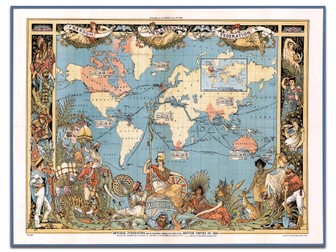
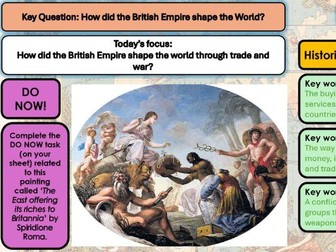
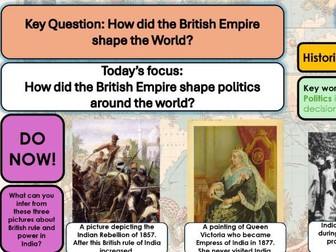
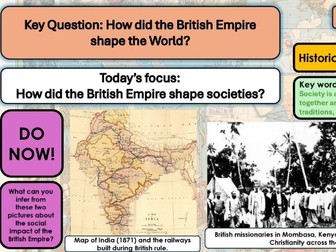
This lesson, titled “How Significant – Gallery Task 1,” is a dynamic and engaging exploration of the British Empire’s impact on the world. It is structured around a fictional scenario in which students are curators for a new exhibition at the “National British Empire Museum.” The central question guiding the lesson is: “How did the British Empire shape the world?” Students are encouraged to think critically about the concept of historical significance and to evaluate the British Empire’s legacy through both short-term and long-term lenses. The lesson begins with a reflective activity that prompts students to consider why the British Empire had a significant impact. Using the acronym B.I.G. (Breakthrough, Impact, Groundbreaking), students are introduced to a framework for assessing historical significance. This sets the stage for deeper inquiry and helps students develop a structured approach to evaluating historical events and developments. The core of the lesson is an interactive “evidence walk,” where students move around the classroom examining ten historical sources. These include images, maps, photographs, and posters that represent various aspects of the British Empire’s influence—ranging from military conquests and political structures to migration, cultural exchange, and ongoing debates about colonial legacies. Students work in pairs or groups to analyze each source, determine whether it represents a short-term or long-term impact, and select three sources for each category to include in their exhibition. Throughout the activity, students are encouraged to consider four thematic lenses—political, social, economic, and military—when analyzing the sources. This multidimensional approach deepens their understanding and allows them to see the complexity of the Empire’s influence. The lesson culminates in a writing task where students justify their selection of sources using a structured format (Point, Source, Explain, Finish), reinforcing their analytical and communication skills. This lesson is an excellent resource because it combines historical inquiry with creativity and collaboration. It encourages students to engage with primary and secondary sources, think critically about historical narratives, and articulate their interpretations in a meaningful way. By simulating a real-world task—curating a museum exhibition—it makes history relevant and accessible, while also fostering empathy, debate, and a nuanced understanding of the British Empire’s legacy
Lesson 2: Science: Did the age of reason break the spell of superstition between 1500 and 1800?Quick View
QualityHistoryResources

Lesson 2: Science: Did the age of reason break the spell of superstition between 1500 and 1800?

(0)
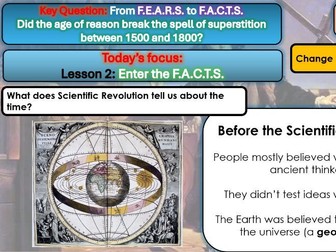
This is lesson 2 of 4 of this enquiry. The previous lesson was about superstition and specifically witchcraft. What the lesson is about: This lesson explores how the Scientific Revolution and the Age of Enlightenment between 1500 and 1800 challenged traditional beliefs and superstitions. Students investigate whether this period marked a significant shift from fear-based thinking (F.E.A.R.S.) to evidence-based understanding (F.A.C.T.S.). Through engaging activities like discussion, station rotations, and a quiz game, students examine key scientific developments—such as Copernicus’ heliocentric theory, Harvey’s discovery of blood circulation, and the rise of experimental science—and assess whether these changes truly broke the spell of superstition. Why it is a good lesson for KS3 students: This lesson is well-suited for KS3 students because it combines historical thinking with active learning. It introduces complex ideas like change and continuity in an accessible way, using clear examples and interactive tasks. The station activity encourages collaboration and critical thinking, while the “Science Snap” quiz adds a fun, fast-paced review. By linking scientific progress to broader social and cultural shifts, the lesson helps students understand how knowledge evolves and why it matters. It also supports key curriculum goals by developing analytical skills and historical empathy.
Lesson 1: Witch craze: Did the age of reason break the spell of superstition between 1500 and 1800?Quick View
QualityHistoryResources

Lesson 1: Witch craze: Did the age of reason break the spell of superstition between 1500 and 1800?

(0)
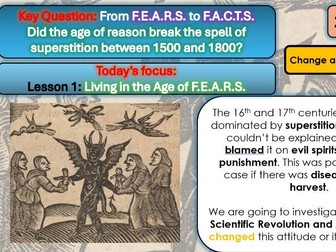
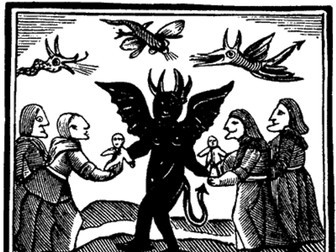
From F.E.A.R.S. to F.A.C.T.S? Did the age of reason break the spell of superstition between 1500 and 1800? This is the first lesson of 4 that looks at the period of 1500 to 1800. The main focus is change and continuity. The series of lessons asks whether superstition reduced over time, and whether scientific explantion dominated by 1800. Key Question: Did the Age of Reason break the spell of superstition between 1500 and 1800? Lesson Focus: Introduces the concept of change and continuity in history. Explores superstitions and fears in the 16th and 17th centuries (e.g. witches, miasma, the Devil). Uses the acronym F.E.A.R.S. (Familiars, Enchantments, Accusations, Rituals, Superstition) to explain beliefs. Encourages students to rank fears from the 1600s and discuss why people believed in them. Investigates the witch craze through historical examples like the Pendle trials and Matthew Hopkins. Introduces historical thinking: asking questions, using evidence, and identifying change vs continuity. Ends with a question wheel task and a fun exit activity to reinforce learning. Why It’s a Good Lesson for All Abilities: Clear Structure & Scaffolding The lesson builds understanding step-by-step, from personal fears to historical fears, then to analysis. Engaging & Accessible Tasks Visual ranking, discussion, and role-play make abstract ideas concrete and fun. Differentiated Content Includes simple definitions (e.g. change/continuity), visual aids, and sentence starters for writing. Critical Thinking Encouraged Students generate and answer their own questions, promoting independence and deeper thinking. Inclusive & Interactive Tasks like “Are you a witch?” and the question wheel involve all learners and spark curiosity.
Lesson 3: Great Plague: Did the age of reason break the spell of superstition between 1500 and 1800?Quick View
QualityHistoryResources

Lesson 3: Great Plague: Did the age of reason break the spell of superstition between 1500 and 1800?

(0)
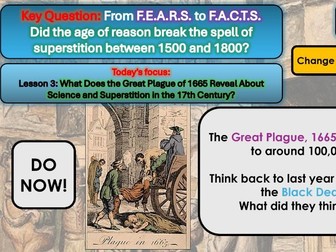
This is lesson 3 of 4. The first two lessons cover superstition and science. This looks at whether the response to the Great Plague in 1665 was more scientific or still superstitious. Lesson Focus: Explores how people in 1665 understood and responded to the Great Plague, comparing it to the Black Death of 1348. It examines whether beliefs and practices had shifted from superstition to science. Structure: Starter Activity (DO NOW): Recaps prior knowledge of the Black Death (1348) and its perceived causes (miasma, divine punishment, planetary alignment). Main Content: Introduction to the Great Plague of 1665 and its devastating impact on London. Analysis of a Bill of Mortality to explore contemporary understanding of disease. Examination of unusual illnesses and beliefs (e.g., “King’s Evil,” “Tissick,” “Quinsie”). Use of Samuel Pepys’ diary and Plague Orders to explore public reactions and government measures. Students assess 8 pieces of historical evidence to determine whether they reflect science/rationality or superstition/irrationality, and whether they show change or continuity from medieval times. Exit Task – Fast Forward to 1800: Introduction to Edward Jenner’s smallpox vaccine. Discussion of resistance to scientific progress and the persistence of superstition. Why This Lesson Benefits All Ability Ranges Differentiated Thinking: The lesson uses accessible historical sources (e.g., Pepys’ diary) and visual aids (e.g., mortality bills) that allow students of all abilities to engage with complex ideas. Scaffolded Analysis: The POINT-EVIDENCE-EXPLAIN-LINK (PEEL) structure helps students build historical arguments, supporting both lower and higher ability learners. Critical Thinking: Encourages students to evaluate evidence, distinguish between rational and irrational beliefs, and understand historical context—skills valuable across the curriculum. Engaging Content: The mix of bizarre historical beliefs and emerging scientific ideas captures student interest and encourages curiosity. Why You Should Use This Lesson Cross-Curricular Links: Bridges history and science, making it ideal for interdisciplinary learning. Promotes Historical Thinking: Encourages students to explore change and continuity over time, a key concept in historical study. Relevance to Today: Draws parallels between past pandemics and modern responses, making it timely and relatable. Encourages Debate: The central question—science vs. superstition—invites discussion and differing viewpoints, fostering classroom engagement.
Lesson 4: Migration Nation: Were the Experiences of Migrants Similar or Different?Quick View
QualityHistoryResources

Lesson 4: Migration Nation: Were the Experiences of Migrants Similar or Different?

(0)
This is asking students to understand the similarities and differences in experience for migrants. This is a basic skill which they may have done at Primary school but it is a good leveller for all students. Source Analysis: Use fact sheets and sources to answer key questions about Vikings and West Indians. Creative Task: Design a two-page spread comparing the two groups. Discussion: What similarities and differences can be found in their experiences? Extension Task: Evaluate how migration shaped British identity. Presentation: Share findings with the class using visual aids. This is followed by an investigation which I have added free as Migration Nation Investigation.
Lesson 3: Migration Nation: What Can We Learn About Migrants Who Came to Britain? (SOURCES/EVIDENCE)Quick View
QualityHistoryResources

Lesson 3: Migration Nation: What Can We Learn About Migrants Who Came to Britain? (SOURCES/EVIDENCE)

(0)
This is the third lesson introducing Year 7 to historical skills. This lesson is introducing sources and evidence: Starter Quiz: Recap key terms from previous lessons. Source Analysis: Examine different types of evidence (written, visual, physical, oral). Inference Task: Infer information from historical sources about different migrant groups. Categorisation Task: Identify whether sources are primary or secondary. Discussion: Evaluate what evidence can and cannot tell us.
Lesson 4: Final lesson: Did the age of reason break the spell of superstition between 1500 and 1800?Quick View
QualityHistoryResources

Lesson 4: Final lesson: Did the age of reason break the spell of superstition between 1500 and 1800?

(0)
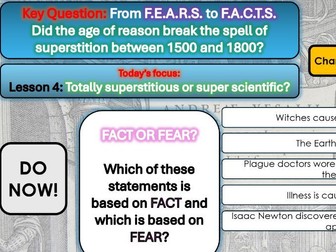
This is the final of 4 lessons. The first explored superstition, the second science and the third the Great Plague. This lesson summarises this unit and leads to an assessment. Lesson Focus This lesson explored the key enquiry question: Did the Age of Reason break the spell of superstition between 1500 and 1800? It aimed to help students evaluate the extent of change and continuity in scientific and medical thinking during this period. The lesson encouraged students to reflect on how far rational, evidence-based science replaced fear-driven, superstitious beliefs, using examples from the Scientific Revolution and Enlightenment. Lesson Activities Students began with a “Fact or Fear?” starter, identifying whether historical beliefs were based on superstition or scientific fact. They then completed a gap-fill activity summarising key developments from 1500 to 1800, including the Pendle witch trials, the Scientific Revolution, and Jenner’s vaccine. The main activity was a team-based “Change vs Continuity” game, where students judged historical facts as evidence of either change or continuity. The lesson concluded with a final extended writing task, supported by a structure strip, where students answered the enquiry question using PEEL paragraphs. Accessibility for All Abilities This lesson is well-suited for all learners due to its clear structure, engaging activities, and strong scaffolding. The “Fact or Fear?” starter activates prior knowledge in a low-stakes way, while the gap-fill and team game support retrieval and discussion. The final assessment is broken down with sentence starters and a structure strip, making extended writing accessible for weaker pupils while still challenging higher-ability students to develop nuanced arguments.