What is regulation?Quick View
isabella_makin

What is regulation?

(0)
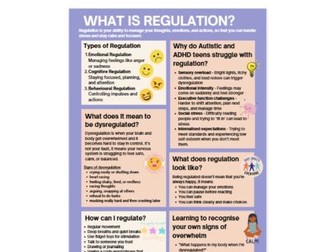
Poster/Visual Aid containing information about what regulation is, how to recognise when you are dysregulated, and how to regulate. Helpful for educators regarding neurodiversity understanding.
Supporting ADHD students in SecondaryQuick View
isabella_makin

Supporting ADHD students in Secondary

(0)
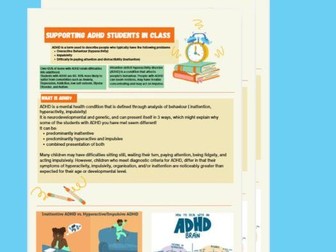
Training and Educational Resource on ADHD, and how best to support it in a secondary school setting. provides information on ADHD condition and what it looks like in the classroom. gives advice and techniques about how to deal with ADHD pupils, and de-escalate situations. contains links to external resources that can further aid understanding.
Thinking it VS Saying itQuick View
isabella_makin

Thinking it VS Saying it

(0)
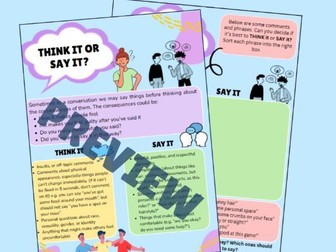
Thinking It vs Saying It is a simple worksheet designed to neurodiverse students understand the difference between thoughts that should stay in their head and comments that are appropriate to say out loud. This resource helps young people to: -Understand which comments are helpful, respectful, or kind -Recognise comments that may hurt feelings, embarrass others, or cross boundaries -Think about the consequences of what they say -Practise sorting phrases into “Think It” and “Say It” -Learn how to rephrase unkind or blunt comments -Build self-awareness and social communication skills Perfect for: ✔ SEN and social-skills lessons ✔ Emotional regulation work ✔ PSHE sessions ✔ Pastoral & behaviour support ✔ One-to-one or small-group interventions
Arguments & Making Things Right (5 page pdf)Quick View
isabella_makin

Arguments & Making Things Right (5 page pdf)

(0)
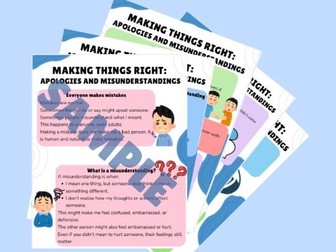
Making Things Right is a neuro-affirming social story designed to help neurodiverse children and teens understand what can cause arguments, how they can reconcile, and how they can apologise with respect. Students will learn to: -Respect other people’s feelings and experiences -Pause before they respond in order to think through their actions -What a proper apology looks like -What to think about after a argument has occurred -Ask trusted adults for help when needed Perfect for: ✔ Emotional regulation support ✔ SEN interventions ✔ Autism and ADHD support ✔ One-to-one pastoral work
Classroom Rules - (3 page pdf)Quick View
isabella_makin

Classroom Rules - (3 page pdf)

(0)
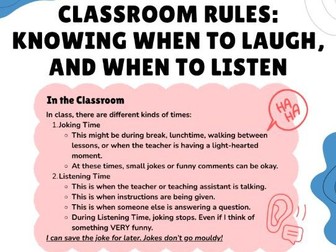
‘Classroom Rules: Knowing When to Laugh and When to Listen’ is a clear, neuro-affirming social story designed especially for autistic and ADHD teens in secondary school. This social story teaches students to: -Recognise the difference between Joking Time and Listening Time -Understand how interrupting affects others -Use simple strategies to wait, pause, or raise their hand -Notice cues that it’s time to stop joking -Handle frustration without talking back -Balance being funny with being respectful Perfect for: ✔ SEN support ✔ Autism interventions ✔ Emotional regulation work ✔ Pastoral teams & behaviour support ✔ One-to-one sessions or whole-class reminders
Understanding Boundaries - (3 page pdf)Quick View
isabella_makin

Understanding Boundaries - (3 page pdf)

(0)
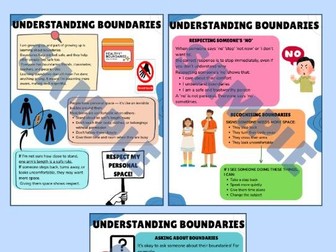
Understanding Boundaries is a social story designed to help autistic and ADHD teens learn about personal space, consent, and respectful communication. This social story teaches young people to: -Understand what personal space is and why it matters -Notice body-language cues that someone needs more space -Respond appropriately when someone says “no” -Learn how to apologise and repair things if you make a mistake -Set their own boundaries safely and confidently -Ask for permission in everyday situations -Know what to do if someone crosses their boundaries Perfect for: ✔ SEN support ✔ Autism interventions ✔ PSHE lessons ✔ Pastoral & behaviour teams ✔ One-to-one or small-group work
Making Friends - (5 page pdf)Quick View
isabella_makin

Making Friends - (5 page pdf)

(0)
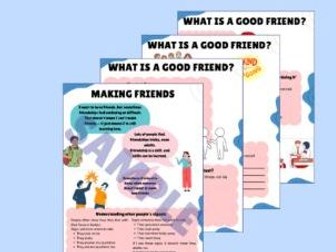
Making Friends is a clear, neuro-affirming social story created for autistic and ADHD children and teens who want to understand friendships without confusion or pressure. This social story helps young people to: -Recognise when someone wants to talk — and when they don’t -Understand facial expressions, body language, and social cues -Learn what makes a kind, respectful friend -Start simple conversations with confidence -Set boundaries and notice other people’s boundaries -Keep friendships going with small, positive actions -Show interest without overwhelming others Perfect for: ✔ SEN support ✔ Autism interventions ✔ Social-skills groups ✔ Pastoral teams & behaviour support ✔ One-to-one sessions or small-group work
Becoming More Independent -  (5 page pdf)Quick View
isabella_makin

Becoming More Independent - (5 page pdf)

(0)
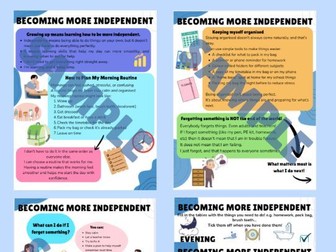
Becoming More Independent is a neuro-affirming social story designed to help autistic and neurodiverse children and teens develop everyday independence skills in a realistic and reassuring way. It emphasises progress over perfection and reminds students that learning independence takes time. This social story helps students: -Understand what independence really means (and what it doesn’t mean) -Create a personalised morning routine that works for them -Use simple organisation tools to reduce stress -Manage forgetting items without panic or shame -Practice asking for help in clear, respectful ways -Build confidence in daily school and home routines Perfect for: ✔ Autism and ADHD support ✔ SEN interventions ✔ Life skills work ✔ Organisation support ✔ One-to-one sessions or small groups
Self-Esteem and Confidence - (5 page pdf)Quick View
isabella_makin

Self-Esteem and Confidence - (5 page pdf)

(0)
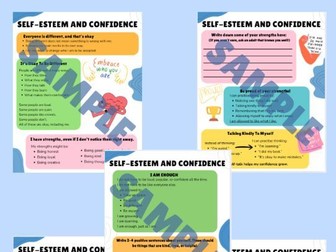
Self-Esteem and Confidence is a neuro-affirming social story designed to help neurodiverse children and teens develop a positive sense of self. It explores difference, strengths, self-talk, and coping with difficult social feelings. This social story helps students to: -Understand that being different is normal and okay -Recognise and celebrate their own strengths -Practise kind, supportive self-talk -Cope with feeling left out or misunderstood -Manage embarrassment with reassurance and perspective -Build confidence without pressure to change who they are Perfect for: ✔ Autism and ADHD support ✔ Emotional wellbeing and self-esteem work ✔ SEN and pastoral support ✔ One-to-one or small group sessions ✔ Transition support and personal development
Boyfriends, Girlfriends & Romance (5 page pdf)Quick View
isabella_makin

Boyfriends, Girlfriends & Romance (5 page pdf)

(0)
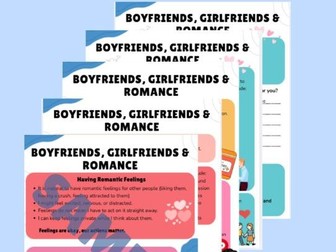
Boyfriends, Girlfriends & Romance is a clear, neuro-affirming social story created for autistic and ADHD children and teens who want to understand and pursue relationships without confusion or pressure. This social story helps young people to: -Recognise when someone wants to be romantic, and when they don’t -Learn what makes a healthy relationship, and what makes an unhealthy relationship -Show interest without overwhelming others -Realise that they are having romantic feelings -Learn that relationships can be between different or the same gender (LGBTQ+) -Set their own romantic boundaries Perfect for: ✔ SEN support ✔ Autism interventions ✔ Social-skills ✔ One-to-one sessions
Handling Big Emotions (3 page pdf)Quick View
isabella_makin

Handling Big Emotions (3 page pdf)

(0)
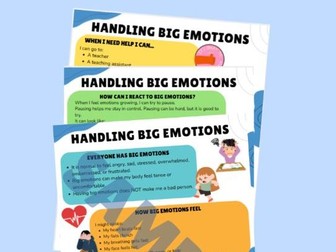
Handling Big Emotions is a neuro-affirming social story designed to help neurodiverse children and teens understand what big emotions feel like, why they happen, and what they can do to cope safely and confidently. Students will learn to: -Notice their own physical and emotional “warning signs” -Understand common triggers for big feelings -Use practical regulation strategies for body, brain, and emotions -Ask trusted adults for help when needed -Reflect and recover after they calm down Perfect for: ✔ Emotional regulation support ✔ SEN interventions ✔ Autism and ADHD support ✔ One-to-one pastoral work ✔ Calm corners & sensory rooms ✔ Toolbox resources for coping skills